


Refine Results
Sort By
From
To


Tremendous human progress is becoming possible through the development of converging technologies stimulated by advances in four core fields: Nanotechnology, Biotechnology Information technology, and new technologies based in Cognitive science (NBIC). This book provides a unique review of technical developments related to the unification that is rapidly taking place today among these fields.

The objective of Document Analysis and Recognition (DAR) is to recognize the text and graphicalcomponents of a document and to extract information. With ?rst papers dating back to the 1960’s, DAR is a mature but still gr- ing research?eld with consolidated and known techniques. Optical Character Recognition (OCR) engines are some of the most widely recognized pr- ucts of the research in this ?eld, while broader DAR techniques are nowadays studied and applied to other industrial and o?ce automation systems. In the machine learning community, one of the most widely known - search problems addressed in DAR is recognition of unconstrained handwr- ten characters which has been frequently used in the past as a benchmark for evaluating machine learning algorithms, especially supervised classi?ers.
Provides for the first time a general overview of research activities related to location and map-based services. These activities have emerged over the last years, especially around issues of positioning, spatial modelling, cartographic communication as well as in the fields of ubiquitious cartography, geo-pervasive services, user-centered modelling and geo-wiki activities. Topics cover an enormous range with heterogenous relationships to the main book issues. Whilst contemporary cartography aims at looking at new and efficient ways for communicating spatial information the development and availability of technologies like mobile networking, mobile devices or short-range sensors lead to interesting new possibilities for achieving this aim.
The theory of linear algebraic monoids culminates in a coherent blend of algebraic groups, convex geometry, and semigroup theory. The book discusses all the key topics in detail, including classification, orbit structure, representations, universal constructions, and abstract analogues. An explicit cell decomposition is constructed for the wonderful compactification, as is a universal deformation for any semisimple group. A final chapter summarizes important connections with other areas of algebra and geometry. The book will serve as a solid basis for further research. Open problems are discussed as they arise and many useful exercises are included.
Linear Algebra Thoroughly Explained provides a comprehensive introduction to the subject suitable for adoption as a self-contained text for courses at undergraduate and postgraduate level. The clear and comprehensive presentation of the basic theory is illustrated throughout with an abundance of worked examples. The book is written for teachers and students of linear algebra at all levels and across mathematics and the applied sciences, particularly physics and engineering.
Provides a clear and comprehensive modern treatment of Lie sphere geometry and its applications to the study of Euclidean submanifolds. It begins with the construction of the space of spheres, including the fundamental notions of oriented contact, parabolic pencils of spheres, and Lie sphere transformations. The link with Euclidean submanifold theory is established via the Legendre map, which provides a powerful framework for the study of submanifolds, especially those characterized by restrictions on their curvature spheres.
Provides a fast introduction to symplectic geometry for graduate students with some knowledge of differential geometry, de Rham theory and classical Lie groups. This text addresses symplectomorphisms, local forms, contact manifolds, compatible almost complex structures, Kaehler manifolds, hamiltonian mechanics, moment maps, symplectic reduction and symplectic toric manifolds. It contains guided problems, called homework, designed to complement the exposition or extend the reader's understanding.

PREFACEThisscientific biography of Kristian Birkeland (1867–1917) was written to bring the story ofa Norwegian national hero to the attention ofthe English-speaking world. Birkeland’sheroic stature was established not on a field of military battle,but in the bitter cold of the Artic wilderness ashe sought to answer basic questions abouthow the Sun controlled northern lights andmag-netic storms. He was also afather of Norsk Hydro one ofNorway’s largest industries. Birkel and died before reaching the age of 50.Because Birkel and never kept adiary, documented information about his family and private life is sparse. Before he died, Olaf Devik, the last of Birke-ffland’s close friends, gave along interview and graciously transferred his personal archive to A.E. Birkeland’s 82 scientific papers and three book-length publications map the progress of his investigations. addressed this book questions that had vexed European scientists for centuries. Why do the northern lights appear overhead when the Earth’s magnetic field is disturbed? How are magnetic storms connected to disturbances on the Sun? To answer these questions Birkeland interpreted his advance laboratory simulations and daring campaigns in the Arctic wilderness in the light of Maxwell’s newly discovered laws of electricity and magnetism. Birkeland’s ideas were dismissed for decades, only to be vindicated when satellites could fly above the Earth’s atmosphere.
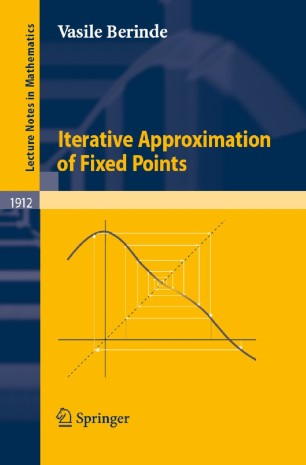
The aim of this monograph is to give a unified introductory treatment of the most important iterative methods for constructing fixed points of nonlinear contractive type mappings. It summarizes the most significant contributions in the area by presenting, for each iterative method considered (Picard iteration, Krasnoselskij iteration, Mann iteration, Ishikawa iteration etc.), some of the most relevant, interesting, representative and actual convergence theorems. Applications to the solution of nonlinear operator equations as well as the appropriate error analysis of the main iterative methods, are also presented.
Although Riemann surfaces are a time-honoured field, this book is novel in its broad perspective that systematically explores the connection with other fields of mathematics. It can serve as an introduction to contemporary mathematics as a whole as it develops background material from algebraic topology, differential geometry, the calculus of variations, elliptic PDE, and algebraic geometry. It is unique among textbooks on Riemann surfaces in including an introduction to Teichmüller theory.

This book covers recent advances in unsupervised and supervised data analysis methods in Computational Intelligence for knowledge discovery. In its first part the book provides a collection of recent research on distributed clustering, self organizing maps and their recent extensions. If labeled data or data with known associations are available, we may be able to use supervised data analysis methods, such as classifying neural networks, fuzzy rule-based classifiers, and decision trees. Therefore this book presents a collection of important methods of supervised data analysis. "Classification and Clustering for Knowledge Discovery" also includes variety of applications of knowledge discovery in health, safety, commerce, mechatronics, sensor networks, and telecommunications.
This book stresses the unity of electromagnetic theory with electric and magnetic fields developed in parallel. SI units are used throughout and considerable use is made of tensor notation and the Levi-Cevita symbol. To more closely display the parallelism, extensive use is made of the scalar magnetic potential particularly in dealing with the Laplace and Poisson equation. 85 worked problems illustrate the theory. Conformal mappings are dealt with in some detail. Relevant mathematical material is provided in appendices.

Computational Intelligence (CI) is used as a name to cover many existing branches of science, with artificial neural networks, fuzzy systems and evolutionary computation forming its core. In recent years CI has been extended by adding many other subdisciplines and it became quite obvious that this new field also requires a series of challenging problems that will give it a sense of direction. Without setting up clear goals and yardsticks to measure progress on the way many research efforts are wasted.The book written by top experts in CI provides such clear directions and the much-needed focus on the most important and challenging research issues, showing a roadmap how to achieve ambitious goals.
Aimed at first-year undergraduates in mathematics and the physical sciences, the only prerequisites are basic algebra, coordinate geometry and the beginnings of differentiation as covered in school. The transition from school to university mathematics is addressed by means of a systematic development of important classes of techniques, and through careful discussion of the basic definitions and some of the theorems of calculus, with proofs where appropriate, but stopping short of the rigour involved in Real Analysis.The influence of technology on the learning and teaching of mathematics is recognised through the use of the computer algebra and graphical package MAPLE to illustrate many of the ideas.
Buried waste on the seabed is a major source of pollution. But, very often, waste sites are not known until a serious problem occurs, or are not adequately mapped. Recent examples around Europe include WWI and WWII ammunition dump sites (e.g. Beufort Dyke in the UK), dumped nuclear submarines in the Arctic Seas, clandestine or hidden toxic-waste in the Baltic Sea and the North Sea.. Even if properly documented, waste sites evolve with time (dumped material can move with currents and tides, especially on a scale of decades; toxic-material barrels can corrode and leak). This book shows the results of a concerted EU-funded effort to tackle this problem and find innovative ways to identify and map toxic waste sites ona the seabed, whether they have been covered with sediments or not. These results are applicable to any region on the seabed in the entire world.
Braids and braid groups have been at the heart of mathematical development over the last two decades. Braids play an important role in diverse areas of mathematics and theoretical physics. The special beauty of the theory of braids stems from their attractive geometric nature and their close relations to other fundamental geometric objects, such as knots, links, mapping class groups of surfaces, and configuration spaces. In this presentation the authors thoroughly examine various aspects of the theory of braids, starting from basic definitions and then moving to more recent results. The advanced topics cover the Burau and the Lawrence--Krammer--Bigelow representations of the braid groups, the Alexander--Conway and Jones link polynomials, connections with the representation theory of the Iwahori--Hecke algebras, and the Garside structure and orderability of the braid groups.

Interfacial electrochemistry of redox metalloproteins and DNA-based molecules is presently moving towards new levels of structural and functional resolution. This is the result of powerful interdisciplinary efforts. Underlying fundamentals of biological electron and proton transfer is increasingly well understood although with outstanding unresolved issues. Comprehensive bioelectrochemical studies have mapped the working environments for bioelectrochemical electron transfer, supported by the availability of mutant proteins and other powerful biotechnology. Introduction of surface spectroscopy, the scanning probe microscopies, and other solid state and surface physics methodology has finally offered exciting new fundamental and technological openings in interfacial bioelectrochemistry of both redox proteins and DNA-based molecules.

Deals with genetic maps, from the problem of sequence comparison and alignment, including DNA chips and genomic rearrangement. It thus covers a wide variety of topics relating to algorithmic and combinatorial processing of questions arising from molecular bioinformatics and biotechnology.
Offers a critical perspective on intra-European mobility and migration by using new empirical data and theoretical discussions. It develops a theoretical and empirical analysis of the consequences of intra-European movement for sending and receiving urban regions in The Netherlands, Sweden, Austria, Turkey, Poland and Czech Republic.The book conceptualizes Central and Eastern European (CEE) migration by distinguishing between different types of CEE migrants and consequences. This involves a mapping of migration corridors within Europe, a unique empirical analysis of consequences for urban regions, and an analysis of governance responses. Next to the European and country perspectives on this phenomenon, the book focuses on the local perspective of urban regions where most mobile citizens settle (either permanently or temporarily). This way the book puts the analysis of intra-European movement in the perspective of broader theoretical debates in migration studies and beyond.
This book deals with the theoretical and methodological aspects of incorporating intelligence in Autonomous Robots and Agents. Challenges faced in the real world to accomplish complex tasks, which require collaborative efforts, and methods to overcome them, are detailed. Several informative articles deal with navigation, localization and mapping of mobile robots, a problem that engineers and researchers are grappling with all the time.This edited volume is targeted to present the latest state-of-the-art methodologies in Robotics. It is a compilation of the extended versions of the very best papers selected from the many that were presented at the 3rd International Conference on Autonomous Robots and Agents (ICARA 2006) which was held at Palmerston North, New Zealand from 11-14 December, 2006. Scientists and engineers who work with mobile robots will find this book very useful and stimulating.

Daraa Highway - Ghabagheb - Syria
+963-15 2050 - 15 860 380 /1/2/3 - 11 662 3900