


Refine Results
Sort By
From
To


Intensifying worldwide environmental changes as well as political, cultural, religious, and economic crises have made intergovernmental organisations (IGOs) important instruments in international and global cooperation. In order to cope with their diverse stakeholders, it is more imperative than ever for intergovernmental organisations to engage in personnel policy on an international scale. Successful diversity management is an essential prerequisite for organisational performance, conflict management, and dynamics of IGOs. Björn A. Peters examines the challenges of diversity and managing diversity in IGOs on the basis of the Mekong River Commission case study.
At the beginning of each year, there is a deluge of top-10 lists on just about every subject you can imagine. A top-10 list of biggest news stories, best-selling books, most popular music and movies, richest companies, and best places to visit or live. It seems everyone has his or her own top-10 list, reflecting, perhaps, differences in regional, national, and cultural values. Companies and governments most often tend to focus their top-10 lists on economic priorities, or priorities related to national defense, security, public health, and new infrastructure. This year, 2007, was no exception. Yet, increasingly, we see governments, private organizations, and companies advocating a new type of prioritization. This framework needs to reach beyond the realms of economics, world trade, and corporate management to include the environment, stakeholders, public preferences, and social goals. Moreover, corporations and individuals are not only interested in generic 10-best lists; they want lists tailored to their values, goals, and current economic and social state. For example, the U. S.
Each chapter in Managing Complexity focuses on analyzing real-world complex systems and transferring knowledge from the complex-systems sciences to applications in business, industry and society. The interdisciplinary contributions range from markets and production through logistics, traffic control, and critical infrastructures, up to network design, information systems, social conflicts and building consensus. They serve to raise readers' awareness concerning the often counter-intuitive behavior of complex systems and to help them integrate insights gained in complexity research into everyday planning, decision making, strategic optimization, and policy.

The concept of genuine responsibility, recognizing the complexity of health care and the need for stakeholder-specific interpretations of responsibility, proposes as the underlying premise of responsibility (at least in regard to health care) the social agreement that distributive choices should be made on the basis of the premise of deliberate reciprocity. When all parties share the same foundation on which the notion of responsibility is built the resulting trust and cooperation among stakeholders enables them to find morally appropriate solutions in reforming health care.This book that is at the same time provocative and important. It proposes to change the way we think about deploying healthcare resources. It will accomplish its goal for readers who are willing to be challenged at a basic level. Intellectually sound and a very good read too.
The goals of the workshop included a discussion of the state of the science in identification of new research and approaches for water pollution events and communication of the management of water pollution and sustainability of water resources. Critical to management of accidental and intentional pollution events is the assessment of the risk, an understanding of the hazards and lessons learned from events which may lead to preventative management and control strategies. Public health protection will ultimately be improved by the ability to develop management frameworks which are flexible and adaptable to the specific region, country or watershed problems and concerns and allow for prioritization in the decision making. The integration of scientific information regarding the types of hazards the environmental fate of the chemical/biological, exposure pathways and human and ecosystem impacts may be implemented from both a qualitative or descriptive approach or using a more classical quantitative risk assessment paradigm. Thus the frameworks for assessing the risk and managing the risk may be seen as preventive, early warning and responsive.

The book addresses the “balancing act” between developing students’ modelling skills on the one hand, and using modelling to help them learn mathematics on the other, which arises from the integration of modelling into classrooms. In addition the book highlights professional learning and development for in-service teachers, particularly in systems where the introduction of modelling into curricula means reassessing how mathematics is taught.
Contaminated sediments pose some of the most difficult site remediation issues. Contaminated sediments typically reside in spatially variable and dynamic systems subject to seasonal flow variations and episodic storm events. The volume of sediments that must be managed at particular sites often exceeds one million cubic meters, dwarfing many contaminated soil sites. These sediments are also associated with equally daunting volumes of water and efforts to remove the contamination typically entrains even more water. The environmental security of both NATO and partner countries is at risk due to the pervasive nature of sediment contamination of rivers, lakes and harbors. A NATO Advanced Research Workshop was convened in Bratislava in May 2005 to discuss current approaches to managing contaminated sediments and to identify research necessary to overcome outstanding problems.

This book points out the need of a multidisciplinary approach in the field of risk assessment and management. It provides an overview of the problems, approaches and common practices directly related to earthquake risk mitigation and, in particular, to the preparation of earthquake emergency plans. Written by a team of specialists from different disciplines, the authors worked together extensively in order to create unity and continuity in the text as a whole. Each topic is illustrated with examples of actual applications taken from the bibliography – including websites with available relevant information. Case studies and information on some relevant international projects are given.
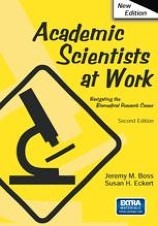
This book focuses on the three aspects of promotion in an academic setting: Scholarship, Teaching, and Service. Templates and worksheets designed to help you navigate your career with point-by-point instructions on how to complete them are provided. In addition to updating the contents of the previous version, this second edition includes a dozen articles written by the authors on managing your career that first appeared in Science's Next Wave.

Daraa Highway - Ghabagheb - Syria
+963-15 2050 - 15 860 380 /1/2/3 - 11 662 3900