


Refine Results
Sort By
From
To

Energy, chemistry, solvents, and habitats -- the basic elements of living systems - define the opportunities and limitations for life on other worlds. This class-tested text examines each of these parameters in crucial depth and makes the argument that life forms we would recognize may be more common in our solar system than many assume. It also considers, however, exotic forms of life that would not have to rely on carbon as basic chemical element, solar energy as a main energy source, or water as primary solvent. Finally the question of detecting bio- and geosignature of such life forms is discussed, ranging from Earth environments to deep space. While speculative considerations in this emerging field of science cannot be avoided, the authors have tried to present their study with the breadth and seriousness that a scientific approach to this issue requires. They seek an operational definition of life and investigate the realm of possibilities that nature offers to realize this very special state of matter and avoid scientific jargon wherever possible to make this intrinsically interdisciplinary subject understandable to a broad range of readers.
This award-winning book investigates the critique of psychoanalysis formulated by the psychiatrist and philosopher Karl Jaspers (1883-1969) over a period of five decades. His arguments against Freud and his followers are examined from systematic perspectives. The study traces the medico-historical roots of Jasper’s criticism of psychoanalysis and then places it within the framework of scientific theory before devoting itself extensively to medico-ethical aspects of the controversy, which are ultimately treated in terms of a history of mentalities. According to this view, Jasper’s student Hannah Arendt saw to it that the philosopher be made aware of the socio-cultural impact which psychoanalysis was beginning to have in the U.S.A.
What is life? Has molecular biology given us a satisfactory answer to this question? And if not, why, and how to carry on from there? This book examines life not from the reductionist point of view, but rather asks the question: what are the universal properties of living systems and how can one construct from there a phenomenological theory of life that leads naturally to complex processes such as reproductive cellular systems, evolution and differentiation? The presentation has been deliberately kept fairly non-technical so as to address a broad spectrum of students and researchers from the natural sciences and informatics.
Van den Ban’s introductory chapter explains the basic setup of a reductive symmetric space along with a careful study of the structure theory, particularly for the ring of invariant differential operators for the relevant class of parabolic subgroups. Advanced topics for the formulation and understanding of the proof are covered, including Eisenstein integrals, regularity theorems, Maass–Selberg relations, and residue calculus for root systems. Schlichtkrull provides a cogent account of the basic ingredients in the harmonic analysis on a symmetric space through the explanation and definition of the Paley–Wiener theorem. Approaching the Plancherel theorem through an alternative viewpoint, the Schwartz space, Delorme bases his discussion and proof on asymptotic expansions of eigenfunctions and the theory of intertwining integrals.

This book, designed for advanced graduate students and post-graduate researchers, provides an introduction to Lie algebras and some of their applications to the spectroscopy of molecules, atoms, nuclei and hadrons. In the first part, a concise exposition is given of the basic concepts of Lie algebras, their representations and their invariants. The second part contains a description of how Lie algebras are used in practice in the treatment of bosonic and fermionic systems. Physical applications considered include rotations and vibrations of molecules (vibron model), collective modes in nuclei (interacting boson model), the atomic shell model, the nuclear shell model, and the quark model of hadrons. One of the key concepts in the application of Lie algebraic methods in physics, that of spectrum generating algebras and their associated dynamic symmetries, is also discussed. The book contains many examples that help to elucidate the abstract algebraic definitions. It provides a summary of many formulas of practical interest, such as the eigenvalues of Casimir operators and the dimensions of the representations of all classical Lie algebras.
Since its inception in 1974, the level crossing approach for analyzing a large class of stochastic models has become increasingly popular among researchers. This volume traces the evolution of level crossing theory for obtaining probability distributions of state variables and demonstrates solution methods in a variety of stochastic models including: queues, inventories, dams, renewal models, counter models, pharmacokinetics, and the natural sciences. Results for both steady-state and transient distributions are given, and numerous examples help the reader apply the method to solve problems faster, more easily, and more intuitively.
Leibniz’s metaphysics of space and time stands at the centre of his philosophy and is one of the high-water marks in the history of the philosophy of science. In this work, Futch provides the first systematic and comprehensive examination of Leibniz’s thought on this subject. In addition to elucidating the nature of Leibniz’s relationalism, the book fills a lacuna in existing scholarship by examining his views on the topological structure of space and time, including the unity and unboundedness of space and time. It is shown that, like many of his more recent counterparts, Leibniz adopts a causal theory of time where temporal facts are grounded on causal facts, and that his approach to time represents a precursor to non-tensed theories of time.
The present volume is an introduction, largely from the physicists' perspective, to the subject matter with in-depth contributions by system neuroscientists. A conceptual model for complex networks of neurons is introduced that incorporates many important features of the real brain, such as various types of neurons, various brain areas, inhibitory and excitatory coupling and the plasticity of the network. The computational implementation on supercomputers, which is introduced and discussed in detail in this book, will enable the readers to modify and adapt the algortihm for their own research.
The present volume is an introduction, largely from the physicists' perspective, to the subject matter with in-depth contributions by system neuroscientists. A conceptual model for complex networks of neurons is introduced that incorporates many important features of the real brain, such as various types of neurons, various brain areas, inhibitory and excitatory coupling and the plasticity of the network. The computational implementation on supercomputers, which is introduced and discussed in detail in this book, will enable the readers to modify and adapt the algortihm for their own research.
Based on material delivered at several summer schools, this book is the first comprehensive textbook at the graduate level encompassing all aspects associated with the emerging field of astrobiology. Volume II gathers another set of extensive lectures covering topics so diverse as the formation and the distribution of elements in the Universe, the concept of habitability from both the planetologists' and the biologists' point of view and artificial life. The contributions are held together by the common goal to understand better the origin of life, its evolution and possible existence outside the Earth's realm.

Claudia Hofmann engages in a theoretical modelling of international learning processes and the substantiation of this model through three cases from international politics. She answers two questions: How may international actors learn as a collective? And how may the lessons learned influence actor behaviour and problem solving processes? As a foundation for answering these questions she examines the nature of actor behaviour within a social international system and integrates the diffusion of norms and values among macro-level actors.
Just over thirty years after Holland first presented the outline for Learning Classifier System paradigm, the ability of LCS to solve complex real-world problems is becoming clear. In particular, their capability for rule induction in data mining has sparked renewed interest in LCS. This book brings together work by a number of individuals who are demonstrating their good performance in a variety of domains.
It is essential for circuit and system designers to understand the components of leakage, sensitivity of leakage to different design parameters, and leakage mitigation techniques in nanometer technologies. This book provides an in-depth treatment of these issues for researchers and product designers.
R is rapidly growing in popularity as the environment of choice for data analysis and graphics both in academia and industry. Lattice brings the proven design of Trellis graphics (originally developed for S by William S. Cleveland and colleagues at Bell Labs) to R, considerably expanding its capabilities in the process. Lattice is a powerful and elegant high level data visualization system that is sufficient for most everyday graphics needs, yet flexible enough to be easily extended to handle demands of cutting edge research. Written by the author of the lattice system, this book describes it in considerable depth, beginning with the essentials and systematically delving into specific low levels details as necessary. No prior experience with lattice is required to read the book, although basic familiarity with R is assumed.
A mathematically consistent formulation of relativistic quantum electrodynamics (QED) has still to be found. Nevertheless, there are several simplified effective models that successfully describe many body quantum systems and the interaction of radiation with matter. Large Coulomb Systems explores a selection of mathematical topics inspired by QED. It comprises selected, expanded and edited lectures given by international experts at a topical summer school and is intended as a high-level introduction for graduate students, postdocs and nonspecialists from related fields.
Philosophy of logic and language, and of meaning and communication are central to this volume. The discussion of these issues involves analytical approaches, including semantics and semiotics, philosophy of science, mathematical logic, phenomenology, hermeneutics and some aspects of philosophical anthropology and aesthetics. Philosophy of the Absolute also belongs to this broad repertoire of philosophical problems and disciplines. A number of problems and viewpoints derive from the metaphysical system; any relativistic view on ethical values, for instance, makes sense in relation to some absolute. Metaphysical system building may have come to an end, but after all it belongs to philosophy to remind us of our past.
The book presents recent estimates of the rates in changes of major land classes such as forest, cropland and pasture. Among the causative mechanisms behind land change, synergetic factor combinations are found to be more common than single key factor explanations. Aggregated globally, multiple impacts of local land changes are shown to significantly affect central aspects of Earth System functioning. Innovative developments and applications in the fields of modeling and scenario construction are presented. Finally, conclusions are drawn about the most pressing implications for the design of appropriate intervention policies, and on new directions and frontiers of research.
This book investigates the newly emerging scope of interests and project agendas to investigate and preserve cultural landscapes. It presents the historic, archaeological, ethnographic, and environmental traditions of cultural landscape study and the attempts to reconstruct and analyze the complex processes of cultural changes through prehistoric and historic times.The "guiding light" of the book is that the fullest understanding of a cultural landscape will materialize through interdisciplinary cooperation, which should involve an ecological approach with historical ecology as the guiding tool, applied archaeology, and environmental planning.
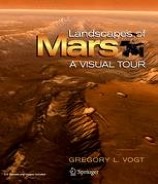
Landscapes of Mars is essentially a picture book that provides a visual tour of Mars. All the major regions and topographical features will be shown and supplemented with chapter introductions and extended captions. In a way, think of it as a visual tourist guide. Other topics covered are Martian uplands on the order of the elevation of Mt. Everest, Giant volcanoes and a rift system, the Grand Canyon of Mars, craters and the absence of craters over large regions (erosion), and wind shadows around craters, sand dunes, and dust devils.
This book presents a collection and synthesis of many of these perspectives — perhaps it could only be produced in a land urb- ised in the tiniest of pockets, and yet so daunting with respect to the way non-populated landscapes dwarf its cities. Many travel to Australia to its cities and never see the landscapes — but it is these that give the country its power and imagery. It is the landscapes that so impress on us the need to consider how our intervention, through activities ranging from resource exploitation and settled agriculture to climate change, poses one of the greatest crises facing the modern world. In this sense, Australia and its landscape provide a mirror through which we can glimpse the extent to which our intervention in the world threatens its very existence.

Daraa Highway - Ghabagheb - Syria
+963-15 2050 - 15 860 380 /1/2/3 - 11 662 3900