


Refine Results
Sort By
From
To

Basic Algebra and Advanced Algebra systematically develop concepts and tools in algebra that are vital to every mathematician, whether pure or applied, aspiring or established. Together, the two books give the reader a global view of algebra and its role in mathematics as a whole.Basic Algebra presents the subject matter in a forward-looking way that takes into account its historical development. It is suitable as a text in a two-semester advanced undergraduate or first-year graduate sequence in algebra, possibly supplemented by some material from Advanced Algebra at the graduate level. It requires of the reader only familiarity with matrix algebra, an understanding of the geometry and reduction of linear equations, and an acquaintance with proofs.
This text is designed for a one-semester course on Probability and Statistics. The exposition unfolds systematically from an introductory chapter to such topics as random variables and vectors, stochastic processes, estimation, testing and regression. The topics are well chosen and the presentation is enriched by many examples from real life. Following every chapter, the reader will find many original, solved and unsolved problems and hundreds of multiple choice questions, enabling those unfamiliar with the topics to master them. Additionally appealing are the interesting historical notes on the mathematicians mentioned throughout and a useful bibliography. A distinguishing character of the book is the thorough and succinct handling of the various topics.
This new book offers a fresh approach to matrix and linear algebra by providing a balanced blend of applications, theory, and computation, while highlighting their interdependence.
Contains a collection of exercises related to typical topics in a course on analytical and numerical methods offered in a degree program in Engineering or Mathematics. Starting with exercises in functional analysis and approximation theory, the text develops problems related to the numerical resolution of elliptic, parabolic, and hyperbolic partial differential equations, scalar or vector, in one or more spatial dimensions. Pure diffusion and pure convection problems are therefore addressed, alongside diffusion-transport problems and problems in compressible and incompressible fluid dynamics. Particular emphasis is given to the finite element method for the spatial discretization of the problems considered, although exercises on the finite difference and finite volume methods are also included.
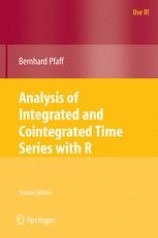
The analysis of integrated and co-integrated time series can be considered as the main methodology employed in applied econometrics. This book not only introduces the reader to this topic but enables him to conduct the various unit root tests and co-integration methods on his own by utilizing the free statistical programming environment R. The book encompasses seasonal unit roots, fractional integration, coping with structural breaks, and multivariate time series models. The book is enriched by numerous programming examples to artificial and real data so that it is ideally suited as an accompanying text book to computer lab classes.
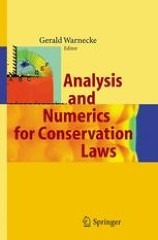
The physical and chemical mechanisms as well as the sizes of these processes are quite different. So are the motivations for studying them scientifically.The super- 8 nova is a thermo-nuclear explosion on a scale of 10 cm. Astrophysicists try to understand them in order to get insight into fundamental properties of the universe. In hows around airfoils of commercial airliners at the scale of 3 10 cm shock waves occur that influence the stability of the wings as well as fuel consumption in ight. This requires appropriate design of the shape and structure of airfoils by engineers. Knocking occurs in combustion, a chemical 1 process, and must be avoided since it damages motors. The scale is 10 cm and these processes must be optimized for efficiency and environmental conside- tions. The common thread is that the underlying ?uid ?ows may at a certain scale of observation be described by basically the same type of hyperbolic s- tems of partial differential equations in divergence form, called conservation laws. Astrophysicists, engineers and mathematicians share a common interest in scientific progress on theory for these equations and the development of computational methods for solutions of the equations. Due to their wide applicability in modeling of continua. A substantial portion of mathematical research is related to the analysis and numerical approximation of solutions to such equations. Hyperbolic conservation laws in two or more space dimensions still poseone of the main challenges to modern mathematics.
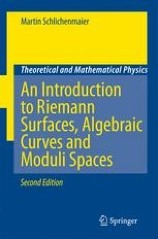
This book gives an introduction to modern geometry. Starting from an elementary level the author develops deep geometrical concepts, playing an important role nowadays in contemporary theoretical physics. He presents various techniques and viewpoints, thereby showing the relations between the alternative approaches.
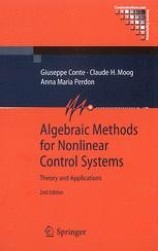
A self-contained introduction to algebraic control for nonlinear systems suitable for researchers and graduate students.The most popular treatment of control for nonlinear systems is from the viewpoint of differential geometry yet this approach proves not to be the most natural when considering problems like dynamic feedback and realization. Professors Conte, Moog and Perdon develop an alternative linear-algebraic strategy based on the use of vector spaces over suitable fields of nonlinear functions. This algebraic perspective is complementary to, and parallel in concept with, its more celebrated differential-geometric counterpart.Algebraic Methods for Nonlinear Control Systems describes a wide range of results, some of which can be derived using differential geometry but many of which cannot.
The articles in this volume are devoted to: - moduli of coherent sheaves. - principal bundles and sheaves and their moduli. - new insights into Geometric Invariant Theory. - stacks of shtukas and their compactifications. - algebraic cycles vs. commutative algebra. - Thom polynomials of singularities. - zero schemes of sections of vector bundles.
The present textbook is a lively, problem-oriented and carefully written introduction to classical modern algebra. The author leads the reader through interesting subject matter, while assuming only the background provided by a first course in linear algebra. The first volume focuses on field extensions. Galois theory and its applications are treated more thoroughly than in most texts. It also covers basic applications to number theory, ring extensions and algebraic geometry. The main focus of the second volume is on additional structure of fields and related topics. Much material not usually covered in textbooks appears here, including real fields and quadratic forms, the Tsen rank of a field, the calculus of Witt vectors, the Schur group of a field, and local class field theory.
For the third edition, the author has added a new chapter on associative algebras that includes the well known characterizations of the finite-dimensional division algebras over the real field (a theorem of Frobenius) and over a finite field (Wedderburn's theorem); polished and refined some arguments (such as the discussion of reflexivity, the rational canonical form, best approximations and the definitions of tensor products); upgraded some proofs that were originally done only for finite-dimensional/rank cases; added new theorems, including the spectral mapping theorem; considerably expanded the reference section with over a hundred references to books on linear algebra.
The first part of the book contains a careful but rapid discussion of the basics of linear algebra, including vector spaces, linear transformations, quotient spaces, and isomorphism theorems. The author then proceeds to modules, emphasizing a comparison with vector spaces. A thorough discussion of inner product spaces, eigenvalues, eigenvectors, and finite dimensional spectral theory follows, culminating in the finite dimensional spectral theorem for normal operators. The second part of the book is a collection of topics, including metric vector spaces, metric spaces, Hilbert spaces, tensor products, and affine geometry. The last chapter discusses the umbral calculus, an area of modern algebra with many important applications.
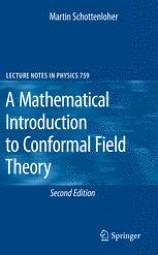
The first part of this book gives a detailed, self-contained and mathematically rigorous exposition of classical conformal symmetry in n dimensions and its quantization in two dimensions. In particular, the conformal groups are determined and the appearance of the Virasoro algebra in the context of the quantization of two-dimensional conformal symmetry is explained via the classification of central extensions of Lie algebras and groups. The second part surveys some more advanced topics of conformal field theory, such as the representation theory of the Virasoro algebra, conformal symmetry within string theory, an axiomatic approach to Euclidean conformally covariant quantum field theory and a mathematical interpretation of the Verlinde formula in the context of moduli spaces of holomorphic vector bundles on a Riemann surface.
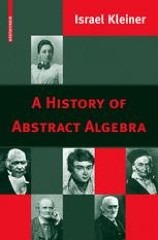
This presentation provides an account of the intellectual lineage behind many of the basic concepts, results, and theories of abstract algebra.The development of abstract algebra was propelled by the need for new tools to address certain classical problems that appeared unsolvable by classical means. A major theme of the approach in this book is to show how abstract algebra has arisen in attempts to solve some of these classical problems, providing context from which the reader may gain a deeper appreciation of the mathematics involved.
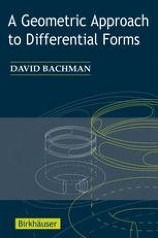
The modern subject of differential forms subsumes classical vector calculus. This text presents differential forms from a geometric perspective accessible at the undergraduate level. The book begins with basic concepts such as partial differentiation and multiple integration and gently develops the entire machinery of differential forms. Each new concept is presented with a natural picture that students can easily grasp. Algebraic properties then follow. This facilitates the development of differential forms without assuming a background in linear algebra. Throughout the text, emphasis is placed on applications in 3 dimensions, but all definitions are given so as to be easily generalized to higher dimensions. A centerpiece of the text is the generalized Stokes' theorem. Although this theorem implies all of the classical integral theorems of vector calculus, it is far easier for students to both comprehend and remember.

Daraa Highway - Ghabagheb - Syria
+963-15 2050 - 15 860 380 /1/2/3 - 11 662 3900