


Refine Results
Sort By
From
To

This volume collects emerging issues in Environmental and Civil Engineering, originating from outstanding doctoral dissertations discussed at Politecnico di Milano in 2021. The advanced innovative insights provided are presented with reference to the relevant sustainable development goals (SDGs), hoping that scientists, technicians and decision makers will find them as a valid support to face future sustainability challenges.
This book provides a compendium of material properties, demonstrates several successful examples of bio-based materials’ application in building facades, and offers ideas for new designs and novel solutions. It features a state-of-the-art review, addresses the latest trends in material selection, assembling systems, and innovative functions of facades in detail. Selected case studies on buildings from diverse locations are subsequently presented to demonstrate the successful implementation of various biomaterial solutions, which defines unique architectural styles and building functions. The structures, morphologies and aesthetic impressions related to bio-based building facades are discussed from the perspective of art and innovation; essential factors influencing the performance of materials with respect to functionality and safety are also presented. Special emphasis is placed on assessing the performance of a given facade throughout the service life of a building, and after its end.
Presents a methodology for the assessment of structural building details, taking into account the contemporary guidelines for earthquake-resistant and energy-efficient buildings. A review of structural details for energy-efficient buildings revealed that in some cases the structural system is interrupted, leading to solutions which are not suitable for earthquake-prone regions. Such typical examples would be the use of thermal insulation under the building foundation and reduction of the load-bearing elements’ dimensions – also at the potential locations of plastic hinges which are crucial for the dissipation of seismic energy.

Focuses on fly ash-based alkali-activated geopolymer concrete, its production and characteristic properties. The re-use of waste materials and industrial by-products, such as fly ash, is not only economically of interest but also helps to reduce carbon dioxide emissions. The carbon footprint of these materials is much lower than that of concrete using ordinary Portland cement. They thus offer new sustainable solutions to the construction industry.
Presents the most recent advances on testing and experimentation in civil engineering, especially in the branches of materials, structures, and buildings, complementing the authors’ publication Advances on Testing and Experimentation in Civil Engineering - Geotechnics, Transportation, Hydraulics and Natural Resources. It includes advances in physical modelling, monitoring techniques, data acquisition and analysis, and provides an invaluable contribution to the installation of new civil engineering experimental facilities.
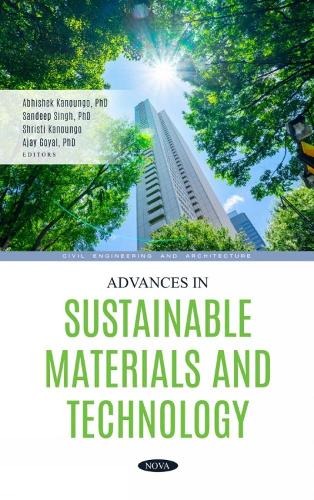
Discusses numerous relevant areas and innovative technologies, such as key construction materials and production, materials with lower energy impact, production processes encouraging less use of ever-depleting natural raw materials, minimization of the generation of greenhouse gases, development of new, environmentally friendly materials and agents, characterization of the properties of construction materials, and methodologies applied in the building of structures.
Highlights Singapore’s development into a city in which water and greenery, along with associated environmental, technical, social and political aspects have been harnessed and cultivated into a liveable sustainable way of life. It is also a story about a unique and thoroughgoing approach to large-scale and potentially transferable water sustainability, within largely urbanized circumstances, which can be achieved, along with complementary roles of environmental conservation, ecology, public open-space management and the greening of buildings, together with infrastructural improvements.
The implementation of material flow management offers enterprises a high potential for realizing new economic competitive advantages. The eco-efficient optimization of material flows aims at reducing costs while simultaneously achieving long-term sustainability with regard to ecological and societal aspects. Knowledge of existing methods and the latest trends is a key prerequisite for successfully implementing, refining and disseminating material flow management approaches.
Many people see a weak association between marketing and sustainable development and even consider them as two incompatible fields. However, marketing benefits from an extremely powerful position to encourage transformations at the production level and to guide consumers towards responsible behaviors. From its inception, marketing has been positioned as a support for the relationship between the company and its customers, with the quest for well-being set in the very foundations of the discipline.
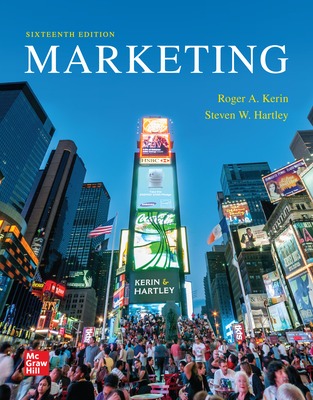
Expanded coverage on social responsibility and sustainability topics such as privacy, social entrepreneurship, diversity, equity, inclusion, and environmental impact. The 16e continues its real-world focus with “Marketing Matters,” “Making Responsible Decisions,” “Insights about me,” “Applying Marketing Metrics,” “Integration of the Customer Journey” and “Building your Marketing Plan” features throughout. Key marketplace changes related to the pandemic such as curbside pick-up, touchless payment, and delivery have been incorporated.
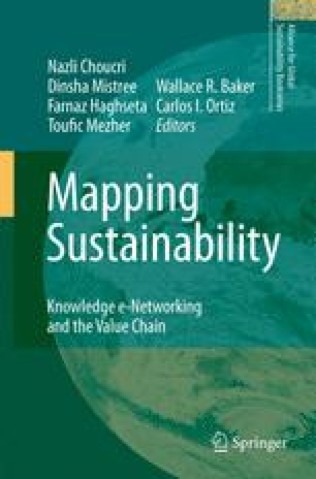
Our underlying objectives are to contribute to the provision, mana- ment, and sharing of knowledge, and to enhance the value of knowledge and its uses by different constituencies in diverse contexts and at different stages of development. The central theme of this book, connecting its different parts, is about ways of transcending critical barriers to the effective uses of knowledge and e-networking. Of special relevance is the development of new approaches to the provision and transmission – from local sources to global networks and from global sources to local networks. In many ways, this is a book of theory and methods, as well as policy and performance.
Companies and policy makers are prioritizing environmental, social, and governance goals as part of their strategies. Academic research has started to focus on these issues, but many important matters require deeper investigation and reflection, especially in specific sectors. This book focuses on the sustainability issues within the retailing and services sectors.
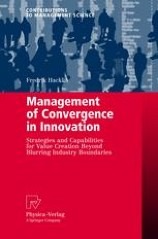
Throughout the past decade, the phenomenon of technological convergence has increasingly gained managerial attention. In this special form of technological change, the coming-together of previously distinct knowledge bases gives rise to the creation of new applications and business models. When such innovations emerge at the intersection of industries, the resulting creative destruction may exceed previously established industry boundaries. As a consequence, convergence does not only promise the creation of new value, but may imply significant disruptions to established industries. Based on investigating 26 firms within the ICT industry, this book highlights implications of the convergence phenomenon on firms’ innovation management practices, and derives strategic guidelines for building and sustaining business models beyond blurring industry boundaries.
In recent years the field of Corporate Social Responsibility (CSR) has impressively progressed. This has resulted in a number of tried and tested management models - models that have demonstrated added value in everyday organisational practice.
Management: Leading and Collaborating in a Competitive World is the perspective of a current or future manager and emphasizes six essential performance dimensions: cost, quality, speed, innovation, service, and sustainability. This bottom-line, results-oriented approach is a unique hallmark of this text. Leadership is also a vital theme and includes working collaboratively toward outstanding results
Discusses the essential principles that guide macroeconomic policy formulation and implementation to stimulate strong economic growth for sustainable development, especially for emerging economies. it includes twelve chapters over three sections: "macroeconomics of economic growth", "labour market and employment", and "the financial system and macroeconomic performance". key conclusions illustrate that the efficacy of regulatory frameworks to create enabling conditions for nurturing and bolstering robust value-adding production structures anchored on appropriate macroeconomic management are the fundamental building blocks of strong economic growth.
Pharmaceutical giants have doubled their investments in drug development in the past decade only to see new drug approvals remain constant. This book investigates and highlights a set of proactive strategies aimed at generating sustainable competitive advantage based on value-generating business practices. We focus on three sources of pharmaceutical innovation: new management methods in the drug development pipeline, new technologies as enablers for cutting-edge R&D, and new forms of cooperation and internationalization, such as open innovation in the early phases of R&D. Our findings are illustrated by cases from Europe, the US, and Asia.
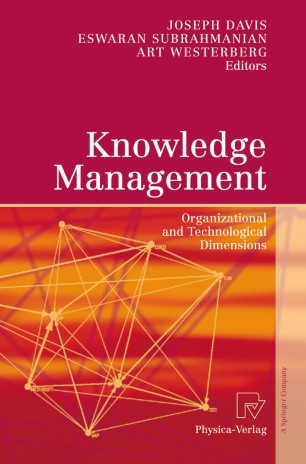
Presents a unique blend of articles which combines both conceptual and practical concerns related to devising and implementing sustainable Knowledge Management systems and solutions in contemporary global organizations. The book's contributors are among the leading thinkers and practitioners in this growing field. The seamless synthesis of the human, organizational, and technological dimensions of Knowledge Management makes this book a definitive guide for academics and practising managers alike.
Investigation reveals enterprises small and large delivering a stimulating message, from changes in entrepreneurial mindsets to the inclusive use of new technologies and a push for innovation. Zucchella and Urban explore the novel concept of circular enterprise, showing how, with their capacity to innovate, these firms are becoming the most powerful actors of a new, sustainable social order.

Aims to revisit the “traditional” interaction between channel strategies and the marketing mix in a connected world. In particular, it focuses on the following four dimensions in this context: Consumers, Products, Value Proposition and Sustainability. Keeping in mind the growing digitalization of business processes in the retail world and the move towards omni-channel retailing.

Daraa Highway - Ghabagheb - Syria
+963-15 2050 - 15 860 380 /1/2/3 - 11 662 3900