


Refine Results
Sort By
From
To


The oceans contain a great biodiversity of marine organisms. They include a rich variety of unusual genes and biochemistries and hence a diverse array of organic compounds ranging from colourful carotenoids and chlorophylls to lipids with structures ranging from the simple to the complex. This volume brings together ten chapters on the occurrence and identification of the lipid biomarkers and of pigments in marine waters. It describes how they can be used in conjunction with stable isotopes and molecular biology to ascertain the sources and fate of organic matter (both natural and pollutant) in the sea and underlying sediments. The authors are each experts in their field and the chapters provide both an overview of the state-of-the-art and knowledge gaps together with abundant detail to satisfy the needs of specialists and non-specialists alike.
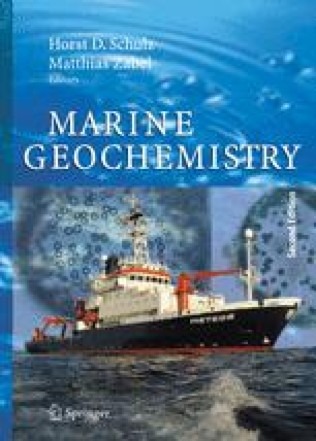
Since 1980 a considerable amount of scientific research dealing with geochemical processes in marine sediments has been carried out. This textbook summarizes the state of the art in this field of research. The topics comprise the examination of sedimentological and physical properties of the sedimentary solid phase, of pore water and pore water constituents, organic matter as the driving force of most microbiological processes, biotic and abiotic redox reactions, carbonates and stable isotopes as proxies for paleoclimate reconstruction, metal enrichments in ferromanganese nodules and crusts as well as in hot vents and cold seeps on the seafloor. A new chapter describes properties, occurrence and formation of gas hydrates in marine sediments. The textbook ends with a chapter on model conceptions and computer models to quantify processes of early diagenesis.

Despite the potential benefits that PSSA designation can deliver, recent practice both within the IMO and by individual member States, has considerably undermined confidence in this emerging concept. The focus of this book is on the events within the IMO that have led to this lack of confidence arising. In doing so, this book presents an examination of coastal State practice with the PSSA concept.

the history of mathematics there are many situations in which cal- lations were performed incorrectly for important practical applications. the history of computing the number began in Egypt and Babylon about 2000 years BC, since then many mathematicians have calculated (e. g. , Archimedes, Ptolemy, Vi` ete, etc. ). In modern mathematics there exist computers that can perform various mathematical operations for which humans are incapable. Therefore the computers can be used to verify the results obtained by humans, to discovery new results, to - prove the result sthatahumancanobtain without anytechnology
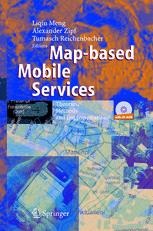
Divided into three parts - theory, method and implementation, this book starts with a summary of the state-of-the-art in mobile technologies. It also introduces a conceptual framework of mobile cartography with the emphasis on mobile usage context. It is accompanied by a CD-ROM which contains the PDF-Files in colour.

In many parts of the world, weather and climate are one of the biggest production risks and uncertainty factors impacting on agricultural systems performance and management. Both structural and non-structural measures can be used to reduce the impacts of the variability (including extremes) of climate resources on crop production. While the structural measures include strategies such as irrigation, water harvesting, windbreaks etc., the non-structural measures include use of seasonal to interannual climate forecasts, improved application of medium-range weather forecasts and crop insurance. This book based on an International Workshop held in New Delhi, India should be of interest to all organizations and agencies interested in improved risk management in agriculture.

With climate change now charging up the political agenda, there are three issues commonly making the headlines: carbon budgets, renewable energy, and the anticipated impacts of climate change. Equally important, though currently less well covered, is the issue how these effects might be mitigated. Given the significant role that forests play in the climate system – as sources, sinks, and through carbon trading – this book discusses the current scientific evidence on the relationships between climate, forest resources and forest management practices around the world. Drawing on expertise from forest scientists from several continents, the book presents both in depth analysis of the current knowledge, and a series of case studies which assess the biological and the economic impacts of climate change. It includes sections on forest responses to climate change, monitoring and modeling changes, economic and management implications, and carbon sequestration under specific management systems.

Many coastal areas and human activities are subject to increasing risks from natural and man-induced hazards such as flooding resulting from major changes in hydrology of river systems that has reached a global scale. Changes in the hydrological cycle coupled with changes in land and water management alter fluxes of materials transmitted from river catchments to the coastal zone, which have a major effect on coastal ecosystems. The increasing complexity of underlying processes and forcing functions that drive changes on coastal systems are witnessed at a multiplicity of temporal and spatial scales.
Intensifying worldwide environmental changes as well as political, cultural, religious, and economic crises have made intergovernmental organisations (IGOs) important instruments in international and global cooperation. In order to cope with their diverse stakeholders, it is more imperative than ever for intergovernmental organisations to engage in personnel policy on an international scale. Successful diversity management is an essential prerequisite for organisational performance, conflict management, and dynamics of IGOs. Björn A. Peters examines the challenges of diversity and managing diversity in IGOs on the basis of the Mekong River Commission case study.
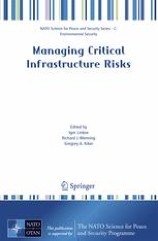
At the beginning of each year, there is a deluge of top-10 lists on just about every subject you can imagine. A top-10 list of biggest news stories, best-selling books, most popular music and movies, richest companies, and best places to visit or live. It seems everyone has his or her own top-10 list, reflecting, perhaps, differences in regional, national, and cultural values. Companies and governments most often tend to focus their top-10 lists on economic priorities, or priorities related to national defense, security, public health, and new infrastructure. This year, 2007, was no exception. Yet, increasingly, we see governments, private organizations, and companies advocating a new type of prioritization. This framework needs to reach beyond the realms of economics, world trade, and corporate management to include the environment, stakeholders, public preferences, and social goals. Moreover, corporations and individuals are not only interested in generic 10-best lists; they want lists tailored to their values, goals, and current economic and social state. For example, the U. S.
Each chapter in Managing Complexity focuses on analyzing real-world complex systems and transferring knowledge from the complex-systems sciences to applications in business, industry and society. The interdisciplinary contributions range from markets and production through logistics, traffic control, and critical infrastructures, up to network design, information systems, social conflicts and building consensus. They serve to raise readers' awareness concerning the often counter-intuitive behavior of complex systems and to help them integrate insights gained in complexity research into everyday planning, decision making, strategic optimization, and policy.

The concept of genuine responsibility, recognizing the complexity of health care and the need for stakeholder-specific interpretations of responsibility, proposes as the underlying premise of responsibility (at least in regard to health care) the social agreement that distributive choices should be made on the basis of the premise of deliberate reciprocity. When all parties share the same foundation on which the notion of responsibility is built the resulting trust and cooperation among stakeholders enables them to find morally appropriate solutions in reforming health care.This book that is at the same time provocative and important. It proposes to change the way we think about deploying healthcare resources. It will accomplish its goal for readers who are willing to be challenged at a basic level. Intellectually sound and a very good read too.
The goals of the workshop included a discussion of the state of the science in identification of new research and approaches for water pollution events and communication of the management of water pollution and sustainability of water resources. Critical to management of accidental and intentional pollution events is the assessment of the risk, an understanding of the hazards and lessons learned from events which may lead to preventative management and control strategies. Public health protection will ultimately be improved by the ability to develop management frameworks which are flexible and adaptable to the specific region, country or watershed problems and concerns and allow for prioritization in the decision making. The integration of scientific information regarding the types of hazards the environmental fate of the chemical/biological, exposure pathways and human and ecosystem impacts may be implemented from both a qualitative or descriptive approach or using a more classical quantitative risk assessment paradigm. Thus the frameworks for assessing the risk and managing the risk may be seen as preventive, early warning and responsive.
This is a book about the invention and testing of ideas. By describing how to generate engaging problem situations for engineering students to solve it inspires original currents of thought. This is the first book that formalises an important aspect of early learning in engineering design.

The resurgence of the nuclear power industry at a time when the nuclear plant I&C workforce is diminishing due to aging and retirements has been the motivation for writing this book. This book compiles 30 years of practical knowledge gained by the author and his staff in testing the I&C systems of nuclear power plants around the world. It focuses on process temperature and pressure sensors and the verification of these sensors’ calibration and response time.

Magnetism and Structure in Functional Materials addresses three distinct but related topics: (i) magnetoelastic materials such as magnetic martensites and magnetic shape memory alloys, (ii) the magnetocaloric effect related to magnetostructural transitions, and (iii) colossal magnetoresistance (CMR) and related magnanites. The goal is to identify common underlying principles in these classes of materials that are relevant for optimizing various functionalities. The emergence of apparently different magnetic/structural phenomena in disparate classes of materials clearly points to a need for common concepts in order to achieve a broader understanding of the interplay between magnetism and structure in this general class of new functional materials exhibiting ever more complex microstructure and function. The topic is interdisciplinary in nature and the contributors correspondingly include physicists, materials scientists and engineers. Likewise the book will appeal to scientists from all these areas.

Gives an comprehensive account of magnetism, spanning the historical development, the physical foundations and the continuing research underlying the field, one of the oldest yet still vibrant field of physics. It covers both the classical and quantum mechanical aspects of magnetism and novel experimental techniques. Perhaps uniquely, it also discusses spin transport and magnetization dynamics phenomena associated with atomically and spin engineered nano-structures against the backdrop of spintronics and magnetic storage and memory applications.

Magnetic heterostructures constitute an important field in magnetism and nanotechnology, which has developed over the past fifteen years due to important advances in epitaxial- growth techniques and lithographic processes. Magnetic heterostructures combine different physical properties which do not exist in nature. Examples are semiconductors/ferromagnets, superconductors/ferromagnets, and ferromagnets/antiferromagnets. These combinations display rich and novel physical properties different from those that exit in any single one of them. Interlayer exchange coupling, exchange bias, proximity effects, giant magneto-resistance, tunneling magneto-resistance, spininjection and spintransport are examples of new physical phenomena that rely on the combination of different materials layers
Macro-engineering involves the large-scale modification and manipulation of natural systems for the benefit of mankind. The primary goals of some Earth-based macroprojects described in this book are power production, land reclamation, food production, climate change, environment, water, transport and coastal protection. Other Earth or space projects considered here have a more futuristic ring, but our present-day technical skill makes their realization possible. Earth-based macroprojects usually combine different aspects and aims. They have a major impact on the ecology of a region and the inhabitants' means of living (like tourism, fishing, shipping). Its effects may be felt worldwide, like the rise in global sea level after the damming and evaporation of large ocean gulfs for power production, or the change in climate following the regional reduction of solar insolation.
Macrocyclic Chemistry: Current Trends and Future Perspectives illustrates essential concepts in this expanding research field covering both basic and applied studies. Written by well-known experts from around the world, the topics of the chapters range from new macrocyclic architectures with different functions and self-assembly processes through to the modeling and dynamics of such systems. The content also reflects on application possibilities in analytical chemistry, separation processes, material preparation and medicine. Thus this book serves as a creative source of research strategies and methodic tools.

Daraa Highway - Ghabagheb - Syria
+963-15 2050 - 15 860 380 /1/2/3 - 11 662 3900