


Refine Results
Sort By
From
To

Presents cybersecurity aspects of ubiquitous and growing IoT and Cyber Physical Systems. It also introduces a range of conceptual, theoretical, and foundational access control solutions. This was developed by the authors to provide an overall broader perspective and grounded approach to solve access control problems in IoT and CPS.
Ajax is a web development technique that takes advantage of JavaScript to display and interact dynamically with information embedded into a web page. Its emergence has made it possible to create web applications that closely resemble their desktop–based brethren. With this exciting new ability came several challenges; not only did developers have to learn JavaScript, but they were also forced to use inefficient development processes, not to mention deal with cross–platform and browser difficulties. But with the release of Google Web Toolkit (GWT), Java developers are able to continue using their favorite language to write powerful Ajax applications while using not only the Java language, but also the very same development tools they're already using on a daily basis!
The book addresses ways and means of organizing computations, highlighting the relationship between algorithms and the basic mechanisms and runtime structures necessary to execute them using machines. It completely abstracts from concrete programming languages and machine architectures, taking instead the lambda calculus as the basic programming and program execution model to design various abstract machines for its correct implementation. The emphasis is on fully normalizing machines based on full-fledged beta-reductions as essential prerequisites for symbolic computations that treat functions and variables truly as first-class objects. Their weakly normalizing counterparts are shown to be functional abstract machines that sacrifice the flavors of full beta-reductions for decidedly simpler runtime structures and improved runtime efficiency. Further downgrading of the lambda calculus leads to classical imperative machines that permit side-effecting operations on the runtime environment.
This volume, with forewords by Greg Bollella and Dana Scott, presents novel programs based on the new advances in this area, including the first randomness-preserving version of Heapsort. Programs are provided, along with derivations of their average-case time, to illustrate the radically different approach to average-case timing. The automated static timing tool applies the Modular Calculus to extract the average-case running time of programs directly from their MOQA code.
This text focuses on the essential elements, providing readers with the basic skills and introductory knowledge required to execute a software project successfully.
This Festschrift volume, published in celebration of the 50th Anniversary of Artificial Intelligence, includes 34 refereed papers written by leading researchers in the field of Artificial Intelligence. The papers were carefully selected from the invited lectures given at the 50th Anniversary Summit of AI, held at the Centro Stefano Franscini, Monte Verità, Ascona, Switzerland, July 9-14, 2006. The summit provided a venue for discussions on a broad range of topics.
This book is so far the first that covers the current state of the art in 3D imaging for safety and security. Special attention was given to advanced 3D imaging technologies in the context of safety and security applications. Comparative evaluation studies showing advantages of 3D imaging over traditional 2D imaging for a given computer vision or pattern recognition task were emphasized. Moreover, additional experts in the field of 3D imaging for safety and security were invited by the editors for a contribution to this book.

Contains contributions from leading researchers, worldwide, who have thought deeply about the nature and consequences of this interplay. The articles take a long-range view of the subject and distill the most important advances in broad terms, making them easily accessible to non-specialists. The first part is devoted to a summary of how relativity theories were born (J Stachel). The second part discusses the most dramatic ramifications of general relativity, such as black holes (P Chrusciel and R Price), space-time singularities (H Nicolai and A Rendall), gravitational waves (P Laguna and P Saulson), the large scale structure of the cosmos (T Padmanabhan); experimental status of this theory (C Will) as well as its practical application to the GPS system (N Ashby). The last part looks beyond Einstein and provides glimpses into what is in store for us in the 21st century.
A standard resource for undergraduate and postgraduate courses in dentistry. It provides fundamental coverage of the materials on which dentistry depends, covering the structure and chemistry that govern the behavior and performance of materials. Particular classes of materials include gypsum, polymers, acrylic, cements, waxes, ceramics and metals. Other chapters review surfaces, corrosion, mixing, casting, cutting and bonding, and mechanical testing. This updated edition, which includes substantial chapters on chemistry, has been extensively revised with new material on temporary restoration resins, hydraulic silicate cements and the practical aspects of wetting surfaces. Mindfully written to provide explanations for behavior, formulation, clinical and laboratory instructions and procedures, there is no comparable resource for researchers, students, teachers and practitioners in the field of dentistry.
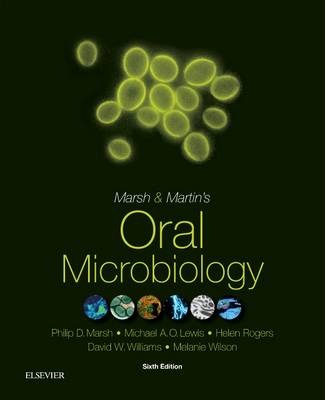
Suitable for undergraduate and postgraduate dental students, research workers, and a wide range of clinical dental professionals.
Combines up-to-date clinical and research information that will help clinicians to advance their theoretical and clinical knowledge on mandibular implant overdentures. Furthermore, it describes treatment considerations for geriatric populations, covering all relevant aspects from physiology to treatment planning and patient management in the surgical and prosthetic phases.
This book reviews all aspects of the use of machine learning in contemporary dentistry, clearly explaining its significance for dental imaging, oral diagnosis and treatment, dental designs, and dental research. In this book, readers will find up-to-date information on different machine learning tools and their applicability in various dental specialties.
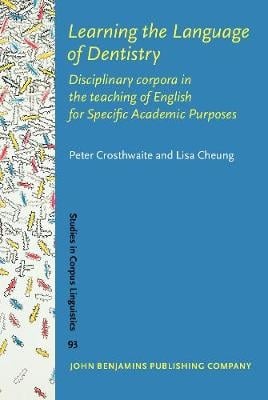
Explores the affordances of disciplinary corpora for the teaching and learning of the language of dentistry, within the field of English for Specific Academic Purposes (ESAP). We extract disciplinary register features and vocabulary from three key genres of the dentistry discipline (published experimental research articles, case reports, and novice/professional research reports within the Dental Public Health domain), before integrating these features into ESAP pedagogy in the form of corpus-based ESAP materials that promote student-led direct engagement with disciplinary corpora – an approach known as 'data-driven learning'. This book is a timely and relevant addition to the field of corpus linguistics and ESAP, and is especially targeted at ESAP professionals who are required to teach disciplinary discourses but who may struggle to know what to teach as non-experts of the target discipline.
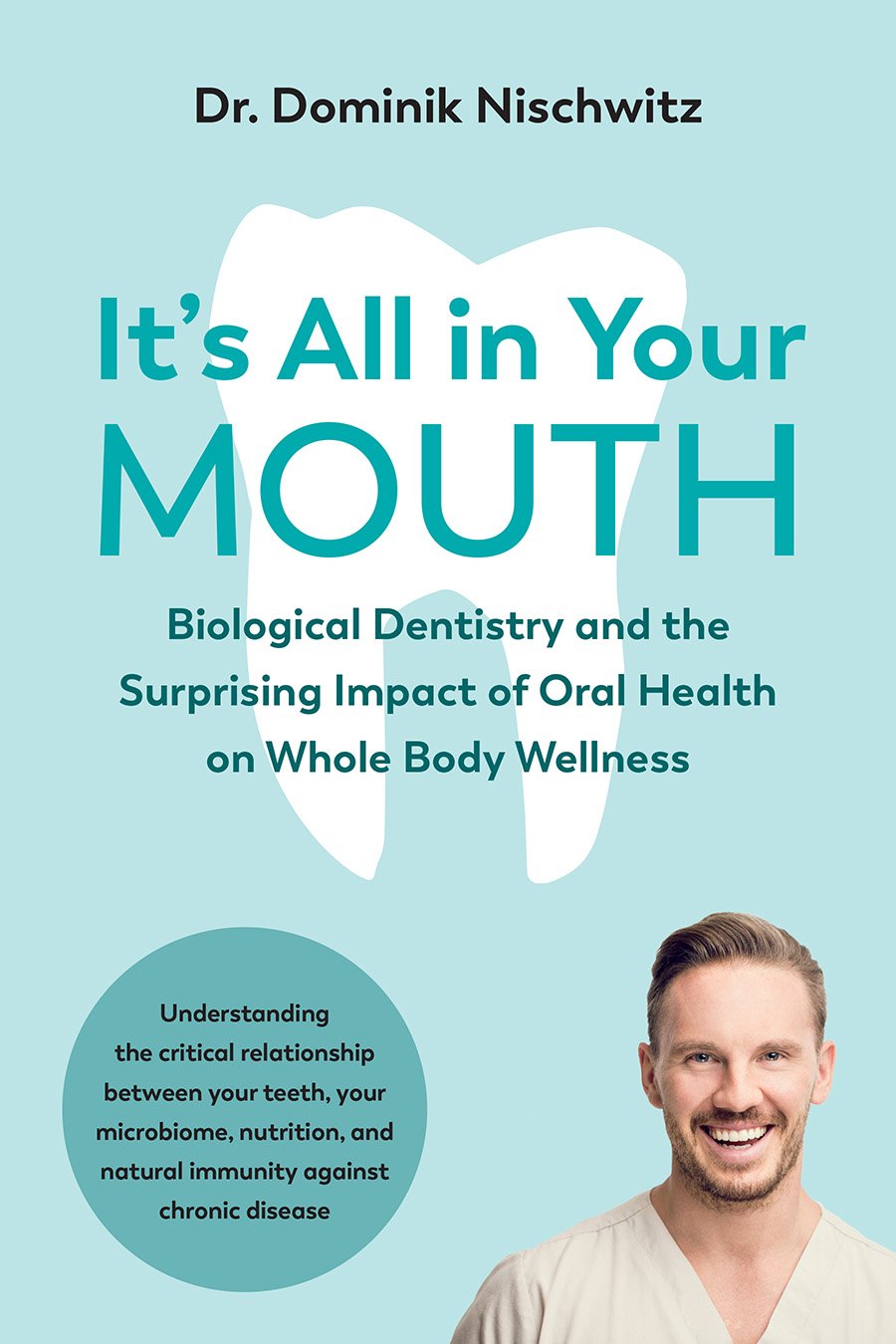
Pesents the principles of biological dentistry along with emerging scientific research on the mouth’s vital role in the body’s microbiome—a key to whole body wellness. Challenging conventional dental wisdom that views the teeth as separate from the rest of the body, and conventional dental practices that often cause more harm than good. Offers a necessary new approach to natural immunity to chronic disease and integrating dental hygiene into whole body health.
Allows a clinician to shape dental treatment and elevate patient smiles. Based on scientific research, clinical evidence, and the practical experience of the authors, this book is a practical approach to esthetic dentistry.
Focuses on enhancing antimicrobial and mechanical properties of polymeric materials and composites for dentistry. In recent years, special attention has been focused on the possibility of giving materials new or improved properties by the introduction of nano or submicron size additives, fibers or whiskers. Another area of research is the application of antibacterial monomers, which can be copolymerized in resins to kill oral pathogenic microflora. In addition, we are currently looking for new data regarding colonization of dental materials by pathogenic microbes and their influence on the other properties. Further, there are many new commercially available materials which should be investigated to verify their properties, which is important from the point of view of clinical practice. Original new research and reviews related to any of the topics mentioned above indicate the current directions of development of dental materials.
This superbly illustrated book equips readers with a detailed, up-to-date understanding of the surgical and nonsurgical complications that may arise during cranio-maxillofacial and oral surgery for a range of conditions, including malformations, infections, trauma, and tumors.
Presents the most current and comprehensive review of oral anatomy for clinicians and researchers alike. In 26 chapters, the reader is taken on a unique anatomical journey, starting with the oral fissure, continuing via the maxilla and mandible to the tongue and floor of the mouth, and concluding with the temporomandibular joint and masticatory muscles. Each chapter offers a detailed description of the relevant anatomical structures and their spatial relationships, provides quantitative morphological assessments, and explains the relevance of the region for clinical dentistry. All dental health care professionals require a sound knowledge of anatomy for the purposes of diagnostics, treatment planning, and therapeutic intervention. A full understanding of the relationship between anatomy and clinical practice is the ultimate objective, and this book will enable the reader to achieve such understanding as the basis for provision of the best possible treatment for each individual patient as well as recognition and comprehension of unexpected clinical findings.
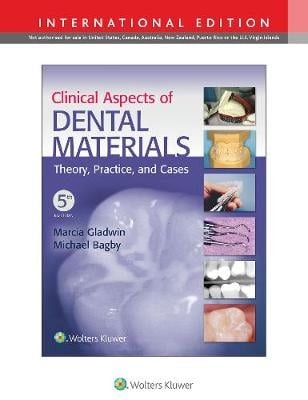
The book’s three-part structure addresses types of dental materials in the 22 chapters of Part I, includes laboratory and clinical applications (essentially a built-in lab manual) in Part II, and presents 11 case studies in Part III that serve as an overall review and help students strengthen their critical thinking skills when providing patient care.
Encompasses a wide range of disciplines, covering everything from dental materials and biomaterials to preventive and therapeutic strategies, from clinical applications to regenerative dentistry.We envision this milestone as a stepping stone toward even greater accomplishments. Through the collaboration and collective efforts of researchers worldwide, we strive to push the boundaries of dental science, explore new frontiers, and improve oral health outcomes for individuals across the globe.

Daraa Highway - Ghabagheb - Syria
+963-15 2050 - 15 860 380 /1/2/3 - 11 662 3900