


Refine Results
Sort By
From
To


The average person can name more bird species than they think, but do we really know what a bird “species” is? This open access book takes up several fascinating aspects of bird life to elucidate this basic concept in biology. From genetic and physiological basics to the phenomena of bird song and bird migration, it analyzes various interactions of birds – with their environment and other birds. Lastly, it shows imminent threats to birds in the Anthropocene, the era of global human impact.This book brings together various disciplines involved in observing bird species come into existence, modify, and vanish. It is a rich resource for bird enthusiasts who want to understand various processes at the cutting edge of current research in more detail. At the same time it offers students the opportunity to see primarily unconnected, but booming big-data approaches such as genomics and biogeography meet in a topic of broad interest. Lastly, the book enables conservationists to better understand the uncertainties surrounding “species” as entities of protection.

An international board of authors from universities, research institutes, and industries describe various biotechnological methods ranging from laboratory, to pilot evaluation and to full-scale process implementation. Topics include bioprocesses for the treatment of odors and air pollutants in wastewater treatment plants, rendering plants, chemical production facilities, and food and flavor manufacturing facilities. In addition to the basic microbiological and engineering aspects, the design, modeling and control of bioreactors are also presented.
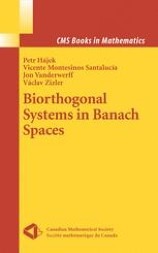
The main theme of this book is the relation between the global structure of Banach spaces and the various types of generalized "coordinate systems" - or "bases" - they possess. In this book, the authors systematically investigate the concepts of Markushevich bases, fundamental systems, total systems and their variants.
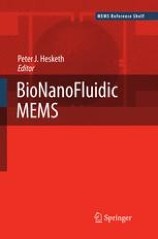
BioNanoFluidic MEMS explains nanofabrication and nanomaterials synthesis suitable for the development of biosensors. The fundamentals initiate an awareness for engineers and scientists who would like to develop and implement novel biosensors for various applications. In addition, the material covered includes: BioNanoFluidic MEMS connection between the interdisciplinary nature of BioNanoFluidics and MEMS BioNanoFluidics and sensor technology including Micro-Mechanical Sensors and Chemical Sensor Technologies ands-on steps for implementation of biosensor fabrication including a discussion of the clean room lithography process and etching, microsensor systems lamination, PDMS moulding, parylene deposition, and others Interconnection between the interdisciplinary nature of BioNanoFluidics and MEMS BioNanoFluidics and sensor technology including Micro-Mechanical Sensors and Chemical Sensor Technologies

Over the past 45 years, biomineralization research has unveiled details of the characteristics of the nano-structure of various biominerals; the formation mechanism of this nano-structure, including the initial stage of crystallization; and the function of organic matrices in biominerals, and this knowledge has been applied to dental, medical, pharmaceutical, materials, agricultural and environmental sciences and paleontology. As such, biomineralization is an important interdisciplinary research area, and further advances are expected in both fundamental and applied research.
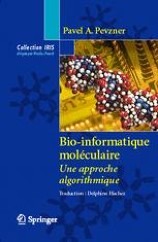
Deals with genetic maps, from the problem of sequence comparison and alignment, including DNA chips and genomic rearrangement. It thus covers a wide variety of topics relating to algorithmic and combinatorial processing of questions arising from molecular bioinformatics and biotechnology.
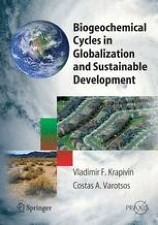
This valuable study of environmental subsystems functioning under various climatic and anthropogenic conditions provides a unique insight into the social context of global changes in biogeochemical cycles and demonstrates current understanding of globalization and sustainable development.
"The authors’ goal in producing this book was to provide an introductory text to electrophysiology, based on a quantitative approach. In attempting to achieve this goal, therefore, the authors have opened the book with a useful, and digestible, introduction to various aspects of the mathematics relevant to this field, including vectors, introduction to Laplace, Gauss’s theorem, and Green’s theorem. This book will be useful for students in medical physics and biomedical engineering wishing to enter the field of electrophysiological investigation. It will also be helpful for biologists and physiologists who wish to understand the mathematical treatment of the processes and signals at the center of the interesting interdisciplinary field.
Use of medicinal plants is as old as human civilization and continuous efforts are being made to improve medicinal plants or produce their products in high amounts through various technologies. About 200,000 natural products of plant origin are known and many more are being identifed from higher plants and microorganisms. Some plant-based drugs have been used for centuries and there is no alternative medicine for many drugs, such as cardiac glycosides. However, natural products research was sidelined to pave the way for com- natorial chemistry, which was expected to produce large numbers of synthetic compounds for high-throughput screening (HTS). This line of work has failed to deliver desirable results. Moreover, it is not possible for all pharmaceutical companies and institutions to adopt costly HTS technology. Therefore, medi- nal plants and their bioactive molecules are always in demand and are a central point of research. While planning this book, we endeavored to incorporate - ticles that cover the entire gamut of current medicinal plants research.
Bioactive Marine Natural Products is the first book available that covers all aspects of bioactive marine natural products. It fills the void in the literature for bioactive marine natural products. The book covers various aspects of marine natural products and it is hoped that all the major classes of bioactive compounds are included. Different classes of marine organisms and the separation and isolation techniques are discussed. The chemistry and biology of marine toxins, peptides, alkaloids, nucleosides and prostanoids are discussed in detail. Biological, toxicological and clinical evaluations are also dealt with to ensure that the book may be adopted at any stage by any practicing organic chemist or biologist, working in academia or in R&D divisions of pharmaceutical companies. Each chapter in the book includes an abstract to highlight the major points discussed in the text and concluding remarks are given. References to books, monographs, review articles and original papers are provided at the end of each chapter.
Specific binding of a ligand to a receptor is a key step in a variety of biol- ical processes, such as immune reactions, enzyme cascades, or intracellular transport processes. The ligand-receptor terminology implies that the rec- tor molecule is signi?cantly larger than the ligand, and the term "bioactive conformation" usually characterizes the conformation of a ligand when it is bound to a receptor. In a more general sense, bioactive conformation applies toanymoleculeinabiologicallyrelevantboundstateregardlessofsizecons- erations. Mostofthecontributions tothisbookaddressligandsthat aremuch smaller than their receptors. X-ray crystallography and high resolution NMR spectroscopy are the two main experimental techniques used to study bioactive conformations. The- fore, the twovolumes ofthisbookcover approachesthat use either ofthetwo techniques, or a combination thereof.

The book begins with a brief introduction to binary rare earth oxides, their physical and chemical stabilities, polymorphism, crystal structures and phase transformation and the association with current applications. The book goes on to present the band structure of the oxides using several quantum chemical calculations, which belong to a newly developed area in the binary rare earth oxides. Central to this chapter are the characterizations of electrical, magnetic and optical properties, as well as details of single crystal growth and particle preparation methods that have progressed in recent years. Later chapters concentrate on thermo-chemical properties and trace determination techniques. The final chapter contains a variety of useful applications in various fields such as phosphors, glass abrasives, automotive catalysts, fuel cells, solid electrolytes, sunscreens, iron steels, and biological materials.

Leading international researchers and practitioners of bifurcations and instabilities in geomechanics debate the developments and applications which have occurred over the last few decades. The topics covered include modeling of bifurcation, structural failure of geomaterials and geostructures, advanced analytical, numerical and experimental techniques, and application and development of generalised continuum models etc. In addition analytical solutions, numerical methods, experimental techniques, and case histories are presented. Beside fundamental research findings, applications in geotechnical, petroleum, mining, and bulk materials engineering are emphasised.

New research in mathematics education deals with the complexity of the mathematics’ classroom. The classroom teaching situation constitutes a pertinent unit of analysis for research into the ternary didactic relationship which binds teachers, students and mathematical knowledge. The classroom is considered as a complex didactic system, which offers the researcher an opportunity to gauge the boundaries of the freedom that is left with regard to choices about the knowledge to be taught and the ways of organizing the students’ learning, while giveing rise to the study of interrelations between three main elements of the teaching process the: mathematical content to be taught and learned, management of the various time dimensions, and activity of the teacher who prepares and manages the class, to the benefit of the students' knowledge and the teachers' own experience.

This book discusses a variety of important but unprecedented ways in which psychology can be useful to philosophy. The early chapters illustrate this theme via comparisons between Chinese and Western philosophy.

During the transition from school to work, important groundwork is laid that prepares the further course of a person's life. In addition, this volume presents new results from diverse transition research from all over Switzerland, which are based on various disciplines such as psychology, sociology, educational sciences or educational economics. For this purpose, theoretical foundations and empirical evidence for the analysis and control of significant passages in the life course are developed.
This book discusses the statistical methods most often applied for such adjustments, ranging from ad hoc procedures to regression-based models. The latter are emphasized, because of their clarity, ease of application, and superior results. Each topic is illustrated with many real case examples. In order to facilitate understanding of their properties and limitations of the methods discussed, a real data example, the Canada Total Retail Trade Series, is followed throughout the book.This book brings together the scattered literature on these topics and presents them using a consistent notation and a unifying view.
This treatise covers all aspects of the design and the daily operations of a beam diagnostic system for a large particle accelerator. A very interdisciplinary field, it involves contributions from physicists, electrical and mechanical engineers and computer experts alike so as to satisfy the ever-increasing demands for beam parameter variability for a vast range of operation modi and particles. The author draws upon 40 years of research and work, most of them spent as the head of the beam diagnostics group at GSI. He has illustrated the more theoretical aspects with many real-life examples that will provide beam instrumentation designers with ideas and tools for their work.
Bayesian Reliability presents modern methods and techniques for analyzing reliability data from a Bayesian perspective. The adoption and application of Bayesian methods in virtually all branches of science and engineering have significantly increased over the past few decades. This increase is largely due to advances in simulation-based computational tools for implementing Bayesian methods. The authors extensively use such tools throughout this book, focusing on assessing the reliability of components and systems with particular attention to hierarchical models and models incorporating explanatory variables. Such models include failure time regression models, accelerated testing models, and degradation models. The authors pay special attention to Bayesian goodness-of-fit testing, model validation, reliability test design, and assurance test planning. Throughout the book, the authors use Markov chain Monte Carlo (MCMC) algorithms for implementing Bayesian analyses--algorithms that make the Bayesian approach to reliability computationally feasible and conceptually straightforward.

Builds further on the contents of the first volume in the Philips Research Book Series, Battery Management Systems - Design by Modelling. Since the subject of battery SoC indication requires a number of disciplines, this book covers all important disciplines starting from (electro)chemistry to understand battery behaviour, via mathematics to enable modelling of the observed battery behaviour and measurement science to enable accurate measurement of battery variables and assessment of the overall accuracy, to electrical engineering to enable an efficient implementation of the developed SoC indication system. It will therefore serve as an important source of information for any person working in engineering and involved in battery management.

Daraa Highway - Ghabagheb - Syria
+963-15 2050 - 15 860 380 /1/2/3 - 11 662 3900