


Refine Results
Sort By
From
To

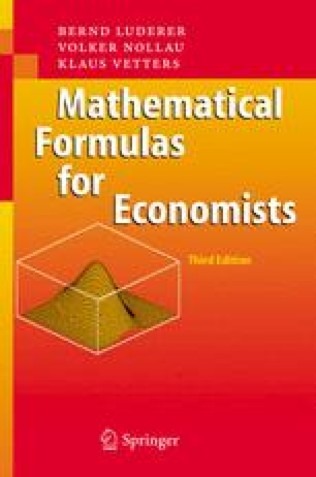
The present collection of formulas has been composed for students of economics or management science at universities, colleges and trade schools. It contains basic knowledge in mathematics, financial mathematics and statistics in a compact and clearly arranged form. This volume is meant to be a reference work to be used by students of undergraduate courses together with a textbook and by researchers in need of exact statements of mathematical results. People dealing with practical or applied problems will also find this collection to be an efficient and easy-to-use work of reference.

The implementation of material flow management offers enterprises a high potential for realizing new economic competitive advantages. The eco-efficient optimization of material flows aims at reducing costs while simultaneously achieving long-term sustainability with regard to ecological and societal aspects. Knowledge of existing methods and the latest trends is a key prerequisite for successfully implementing, refining and disseminating material flow management approaches.
Introduces new approaches that deploy concepts from Marx’s critique of political economy to renew the study of labour, value and social antagonisms in the broad area of management and organisation studies.

This book is entirely devoted to discrete time and provides a detailed introduction to the construction of the rigorous mathematical tools required for the evaluation of options in financial markets. Both theoretical and practical aspects are explored through multiple examples and exercises, for which complete solutions are provided. Particular attention is paid to the Cox, Ross and Rubinstein model in discrete time.
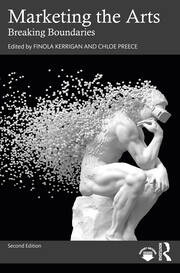
The importance of arts consumption and its socio-cultural, political, and economic dimensions The impact of new technologies, platforms, and alternative artforms on the art market The importance of the aesthetic experience itself and how to research it The value of arts-based methods The art versus commerce debate The artist as entrepreneur The role of the arts marketer as market-maker
Sheds light on marketing effectiveness and accountability marketing in small and medium-sized enterprises (SMEs). Using a multi-method investigation, it includes a knowledge inquiry of marketing knowledge and customer knowledge, a qualitative inquiry utilizing semi structured interviews and thematic data analysis, a quantitative analysis utilizing survey and structural equations modelling, and a case study that employs both narrative (storytelling) data analysis and an accountability audit with a techno marketing SME.
this work introduces its users to the fundamental knowledge that is indispensable in this complex and exciting field of Marketing. It has been compiled especially for first-degree students of Business Administration and Marketing who take an interest in the international aspects of these disciplines.The book gives an introduction to the generic issues of Marketing Communications as well as an overview of the information behaviour of targeted customer groups. The foundation laid in the initial chapters is followed up by more specific areas such as situational analysis and the development of communications strategies.
Offers a systemic approach to the integration of marketing and supply chain management. It examines the strategic connections and disconnections between supply chain and operations management and marketing by focusing on the factors that constitute the extended marketing mix, including product, price, promotion, people, and processes.
Offers something for everyone working with market segmentation: practical guidance for users of market segmentation solutions; organisational guidance on implementation issues; guidance for market researchers in charge of collecting suitable data; and guidance for data analysts with respect to the technical and statistical aspects of market segmentation analysis. Even market segmentation experts will find something new, including a vast array of useful visualisation techniques that make interpretation of market segments and selection of target segments easier. The book talks the reader through every single step, every single potential pitfall, and every single decision that needs to be made to ensure market segmentation analysis is conducted as well as possible. All calculations are accompanied not only with a detailed explanation, but also with R code that allows readers to replicate any aspect of what is being covered in the book using R, the open-source environment for statistical computing and graphics.
Market Momentum: It examines the behavioral and statistical causes of market momentum while also exploring the practical side of implementing related strategies. The phenomenon of momentum in finance occurs when past high returns are followed by subsequent high returns, and past low returns are followed by subsequent low returns. Market Momentum provides a detailed introduction to the financial topic, while examining existing literature.
Our underlying objectives are to contribute to the provision, mana- ment, and sharing of knowledge, and to enhance the value of knowledge and its uses by different constituencies in diverse contexts and at different stages of development. The central theme of this book, connecting its different parts, is about ways of transcending critical barriers to the effective uses of knowledge and e-networking. Of special relevance is the development of new approaches to the provision and transmission – from local sources to global networks and from global sources to local networks. In many ways, this is a book of theory and methods, as well as policy and performance.
Chapters provide a valuable frame of reference for the 21st-century manager of public services by assessing the renewal of existing practices such as strategic costing, performance management, digitization and procurement and innovations in management practices, including branding, Lean Management, resilience and risk management. The book suggests that, as the management of public services is imbued with financial, social, economic and political uncertainties, management needs to be flexible and responsive to new ideas and practices to fulfil its purpose. This book ultimately supports the reflective manager, those who think about their job and are open to new ideas on how their job can be done better, by revisiting existing practices and examining innovations in public management.
It still holds true: information is not always the answer. Information is often part of the problem. While the main goal of information in the business place is to - able adequate decisions and actions, it can also lead to numerous negative effects: it can confuse, block creativity, or it can lead to hectic activism, stress and fatigue. Information can distract and divert attention, and it may even delay important - cisions – the paralysis by analysis. Strategies to avoid these dysfunctional effects of information can be divided into sender-based strategies and receiver-based strategies.
"Managing Global Innovation is a rich compendium of new concepts of global R&D, enlivened by 18 excellent best-in-class case studies. What is especially impressive, the authors bridge seamlessly theoretical and practical issues about how companies create, transform and implement new technology in an expanding marketplace. This will be intriguing to both the industry and the academic world. The lessons learned are invaluable. The book is a real tour de force, probably destined to become a standard in this field for some time to come." Professor Jeff Huang, Harvard University "This excellent book demonstrates how the dynamics of innovation and creativity can be mastered. Important reading for senior management and a must for R&D leaders."

Collaboration of organizations reshapes traditional managerial practices and creates new inter-organizational contexts for strategy, coordination and control, information and knowledge management. Heralded as organizational forms of the future, networks are at the same time fragile and precarious organizational arrangements, which regularly fail. In order to investigate the new realities created by technology-enabled forms of network organizations and to address the emerging managerial challenges, this book introduces an integrative view on inter-firm network management. Centred on a network life cycle perspective, strategic, economic and relational facets of business networking are explored.

Within companies and organizations there is an increased emphasis on making different functional areas work together seamlessly. These developments have led to an increased emphasis on research and practice in business that integrate the functional areas within and between business entities. The research community has recognized the importance of addressing these different, and often conflicting, business perspectives. This has led to research streams that address issues characterizing the domain of business interfaces. These include the benefits of coordination, new product development, product portfolio management, supply chain coordination, and partnerships and collaboration in the Internet space.
Throughout the past decade, the phenomenon of technological convergence has increasingly gained managerial attention. In this special form of technological change, the coming-together of previously distinct knowledge bases gives rise to the creation of new applications and business models. When such innovations emerge at the intersection of industries, the resulting creative destruction may exceed previously established industry boundaries. As a consequence, convergence does not only promise the creation of new value, but may imply significant disruptions to established industries. Based on investigating 26 firms within the ICT industry, this book highlights implications of the convergence phenomenon on firms’ innovation management practices, and derives strategic guidelines for building and sustaining business models beyond blurring industry boundaries.
This textbook includes the most important management methods and tools. The author does not restrict himself to describing the scientific methods but also shows how to apply them to real-life situations. The management tools he introduces have been successfully tested during 20 years of experience. The various methods are described and analyzed in detail, and many examples illustrate their application. Thus, the textbook gives a fundamental and comprehensive insight into the practice of successful management. It is clearly structured and provides essential in-depth knowledge for students as well as for managers and consultants.
To support businesses managed through an organizational structure oriented by business processes, it is essential that the manager has a set of knowledge, technical skills, and professional demeanor. This text focuses on these aspects, presenting: a) the theoretical foundation, describing the central concepts of the M-B-BP approach; b) the set of necessary techniques from different areas, describing and exemplifying those skills; and c) the required behaviors of managers and employees for structuring, operation, management, and continuous improvement of the organization's business processes.

At a time when managers often provide fodder for unseemly headlines, and some are even compared unflatteringly with locusts, today’s business leaders are called upon as never before to demonstrate the moral justification for their activities, and to ensure that it is understood by all the key stakeholders of a company. What is required is nothing less than a management renaissance, based on a thoroughgoing concept of corporate leadership; there is no less a need for decision makers who hold themselves to the highest standards, with a positive perception of their fu- tion as agents of dissemination, and who are committed to the good not only of “their” firm, but also of society in general.

Daraa Highway - Ghabagheb - Syria
+963-15 2050 - 15 860 380 /1/2/3 - 11 662 3900