


Refine Results
Sort By
From
To

Written for the budding web developer searching for a powerful, low-cost solution for building flexible, dynamic web sites. Essentially three books in one: provides thorough introductions to the PHP language and the MySQL database, and shows you how these two technologies can be effectively integrated to build powerful websites. Provides over 500 code examples, including real-world tasks such as creating an auto-login feature, sending HTML-formatted e-mail, testing password guessability, and uploading files via a web interface. Updated for MySQL 5, includes new chapters introducing triggers, stored procedures, and views.
Learn to use the jOOQ library to manage SQL database operations in Java and JVM applications. This book walks you through what JOOQ is, how to install and get started with it, and then gets you working with it. You will: Comparing equivalent features between Hibernate, JPA and jOOQ. Unlock the power of your SQL database with high performing, flexible and typesafe SQL queries. Seamlessly work with many different SQL database vendors without changing your code. Effortlessly generate Java code based on the content of your database. Write reactive SQL database access code with R2DBC. Integrating jOOQ into popular frameworks and platforms like Hibernate, Spring boot and Quarkus tools like IDEs. Testing jOOQ-based code with modern integration testing frameworks like TestContainers and Docker. Learn how to safely handle data access code within frameworks like the Java Persistence API (JPA)
Shows you how to leverage IntelliJ’s tools to develop clean, efficient Java applications. The last portion of the book focuses on application testing and deployment, and language- and framework- specific guidelines. After reading this book and working through its freely available source code, you'll be up to speed with this powerful IDE for today's Java development. You will: Use IntelliJ IDEA to build Java applications / Set up your IDE and project / Work with source code / Extend your Java application to data science and other kinds of applications / Test and deploy your application and much more
Beginning Ajax with PHP: From Novice to Professional is the first book to introduce how these two popular technologies can work together to create next-generation applications. Author Lee Babin covers what you commonly encounter in daily web application development tasks.
The automotive industry has always been synonymous with research and innovation, but nowadays the industry is adding pressure and is establishing the agenda of the researchers from the field. Visions have been provided, and the hardware and the software exist; the only question remaining is: “who is going to deliver”? To answer this question, we encouraged scientists, researchers, industry specialists, and academics to share their vision of autonomous vehicles. What will the platform look like? What kind of hardware and software is most suitable? Who will make the connection between these two interdependent environments (and how), so that in the end the AI will define the process? These are the pressing issues of the current moment, and this Special Issue will help all those interested in the topic to promote their vision and ideas.
This book takes a look at fully automated, autonomous vehicles and discusses many open questions: How can autonomous vehicles be integrated into the current transportation system with diverse users and human drivers? Where do automated vehicles fall under current legal frameworks? What risks are associated with automation and how will society respond to these risks? How will the marketplace react to automated vehicles and what changes may be necessary for companies?
The field of healthcare is constantly evolving and advancing with new technologies and innovations. Among these, assistive technologies, robotics, and automated machines are rapidly gaining ground as powerful tools to improve the quality of care and enhance patient outcomes. From wearable devices that monitor vital signs to surgical robots that assist in complex procedures, these technologies have the potential to revolutionize the way we deliver healthcare. The development and the integration of assistive technologies, care robots, and automated machines are strategic both as single components, when paired together, and when interconnected in the health domain.This reprint explores the latest developments in assistive technologies, robotics, and automated machines in the health domain, providing a comprehensive overview of their applications and potential impact. The reprint is for the benefit of healthcare professionals, researchers, engineers, and students interested in these rapidly evolving fields.
This third edition of the successful Analysis and Design of Information Systems provides a comprehensive introduction and user-friendly survey to all aspects of business transformation and analysis, and aims to provide the complex set of tools covering all types of systems, including legacy, transactional, database, and web/e-commerce topics.
An Integrated Approach to Software Engineering introduces software engineering to advanced-level undergraduate and graduate students of computer science. It emphasizes a case-study approach whereby a project is developed through the course of the book, illustrating the different activities of software development. The sequence of chapters is essentially the same as the sequence of activities performed during a typical software project. All activities, including quality assurance and control activities, are described in each chapter as integral activities for that phase of development. Similarly, the author carefully introduces appropriate metrics for controlling and assessing the software process. Chapters in this revised edition, updated for today’s standards, include these new features: Software Process, Requirements Analysis and Specification, Software Architecture, Project Planning, Object Oriented Design, Coding,Testing,
Describes how to apply ICONIX Process (a minimal, use case-driven modeling process) in an agile software project. It's full of practical advice for avoiding common agile pitfalls. Further, the book defines a core agile subset so those of you who want to get agile need not spend years learning to do it. Instead, you can simply read this book and apply the core subset of techniques. The book follows a real-life .NET/C# project from inception and UML modeling, to working code through several iterations. You can then go on-line to compare the finished product with the initial set of use cases. The book also introduces several extensions to the core ICONIX Process, including combining test-driven development (TDD) with up-front design to maximize both approaches (with examples using Java and JUnit). And the book incorporates persona analysis to drive the projects goals and reduce requirements churn.
Flash allows users to create some amazing interactive interfaces to interact with rich Internet applications, e-learning systems, and simple web sites. In this book, two of the most talented Flash designers in the world will show you how to use them effectively to create breathtaking visuals for your Flash web sites. You'll also learn how to take advantage of Flash's powerful built-in vector-based drawing tools.
Offers a modern and accessible introduction to Statistical Inference, the science of inferring key information from data. Aimed at beginning undergraduate students in mathematics, it presents the concepts underpinning frequentist statistical theory. Written in a conversational and informal style, this concise text concentrates on ideas and concepts, with key theorems stated and proved. Detailed worked examples are included and each chapter ends with a set of exercises, with full solutions given at the back of the book. Examples using R are provided throughout the book, with a brief guide to the software included. Topics covered in the book include: sampling distributions, properties of estimators, confidence intervals, hypothesis testing, ANOVA, and fitting a straight line to paired data.
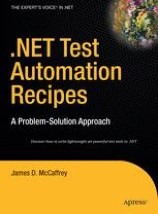
If you develop, test, or manage .NET software, you will find .NET Test Automation Recipes: A Problem-Solution Approach very useful. The book presents practical techniques for writing lightweight software test automation in a .NET environment and covers API testing thoroughly. It also discusses lightweight, custom Windows application user interface automation and teaches you low-level web application user interface automation. Additional material covers SQL stored procedure testing techniques.
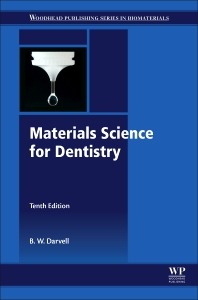
A standard resource for undergraduate and postgraduate courses in dentistry. It provides fundamental coverage of the materials on which dentistry depends, covering the structure and chemistry that govern the behavior and performance of materials. Particular classes of materials include gypsum, polymers, acrylic, cements, waxes, ceramics and metals. Other chapters review surfaces, corrosion, mixing, casting, cutting and bonding, and mechanical testing. This updated edition, which includes substantial chapters on chemistry, has been extensively revised with new material on temporary restoration resins, hydraulic silicate cements and the practical aspects of wetting surfaces. Mindfully written to provide explanations for behavior, formulation, clinical and laboratory instructions and procedures, there is no comparable resource for researchers, students, teachers and practitioners in the field of dentistry.
Pesents buildings developed using modular assembly approaches based on lightweight and corrosion-resistant fiber reinforced polymer (FRP) composites. Construction methods and the choice of building materials offer great opportunities for more productive and environmentally friendly solutions. This book includes valuable experimental data on large-scale structural components (beams, slabs, amd columns), connections (shear connections, wall stud connections, beam-column connections, column-column connections) and structures (composite floor system, structural sandwich assemblies, and full-scale structural demonstrations), supported with detailed numerical modelling and analytical methods.
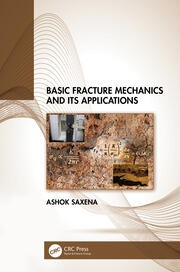
Presents specific aspects of how fracture mechanics is used to address fatigue crack growth, environment assisted cracking, and creep and creep-fatigue crack growth. Other topics include mixed-mode fracture and materials testing and selection for damage tolerant design, alongside in-depth discussions of ensuring structural integrity of components through real-world examples. There is a strong focus throughout the book on the practical applications of fracture mechanics. It provides a clear description of the theoretical aspects of fracture mechanics and also its limitations.
Offers a superb introduction to theoretical and practical soil mechanics. Special attention is given to the risks of failure in civil engineering, and themes covered include stresses in soils, groundwater flow, consolidation, testing of soils, and stability of slopes. The basic principles of applied mechanics, that are frequently used, are offered in the appendices. The author’s considerable experience of teaching soil mechanics is evident in the many features of the book: it is packed with supportive color illustrations, helpful examples and references.
Presents the most recent advances on testing and experimentation in civil engineering, especially in the branches of materials, structures, and buildings, complementing the authors’ publication Advances on Testing and Experimentation in Civil Engineering - Geotechnics, Transportation, Hydraulics and Natural Resources. It includes advances in physical modelling, monitoring techniques, data acquisition and analysis, and provides an invaluable contribution to the installation of new civil engineering experimental facilities.
This book provides an investor-friendly presentation of the premises and applications of the quantitative finance models governing investment in one asset class of publicly traded stocks, specifically real estate investment trusts (REITs). The models provide highly advanced analytics for REIT investment, including: portfolio optimization using both historic and predictive return estimation; model backtesting; a complete spectrum of risk assessment and management tools with an emphasis on early warning systems, risk budgeting, estimating tail risk, and factor analysis; derivative valuation; and incorporating ESG ratings into REIT investment.
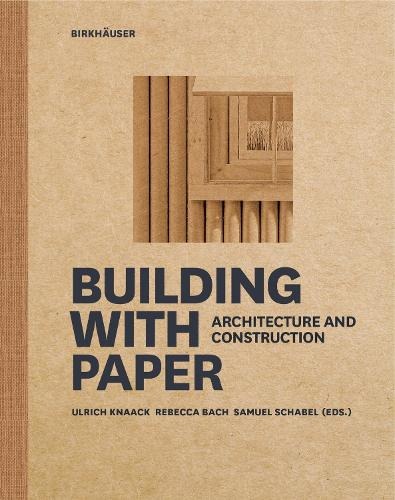
Paper and cardboard as sustainable building materials are currently the subject of research and testing in building practice. Properly protected from moisture and fire, the material proves to be strong and durable. This introduction explains the basics and the technology of building with cardboard and paper and shows a wide range of exciting examples.

Daraa Highway - Ghabagheb - Syria
+963-15 2050 - 15 860 380 /1/2/3 - 11 662 3900