


Refine Results
Sort By
From
To

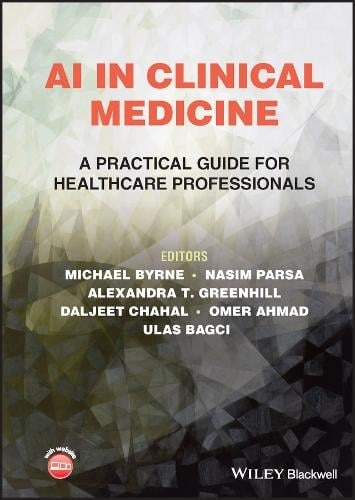
A Practical Guide for Healthcare Professionals is the definitive reference book for the emerging and exciting use of AI throughout clinical medicine. AI in Clinical Medicine: A Practical Guide for Healthcare Professionals is divided into four sections. Section 1 provides readers with the basic vocabulary that they require, a framework for AI, and highlights the importance of robust AI training for physicians. Section 2 reviews foundational ideas and concepts, including the history of AI. Section 3 explores how AI is applied to specific disciplines. Section 4 describes emerging trends, and applications of AI in medicine in the future.
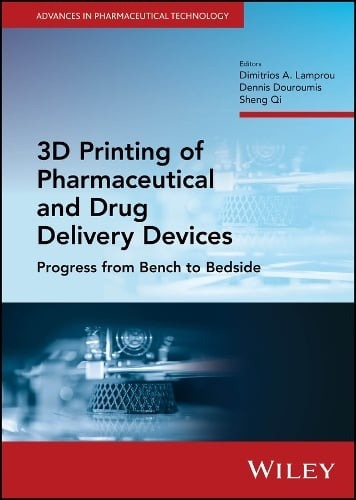
Discover the latest, fast-developing technology to help move towards more cost-effective, small-batch, decentralized manufacturing of personalized systems . 3D printing has revolutionized manufacturing. Its precision and flexibility have enabled the large-scale production of materials and devices too complex for conventional industrial manufacturing. This has been particularly revolutionary in the field of pharmaceutical production, where 3D printing is being integrated into the manufacture of both drugs and drug delivery devices. It has never been more important for industry professionals to understand this form of production.
Provides answers to key open questions concerning competition policy in emerging economies, with a focus on South Eastern Europe. The contributions address two major issues. One is the design of competition policy and the national competition authorities that enforce it, including the topics of competition advocacy and state aid control; the other is the use of economic methods in competition law enforcement, especially in the cases of relevant market definition and merger control. Many lessons learned in the countries of South Eastern Europe can be applied to the emerging markets of other regions. As such, the findings presented here will be highly relevant for officials and staff at national competition authorities, advisers to legislators shaping national competition policy, competition law professionals, and university students alike.

This book was finalized while countries around the world were still confronting a global public health crisis caused by the COVID-19 pandemic. Many came to rely on digital services as an infrastructure for social interaction and professional endeavors, including academic and educational work. The pandemic seems to have precipitated a further shift towards digital technologies and artificial intelligence. It is our hope that this book will contribute to an informed discussion about the relevance of and implications for international economic law beyond the pandemic"
This book considers the potential and limitations of the various mathematical approaches and thereby aims to give a balanced view of the usability of each mathematical approach. Written with both student and professional in mind, this book assists the reader in applying mathematical methods to solve practical problems that are relevant to software engineers. It is suitable for coursework or self-study and there is helpful material on tools to support the various mathematical approaches.
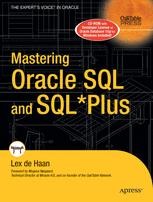
This exceptional book explains fundamentals in detail, supported by realistic examples, while most other books on the market do not properly cover such basics. If you work with relational databases you need to understand the SQL language. And you will gain full competence to define, access, and manipulate data in an Oracle database, if you do so following this book's guidance.
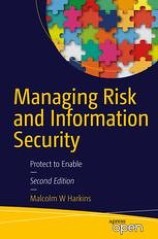
Examine the evolving enterprise security landscape and discover how to manage and survive risk. While based primarily on the author’s experience and insights at major companies where he has served as CISO and CSPO, the book also includes many examples from other well-known companies and provides guidance for a management-level audience. Managing Risk and Information Security provides thought leadership in the increasingly important area of enterprise information risk and security. It describes the changing risk environment and why a fresh approach to information security is needed. Because almost every aspect of an enterprise is now dependent on technology not only for internal operations but increasing as a part of product or service creation, the focus of IT security must shift from locking down assets to enabling the business while managing and surviving risk. This edition discusses business risk from a broader perspective, including privacy and regulatory considerations. It describes the increasing number of threats and vulnerabilities and offers strategies for developing solutions. These include discussions of how enterprises can take advantage of new and emerging technologies—such as social media and the huge proliferation of Internet-enabled devices—while minimizing risk.
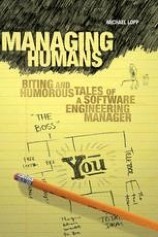
Managing Humans is a selection of the best essays from Michael Lopp's web site, Rands in Repose. Drawing on Lopp's management experiences at Apple, Netscape, Symantec, and Borland, this book is full of stories based on companies in the Silicon Valley where people have been known to yell at each other. It is a place full of dysfunctional bright people who are in an incredible hurry to find the next big thing so they can strike it rich and then do it all over again. Among these people are managers, a strange breed of people who through a mystical organizational ritual have been given power over your future and your bank account.
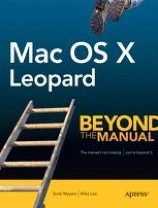
Good computer books make assumptions about the reader: what they do and don't know when they pick up the book, and what they want to know when they put it down. For each reader this could be very different; therefore, a book that suits one person may not be the best for another. Mac OS X Leopard: Beyond the Manual makes some assumptions too, ones that tend to differ from other Mac OS X books. First of all, we assume that you have used a computer in that past: that you know how to use a mouse and you know the proper place to stick a DVD to get it to play in your computer. We won't be showing you these things. (We will, however, demonstrate to our Mac converts how to “right click” on a trackpad with only one button!).
LOGICAL DATA MODELING: What It Is and How To Do IT is directed toward three groups of people: (1) Business subject matter experts, (2) information technology professionals, (3) advanced students in Computer Science, Management Information Systems, and e-Business. Its purpose is to outline the basics of logical data modeling—specifically, data modeling for relational database management systems—in simple, practical terms and in a business context. The focus on relational data modeling is consciously made because it is superior in modeling real business activities.
In development scenarios where things can't be run in a debugger, or when you run the risk of masking the problem, logs are the greatest source of information about running a program. Pro Apache Log4j, Second Edition provides best practices guidelines and comprehensive coverage of the most recent release. Step by step, the book explains core concepts, from basic to advanced. Code samples are in Java and include guidelines for different application-specific needs. You'll also learn how to extend the API to write custom components and best practices for using the feature-rich log4j API. This book concludes with enterprise Java applications using log4j with JSP and J2EE.
Every C# programmer needs to learn about LINQ (Language–Integrated Query), Microsoft's breakthrough technology for simplifying and unifying data access from any data source. With LINQ, you can write more elegant and flexible code—not just to access databases and files, but to manipulate data structures and XML. This book is a short, yet comprehensive guide to the major features of LINQ and the significant enhancements introduced with .NET 3.5. There is no better source for getting a head–start on the future of these technologies than this book.
LINQ for Visual C# 2005 is a short, yet comprehensive guide to the major features of LINQ. It thoroughly covers LINQ to Objects, LINQ to SQL, LINQ to DataSet, and LINQ to XML. It also details significant enhancements to C#, .NET, and ADO.NET.
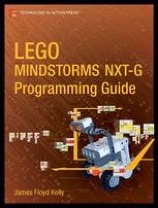
LEGO MINDSTORMS NXT-G Programming Guide provides programming techniques simple enough to be understood by young programmers, ages 10 and up, and provides a test robot (with instructions) in the appendix for running the programs
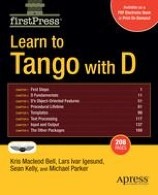
Learn to Tango with D introduces you to the powerful D language, with special attention given to the Tango software library. A concise yet thorough overview of the language's syntax and features is presented, followed by an introduction to Tango, the popular general–purpose library you'll find invaluable when building your D applications.
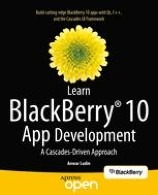
Learn how to leverage the BlackBerry 10 Cascades framework to create rich native applications. Learn BlackBerry 10 App Development gives you a solid foundation for creating BlackBerry 10 apps efficiently. Along the way, you will learn how to use QML and JavaScript for designing your app’s UI, and C++/Qt for the application logic. No prior knowledge of C++ is assumed and the book covers the fundamental aspects of the language for writing BlackBerry 10 apps. Also a particular emphasis is put on how to create a visually enticing user experience with the Cascades framework, which is based on Qt and QML.
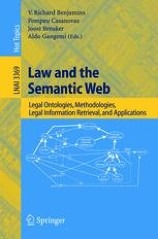
As part of this objective, ICT (information and communication technologies) services should become available for every citizen, and for all schools, homes and businesses. The book you have in front of you is about Semantic Web technology and law. Law is something omnipresent; all citizens — at some points in their lives — have to deal with it. In addition, law involves a large group of professionals, and is a mul- billion business world wide. Information technology is important because it that can improve citizens’ interaction with law, as well as improve legal professionals’ work environment. Legal professionals dedicate a significant amount of their time to finding, reading, analyzing and synthesizing information in order to take decisions, and prepare advice and trials, among other tasks. As part of the “Semantic-Based Knowledge and Content Systems” Strategic Objective, the European Commission is funding projects to construct technology to make the Semantic Web vision come true. 1 The articles in this book are related to two current foci of the Strategic Objective : • Knowledge acquisition and modelling, capturing knowledge from raw information and multimedia content in webs and other distributed repositories to turn poorly structured information into machi- processable knowledge.
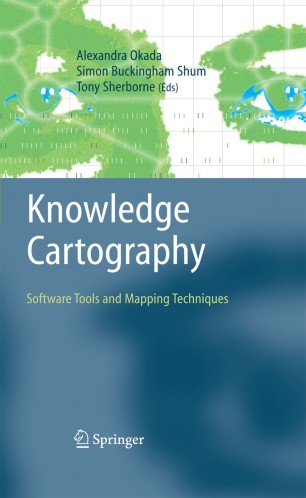
The authors see mapping software as a set of visual tools for reading and writing in a networked age. In an information ocean, the primary challenge is to find meaningful patterns around which we can weave plausible narratives. Maps of concepts, discussions and arguments make the connections between ideas tangible and disputable.With 17 chapters from the leading researchers and practitioners, the reader will find the current state–of-the-art in the field. Part 1 focuses on educational applications in schools and universities, before Part 2 turns to applications in professional communities.
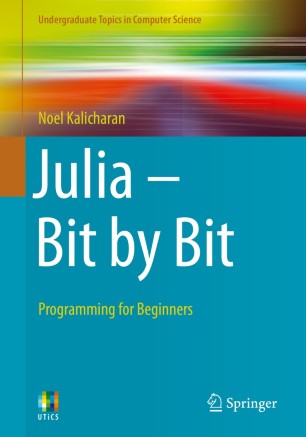
The main goal of this book is to teach fundamental programming principles to beginners using Julia, one of the fastest growing programming languages today. Julia can be classified as a "modern" language, possessing many features not available in more popular languages like C and Java.
JDBC Recipes provides easy-to-implement, usable solutions to problems in relational databases that use JDBC. You will be able to integrate these solutions into your web-based applications, such as Java servlets, JavaServer Pages, and Java server-side frameworks. This handy book allows you to cut and paste the solutions without any code changes. This book focuses on topics that have been ignored in most other JDBC books, such as database and result set metadata. It will help you develop database solutions, like adapters, connectors, and frameworks using Java/JDBC. The insightful solutions will enable you to handle all data types, including large binary objects. A unique feature of the book is that it presents JDBC solutions (result sets) in XML.

Daraa Highway - Ghabagheb - Syria
+963-15 2050 - 15 860 380 /1/2/3 - 11 662 3900