


Refine Results
Sort By
From
To

Many times all of us could hear from mass media that an asteroid approached and swept past the Earth. Such an asteroid or comet will inevitably strike the planet some day. This volume considers hazards due to collisions with cosmic objects, particularly in light of recent investigations of impacts by the authors. Each chapter written by an expert contains an overview of an aspect and new findings in the field. The main hazardous effects – cratering, shock, aerial and seismic waves, fires, ejection of dust and soot, tsunami are described and numerically estimated. Numerical simulations of impacts and impact consequences have received much attention in the book. Fairly small impacting objects 50 -100 m in diameter pose a real threat to humanity and their influence on the atmosphere and ionosphere is emphasized.
Plants play a key role in purifying the biosphere of the toxic effects of industrial activity. This book shows how systematic application of the results of investigations into the metabolism of xenobiotics (foreign, often toxic substances) in plants could make a vastly increased contribution to planetary well-being. Deep physiological knowledge gained from an accumulation of experimental data enables the great differences between the detoxifying abilities of different plants for compounds of different chemical nature to be optimally exploited. Hence planting could be far more systematically adapted to actual environmental needs than is actually the case at present.
this book offers a comprehensive and state of the art analysis of aerodynamic and flight mechanic entry topics. In addition, it provides a large set of application exercises and solutions. It is addressed to university and engineering school students, as well as engineers in aerospace companies and government agencies, or simply curious readers.
This collection of peer reviewed papers represents a concise, up-to-date summary of our current knowledge of planetary boundary layer (PBL) physics and parameterization. As such, it makes a major contribution to the interchange of knowledge and ideas between physicists, meteorologists and environmental modellers and sets out the course to be followed in subsequent research to improve PBL parameterizations in climate, numerical weather prediction, air quality, and emergency preparedness models. Major themes covered are: Nature and theory of turbulent boundary layers, Boundary layer flows - modelling and applications to environmental security, Nature, theory and modelling of boundary-layer flows, and Air flows within and above urban and other complex canopies - air-sea-ice interactions.
"Astrophysics Updates" is intended to serve the information needs of professional astronomers and postgraduate students about areas of astronomy, astrophysics and cosmology that are rich and active research spheres. Observational methods and the latest results of astronomical research are presented as well as their theoretical foundations and interrelations. The contributed commissioned articles are written by leading exponents in a format that will appeal to professional astronomers and astrophysicists who are interested in topics outside their own specific areas of research. This collection of timely reviews may also attract the interest of advanced amateur astronomers seeking scientifically rigorous coverage.
For a quantitative understanding of the physics of the universe - from the solar system through the milky way to clusters of galaxies all the way to cosmology - these edited lecture notes are perhaps among the most concise and also among the most critical ones: Astrophysics has not yet stood the redundancy test of laboratory physics, hence should be wary of early interpretations. Special chapters are devoted to magnetic and radiation processes, supernovae, disks, black-hole candidacy, bipolar flows, cosmic rays, gamma-ray bursts, image distortions, and special sources. At the same time, planet earth is viewed as the arena for life, with plants and animals having evolved to homo sapiens during cosmic time. -- This text is unique in covering the basic qualitative and quantitative tools, formulae as well as numbers, needed for the precise interpretation of frontline phenomena in astrophysical research. The author compares mainstream interpretations with new and even controversial ones he wishes to emphasize.
Here is a one-volume guide to just about everything computer-related for amateur astronomers!Today’s amateur astronomy is inextricably linked to personal computers. Computer-controlled "go-to" telescopes are inexpensive. CCD and webcam imaging make intensive use of the technology for capturing and processing images. Planetarium software provides information and an easy interface for telescopes. The Internet offers links to other astronomers, information, and software. The list goes on and on.
At some time we have all gazed through the telescope eyepiece at the magnificent rings and banded globe of Saturn, or seen long shadows reaching across crater floors at the Moon’s terminator – and wondered at the sheer beauty of the sight. It seems almost anachronistic to think of sketching when CCD imaging is available, but astronomical sketching provides an entirely different and deeply personal experience. It means spending time at the eyepiece to really look at what you can see, training your eye to perceive ever greater detail to take the fullest advantage of your telescope's light grasp and resolution.
Astrobiology, a new exciting interdisciplinary research field, seeks to unravel the origin and evolution of life wherever it might exist in the Universe. The current view of the origin of life on Earth is that it is strongly connected to the origin and evolution of our planet and, indeed, of the Universe as a whole. We are fortunate to be living in an era where centuries of speculation about the two ancient and fundamental problems: the origin of life and its prevalence in the Universe are being replaced by experimental science. The subject of Astrobiology can be approached from many different perspectives. This book is focused on abiogenic organic matter from the viewpoint of astronomy and planetary science and considers its potential relevance to the origins of life on Earth and elsewhere. Guided by the review papers in this book, the concluding chapter aims to identify key questions to motivate future research and stimulate astrobiological applications of current and future research facilities and space missions. Today’s rich array of new spacecraft, telescopes and dedicated scientists promises a steady flow of discoveries and insights that will ultimately lead us to the answers we seek.
Environmental issues continued to loom large in the last decade of the twentieth century,especially environmental problems related to rising levels of CO emissions and 2 other greenhouse gases on the planet’s average temperatures and, subsequently, storm patterns. Floods and droughts, in combination with unseasonably high and low temperatures became the norm rather than the exception for large expanses of Africa,Asia and Oceania. Even large areas of Europe and NorthAmerica were s- jected to recurrent floods and droughts and experienced unseasonable extremes of hot and cold temperatures associated with man-made intrusions into the natural environment. And, still, a global plan of action to haltman-related patterns of def- estation, desertification, and over-fishing of the seas has yet to come into being. At the same time, the number of regional conflicts and civil wars increased and, with them, the lives of many women, children, old people and other n- combatants were lost in these conflicts.
This volume is a compilation of articles that summarize the most recent results in meteor, meteoroid and related fields presented at the Meteoroids 2007 conference held at the impressive CosmoCaixa Science Museum in Barcelona, Spain. The conference took place between the 11th and the 15th of June and was organized by the Institute of Space Sciences (Consejo Superior de Investigaciones Científicas, CSIC) and the Institut d'Estudis Espacials de Catalunya (IEEC). Researchers in meteor science and supporting fields representing more than 20 countries participated at this international conference.
This book shines a light on how and why academic work became entwined with air travel, and what can be done to change academia’s flying habit. The starting point of the book is that flying is only one means of scholarly communication among many, and that the state of the planet now obliges us to shift to other means.
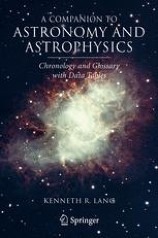
Astronomy and Astrophysics is a comprehensive, fundamental, up-to-date reference book. It is filled with vital information and basic facts for amateur astronomers and professional astrophysicists, and for anyone interested in the Universe, from the Earth and other planets to the stars, galaxies and beyond. Although serious and thorough, the language, and ideas will attract the general reader, as well as students and professionals. Astronomy and Astrophysics consists of two main parts, a Timeline and a Dictionary. The Timeline is a concise history, arranged chronologically, which provides the complete story of cosmic discovery from early Chinese and Greek astronomy to the latest findings of modern astrophysics and robotic spacecraft.

Daraa Highway - Ghabagheb - Syria
+963-15 2050 - 15 860 380 /1/2/3 - 11 662 3900