


Refine Results
Sort By
From
To

With the spread of multidetector row CT (MDCT), virtual colonography (VC) is establishing itself as a new, proven alternative radiological method in the diagnosis of intestinal polyps and colorectal cancer. VC is already considered the first-line examination for identifying synchronous tumor lesions in patients with colorectal cancers that cannot be penetrated by endoscope, simultaneously providing accurate staging of malignant lesions. Its minimally invasive nature makes VC a valid alternative to pancolonoscopy, even in the detection of intestinal polyps, and provides the basis for interesting developments regarding future applications in screening programs. The text, aimed at radiologists who are approaching the method, radiology technicians and doctors involved in the diagnostic and therapeutic process of colorectal pathology, indicates the advantages of the normal method, the normal method with fourteen chondrii, the normal method with fourteen chondrii, the pathological method with fourteen chondrii indications.

Book has focused on the broad structural investigation of the anorectum and on the focused management of largely “functional” problems. And it has done so in style. For this is a core area of specialist practice;your more general colleagues may think twice before referring you new cases of cancer and in?ammatory bowel disease (both also central areas in colorectal surgery), but they will not hesitate in referring the patients whose inves- gation and management are described here. And they will expect you to know how to deal with them. These are some of the most challenging patients to manage. Rightly have the editors covered the physiological areas,rightly the psychological issues, rightly the medicolegal aspects: here is the making of a specialist—the sword and the shield.
Community-acquired pneumonia (CAP) is a disease associated with high morbidity and mortality, with at least one third of cases requiring hospitalization, exceeding the numbers admitted for myocardial infarction and stroke. Despite a broad armamentarium of antimicrobials available, it remains an important cause of death in industrialized countries. CAP is caused by a variety of pathogens with their order of importance dependent on the location and population studied. Despite the importance of CAP, reliable data and a recommended evidence-based therapy are lacking, and basic research must be improved. The goal of this volume is to present state-of-the-art knowledge on epidemiology, clinical presentation, immunology, pathology, and diagnosis including the identification of "new pathogens". Therapeutic approaches, antibiotics resistance, disease management and vaccination strategies are also covered. The volume is of interest to researchers and clinicians in virology, epidemiology and biomedicine.
Combines data from human embryology, animal research and developmental neuropathology. This book provides an overview of the development of the human Central Nervous System (CNS) in the context of its many developmental disorders due to genetic, environmental and hypoxic causes. It highlights numerous clinical cases and contains over 400 figures.
Clinical Chemistry considers what happens to the body’s chemistry when affected by disease. It provides introductory coverage of the scientific basis for biochemistry tests routinely used in medicine - including tests for the assessment of organ function, diagnosis and monitoring disease activity and therapy efficacy. Each topic area begins with a concise description of the underlying physiological and biochemical principles and then applies them to patient investigation and management. The regular use of case histories helps further emphasise clinical relevance and chapter key points, as well as provide a useful starting point for examination revision.
MRI has become the preferred noninvasive imaging modality for the heart and great vessels. The substantial technological progress achieved in recent years has provided the user with state of the art MRI systems, but their optimal use can be limited by restricted awareness of the potential patient benefit and the necessity for teaching. This extensively illustrated volume, has been specifically compiled to meet these needs. Essential theoretical background information is provided, and imaging acquisition and potential pitfalls are considered in detail. Most importantly, structured guidelines are provided on the interpretation of clinical data in the wide range of cardiac pathology that can be encountered. Throughout, the emphasis is on the implementation of cardiac MRI in clinical practice.
This comprehensive volume, written by experts in the field, provides a current understanding of the molecular properties of the heat shock proteins and their roles in health and disease. Cell Stress Proteins includes advances in several aspects of stress protein research, with chapters ranging from basic studies of the role of heat shock proteins in protein folding to reviews examining the breakdown of stress protein regulation during disease. It also provides analysis of the biochemical and molecular properties of heat shock proteins which can be utilized in evaluating their role in human physiology and pathology. Cell Stress Proteins is an ideal book for researchers, clinicians, physicians, and graduate students in the fields of biochemistry, cell biology, microbiology, immunology, and genetics.
Cryopreserved allograft tissues are now standard materials for the reconstructive cardiac surgeon. Since publication of the first edition ("Cardiac Reconstructions with Allograft Valves") in 1989, the field has progressed dramatically with increased clinical use of cardiovascular allograft tissues, with the development of new surgical techniques, and with advances in the understanding of the fundamentals of valve transplantation biology and cryopreservation. As a result, over two-thirds of the present volume represents new material. Fifty-six authors bring their expertise to thirteen comprehensive, lavishly illustrated sections which discuss the principles of the use of homograft valves, major clinical series of homograft valves for both left and right ventricular outflow tracts, cryopreserved allograft tissue for cardiac reconstruction, cell biology of heart valve leaflets, cryobiology of heart valve preservation, morphological, biochemical, and explant pathology studies of allograft heart valves, allograft valve banking, as well as detailed explanation of surgical techniques for valve and root methods for left and right ventricular outflow tract reconstructions, the Ross operation and variants, and complex reconstructions. A final section presents potential future directions for the field. Over 400 illustrations, created expressly for this book, depict the surgical techniques from the perspective of the surgeon standing at the operating table.

Cancer Grading Manual addresses all histopathologic aspects of tumor pathology essential for grading of tumors. It discusses the history and basic tenets of tumor grading; principles of microscopic grading of tumors; ancillary methods currently used to improve tumor grading; and new techniques used in evaluating tumors and formulating prognosis. It is designed to be a practice-oriented, concise and well-illustrated resource for diagnostic surgical pathologists and pathology residents.
Testicular cancer has benefited from important therapeutic advances radically transforming its prognosis. Recent protocols have led to the development of treatments that maintain therapeutic efficacy while favoring quality of life and minimizing the sequelae (such as fertility disorders) in these often young men. This book discusses the various technical advances both in the field of diagnosis - with the contribution of modern imaging and anatomopathology - and therapy. The place of chemotherapy as well as that of surgery are largely detailed, thus placing the urologist at the heart of the multidisciplinary team taking care of these patients. Quality of life is also discussed by taking into account the impact of the treatment of these tumors on the fertility of these young patients.
These days are an opportunity to remind and persuade those less convinced that the treatment of this very particular phase of the disease is not limited to a score played by a few speakers or even by medical oncologists alone; but on the contrary, we must bring into play a truly philharmonic polyphonic ensemble, united around the patient and comprising all the players in multidisciplinary care: general practitioner, surgeon, radiotherapist, imaging specialist, gynecologist, general practitioner, psychologist, algologist, supportive care workers ...
This topic is a new entry in the area of cellular calcium signaling: yet, it now spans the entire area, with discoveries that cover both genetic and acquired pathologies, even offering glimpses in the direction of therapy.Cellular calcium homeostasis, and thus calcium signalling, is mainly regulated by membrane intrinsic proteins and calcium sensor proteins. Both classes may be involved in pathological processes that affect both human and animals, ranging from common and important diseases (e.g. migraine, diabetes, epilepsia, manic depression, infertility, various types of cancer, Alzheimer’s disease, muscular dystrophy) to rare genetic conditions (e.g., a number of genetic heart conditions, autoimmune retinopathies, night blindness, hereditary amyloid polyneuropathy, malignant hyperthermia, cerebellar ataxia, atherothrombotic disease).
Breast Cytopathology by Syed Ali, MD and Anil Parwani, MD will fulfill the need for an easy-to-use and authoritative synopsis of breast cytopathology. This volume, part of the Essentials in Cytopathology book series, fits into the lab coat pocket and is ideal for portability and quick reference. Each volume in the series is heavily illustrated with a full color art program, while the text follows a user-friendly outline format.

This book highlights M. D. Anderson Cancer Center’s multidisciplinary approach and reviews the entire spectrum of patient care, from prevention and screening through diagnosis and treatment through posttreatment follow-up and survivorship issues.

Since Bailey and Cushing (1926), all brain tumor classifications have been called histogenetic. The nosographic position that the tumor types progressively acquired in the classification systems derived from the resemblance of tumor cells to those of the cytogenesis, modified whenever new information became available from different biological research fields and especially from molecular genetics. Classically, on the basis of the rough correspondence between the mature/immature aspect of tumor cells and the benign/malignant biological behavior of the tumors, the histological labels contained a prognostic significance. The supposed origin of the tumors was thus a factor for prognosis. Later on, with the concept of anaplasia (Cox, 1933; Kernohan et al., 1949) new criteria were introduced for establishing the malignancy grades of tumors. Immunohistochemistry and later molecular genetics further refined the prognostic diagnoses, substantially increasing the opportunities to recognize the cell origin of tumors, beside revealing the pathogenetic mechanisms. Prognoses became more accurate, as required by the greater and more targeted possibilities of therapy.

Despite the increasing awareness that neural mechanisms are the primary cause of cardiac disease and its progression, therapy continues to focus on end-organ protection and does not approach the neural core of the problem. Growing public health problems such as heart failure are still treated with autonomic drugs that are 30-40 years old and simply act on cardiac receptors. However, it has now been shown that the progression of ischemic heart disease to heart failure is mainly due to abnormal central responses to incipient cardiac disease, with neural activation the primary cause rather than the consequence of cardiac remodeling.
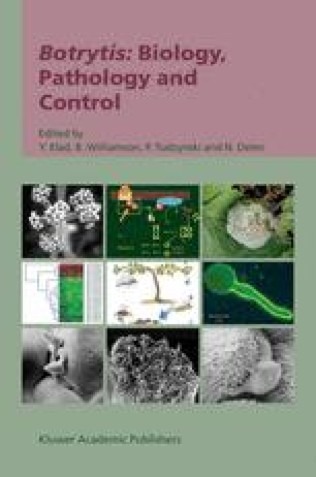
The book is the result of intensive work of 43 authors, all of them leading scientists in the Botrytis sciences. New technologies have arisen that when applied to long-standing problems or to test new hypotheses have been most rewarding and many of these are covered in this book.
Bone Resorption, the second volume in the series Topics in Bone Biology, deals with the osteoclast, the bone-resorbing cell, its origins, its enzymes, the regulation of osteoclast activity, and structural aspects of bone resorption. Diseases involving osteoclast function are discussed from the genetic viewpoint in two chapters that span transgenic mouse models to human pathology. Another chapter treats diseases of osteoclast function. Because osteoporosis may be considered a disease in which the bone resorption rate exceeds formation, a separate chapter deals with current and potential therapeutic approaches to this widespread disease that affects both men and women. Bone metastases and an analysis of the central role of the osteoclast in this condition are treated in the concluding chapter.
Aims to build a new generation of experts with a broader understanding of key topics in the Alzheimer’s disease field. Chapters guide readers through innovative approaches to the discovery of novel biomarkers in cerebrospinal fluid, innovation in blood-based biomarkers, a comprehensive overview of magnetic resonance imaging and molecular imaging approaches and their value for developing drugs for Alzheimer’s disease, cutting-edge developments in neuropathology and their relevance for Alzheimer’s disease trials, novel genomic strategies for biomarker development, and related topics including neuropsychological testing and advanced analytical methods.Written in the highly successful Methods in Molecular Biology series format, chapters include introductions to their respective topics, lists of the necessary materials and reagents, step-by-step, readily reproducible laboratory protocols, and tips on troubleshooting and avoiding known pitfalls.

This book presents a comprehensive account of all aspects of biological invasions in South Africa, where research has been conducted over more than three decades, and where bold initiatives have been implemented in attempts to control invasions and to reduce their ecological, economic and social effects.

Daraa Highway - Ghabagheb - Syria
+963-15 2050 - 15 860 380 /1/2/3 - 11 662 3900