


Refine Results
Sort By
From
To


It is well known that corrosion products, i.e. rust, on iron and steel surfaces cannot be assigned a typical crystallographic structure with long-range order. In fact, the structure of rust is considered to be very complicated, and some forms of rust are assigned to the amorphous state for this reason. Accurate information about the atomic-scale structure of rust is important to shed light on corrosion mechanisms of metallic materials. And, since life of steel structures is often dominated by environmental degradation or corrosion of the surface, the structure of the rust formed on iron and steel surfaces during prolonged exposure to air is of great interest. This book describes the fundamental aspects of materials characterization for the ferric oxyhydroxides formed on steel surfaces.

Cathodic Arcs: From Fractal Spots to Energetic Condensation is the first book in over a decade dedicated to the physics and technology of cathodic arcs. It includes a detailed account of arc history, a textbook-like introduction to cathode phenomena, and some basic physics of expanding plasmas; it deals with the infamous macroparticle issue and describes a host of practical plasma filter solutions. In contrast to previous books on cathodic arcs, the focus is on the relation of arc plasmas and their properties to surface modification and thin film deposition. The book contains sections on basic plasma physics and thin film materials science. It also deals with practical issues of coatings such as stress control and the often-underrated issue of the coating’s color. By stressing the fractal nature of cathode spots, the theme of fluctuations can be found throughout the book: fluctuations affect all plasma properties and thereby have consequences for plasma-based surface modifications and film growth.

Lays out a vision for a coherent framework for understanding complex systems'' (from the foreword by J. Doyne Farmer). By developing the genuine idea of Brownian agents, the author combines concepts from informatics, such as multiagent systems, with approaches of statistical many-particle physics. This way, an efficient method for computer simulations of complex systems is developed which is also accessible to analytical investigations and quantitative predictions. The book demonstrates that Brownian agent models can be successfully applied in many different contexts, ranging from physicochemical pattern formation, to active motion and swarming in biological systems, to self-assembling of networks, evolutionary optimization, urban growth, economic agglomeration and even social systems.
This treatise covers all aspects of the design and the daily operations of a beam diagnostic system for a large particle accelerator. A very interdisciplinary field, it involves contributions from physicists, electrical and mechanical engineers and computer experts alike so as to satisfy the ever-increasing demands for beam parameter variability for a vast range of operation modi and particles. The author draws upon 40 years of research and work, most of them spent as the head of the beam diagnostics group at GSI. He has illustrated the more theoretical aspects with many real-life examples that will provide beam instrumentation designers with ideas and tools for their work.
Axions are peculiar hypothetical particles that could both solve the CP problem of quantum chromodynamics and at the same time account for the dark matter of the universe. Based on a series of lectures by world experts in this field held at CERN (Geneva), this volume provides a pedagogical introduction to the theory, cosmology and astrophysics of these fascinating particles and gives an up-to-date account of the status and prospect of ongoing and planned experimental searches. Learners and practitioners of astroparticle physics will find in this book both a concise introduction and a current reference work to a showcase topic that connects the "inner space" of the elementary particle world with the "outer space" of the universe at large.
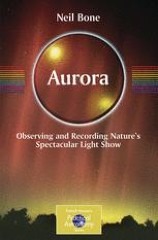
The uniquely beautiful light display of an aurora is the result of charged particles colliding with tenuous atmospheric oxygen and nitrogen, more than 60 miles above the Earth, when the magnetosphere is disturbed by changes in the solar wind. Often - and incorrectly - regarded as being confined to high northern and southern latitudes, major auroral displays are visible from even the southern USA and the south of England, and occur perhaps twenty times in each eleven-year sunspot cycle. This book describes the aurora from the amateur observational viewpoint, discusses professional studies of auroral and geomagnetic phenomena to put amateur work in context, and explains how practical observers can go about observing and recording auroral displays.
This introduction to Atomic and Molecular Physics explains how our present model of atoms and molecules has been developed over the last two centuries both by many experimental discoveries and, from the theoretical side, by the introduction of quantum physics to the adequate description of micro-particles. It illustrates the wave model of particles by many examples and shows the limits of classical description. The interaction of electromagnetic radiation with atoms and molecules and its potential for spectroscopy is outlined in more detail and in particular lasers as modern spectroscopic tools are discussed more thoroughly. Many examples and problems with solutions are offered to encourage readers to actively engage in experimentation.
This volume of Topics in Current Chemistry presents an overview of atomistic theoreticalmethodsapplied tomolecular biologicalsystems. Itthus repesents abottom-upview of chemistryonbiologyfroma theoreticalperspective. The chapters arearrangedsuchthat important issuesareconsidered startingfrom a quantum mechanical perspective and proceeding to a molecular mechanics and molecular dynamics descriptiono fthemotionoftheelementaryparticles involved.which are responsible for the properties and function of biomolecules. Depending on the length and time scales relevant for a given phenomenon to be investigated, tailored theoretical methods are required to account for these. If one is interested in large scale motions of molecules, a molecul- mechnanics-based description willbeappropriate.
Atomic Spectroscopy provides a comprehensive discussion on the general approach to the theory of atomic spectra, based on the use of the Lagrangian canonical formalism. This approach is developed and applied to explain the hydrogenic hyperfine structure associated with the nucleus motion, its finite mass, and spin. The non-relativistic or relativistic, spin or spin-free particle approximations can be used as a starting point of general approach. The special attention is paid to the theory of Lamb shift formation. The formulae for hydrogenic spectrum including the account of Lamb shift are written in simple analytical form. The book is of interest to specialists, graduate and postgraduate students, who are involved into the experimental and theoretical research in the field of modern atomic spectroscopy.
An increasing interest in studies of atmospheric aerosols in the context of their impact on the formation of climate, heterogeneous chemical reactions in the atmosphere affecting in particular the environmental quality, problems of visibility and human health is the cause of unusual scales of developments connected with studies of atmospheric aerosols. The necessity has arisen to analyze the latest results concerning, first of all, three aspects of the problems considered: 1. aerosol properties from data of complex field observational experiment; 2. processes of aerosol formation and interaction of aerosol with clouds, 3. aerosol as a climate-forming atmospheric component (including the problem of long-range transport). The monograph in hand is dedicated mainly to the problems of the impact of aerosol on climate processes in the atmosphere, from microphysical processes of formation and evolution of aerosol properties to the formation of macro-scale cloud sytems on aerosol particles.
The book describes the branch of astrophysics in which processes in the universe are investigated with experimental methods known from particle physics experiments. After a historical introduction to the basics of elementary particles, their interactions and the relevant detection techniques are described. The main body of the book concerns cosmic rays. The modern aspects of astroparticle physics are described in a chapter on cosmology. The book provides an orientation in the field of astroparticle physics that many beginners might look for. The physics issues are presented with little mathematics, and the results are illustrated by many diagrams. The reader has a chance to enter this field of astrophysics with a book that closes the gap between expert and popular level.
This book presents a comprehensive collection of 21 contributions from leading scientists in this field covering a broad spectrum of topics and presenting recent progress concerning instrumentation, data analysis and modeling, biological systems, particles, colloids, synthetic macromolecules, interacting systems. Due to the versatility of this fascinating and powerful technique, information and original publications are widespread and comprehensive collections are rare. Therefore, this volume presents a valuable source for biologists, chemists, materials scientists, and physicists interested in most recent information, results and development related to this important analytical method.

Analytical ultracentrifugation (AUC) is a powerful method for the characterization of polymers, biopolymers, polyelectrolytes, nanoparticles, dispersions, and other colloidal systems. The method is able to determine the molar mass, the particle size, the particle density and interaction parameters like virial coefficients and association constants. Because AUC is also a fractionation method, the determination of the molar mass distribution, the particle size distribution, and the particle density distribution is possible. A special technique, the density gradient method, allows fractionating heterogeneous samples according to their chemical nature that means being able to detect chemical heterogeneity.
The geometric interpretation of gravitation is one of the major foundations of modern theoretical physics. This primer introduces classical general relativity with emphasis on the clarity of conceptual structure and on the basic mathematical methods to build up systematically application skills. The wealth of physical phenomena entailed by the Einstein‘s equations is revealed with the help of specific models describing gravitomagnetism, gravitational waves, cosmology, gravitational collapse and black holes. End-of-chapter exercises complete the main text.
This book is introduction to the theory of continuous-time stochastic processes. A balance of theory and applications, the work features concrete examples of modeling real-world problems from biology, medicine, industrial applications, finance, and insurance using stochastic methods. No previous knowledge of stochastic processes is required. Key topics covered include: * Interacting particles and agent-based models: from polymers to ants * Population dynamics: from birth and death processes to epidemics * Financial market models: the non-arbitrage principle * Contingent claim valuation models: the risk-neutral valuation theory * Risk analysis in insurance

The book summarizes international progress over the last few decades in upper atmosphere airglow research. Measurement methods, theoretical concepts and empirical models of a wide spectrum of upper atmospheric emissions and their variability are considered. The book contains a detailed bibliography of studies related to the upper atmosphere airglow.
Provides a comprehensive review of available techniques for the remote sensing of aerosols. Although mostly satellite remote sensing is considered, ground-based techniques are also discussed.describes techniques for the determination of the column concentration of aerosol particles and their optical sizing using spaceborne optical instrumentation. The majority of the techniques described in this book use a so-called "library method". This method relies upon the precalculated top-of-atmosphere reflectances (TOAR) for vaious atmospheric aerosol types. The comparison of measured and calculated TOARS allows one to characterize the optically-equivalent aerosol state.
The present volume 47 of the Advances in Solid State Physics contains the written version of a large number of the invited talks of the 2007 Spring Meeting of the Arbeitskreis Festkörperphysik which was held in Regensburg, Germany, from March 26 to 30, 2007 in conjunction with the 71st Annual Meeting of the Deutsche Physikalische Gesellschaft.It gives an overview of the present status of solid state physics where low-dimensional systems such as quantum dots and quantum wires are dominating. The importance of magnetic materials is reflected by the large number of contributions in the part dealing with ferromagnetic films and particles. One of the most exciting achievements of the last couple of years is the successful application of electrical contacts to and the investigation of single layers of graphene.

Many topical talks given at the numerous symposia are included. Most of these were organized collaboratively by several of the divisions of the Arbeitskreis. The topis range from zero-dimensional physics in quantum dots, molecules and nanoparticles over one-dimensional physics in nanowires and 1d systems to more applied subjects like optoelectronics and materials science in thin films.
Investigate and to teach quantum mechanics with the aid of computer-generated animations. It is a self-contained textbook that combines selected topics from atomic physics (spherical symmetry, the hydrogen atom, and particles with spin) with an introduction to quantum information theory (qubits, EPR paradox, teleportation, quantum computers). It explores relativistic quantum mechanics and the strange behavior of Dirac equation solutions. A series of appendices covers important topics from perturbation and scattering theory. The book places an emphasis on ideas and concepts, with a fair to moderate amount of mathematical rigor. Though this book stands alone, it can also be paired with Thaller Visual Quantum Mechanics to form a comprehensive course in quantum mechanics. The software for the first book earned the European Academic Software Award 2000 for outstanding innovation in its field.

Daraa Highway - Ghabagheb - Syria
+963-15 2050 - 15 860 380 /1/2/3 - 11 662 3900