


Refine Results
Sort By
From
To

Contains a concise collection of the most important oral and maxillofacial surgery classifications and lists. Such classifications help to describe diseases in a comprehensible, measurable, validated and reproducible manner and are the first step towards a systematic approach for treating specific conditions. Elsewhere in this book, lists provide clinical guidance on key subspecialty topics. Using subdivisions such as trauma, head and neck cancer, and orthognathic surgery, this is a succinct and easy-to-use guide for the head and neck clinician.
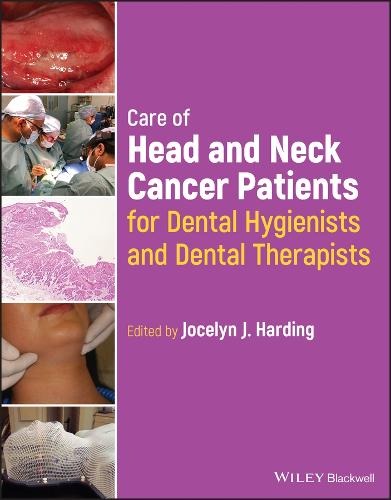
An advisory guide that enables dental hygienists, dental therapists, and other health care professionals to appreciate the journey undertaken by head and neck cancer patients. Focusing on the before, during, and after treatments, the book covers common head and neck cancer treatments such as surgery, radiotherapy, chemotherapy and innovative new therapies. It also discusses treatment complications such as halitosis, osteoradionecrosis, and radiation dermatitis.
Offers a deeper understanding of the foundational concepts of AI, its practical applications in oral health, and the possibilities that lie ahead. From oral pathology to maxillofacial surgery, prosthodontics to orthodontics, and endodontics to dental education, it presents compelling, evidence-based insights into how AI is changing the landscape of dentistry.
Reviews and describes anesthetic management of patients during oral and maxillofacial surgery. It covers applied anatomy of oral and maxillofacial surgery, difficult airway management and anesthetic techniques. The anesthetic management for patients with oral and maxillofacial disorders such as head and neck infection, head and neck injuries, and head and neck malignancy is also discussed. It will be a concise, up-to-date reference for specialists in anesthesiology, as well as practitioners in oral and maxillofacial surgery. It aims to share up-to-date knowledge and practical techniques with those who work in the fields related to oral and maxillofacial surgery.
Offers a comprehensive yet practical approach to anesthesiology for dentist anesthesiologists, oral and maxillofacial surgeons, and anesthesia providers in a dental environment. Taking a concise bulleted approach for fast access to information, the book covers all topics relevant to providing perioperative anesthetic management for the head and neck region. Coverage ranges from equipment, anatomy, physiology, and pharmacology to anesthetizing patients with specific conditions and for specific procedures.
Provides a detailed step-by-step approach to the dissection of the forehead, face, and neck, in a structural, layered approach. This dissection manual follows an atlas format, with color photographs from past professional lectures and classroom courses, as well as line drawings, enhancing descriptions. Clinical correlations are also interjected throughout to highlight the importance of individual anatomic structures. Chapters describe the preparation and storage of specimens and the dissection of the forehead and eyebrows, the midface, nose, ear, and lower face, and the neck.
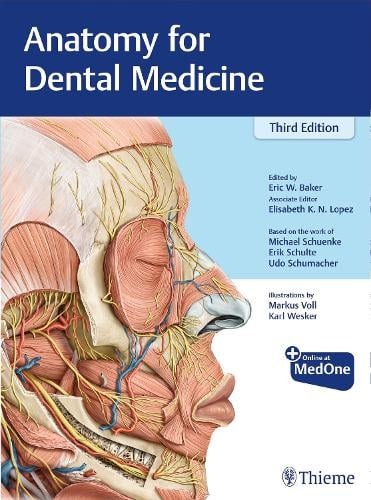
Strikes an optimal balance between systemic and regional approaches to complex head and neck anatomy. Award-winning full-color illustrations, succinct text, summary tables, and questions put anatomical structures and knowledge into a practical context. NEW! Additional radiologic images and landmark features throughoutNEW! Reorganized brain/nerve sectionsNEW! Expanded clinical question appendix including patient box questions in the style of the INBDENEW! Factual question appendix places greater emphasis on areas including the skull, larynx, cross sectional anatomy, body below the neck, and local anesthesia
Covers updated practices and cutting-edge innovations pertinent to advanced Oral & Maxillofacial Surgeons, Otolaryngologists (Head and Neck Surgeons), and Facial Plastic Surgeons. Each chapter will review and update the reader on advancements in procedures and technologies in head and neck surgery.
Advanced Dental Biomaterials is an invaluable reference for researchers and clinicians within the biomedical industry and academia. The book can be used by both an experienced researcher/clinician learning about other biomaterials or applications that may be applicable to their current research or as a guide for a new entrant into the field who needs to gain an understanding of the primary challenges, opportunities, most relevant biomaterials, and key applications in dentistry.
Contains vital information from throughout the world on landslide and slope instability problems. Every four years the worlds leading scientists and engineers dealing with landslides, have the opportunity to meet up and engage in the exchange of ideas and experiences at a symposium run under the auspices of ISSMGE Technical Committee 11. These volumes, taken from the 8th symposium in the series, detail investigations into landslide causes, mechanisms and hazards, together with accounts of monitoring and mapping.

Applies deductive reasoning, logic and mathematics to RC. Laying out, deductively, the principles of RC, it encourages researchers to re-imagine and innovate using a solid conceptual framework. Sections consider the reasoning behind key theories, as well as problems that remain unsolved.
Adapting the Built Environment for Climate Change: Design Principles for Climate Emergencies analyzes several scenarios and proposes various adaptation strategies for climate emergencies (heat waves, wildfires, floods, and storms). Divided into three themes, the book offers an organized vision of a complex and multi-factor challenge. It covers climatic resilience and building refurbishment, implications for service life prediction and maintainability, and climate adaptation in the maintenance and management of buildings. Sections cover infrastructure materials, climate emergency adaptation and building adaptation to heat waves, wildfires, floods and storms.
At a time when managers often provide fodder for unseemly headlines, and some are even compared unflatteringly with locusts, today’s business leaders are called upon as never before to demonstrate the moral justification for their activities, and to ensure that it is understood by all the key stakeholders of a company. What is required is nothing less than a management renaissance, based on a thoroughgoing concept of corporate leadership; there is no less a need for decision makers who hold themselves to the highest standards, with a positive perception of their fu- tion as agents of dissemination, and who are committed to the good not only of “their” firm, but also of society in general.

Oxide Design, Co. has collected and curated this latest collection of stunning letterheads and logos. From logos to labels, business cards to envelopes, the creative techniques and full-color images portrayed in this broad range of work inspires new design solutions for age-old challenges that beg for a fresh approach.

offers easy-to-follow instruction for using basic shapes to draw cute cartoon characters. Her approach is simple: All you need are basic drawing tools and shapes to cartoon! The book features dozens of drawing projects and step-by-step instruction perfect for beginning and aspiring artists, cartoonists, illustrators, pen and graphite artists, and many others. Each project combines simple geometric shapes—including circles and triangles and squares but also ovals, rectangles, and more—to draw adorable, cartoon-inspired artwork, including cartoon: Heads / Faces / Bodies / Unique characters / Animals, such as elephants / And more!
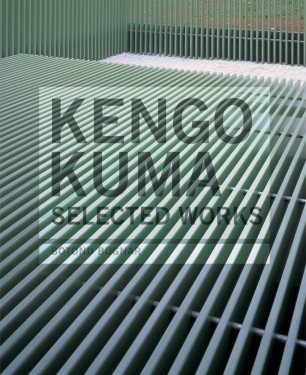
the first full-length monograph on the work of this enormous talent. Included are all of Kuma's most recent projects, including the Museum of Ando Hiroshige, the Stone Museum, the Horai Onsen Bath House in Atami, Louis Vuitton Tokyo Headquarters, and the Nagasaki Prefectural Museum.
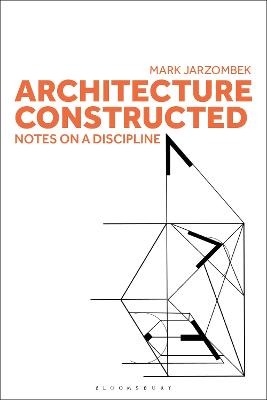
In this book, acclaimed architectural theorist Mark Jarzombek examines this tension head-on, and uses it to rethink the nature of the history of architecture. He reveals architecture to be a troubled, interconnected realm, incomplete and unstable, where labor, craft, and occupation are the ‘invisible’ complements to the work of the architect.

Russian mathematics (later Soviet mathematics, and Russian mathematics once again) occupies a special place in twentieth-century mathematics. In addition to its well-known achievements, Russian mathematics established a unique style of research based on the existence of prominent mathematical schools. These schools were headed by recognized leaders, who became famous due to their talents and outstanding contributions to science. The present collection is intended primarily to gather in one book the t- timonies of the participants in the development of mathematics over the past century. In their articles the authors have expressed their own points of view on the events that took place. The editors have not felt that they had a right to make any changes, other than stylistic ones, or to add any of their own commentary to the text. Naturally, the points of view of the authors should not be construed as those of the editors. The list of mathematicians invited to participate in the present edition was quite long.
With climate change now charging up the political agenda, there are three issues commonly making the headlines: carbon budgets, renewable energy, and the anticipated impacts of climate change. Equally important, though currently less well covered, is the issue how these effects might be mitigated. Given the significant role that forests play in the climate system – as sources, sinks, and through carbon trading – this book discusses the current scientific evidence on the relationships between climate, forest resources and forest management practices around the world. Drawing on expertise from forest scientists from several continents, the book presents both in depth analysis of the current knowledge, and a series of case studies which assess the biological and the economic impacts of climate change. It includes sections on forest responses to climate change, monitoring and modeling changes, economic and management implications, and carbon sequestration under specific management systems.
Takes an in-depth look at Louisiana as a state which is ahead of the curve in terms of extreme weather events, both in frequency and magnitude, and in its responses to these challenges including recovery and enhancement of resiliency.

Daraa Highway - Ghabagheb - Syria
+963-15 2050 - 15 860 380 /1/2/3 - 11 662 3900