


Refine Results
Sort By
From
To

This book introduces readers to a new methodology for assessing the risks to the marine environment following accidental oil spills. The methodology will soon be implemented on the Norwegian Continental Shelf and will be complemented by guidelines for its use in a regulatory framework.
Offers state-of-the-art contributions in the area of AI and its applications in the field of civil engineering presenting methods and implementation of AI and machine learning in multiple facets of civil engineering
Addresses the fundamental principles of soil mechanics and the role of water in geotechnical projects and assessments. Applied Geotechnics for Construction Projects 2 outlines the hydraulic properties of soils and the basic concepts of water in soil, detailing the principles of permeability measurement tests and giving concrete test cases, and then goes on to outline the basic notions of soil mechanics as applied in geotechnics: from consolidation to short- and long-term notions via the swelling phenomena of clayey soils, soil shear strength and slope stability. The third chapter presents a comprehensive overview of geotechnical expertise using examples of concrete projects either with or without damage in the context of geotechnical construction works.
Focuses on the safety assessment of existing structures subjected to multi-hazard scenarios through advanced numerical methods. Whereas the focus is on concrete dams and nuclear containment structures, the presented methodologies can also be applied to other large-scale ones. This book is composed of seven sections: Fundamentals: theoretical coverage of solid mechnics, plasticity, fracture mechanics, creep, / seismology, dynamic analysis, probability and statistics / Damage: that can affect concrete structures, such as cracking of concrete, AAR, chloride ingress, and rebar corrosion, / Finite Element: formulation for both linear and nonlinear analysis including stress, heat and fracture mechanics, / Engineering Models: for soil/fluid-structure interaction, uncertainty quantification, probablilistic and random finite element analysis, machine learning, performance based earthquake engineering, ground motion intensity measures, seismic hazard analysis, capacity/fragility functions and damage indeces, / Applications to dams through potential failure mode analyses, risk-informed decision making, deterministic and probabilistic examples, / Applications to nuclear structures through modeling issues, aging management programs, critical review of some analyses, / Other applications and case studies: massive RC structures and bridges, detailed assessment of a nuclear containment structure evaluation for license renewal.
Originates from an international workshop organized by Turkish Natural Catastrophe Insurance Pool (TCIP) in November 2019 that gathered renown researchers from academia, representatives of leading international reinsurance and modeling companies as well as government agencies responsible of insurance pricing in Turkey. The book includes chapters related to post-earthquake damage assessment, the state-of-art and novel earthquake loss modeling, their implementation and implication in insurance pricing at national, regional and global levels, and the role of earthquake insurance in building resilient societies and fire following earthquakes. The rich context encompassed in the book makes it a valuable tool not only for professionals and researchers dealing with earthquake loss modeling but also for practitioners in the insurance and reinsurance industry.
Natural disasters cause considerable economic damage. While developed countries usually are able to cope with the impacts of natural hazards, developing countries are faced with severe consequences for their resources. In order to prevent long-term macroeconomic repercussions, governments need a comprehensive disaster risk management strategy.Budgetary resources are allocated to pre-disaster risk management strategies to reduce the probability of financing gaps. The framework and model approach allows cross country comparisons as well as the assessment of financial vulnerability, macroeconomic risk, and risk management strategies.
Combines energy economics and big data modeling analysis in energy conversion and management and comprehensively introduces the relevant theories, key technologies, and application examples of the smart energy economy. With the help of time series big data modeling results, energy economy managers develop reasonable and feasible pricing mechanisms of electricity price and improve the absorption capacity of the power grid. In addition, they also carry out scientific power equipment scheduling and cost–benefit analysis according to the results of data mining, so as to avoid the loss caused by accidental damage of equipment. Energy users adjust their power consumption behavior through the modeling results provided and achieve the effect of energy saving and emission reduction while reasonably reducing the electricity expenditure.

Guides to the designs, technologies and materials that really make green buildings work will help architects, specifiers and clients make informed choices, based on reliable technical information. Low Impact Building: Housing using Renewable Materials is about changing the way we build houses to reduce their 'carbon' footprint and to minimise environmental damage. One of the ways this can be done is by reducing the energy and environmental impact of the materials and resources used to construct buildings by choosing alternative products and systems. In particular, we need to recognise the potential for using natural and renewable construction materials as a way to reduce both carbon emissions but also build in a more benign and healthy way.
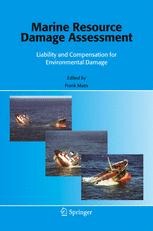
MARE-DASM research focused on: (i) the estimation and distribution of marine contaminants in order to assess their long term effects (ecotoxicology); (ii) the integration of these result into a Biological Effects SubModel and a mathematical model assessing the risks associated with accidental spillage of oil at sea and the damage this can cause (modelling); (iii) the assessment of the willingness to pay for ecological damage, based on the Contingent Valuation Method (economics); (iv) the development and evaluation of measures to be taken in order to guarantee a sustainable use of the Belgian part of the North Sea, taking into account the economic and social interests and values (social economics); (v) the potential to develop technical and legal procedures that allow ecological damage to the marine environment to be evaluated and compensated, taking into account constraints in national and international liability legislation (legal).
Provides an authoritative insight on the Loss and Damage discourse by highlighting state-of-the-art research and policy linked to this discourse and articulating its multiple concepts, principles and methods. Written by leading researchers and practitioners, it identifies practical and evidence-based policy options to inform the discourse and climate negotiations. With climate-related risks on the rise and impacts being felt around the globe has come the recognition that climate mitigation and adaptation may not be enough to manage the effects from anthropogenic climate change.
Examines social and medical responses to the disfigured face in early medieval Europe, arguing that the study of head and facial injuries can offer a new contribution to the history of early medieval medicine and culture, as well as exploring the language of violence and social interactions. Despite the prevalence of warfare and conflict in early medieval society, and a veritable industry of medieval historians studying it, there has in fact been very little attention paid to the subject of head wounds and facial damage in the course of war and/or punitive justice. The impact of acquired disfigurement —for the individual, and for her or his family and community—is barely registered, and only recently has there been any attempt to explore the question of how damaged tissue and bone might be treated medically or surgically..
Oil tankers are not the only vessels that have caused oil pollution at sea. Numerous spills in the past have been of heavy fuel oil from non-tankers. However, the international liability and compensation regime covered only oil pollution damage caused by oil tankers. There was thus a need to bring the law on marine oil pollution responsive to oil pollution damage caused by non-tankers. In March 2001, the International Convention on Civil Liability for Bunker Oil Pollution Damage was adopted following a diplomatic conference at the International Maritime Organization. Though this convention has not yet come into force, its various aspects should already be considered as they will surely affect the maritime industry as a whole and the non-tanker sector, in particular. This book provides a timely and comprehensive study on the concept of compulsory insurance, its main purpose of ensuring compensation and its interrelations with other features such as the rule of strict liability and the limitation of liability under the convention.
This insightful, multidisciplinary volume provides in-depth case data, empirical findings, and original research, synthesizing a range of seemingly irreconcilable legal and psychological viewpoints. Leading scholars consider the roots of juryphobia, the growth trajectories of damage awards, alternative means of obtaining civil justice

This volume gives answers to different questions concerning damage caused by children. Are children directly liable and is there any age limit below which they have no tortious capacity Can children, in spite of their lack of tortious capacity, for reasons of equity be held liable in exceptional conditions? What is the relationship between liability of children and liability of their parents or guardians? Are these questions answered by special rules of general application in all fields of tort liability or are there specific rules for specific torts
Charge migration through DNA has been the focus of considerable interest in recent years. A deeper understanding of the nature of charge transfer and transport along the double helix is important in fields as diverse as physics, chemistry and nanotechnology. It has also important implications in biology, in particular in DNA damage and repair. This book presents contributions from an international team of researchers active in this field.
As the deep-ultraviolet (DUV) laser technology continues to mature, an increasing number of industrial and manufacturing applications are emerging. For example, the new generation of semiconductor inspection systems is being pushed to image at increasingly shorter DUV wavelengths to facilitate inspection of deep sub-micron features in integrated circuits. DUV-sensitive charge-coupled device (CCD) cameras are in demand for these applications. Although CCD cameras that are responsive at DUV wavelengths are now available, their long-term stability is still a major concern. This book describes the degradation mechanisms and long-term performance of CCDs in the DUV, along with new results of device performance at these wavelengths.
Like all limited and vulnerable resources, water has become one of the potential targets of terrorists. Coastal lagoons are especially vulnerable as they are densely populated centers of commerce and/or tourism. This volume addresses the basic scientific concepts that must be integrated by decisionmakers to minimize damages and optimize recovery operations in the aftermath of such an attack. Scientists from many disciplines including water resource management, hydrodynamics, aquatic ecology and social science combine their expertise in an effort to assess and model emergency scenarios for coastal lagoon systems. This case study uses existing numerical models such as-EFCD, WASP and AQUATOX are used to demonstrate how to optimize rapid response and decision-making
This book points out the need of a multidisciplinary approach in the field of risk assessment and management. It provides an overview of the problems, approaches and common practices directly related to earthquake risk mitigation and, in particular, to the preparation of earthquake emergency plans. Written by a team of specialists from different disciplines, the authors worked together extensively in order to create unity and continuity in the text as a whole. Each topic is illustrated with examples of actual applications taken from the bibliography – including websites with available relevant information. Case studies and information on some relevant international projects are given.
The physical and chemical mechanisms as well as the sizes of these processes are quite different. So are the motivations for studying them scientifically.The super- 8 nova is a thermo-nuclear explosion on a scale of 10 cm. Astrophysicists try to understand them in order to get insight into fundamental properties of the universe. In hows around airfoils of commercial airliners at the scale of 3 10 cm shock waves occur that influence the stability of the wings as well as fuel consumption in ight. This requires appropriate design of the shape and structure of airfoils by engineers. Knocking occurs in combustion, a chemical 1 process, and must be avoided since it damages motors. The scale is 10 cm and these processes must be optimized for efficiency and environmental conside- tions. The common thread is that the underlying ?uid ?ows may at a certain scale of observation be described by basically the same type of hyperbolic s- tems of partial differential equations in divergence form, called conservation laws. Astrophysicists, engineers and mathematicians share a common interest in scientific progress on theory for these equations and the development of computational methods for solutions of the equations. Due to their wide applicability in modeling of continua. A substantial portion of mathematical research is related to the analysis and numerical approximation of solutions to such equations. Hyperbolic conservation laws in two or more space dimensions still poseone of the main challenges to modern mathematics.
Consists of various topics, including radioactivity inspection of food products; decontamination trials for rice and livestock production; the state of contamination in wild animals and birds, trees, mushrooms, and timber; the dynamics of radioactivity distribution in mountain and paddy fields; damage incurred by the forestry and fishery industries; and the change in consumers’ minds. The last chapter introduces a real-time radioisotope imaging system, the forefront technique to visualize actual movement of cesium in soil and in plants. This is the only book to provide systematic data about the actual change of radioactivity, and thus is of great value for all researchers who wish to understand the effect of radioactive fallout on agriculture.

Daraa Highway - Ghabagheb - Syria
+963-15 2050 - 15 860 380 /1/2/3 - 11 662 3900