


Refine Results
Sort By
From
To

Describes 226 species of 32 families of medicinal plants, which are commonly used in Chinese medicine. The most important species are Aquilaria sinensis and Daphne genkwa of Thymelaeaceae; Benincasa hispida, Siraitia grosvenorii, Trichosanthes kirilowii and Trichosanthes rosthornii of Cucurbitaceae; Camellia sinensis of Theaceae; Cleistocalyx operculatus, Eugenia caryophyllata and Rhodomyrtus tomentosa of Myrtaceae; Osbeckia chinensis of Melastomataceae; Quisqualis indica and Terminalia chebula of Combretaceae; Hypericum japonicum of Hypericaceae; Microcos paniculata of Tiliaceae; Hibiscus mutabilis of Malvaceae; Croton crassifolius, C. lachnocarpus, C. tiglium, Euphorbia humifusa, E. lathyris, E. pekinensis, Phyllanthus emblica and Sauropus spatulifolius of Euphorbiaceae. In each specie, it introduces the scientific names, medicinal names, morphologies, habitats, distributions, acquisition and processing methods of these medicinal plants, the content of medicinal properties, therapeutic effects, usage and dosage of these medicinal plants, and attaches unedited color pictures and pictures of part herbal medicines of each species.
Describes 256 species of medicinal plants from 5 families, which are commonly used in Chinese medicine. The most important species are Agrimonia pilosa, Amygdalus persica, Armeniaca mume, Armeniaca vulgaris, Armeniaca sibirica, Chaenomeles sinensis, Eriobotrya japonica of Rosaceae; Chimonanthus praecox of Calycanthaceae;Albizia julibrissin, Archidendron clypearia, Entada phaseoloides, Bauhinia championii of Mimosoideae; Caesalpinia sappan, Cassia tora, Gleditsia sinensis of Caesalpiniaceae; Abrus cantoniensis, Astragalus membranaceus, Astragalus membranaceus, Dalbergia odorifera, Desmodium caudatum, Desmodium styracifolium, Erythrina variegata, Euchresta japonica, Flemingia prostrata, Glycyrrhiza uralensis, Glycyrrhiza inflata, Glycyrrhiza glabra, Lablab purpureus, Sophora japonica and Spatholobus suberectus of Butterflyaceae. In each specie, it introduces the scientific names, medicinal names, morphologies, habitats, distributions, acquisition and processing methods of these medicinal plants, the content of medicinal properties, therapeutic effects, usage and dosage of these medicinal plants, and attaches unedited color pictures and pictures of part herbal medicines of each species. This book series has 10 volumes in total, which covers over 2000 kinds of Chinese medicines that are commonly used. These volumes not only introduce the efficacy function and some prescriptions of the medicines, but also introduce the biological characteristics of them in detail with clear photos of the habitats, so that readers can identify them in the field. Apart from the growing environment, the books expound the distribution areas and other information to facilitate researches and other applications. The volumes are targeted at readers of general interests and it is also of high referential value for scientific researcher and teachers. It can be used as a guide to researchers, clinical doctors, and students in the department of pharmaceutics and traditional Chinese medicine.
Combines data from human embryology, animal research and developmental neuropathology. This book provides an overview of the development of the human Central Nervous System (CNS) in the context of its many developmental disorders due to genetic, environmental and hypoxic causes. It highlights numerous clinical cases and contains over 400 figures.
Follows the revised format of the Practical Assessment Clinical Examination Skills (PACES) exam conducted by the Royal College of Physicians in the UK, where ‘clinical consultation skills’ will be tested twice in two separate stations. Thus, coming closest to what doctors do in real life: obtain a structured history, perform a focussed examination and explain the problem to the patient in lay terms. This book takes readers through a rational approach to 63 common presenting symptoms or laboratory abnormalities in medicine. It is aimed at improving the clinical consultation skills of young doctors and preparing them for the new format of MRCP PACES
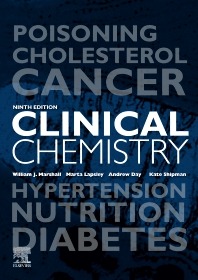
Clinical Chemistry considers what happens to the body’s chemistry when affected by disease. It provides introductory coverage of the scientific basis for biochemistry tests routinely used in medicine - including tests for the assessment of organ function, diagnosis and monitoring disease activity and therapy efficacy. Each topic area begins with a concise description of the underlying physiological and biochemical principles and then applies them to patient investigation and management. The regular use of case histories helps further emphasise clinical relevance and chapter key points, as well as provide a useful starting point for examination revision.
This book serve as either an excellent review for the American Board of Anesthesiology’s oral exam or as an easy and practical way for the reader to gain familiarity with unexpected problems in clinical anesthesia.
Reviews the treatment concepts in several areas of cleft involvement. This text consists of longitudinal facial and palatal growth studies of dental casts, photographs, panorexes and cephalographs from birth to adolescence.
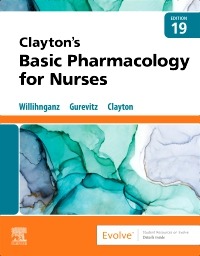
Helps you understand the principles of pharmacology and apply them to nursing practice. Known for its practical application of the nursing process to drugs and disorders, this book explains how to make informed decisions about drug therapy, educate patients, and administer medications. This edition adds new Next Generation NCLEX® (NGN)-style case studies and questions to prepare you for the critical thinking questions on the NGN exam. Concise and easy to use, this text teaches the basics of medication administration and drug actions.
Every medical specialty has at its basis a core of classic papers, which both reflect the historical background and give insight into present and future developments. The papers discussed in this book are considered classics for many reasons, but in all cases they highlight landmarks in the development in critical care medicine and therefore providing an invaluable reference for both trainee and practising clinicians.
Keeping up with these statistics means improving on traditional concepts of palliative care to meet growing demands. Choices in Palliative Care brings together 31 leading experts to spotlight core issues in the field, identify ways PC can fill gaps in current care systems, and demonstrate state-of-the-art care that is both cost-effective and clinically appropriate. This far-sighted volume redefines palliative care as interdisciplinary and integrative, providing liaisons between patients, families, and doctors; minimizing loved ones’ care burdens; bridging acute and long-term care to respond to clients’ evolving needs; adaptable to non-fatal (and possibly curable) chronic illnesses.
A team of renowned technologists and engineers delivers a practice guide to chemical product design. Offering real-world case studies for disinfectant formulation, the optimization of defined media, and the formulation of biocomposites, the book contains introduction to the current product design process. A practical approach to the essentials of product design, related statistical techniques and optimization, patents, green chemistry and gives real life case studies.
Chemical Leasing is an innovative business model within the sustainable management of chemicals. The economic benefit is achieved by selling chemicals services instead of increasing the sales volume. This book contains detailed descriptions and evaluations based on existing projects in Austria, Egypt, Russia and Mexico where in a broard range of sectors and companies the application of Chemical leasing was assisted. The book also contains political and scientific interpretations and analyses.
Contains the knowledge necessary to understand the diagnosis and treatment of immunological disorders. With easy-to-read text and a wealth of colour clinical images and diagrams, this well-regarded textbook introduces complex concepts using effective pedagogical tools such as bulleted lists, key point boxes, real-life case studies, practical examples, figures and tables, chapter introductions, and keywords in bold integrated in each chapter.
The biological sciences are dominated by the idea that cells are the functionally autonomous, physically separated, discrete units of life. This concept was propounded in the 19th century by discoveries of the cellular structuring of both plants and animals. Moreover, the ap parent autonomy of unicellular eukaryotes, as well as the cellular basis of the mammalian brain (an organ whose anatomy for a long while defied attempts to validate the idea of the cellular nature of its neurons), seemed to provide the final conclusive evidence for the completeness of *cell theory', a theory which has persisted in an almost dogmatic form up to the present day. However, it is very obvious that there are numerous observations which indicate that it is not the cells which serve as the basic units of biological life but that this property falls to some other, subcellular assemblage. To deal with this intricate problem concerning the fundamental unit of living matter, we proposed the so-called Cell Body concept which, in fact, devel ops an exceedingly original idea proposed by Julius Sachs at the end of the 19th century. In the case of eukaryotic cells, DNA-enriched nuclei are intimately associated with a microtubular cytoskeleton. In this configuration—as a Cell Body—these two items comprise the fundamental functional and struc tural unit of eukaryotic living matter. The Cell Body seems to be inherent to all cells in all organisms.

Collects techniques to study the highly regulated cell cycle process. Beginning with chapters investigating these processes and assessing how cells respond when these complicated pathways are simplified by using synthetic biology and in vitro reconstitutions, the book continues by exploring how cells sense and respond to environmental conditions, different model systems and cellular types used to visualize cellular architecture during cell division, as well as innovative single cell microscopy techniques to highlight the heterogeneity of the cell population with respect to cell cycle progression. Written for the highly successful Methods in Molecular Biology series, chapters include introductions to their respective topics, lists of the necessary materials and reagents, step-by-step and readily reproducible laboratory protocols, and tips on troubleshooting and avoiding known pitfalls.
This book is a companion text to Orthopedic Rehabilitation, Assessment, and Enablement by the same author, but can be used independently.
This book examines the concept of care and care practices in healthcare from the interdisciplinary perspectives of continental philosophy, care ethics, the social sciences, and anthropology. Areas addressed include dementia care, midwifery, diabetes care, psychiatry, and reproductive medicine. Special attention is paid to ambivalences and tensions within both the concept of care and care practices. Contributions in the first section of the book explore phenomenological and hermeneutic approaches to care and reveal historical precursors to care ethics. Empirical case studies and reflections on care in institutionalised and standardised settings form the second section of the book.
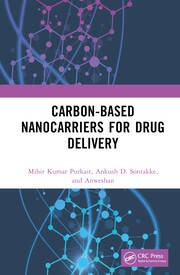
Carbon-Based Nanocarriers for Drug Delivery enlists the latitudes and advancements in the synthesis processes, functionalization, and applications of carbon-based nanomaterials (CBNs) in targeted drug delivery systems (DDSs). It covers the applicability and suitability of CBNs as nanocarriers for efficient drug delivery application via elucidating the recent advancements in CBNs, their functionalized and innovative derivatives, and the relevant case studies. The book explores the necessity, efficacy, toxicological aspects, and challenges for the application of CBN in targeted DDSs.
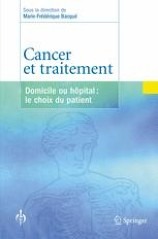
This book takes stock of the needs, expectations and challenges of caring for a cancer patient at home or in hospital. Indeed, if the number of cancer cases is increasing in Western countries, their management is evolving. The emphasis today is on a more humane announcement of the disease, less aggressive treatments and a better quality of life. Better informed patients often wish to be treated at home. As the survival time lengthens, hospital stays are reduced and chosen. Home care teams will soon be relying on the hospital more easily, thanks to specific communication methods and care networks. Here, all the stakeholders involved in the psycho-oncological approach to the patient discuss the choice of place and means of treatment for patients: from the general practitioner to the psychologist, from the oncologist to the mobile palliative care unit.
Description and analysis of recent developments and current trends in health policy with regard to cancer drug safety. Opens with an overview of pharmacovigilance for cancer blockbuster drugs, covering both general considerations and efforts to develop a structured framework for the identification and reporting of adverse drug reactions (ADRs). A number of important examples of serious ADRs to hematology and oncology drugs are then reviewed, with evaluation of the lessons learned and the policy implications of the ensuing legal cases and their settlements. Further, the difficulty of reporting such blockbuster side effects in the medical literature is explored in an empirical study. Significant advances have been achieved in analytic methods for the identification of ADRs, and here there is a particular focus on the value of optimal discriminant analysis. Finally, the impacts on pharmacovigilance and drug safety of the huge fines paid under the U.S. False Claims Act relating to the defrauding of governmental programs also receive careful attention – these fines are playing an important role in changing the landscape for pharmaceutical safety.

Daraa Highway - Ghabagheb - Syria
+963-15 2050 - 15 860 380 /1/2/3 - 11 662 3900