


Refine Results
Sort By
From
To


Provides structural engineers with a concise introduction to the architectural, structural and technological aspects of cable roofs, and supplies sufficient information for engineers to carry out their own designs. The improved methods for generating wind and earthquake histories have been included as the trend in modern design codes seem increasingly to require that dynamic response of other forms of non-linear structures such as guyed masts is considered at the design stage.

Subjects in the proceedings include: Civil engineering technology / Civil engineering surveying / Geological engineering / Structural engineering / Tunnel and bridge engineering / Environmental protection materials / Pollution control project / Building environment and equipment engineering

This book, building on research initiated by scholars from the Leiden-Delft-Erasmus Centre for Global Heritage and Development (CHGD) and ICOMOS Netherlands, presents multidisciplinary research that connects water to heritage.

The research presented here develops a new method of actively controlling the rheology of fresh concrete during casting operations by incorporating specially designed responsive components. This results in real-time changes to the rheological behaviour of the cementitious material, allowing the user to intervene actively after the cementitious material has left the mixing phase. This newly gained agility contributes to increased processing speed and placement reliability in the case of traditional casting methods and can also facilitate advanced 3D concrete printing. The different routes followed to achieve this Active Rheology Control are explained within.

The implementation of material flow management offers enterprises a high potential for realizing new economic competitive advantages. The eco-efficient optimization of material flows aims at reducing costs while simultaneously achieving long-term sustainability with regard to ecological and societal aspects. Knowledge of existing methods and the latest trends is a key prerequisite for successfully implementing, refining and disseminating material flow management approaches.
Featuring examples from a range of organizations including Coca-Cola and Mercedes-Benz, it shows how to create a strategy which leverages consumer data for customer-centric marketing, establishes the ROI of channels and campaigns, strengthens brands and creates data-driven product strategies. Covering the range of new global laws that impact consumer privacy and data collection and usage, Marketing Metrics shows how to use data in a non-invasive, secure and ethical way.

Sheds light on marketing effectiveness and accountability marketing in small and medium-sized enterprises (SMEs). Using a multi-method investigation, it includes a knowledge inquiry of marketing knowledge and customer knowledge, a qualitative inquiry utilizing semi structured interviews and thematic data analysis, a quantitative analysis utilizing survey and structural equations modelling, and a case study that employs both narrative (storytelling) data analysis and an accountability audit with a techno marketing SME.
Market Momentum: It examines the behavioral and statistical causes of market momentum while also exploring the practical side of implementing related strategies. The phenomenon of momentum in finance occurs when past high returns are followed by subsequent high returns, and past low returns are followed by subsequent low returns. Market Momentum provides a detailed introduction to the financial topic, while examining existing literature.

This book provides a broad range of insights on market engineering and information management. It covers topics like auctions, stock markets, electricity markets, the sharing economy, information and emotions in markets, smart decision-making in cities and other systems, and methodological approaches to conceptual modeling and taxonomy development.

Our underlying objectives are to contribute to the provision, mana- ment, and sharing of knowledge, and to enhance the value of knowledge and its uses by different constituencies in diverse contexts and at different stages of development. The central theme of this book, connecting its different parts, is about ways of transcending critical barriers to the effective uses of knowledge and e-networking. Of special relevance is the development of new approaches to the provision and transmission – from local sources to global networks and from global sources to local networks. In many ways, this is a book of theory and methods, as well as policy and performance.

The book deals with the management of information systems security and privacy, based on a model that covers technological, organizational and legal views. This is the basis for a focused and methodologically structured approach that presents "the big picture" of information systems security and privacy, while targeting managers and technical profiles. The book addresses principles in the background, regardless of a particular technology or organization. It enables a reader to suit these principles to an organization's needs and to implement them accordingly by using explicit procedures from the book. Additionally, the content is aligned with relevant standards and the latest trends.
Throughout the past decade, the phenomenon of technological convergence has increasingly gained managerial attention. In this special form of technological change, the coming-together of previously distinct knowledge bases gives rise to the creation of new applications and business models. When such innovations emerge at the intersection of industries, the resulting creative destruction may exceed previously established industry boundaries. As a consequence, convergence does not only promise the creation of new value, but may imply significant disruptions to established industries. Based on investigating 26 firms within the ICT industry, this book highlights implications of the convergence phenomenon on firms’ innovation management practices, and derives strategic guidelines for building and sustaining business models beyond blurring industry boundaries.
This book encompasses a collection of in-depth analyses showcasing the challenges and ways forward for macroeconomic modelling of R&D and innovation policies. Based upon the proceedings of the EC-DG JRC-IEA workshop held in Brussels in 2017, it presents cutting-edge contributions from a number of leading economists in the field. It provides a comprehensive overview of the current academic and policy challenges surrounding R&D as well as of the state-of-the-art modelling techniques.

It has two new sections, a new appendix, and more than half a dozen new figures. A few references have also been added, Much of the new material is based on work , The financial support of the National Science Foundation and the Volvo Foundations Center of Excellence for the Future of Urban Transportation at U. C. Berkeley is also acknowledged. The new appendix presents the logic behind the traveling salesman and vehicle routing results used in Sec. 4. 2 to describe the transportation ope- tion; Chapter 4 is more self-contained as a result. New section 5. 6 int- duces and evaluates a general method that automatically translates the c- tinuum approximation recipes of Chapters 4 and 5 into discrete system designs. This closes a gap in previous editions. Other additions include an explanation of how to develop system designs that can efficiently acc- modate real-time control strategies to manage uncertainty (new section 4. 6. 3), and extensions of the many-to-many design ideas of Chap. 6
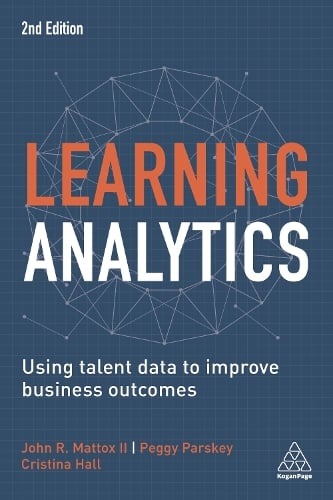
Effective evaluation and measurement of learning and development initiatives is critical to maximise the impact of training, identify gaps for improvement and ensure that efforts are aligned to the business' needs. Learning Analytics outlines how analytical approaches can respond to these challenges, the types and benefits of technological solutions and how to ask the right questions of organizational data in order to build a learning organization that boosts performance and competitive advantage.
Often, the leadership in technological development is accompanied by a leadership in environmental policy. The book provides an analysis of lead markets for innovations such as fuel cells, photovoltaics, and others. Contributions of innovation economics, policy analysis and environmental economics are assessed regarding their potential to explain the leadership of single countries. The book depicts the policy frameworks that are favourable to the creation of such lead markets on the basis of theoretical considerations and case studies. Finally, recommendations for R and D policies, environmental and industrial policies are derived.

The proposed consensus models focus on the treatment of non-cooperative behaviors in the consensus-reaching process and explores the influence of trust loss on the consensus-reaching process.The logic behind is as follows: firstly, a clustering algorithm is adopted to reduce the dimension of decision-makers, and then, based on the clusters’ opinions obtained, a consensus-reaching process is carried out to obtain a decision result acceptable to the majority of decision-makers.
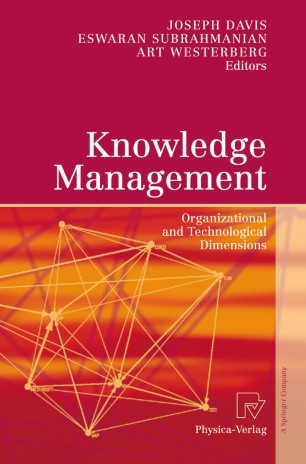
Presents a unique blend of articles which combines both conceptual and practical concerns related to devising and implementing sustainable Knowledge Management systems and solutions in contemporary global organizations. The book's contributors are among the leading thinkers and practitioners in this growing field. The seamless synthesis of the human, organizational, and technological dimensions of Knowledge Management makes this book a definitive guide for academics and practising managers alike.
In recent years, agent-based simulation has become a widely accepted tool when dealing with complexity in economics and other social sciences. The contributions presented in this book apply agent-based methods to derive results from complex models related to market mechanisms, evolution, decision making, and information economics. In addition, the applicability of agent-based methods to complex problems in economics is discussed from a methodological perspective. The papers presented in this collection combine approaches from economics, finance, computer science, natural sciences, philosophy, and cognitive sciences.
International tourism is expected to be a major vehicle of economic development in industrializing countries in the 21st century, especially for Asia. To generate long-term growth, countries with tourism-based economies must develop strategies for employing their comparative advantages to achieve competitive advantages. However, competitiveness in the tourist industry is multi-dimensional and complex. This study evaluates the competitiveness of the Taiwanese tourism sector by a multi-dimensional framework. The theoretical model proposes that the competitiveness of tourist destinations should be composed of Ricardian comparative advantages (like the conditions of natural endowments and the degree of technological change); Porterian competitive advantages; tourism management, i.e., providing high quality education and job training, public goods, support services and reduced transaction costs to enhance comparative and competitive advantages; and environmental conditions.

Daraa Highway - Ghabagheb - Syria
+963-15 2050 - 15 860 380 /1/2/3 - 11 662 3900