


Refine Results
Sort By
From
To

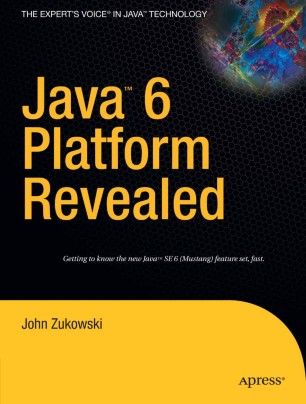
New editions of the platform don't happen that frequently, but when they do, there is a lot to learn about quickly. If you want to come up to speed on the feature set as quickly as possible, Java 6 Platform Revealed will place you well ahead of the pack. You'll find 10 chapters of how to use the JSR implementations and library improvements that are now a part of Mustang. You'll learn about the scripting features of AWT and Swing, like splash screens, system tray access, and table sorting and filtering and lots more. What you won't find in Java 6 Platform Revealed is a "getting started with Java" tutorial. Come prepared with a good working knowledge of Java 5 platform for best results.
Quickly find solutions to dozens of common programming problems encountered while building Java applications, with recipes presented in the popular problem-solution format. Look up the programming problem that you want to resolve. Read the solution. Apply the solution directly in your own code. Problem solved! covers of some of the newest features, APIs, and more such as pattern matching for switch, Restore Always-Strict-Floating-Point-Semantics, enhanced pseudo-random number generators, the vector API, sealed classes, and enhancements in the use of String. Source code for all recipes is available in a dedicated GitHub repository. This must-have reference belongs in your library. You will learn : Look up solutions to everyday problems involving Java SE 17 LTS and other recent releases / Develop Java SE applications using the latest in Java SE technology / Incorporate Java major features introduced in versions 17, 16, and 15 into your code
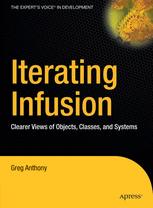
Iterating Infusion presents comprehensive tools for you to best manage and work with object orientation. These include simplified fundamental concepts, popular language comparisons, advanced designing strategies, a broad usage progression, thorough design notations (interaction algebra), and data-oriented (fundamentally-OO) languages. The title, Iterating Infusion, alludes to the fact that any system has multiple, coexisting functional levels and that new levels—both lower and higher—are continually added to the same functional area. The practical effect is to bring processes into focus, always clarifying the vague. The extreme form of this is when separate but compatible technologies are brought together to create advancements; these can be baby-steps or great leaps, with varying amounts of effort. In more general terms, the same thing in a different context can take on much more power. And actually, this phenomenon is at the heart of object-oriented software.

Presents the most interesting talks given at ISSE 2006 - the forum for the interdisciplinary discussion of how to adequately secure electronic business processes. The topics include: Smart Token and e-ID-Card Developments and their Application - Secure Computing and how it will change the way we trust computers - Risk Management and how to quantify security threats - Awareness raising, Data Protection and how we secure corporate information. Adequate information security is one of the basic requirements of all electronic business processes. It is crucial for effective solutions that the possibilities offered by security technology can be integrated with the commercial requirements of the applications. The reader may expect state-of-the-art: best papers of the Conference ISSE 2006.
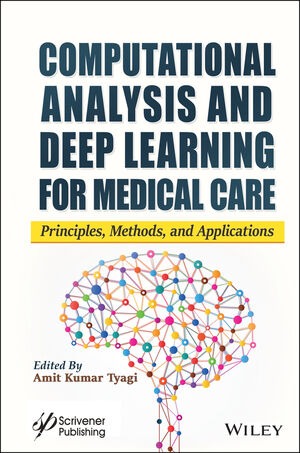
Focuses on the sophisticated methods for improving dye extraction and dyeing properties which will minimize the use of bioresource products. This book also brings out the innovative ways of wet chemical processing to alleviate the environmental impacts arising from this sector.
This book addresses the application of computing to cultural heritage and the discipline of Digital Humanities that formed around it. Digital Humanities research is transforming how the Human record can be transmitted, shaped, understood, questioned and imagined and it has been ongoing for more than 70 years. However, we have no comprehensive histories of its research trajectory or its disciplinary development. The authors make a first contribution towards remedying this by uncovering, documenting, and analysing a number of the social, intellectual and creative processes that helped to shape this research from the 1950s until the present day.
Component-based software development regards software construction in terms of conventional engineering disciplines where the assembly of systems from readily-available prefabricated parts is the norm. Because both component-based systems themselves and the stakeholders in component-based development projects are different from traditional software systems, component-based testing also needs to deviate from traditional software testing approaches. Gross first describes the specific challenges related to component-based testing like the lack of internal knowledge of a component or the usage of a component in diverse contexts. He argues that only built-in contract testing, a test organization for component-based applications founded on building test artifacts directly into components, can prevent catastrophic failures like the one that caused the now famous ARIANE 5 crash in 1996. This book is the first comprehensive treatment of the intricacies of testing component-based software systems. With its strong modeling background, it appeals to researchers and graduate students specializing in component-based software engineering. Professionals architecting and developing component-based systems will profit from the UML-based methodology and the implementation hints based on the XUnit and JUnit frameworks.
Embedded systems are ubiquitous. They appear in cell phones, microwave ovens, refrigerators, consumer electronics, cars, and jets. Some of these embedded s- tems are safety- or security-critical such as in medical equipment, nuclear plants, and X-by-wire control systems in naval, ground and aerospace transportation - hicles. With the continuing shift from hardware to software, embedded systems are increasingly dominated by embedded software. Embedded software is complex. Its engineering inherently involves a mul- disciplinary interplay with the physics of the embedding system or environment. Embedded software also comes in ever larger quantity and diversity. The next generation of premium automobiles will carry around one gigabyte of binary code. The proposed US DDX submarine is e?ectively a ?oating embedded so- ware system, comprising 30 billion lines of code written in over 100 programming languages. Embedded software is expensive. Cost estimates are quoted at around US$15– 30 per line (from commencement to shipping). In the defense realm, costs can range up to $100, while for highly critical applications, such as the Space Shuttle, the cost per line approximates $1,000. In view of the exponential increase in complexity, the projected costs of future embedded software are staggering.

The book discusses major topics in complex analysis with applications to number theory.It 's including the theory of several finitely and infinitely complex variables, hyperbolic geometry, two- and three-manifolds, and number theory. In addition to solved examples and problems, the book covers most topics of current interest, such as Cauchy theorems, Picard’s theorems, Riemann–Zeta function, Dirichlet theorem, Gamma function, and harmonic functions.
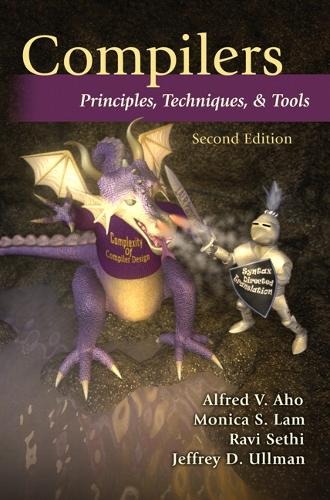
This introduction to compilers is the direct descendant of the well-known book by Aho and Ullman, Principles of Compiler Design. The authors present updated coverage of compilers based on research and techniques that have been developed in the field over the past few years. The book provides a thorough introduction to compiler design and covers topics such as context-free grammars, fine state machines, and syntax-directed translation.
Communications and Networking: An Introduction provides a clear and easy to follow treatment of the subject, written specifically for undergraduates who have no previous experience in the field. The author takes a step by step approach, with examples and exercises designed to give the reader increased confidence in using and understanding communications systems. Topics covered include communications technologies, networking models and standards, local area and wide area networks, network protocols, TCP/IP-based networks and network management.

This book is written for members of the scholarly research community, and for persons involved in research evaluation and research policy. More specifically, it is directed towards the following four main groups of readers: – All scientists and scholars who have been or will be subjected to a quantitative assessment of research performance using citation analysis. – Research policy makers and managers who wish to become conversant with the basic features of citation analysis, and about its potentialities and limitations. – Members of peer review committees and other evaluators, who consider the use of citation analysis as a tool in their assessments. – Practitioners and students in the field of quantitative science and technology studies, informetrics, and library and information science. Citation analysis involves the construction and application of a series of indicators of the ‘impact’, ‘influence’ or ‘quality’ of scholarly work, derived from citation data, i.e. data on references cited in footnotes or bibliographies of scholarly research publications. Such indicators are applied both in the study of scholarly communication and in the assessment of research performance. The term ‘scholarly’ comprises all domains of science and scholarship, including not only those fields that are normally denoted as science – the natural and life sciences, mathematical and technical sciences – but also social sciences and humanities.

Case-based reasoning (CBR) has received a great deal of attention in recent years and has established itself as a core methodology in the field of artificial intelligence. The key idea of CBR is to tackle new problems by referring to similar problems that have already been solved in the past. More precisely, CBR proceeds from individual experiences in the form of cases. The generalization beyond these experiences typically relies on a kind of regularity assumption demanding that 'similar problems have similar solutions'. Making use of different frameworks of approximate reasoning and reasoning under uncertainty, notably probabilistic and fuzzy set-based techniques, this book develops formal models of the above inference principle, which is fundamental to CBR. The case-based approximate reasoning methods thus obtained especially emphasize the heuristic nature of case-based inference and aspects of uncertainty in CBR. This way, the book contributes to a solid foundation of CBR which is grounded on formal concepts and techniques from the aforementioned fields. Besides, it establishes interesting relationships between CBR and approximate reasoning, which not only cast new light on existing methods but also enhance the development of novel approaches and hybrid systems.

This book covers a variety of well known topics of interest to practitioners in industry and research scientists. The range of topics includes languages, tools and methodologies for the semantic Web, semantic Web-based ontology management and engineering, semantic Web services, practical applications of the semantic Web techniques, artificial intelligence methods and tools for the semantic Web, software agents on the semantic Web, visualization and modeling of the semantic Web. The goal of this book is to provide a state-of-the-art review of the research as well as to introduce topics of interest to experts.
This book provides foundational knowledge for designing autonomous, asynchronous systems and explains aspects of users relevant to designing for these systems, introduces principles for user-centered design, and prepares readers for more advanced and specific readings.
This book clearly describes how to establish an architecture practice that delivers value for an organization. The authors demonstrate a wealth of experience and a deep understanding of the multifaceted nature of this challenging task and they provide sound advice on how to avoid the many pitfalls that may be encountered along the way. Building an Enterprise Architecture Practice provides practical advice on how to develop your enterprise architecture practice.
The book is organized as follows. In the beginning of this book (chapters 1 through 6), you learn how to build a data warehouse, for example, defining the architecture, understanding the methodology, gathering the requirements, designing the data models, and creating the databases. Then in chapters 7 through 10, you learn how to populate the data warehouse, for example, extracting from source systems, loading the data stores, maintaining data quality, and utilizing the metadata. After you populate the data warehouse, in chapters 11 through 15, you explore how to present data to users using reports and multidimensional databases and how to use the data in the data warehouse for business intelligence, customer relationship management, and other purposes. Chapters 16 and 17 wrap up the book: After you have built your data warehouse, before it can be released to production, you need to test it thoroughly. After your application is in production, you need to understand how to administer data warehouse operation.
Boundary representation is the principle solid modelling method used in modern CAD/CAM systems. There have been a long series of developments on which currently available systems are based, full details of which are only partially known. Ian Stroud’s thorough coverage of these developments puts this technology in perspective. Ian Stroud started working with boundary representation solid modelling in 1977. Since then he has researched and is researching a wide variety of topics in and around this field. The information in the book comes from the results of this research.

Blockchain technology is a powerful, cost-effective method for network security. Essentially, it is a decentralized ledger for storing all committed transactions in trustless environments by integrating several core technologies such as cryptographic hash, digital signature and distributed consensus mechanisms. Over the past few years, blockchain technology has been used in a variety of network interaction systems such as smart contracts, public services, Internet of Things (IoT), social networks, reputation systems and security and financial services. With its widespread adoption, there has been increased focus on utilizing blockchain technologies to address network security concerns and vulnerabilities as well as understanding real-world security implications.

The book explains the security architecture model and the practice of building data sharing from the blockchain infrastructure, allowing readers to understand the importance of data sharing security based on the blockchain framework, as well as the threats to security and privacy. Further, by presenting specific data sharing case studies, it offers insights into solving data security sharing problems in more practical fields. The book is intended for readers with a basic understanding of the blockchain infrastructure, consensus mechanisms, smart contracts, secure multiparty computing, homomorphic encryption and image retrieval technologies.

Daraa Highway - Ghabagheb - Syria
+963-15 2050 - 15 860 380 /1/2/3 - 11 662 3900