


Refine Results
Sort By
From
To

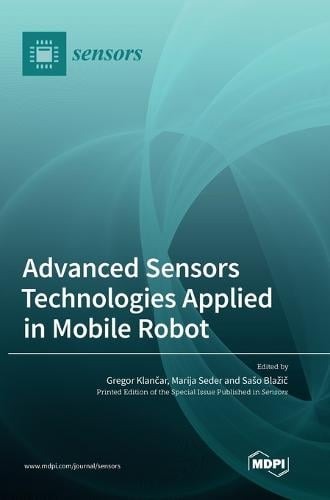
Contains contributions on the latest developments in mobile robotic systems and related research. Various topics with different ideas and applications from mobile robotics have found their place. New ideas are presented for mobile robots that specialise in cleaning floors, power lines and HVAC systems. We also find innovative approaches for navigation path planning using local minima-free potential fields, novel path primitives and/or their parameterisation for minimum-time planning, and various control approaches ranging from visual serving to model predictive and adaptive trajectory tracking, applied to wheeled robots, humanoid manipulators and flying robots. Localisation approaches using LiDAR, motion capture systems, fingerprint-based and biomechanical gait systems are also discussed.
This book presents a unified and systematic description of a wide class of miscellaneous problems of inconsistent knowledge management, analyzed by traditional mathematical methods using relational and logical representations.
Presents a wide variety of topics needed by today's engineers. The fifth edition of that book, available now, has been broken into two parts: topics currently needed in mathematics courses and a new stand-alone volume presenting topics not often included in these courses and consequently unknown to engineering students and many professionals.
This book serves as an introduction to the state of the art on data warehouse design, with many references to more detailed sources. Providing a clear and a concise presentation of the major concepts and results of data warehouse design, it can also be used as the basis of a graduate or advanced undergraduate course.
This book presents a comprehensive reference of state-of-the-art efforts and early results in the area of autonomic networking and communication.
Surpassing any white papers, specialist documents and other documentationthis book features in-depth coverage of the .NET Remoting Framework. The text is organized into three main parts, and this revised, second edition features 150 pages of entirely new material! Part one includes a guide to the 1.1 framework and its capabilities in real-world applications. Part two presents .NET remoting internals, and provides real-world code and development strategies. Finally, part three looks at futuristic remoting tools and their present implementation in Visual Studio .NET 2005. You will come to see how remoting procedures will change within the new IDE and revised framework.
Explains the important concepts and principles of image processing to implement the algorithms and techniques to discover new problems and applications. It contains numerous fundamental and advanced image processing algorithms and pattern recognition techniques to illustrate the framework. It presents essential background theory, shape methods, texture about new methods, and techniques for image processing and pattern recognition. It maintains a good balance between a mathematical background and practical implementation. This book also contains the comparison table and images that are used to show the results of enhanced techniques. This book consists of novel concepts and hybrid methods for providing effective solutions for society. It also includes a detailed explanation of algorithms in various programming languages like MATLAB, Python, etc.
In the modern information era, managers must recognize the competitive opportunities represented by decision-support tools. Adaptive business intelligence systems combine prediction and optimization techniques to assist decision makers in complex, rapidly changing environments. These systems address the fundamental questions: What is likely to happen in the future? And what is the best decision right now? Adaptive Business Intelligence includes elements of data mining, predictive modeling, forecasting, optimization, and adaptability.
Adaptive agents and multi-agent systems is an emerging and exciting interdisciplinary area of research and development involving artificial intelligence, software engineering, and developmental biology, as well as cognitive and social science. This book presents 17 revised and carefully reviewed papers taken from two workshops on the topic as well as 2 invited papers by leading researchers in the area. The papers deal with various aspects of machine learning, adaptation, and evolution in the context of agent systems and autonomous agents.
This volume contains a collection of the papers presented during the 1st International ACM-L Workshop, which was held on November 8, 2006 during the 25th International Conference on Conceptual Modeling, ER 2006, held November 6–9,2006, in Tucson, Arizona, plus several invited papers.These papers plus the invited papers represent the current thinking in conceptual modeling research, The active model can only be realized through technology integration (e.g., AI, software engineering, information technology,cognitive science, art and sciences, philosophy, etc.)
In that book we tried very hard not to simply list everything that we knew about the product. Instead we tried to act as intelligent filters, presenting only the essential information that you need to get started. Every screen shot has been retaken and every section has been re-checked to ensure, not only that it still works, but also that it is actually still relevant. We have re-written parts where the product has changed and also added some. For example, there is a new section on Object Dependencies and a whole new chapter about Data Access Pages - helping you to put your Access database onto an intranet.
Presents cybersecurity aspects of ubiquitous and growing IoT and Cyber Physical Systems. It also introduces a range of conceptual, theoretical, and foundational access control solutions. This was developed by the authors to provide an overall broader perspective and grounded approach to solve access control problems in IoT and CPS.
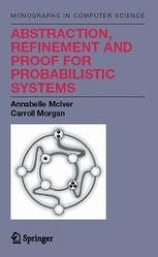
Probabilistic techniques are increasingly being employed in computer programs and systems because they can increase efficiency in sequential algorithms, enable otherwise nonfunctional distribution applications, and allow quantification of risk and safety in general. This makes operational models of how they work, and logics for reasoning about them, extremely important. Abstraction, Refinement and Proof for Probabilistic Systems presents a rigorous approach to modeling and reasoning about computer systems that incorporate probability. Its foundations lie in traditional Boolean sequential-program logic—but its extension to numeric rather than merely true-or-false judgments takes it much further, into areas such as randomized algorithms, fault tolerance, and, in distributed systems, almost-certain symmetry breaking. The presentation begins with the familiar "assertional" style of program development and continues with increasing specialization: Part I treats probabilistic program logic, including many examples and case studies; Part II sets out the detailed semantics; and Part III applies the approach to advanced material on temporal calculi and two-player games.
Presents a ""practical theory"" of reactive systems, with formal foundations in Temporal Logic of Actions. This book emphasises theoretical understanding of reactive behaviors and using ""horizontal"" modularity to manage their complexity. It illustrates the incremental specification by a number of examples of varying size and complexity
The book proposes a new methodology for realizing platform-centric design of complex systems, and presents a detailed plan for its implementation. The proposed plan allows component vendors, system integrators and product developers to collaborate effectively and efficiently to create complex products within budget and schedule constraints.
This volume, with forewords by Greg Bollella and Dana Scott, presents novel programs based on the new advances in this area, including the first randomness-preserving version of Heapsort. Programs are provided, along with derivations of their average-case time, to illustrate the radically different approach to average-case timing. The automated static timing tool applies the Modular Calculus to extract the average-case running time of programs directly from their MOQA code.
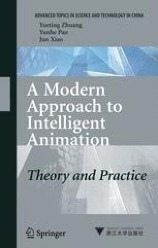
Part of the new series, Advanced Topics in Science and Technology in China, this book discusses concepts, theory, and core technologies of intelligent theory and human animation, including video based human animation, and intelligent technology of motion data management and reusing. It introduces systems developed to demonstrate the technologies of video based animation. Each chapter is independent. Lively pictures and demos will be presented to make the theory and technologies more understandable.
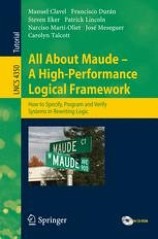
This book gives a comprehensive account of Maude, a language and system based on rewriting logic. Many examples are used throughout the book to illustrate the main ideas and features of Maude, and its many possible uses. Maude modules are rewrite theories. Computation with such modules is - cient deduction by rewriting. Because of its logical basis and its initial model semantics,aMaude module defines a precise mathematical model.This means that Maude and its formal tool environment can be used in three, mutually reinforcing ways: • as a declarative programming language; • as an executable formal specification language; and • as a formal verification system. Maude’s rewriting logic is simple, yet very expressive. This gives Maude good representational capabilities as a semantic framework to formally represent a wide range of systems, including models of concurrency, distributed al- rithms, network protocols, semantics of programming languages, and models of cell biology. Rewriting logic is also an expressive universal logic,making Maude a fiexible logical framework in which many difierent logics and - ference systems can be represented and mechanized. This makes Maude a useful metatool to build many other tools, including those in its own formal tool environment. Thanks to the logic’s simplicity and the use of advanced semi-compilation techniques, Maude has a high-performance implementation, making it competitive with other declarative programming languages.
Offers a modern and accessible introduction to Statistical Inference, the science of inferring key information from data. Aimed at beginning undergraduate students in mathematics, it presents the concepts underpinning frequentist statistical theory. Written in a conversational and informal style, this concise text concentrates on ideas and concepts, with key theorems stated and proved. Detailed worked examples are included and each chapter ends with a set of exercises, with full solutions given at the back of the book. Examples using R are provided throughout the book, with a brief guide to the software included. Topics covered in the book include: sampling distributions, properties of estimators, confidence intervals, hypothesis testing, ANOVA, and fitting a straight line to paired data.
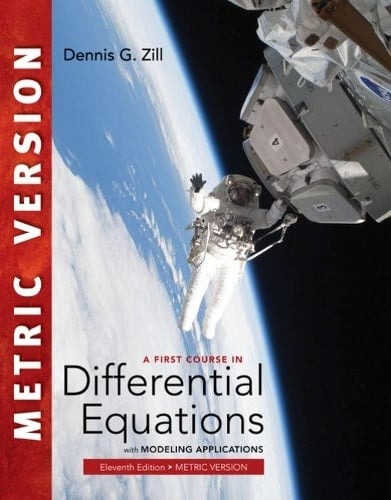
A comprehensive treatment of ordinary differential equations, concisely presenting basic and essential results in a rigorous manner. Including various examples from physics, mechanics, natural sciences, engineering and automatic theory, Differential Equations is a bridge between the abstract theory of differential equations and applied systems theory.

Daraa Highway - Ghabagheb - Syria
+963-15 2050 - 15 860 380 /1/2/3 - 11 662 3900