


Refine Results
Sort By
From
To

Bringing together an international team of scholars, this book offers new perspectives on the impact that the Bauhaus and its teaching had on a wide range of artistic practices.
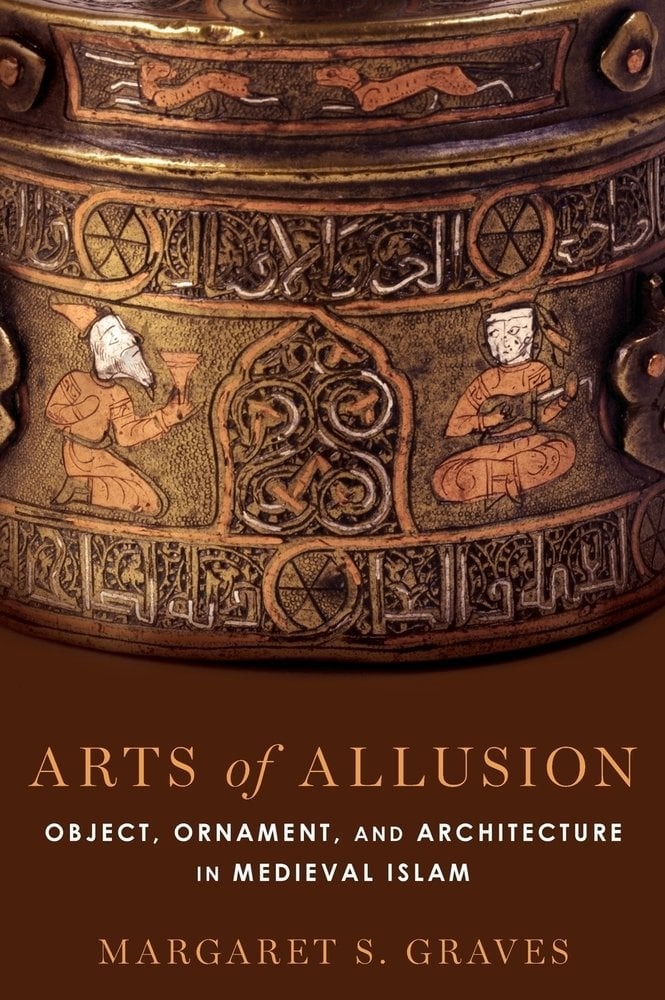
The art of the object reached unparalleled heights in the medieval Islamic world, yet the deep intellectual dimensions of ceramics, metalwares, and other plastic arts in this milieu have not always been acknowledged. Arts of Allusion reveals the object as a crucial site where premodern craftsmen of the eastern Mediterranean and Persianate realms engaged their creations in fertile dialogue with poetry, literature, painting, and, perhaps most strikingly, architecture. Through close studies of objects from the ninth to the thirteenth centuries, this book reveals that allusions to architecture abound across media in the portable arts of the medieval Islamic world.
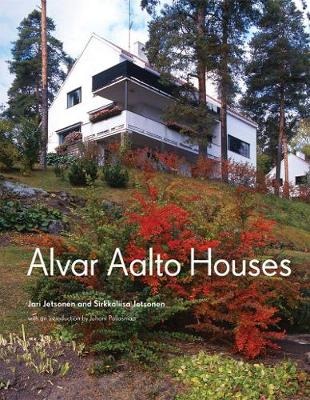
Finnish architect and designer Alvar Aalto (1898-1976) designed nearly one hundred single-family houses. Aalto, who is also known for his furniture and glassware, worked in a unique style that blended modernism and traditional vernacular architecture. Authors Jari and Sirkkaliisa Jetsonen (Finnish Summer Houses) present twenty-six of Aalto's innovative residences—from small summer homes and postwar standardized housing to large housing complexes for industrial commissions—built between the 1920s to the 1960s.
Comprising texts, interviews and portfolios that collectively document new theories and emerging critical practices in the field of interior design. The material is informed by, but not limited to, the annual AfterTaste symposia hosted by Parsons The New School of Design. The book s central argument is that the field of interior design is inadequately served by its historical reliance on taste-making and taste-makers, and, more recently from a set of theoretical concerns derived from architecture; the volume seeks to set an expanded frame by advancing new voices and perspectives in both the theory and practice of interior design, considered as an independent discipline. In 2007, the Department of Architecture, Interior Design and Lighting at Parsons The New School for Design inaugurated an annual international symposium series dedicated to the critical study of the interior.
Interior design describes the process by which an interior space is made into an effective setting for whatever range of human activities are to take place there. Much like the history of art, the history of interior design encompasses numerous styles, movements, and the influence of international, political, and social developments. A basic understanding of this history is important to students taking survey courses, professional designers looking to the past for inspiration, and for those interested in antiques, furniture design, and the general evolution of the spaces where we work and live
Exploring a broad range of design styles and movements, this revised and expanded edition includes coverage of non-Western design and vernacular interior architecture and features 665 photographs and drawings (color and black-and-white). The companion image bank includes an interactive presentation of periods and styles, incorporating more than 100 illustrations.
In this book 50 landscape architects from Europe, North and South America, Asia and Australia each give five responses. These include practitioners and teachers, young start-ups as well as internationally established firms. The publication illustrates the complex and dynamic nature of the discipline, and presents a diverse cross-section of the core expertise of this field. At the same time, it allows the reader to trace the individual attitudes into which geographical conditions, social contexts and political circumstances flow.
This book provides a holistic, interdisciplinary overview of offshore wind energy, and is a must-read for advanced researchers. Topics, from the design and analysis of future turbines, to the decommissioning of wind farms, are covered. The scope of the work ranges from analytical, numerical and experimental advancements in structural and fluid mechanics, to novel developments in risk, safety & reliability engineering for offshore wind. The core objective of the current work is to make offshore wind energy more competitive, by improving the reliability, and operations and maintenance (O&M) strategies of wind turbines.
this book serves memories relevant to understanding the roots of communities on Mount Desert Island, Maine. The surnames of many of Mount Desert’s earliest settlers are still found in today’s telephone directories. In these families many oral traditions are passed down from generation to generation
Offering a compelling personal account of his life in architecture as an influential postmodern designer, architect-planner and principal of a leading global practice, this autobiography includes anecdotes and invaluable insights into Terry’s life and work from the 1940s to the present day. An inside view of what it’s like to be an architect at the top of his profession, this book also highlights what it takes to develop a successful international practice. Offers the inside view of what it is like to be an architect at the top of his profession, including insights into the defining projects and watershed moments of Sir Terry Farrell's career Provides the inside story on some of Terry Farrell’s most significant buildings and projects, including Charing Cross Station, The MI6 Building, Alban Gate and Beijing South Railway Station. Abundantly illustrated with over 80 images, including personal photos and images of key buildings.
Shows readers a path to improve their project delivery via the application of lean concepts and process management. Authors Michael Czap and Gregory Buchanan challenge readers to reexamine their approach to architectural practice and projects by presenting a unique and compelling alternative. Readers will learn to: Maximize the use of their resources to deliver superior results in less time / Minimize waste, cost, and inefficiency in their firm’s operations / Move between radically different project scales while retaining efficient and effective processes
Reconsiders what is required from physical school environments, building on the learning gathered from the sector over the past two decades. To meet the new social, environmental and economic challenges it advocates designing differently, both in terms of the form that buildings take and the evaluation of their impact and performance. By calling for a reframing of the way that schools are regarded as community-wide amenities, this book explores the potential for architects to deliver design in a manner that supports healthy lifestyles and promotes wellbeing. Through encouraging social connections, new possibilities open up for educational facilities to become open, welcoming and inclusive. Featuring: Over 12 international case studies from practices including: Architype, Argyll + Bute, Bogle Architects, DRMM, Revaerk, Scott Brownrigg and XDGA. Key themes of wellbeing, connectivity, inclusion, indicators and evaluation. Practical guidance and learning points throughout. A new design brief for community schools
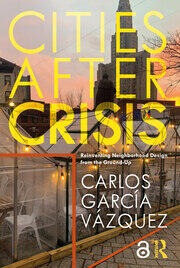
The book details how these crises have led to a new urban vision—from avantgarde modern design to an artisan aesthetic that calls for simplicity and the everyday, from the sustainable development paradigm to a resilient vision that defends de-growth and the re-wilding of cities, from a homogenizing globalism to a new localism that values what is distinctive and nearby, from the privatization of the public realm to the commoning and self-governance of urban resources, and from top-down to bottom-up processes based on the engagement and empowerment of communities.
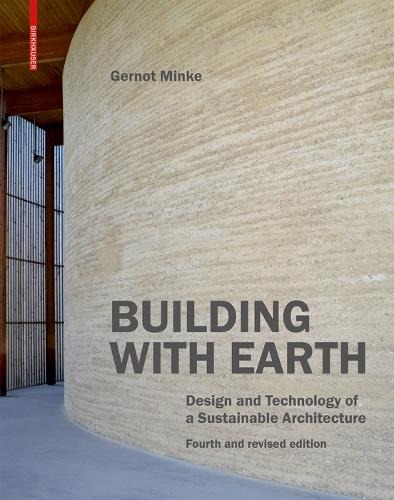
Offers a practical systematic overview of the many uses of earth and techniques for processing it. Its properties and physical characteristics are described in informed and knowledgeable detail. The presentation reflects the rich and varied experiences gained over thirty years of building earth structures all over the world. Numerous photographs of construction sites and drawings show the concrete execution of earth architecture. Documentation of 30 international earth buildings. The characteristics of the building material earth and its applications in modern architecture
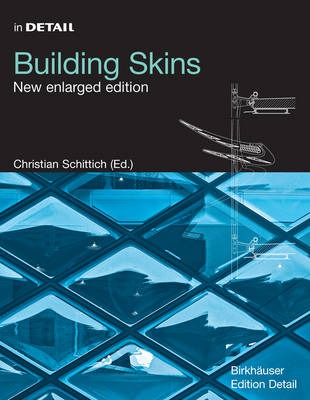
Focuses on the wide-ranging aspects of facade design, from the selection and use of materials to the advanced technical possibilities now open to the architect. A wide array of carefully selected international examples show the theory in the practice.
Provides the readers with a timely guide to the application of biomimetic principles in architecture and engineering design. As a result of a combined effort by two internationally recognized authorities, the biologist Werner Nachtigall and the architect Göran Pohl, the book describes the principles which can be used to compare nature and technology, and at the same time it presents detailed explanations and examples showing how biology can be used as a source of inspiration and “translated” in building and architectural solutions (biomimicry). Even though nature cannot be directly copied, the living world can provide architects and engineers with a wealth of analogues and inspirations for their own creative designs. But how can analysis of natural entities give rise to advanced and sustainable design? By reporting on the latest bionic design methods and using extensive artwork, the book guides readers through the field of nature-inspired architecture, offering an extraordinary resource for professional architects, engineers, designers and urban planners, as well as for university teachers, researchers and students.
This book offers an optimistic view of the future and provides a road map for societies to get there. Drawing upon extensive research and many years as a thought leader in environmental and sustainability issues in Japan and internationally, Hiroshi Komiyama analyzes the most pressing challenges to the attainment of sustainability of economically advanced nations and argues forcefully for Japan to lead them out of the present dilemma through active promotion of creative consumer and societal demand. He shows how an active industry–government–academic partnership can provide the environment needed to promote such new creative demand and illustrates its potential through presentation of a Platinum Society Network that was launched on a regional basis in Japan in 2010 to facilitate the solution of common issues through the exchange of information and ideas.
The facade serves as the building's public face, allowing rapid assessment of its architecture. 'Best of Detail: Facades' explores this topic with theoretical discussions and an in-depth look at a range of selected projects, which, besides showcasing suitable materials and designs, give the reader a detailed look behind the scenes. It turns out that quality architecture can only result from a coherency between the facade, structure, internal organisation and building services design elements that interact directly with each other. This presents the architect with enormous challenges, particularly as the unity between the exterior and interior is no longer a given, as today's range of materials and design possibilities offer nearly limitless creativity.
This book reviews Dante Bini’s inventions and designs, focusing on his form-resistant Binishell and other pneumatic construction systems. Dante Bini’s double profile of architect and builder underpins the narrative of the entire book. It is used to analyse the evolution of the early reinforced-concrete Binishell patent into a variety of automated construction systems based on the use of air. Dante Bini has always been quite proactive in promoting his work and disseminating the results of his experimentations and achievements via journal articles, conference presentations and public talks.
The book is divided into seven chapters, which in turn analyze the interconnections between the novel and architecture in theory and in practice. The first six chapters cover debates on State art, on the novel and on architecture, as well as their historical development and their unfolding in key journals of the period. The last chapter offers a detailed analysis of some important novels and buildings, which have in practice realized some of the key principles articulated in the theoretical disputes.

Daraa Highway - Ghabagheb - Syria
+963-15 2050 - 15 860 380 /1/2/3 - 11 662 3900