


Refine Results
Sort By
From
To

Provides a comprehensive overview of the oral and maxillofacial subjects in dentistry that students will need in order to pass their final exams. This invaluable adjunct to exam preparation provides a practical synthesis of core information, reflecting real-life case scenarios. Information is structured to enhance understanding and clinical decision making, and a variety of self-assessment methods prepare students for success. Comprehensively updated, the book covers a range of essential topics in the field of contemporary oral and maxillofacial subjects, including surgical flap design, state-of-the-art surgical techniques, zygomatic implants, molecular pathology, current imaging applications and pain management. The text is integrated and evidence based throughout. Covers oral and maxillofacial surgery, radiology, pathology and oral medicine subjects Brand new chapter on facial skin broadens diagnostic ability Range of self-assessment tasks to support learning Aligns to dental school curricula globally Concise and easy to follow Designed to support recall for examination purposes Practical guidance on examination preparation and skills Perfect for BDS exam preparation and candidates taking the MFDS, MJDF, ORE or other post-graduate exams
Explains the core procedures in dentistry, how to do them, and the rationale that underpins them. Full of useful and easy-to-access information, it acts as a compendium of practical procedures in primary dental care, supporting students and dental practitioners in their daily professional and academic lives. This manual is a complete, practical guide to the delivery of effective, state of the art oral healthcare—the ‘what, when, and how’ of clinical practice. It compiles chapters written by expert clinicians on topics such as dental imaging, the management of dental pain, conscious sedation, operative dentistry, implant dentistry, oral medicine and surgery, paediatric dentistry, periodontics, prosthodontics, special care dentistry, dental trauma, aesthetic dentistry, and much more.

Describes the challenges that deep carious lesions pose for dental practitioners, including the risk of endodontic complications and the difficulty of restorative treatment, and identifies options for overcoming these challenges on the basis of the best available evidence. The opening chapter sets the scene by discussing pathophysiology, histopathology, clinical symptomatology, and treatment thresholds. The various treatment options are then systematically presented and reviewed, covering non-selective, stepwise, and selective carious tissue removal and restoration, sealing of lesions using resin sealants or crowns, and non-restorative management approaches. In each case the current evidence with respect to the treatment is carefully evaluated. Advantages and disadvantages are explained and recommendations made on when to use the treatment in question. Illustrative clinical cases and treatment pathways for clinicians are included. This book will be of value for all practitioners who treat dental caries and carious lesions, whether in the permanent or the primary dentition. It will also be of interest to under- and postgraduate students in cariology and restorative, operative, preventive, and pediatric dentistry.
Presents clear and consistent guidance on all aspects of both common and less common, minor and major complications encountered in oral and maxillofacial surgery (OMS) practice. In-depth chapters provide thorough descriptions of each complication and recommend treatment strategies for associated complications of anesthesia, implant surgery, maxillofacial trauma, and more, using easy to read algorithms.
Provides complete instructions for the safe and effective administration of local anesthesia. Written by noted dental hygiene educator Demetra Logothetis, the first edition won a 2012 PROSE Honorable Mention award. This edition adds a new chapter on children and adolescent patients, plus new coverage of anesthetic agents and advanced techniques.
A comprehensive guide to the use of local anaesthesia in dentistry that will meet the needs of both students and dental practitioners. It provides the reader with ample background information on the origin of pain and the pharmacology of anaesthetics, and describes the anatomy of the trigeminal nerve in detail. Subsequent chapters cover key are as such as general practical aspects, local anesthaesia in the upper and the lower jaw, the use of local anaesthetics in children, local and systematic complications, and the prevention of side effects. Patients at particular risk of adverse effects are identified and attention drawn to significant legal aspects.
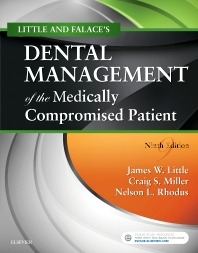
Learn how to provide dental care to any patient, regardless of existing medical conditions. Little and Falace’s Dental Management of the Medically Compromised Patient, 9th Edition, has been thoroughly revised to give you the information you need to assess common problems, and make safe and healthy dental management decisions. The new addition includes expanded coverage of women’s health issues and introduces a process for developing a medical-risk source. Also, each chapter features vivid illustrations and well-organized tables to give you in-depth details and overall summaries to help you get to the root of your future patients’ needs.
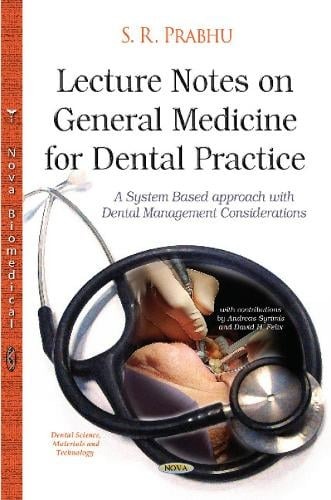
Offers a system based approach covering a broad range of topics in general medicine for dental practice. The book includes chapters on history taking and patient interview, general physical examination, system specific examination, common health related complaints, systemic infections, and diseases of the gastrointestinal, cardiovascular, respiratory, neurological, immunological, renal, endocrinal, dermatological and musculoskeletal systems. Nutritional disorders, psychiatric disorders, the female patient with menstrual, menopause and pregnancy related disorders, dental management of patients taking medications for systemic conditions and medical emergencies in dental practice have also been discussed in some detail.
Describes the most commonly encountered endodontic complications and provides up-to-date information on their prevention and management. The opening chapters explain the importance of accurate diagnosis and treatment planning, outline the role of digital radiography and CBCT in managing complications, and highlight the need for close attention to anatomic landmarks in order to avoid damage to neurovascular anatomy. Endodontic problems associated with different procedural errors are then discussed in detail, covering a wide variety of access- and instrumentation-related complications and the difficulties that may arise when using obturation techniques. Readers will also find information on the endodontic–periodontal relationship, special issues in geriatric patients, and the potential medical emergencies and precautions in specific patient subsets.
The book has been well received internationally by a wide audience of clinicians, including general dentists, oral surgeons, otolaryngologists, primary care physicians, nurse practitioners, dental hygienists, physician assistants, and dermatologists, and sales have been strong among students and post-graduate residents training in medical, dental, and allied health fields, supporting the versatility of this work and serving as testimony to its value in both the academic and private practice arenas. Several key updates and improvements have been made to the second edition. All informational content has been updated to ensure accuracy and relevance, particularly in the rapidly evolving fields of oncology and pharmacology. A new chapter has been added entitled "Oral Sequelae of Cancer and Cancer Therapy" which better organizes and consolidates previous content while expanding on topics such as targeted therapies and hematopoietic stem cell transplantation. Additional clinical images have been included throughout the book so that the full clinical spectrum of any given condition is well-represented. Furthermore, the print quality, as well as the positioning and layout of the clinical images has been improved for optimal utility. Lastly, the summary boxes that follow each condition have been reconfigured with color-coded icons for improved definition, ease of use and cross-referencing.
Presents the most current and comprehensive review of oral anatomy for clinicians and researchers alike. In 26 chapters, the reader is taken on a unique anatomical journey, starting with the oral fissure, continuing via the maxilla and mandible to the tongue and floor of the mouth, and concluding with the temporomandibular joint and masticatory muscles. Each chapter offers a detailed description of the relevant anatomical structures and their spatial relationships, provides quantitative morphological assessments, and explains the relevance of the region for clinical dentistry. All dental health care professionals require a sound knowledge of anatomy for the purposes of diagnostics, treatment planning, and therapeutic intervention. A full understanding of the relationship between anatomy and clinical practice is the ultimate objective, and this book will enable the reader to achieve such understanding as the basis for provision of the best possible treatment for each individual patient as well as recognition and comprehension of unexpected clinical findings.

Dr. Kao and a team of experts begin by discussing anatomy, radiographic image applications and limitations, and then provide step-by-step clinical procedures for the lateral window technique, including piezosurgery, and the trans-alveolar methods, including balloon and controlled hydostatic sinus elevation. Also included are chapters on post-operative care and complication management.
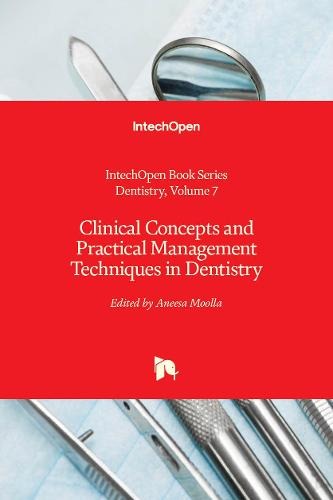
Deals with complete oral health, including prevention, treatment, and cure. This book provides readers with the latest updates on dental clinical concepts and practical management techniques. It is divided into four sections that contain in-depth chapters with concepts and techniques from the fields of oral medicine, periodontology, radiology, endodontics, restorative dentistry, dental trauma, and probability and sampling. It is a compendium of work by internationally recognized oral clinicians and public healthcare leaders in dentistry. It presents updates on some of the most pertinent issues within the practice of dentistry, such as regenerative endodontic procedures, the unique role of radiographs, recognition of child abuse, and dental statistics.
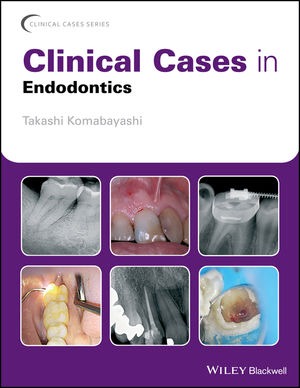
Presents actual clinical cases, accompanied by academic commentary, that question and educate the reader about essential topics in endodontic therapy. It begins with sets of cases illustrating the most common diagnoses and the steps involved in preparing a treatment plan. Subsequent chapters continue in this style, presenting exemplary cases as the basis of discussing various treatment options, including nonsurgical root canal treatment, re-treatment, periapical surgery, internal and external resorption, emergencies and trauma, and treating incompletely developed apices.
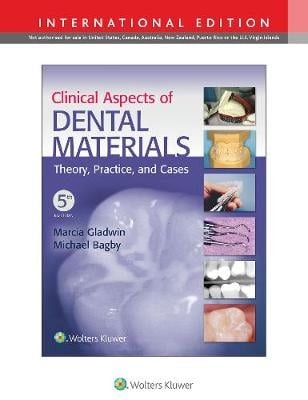
The book’s three-part structure addresses types of dental materials in the 22 chapters of Part I, includes laboratory and clinical applications (essentially a built-in lab manual) in Part II, and presents 11 case studies in Part III that serve as an overall review and help students strengthen their critical thinking skills when providing patient care.
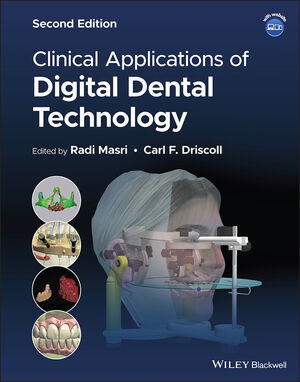
Provides comprehensive yet practical references to a wide range of potential uses for digital technology in dental practice, discussing a wide range of digital technologies including their indications, contraindications, advantages, disadvantages, limitations, and applications. Overall, the book emphasizes how to use digital dentistry in daily practice across all specialties. With broad coverage of the subject, Clinical Applications of Digital Dental Technology discusses digital imaging, digital impressions, digital prosthodontics, digital implant planning and placement, and digital applications in endodontics, orthodontics, and oral surgery. Each chapter is written by experts in each topic and covers applications for prosthodontics, implant dentistry, oral surgery, endodontics, orthodontics, and other specialty areas.
Provides a comprehensive overview of current developments in anaesthesiology. The chapters : Solutions for Insufficient Epidural Analgesia for Planned Vaginal Birth and Interdisciplinary Emergencies in the Delivery Room, Anesthesia for Robotic Surgeries in Children, Anesthetic Management of Bronchoscopic Lung Volume Reduction, General Anaesthesia in the Context of Haemorrhagic Shock and Trauma, Anesthesiologic Management of Patients with Opioids or Psychoactive Substance Use, Fascial Plane Blocks, Considerations and New Perspectives of Locoregional Anesthesia in Dentistry, The Effect of Parental Anxiety on Postoperative Paediatric Cognitive Dysfunction.
Provides a detailed step-by-step approach to the dissection of the forehead, face, and neck, in a structural, layered approach. This dissection manual follows an atlas format, with color photographs from past professional lectures and classroom courses, as well as line drawings, enhancing descriptions. Clinical correlations are also interjected throughout to highlight the importance of individual anatomic structures. Chapters describe the preparation and storage of specimens and the dissection of the forehead and eyebrows, the midface, nose, ear, and lower face, and the neck.
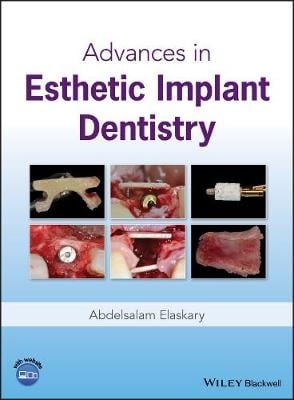
A comprehensive and highly illustrated reference on current topics in esthetic dental implant therapy. Offering innovative step-by-step protocols for surgical techniques and case studies, the book presents practical, clinically oriented guidance firmly anchored in solid scientific research. A companion website provides videos of clinical procedures and follow-up case studies. Emphasizes the physiology of labial plate of bone and its influence to the overall fate of implant placement in fresh extraction sites, including several cutting-edge techniques to restore and treat deficient labial plate of bone. A novel chapter offers a solid protocol to diagnose, categorize, and treat implant-related gingival recession predictably.
Includes eight chapters that focus on various important aspects of dental prosthetics and implantology, such as modern materials choices, prosthetic management of teeth malposition, and novel approaches to restoration design.

Daraa Highway - Ghabagheb - Syria
+963-15 2050 - 15 860 380 /1/2/3 - 11 662 3900