


Refine Results
Sort By
From
To


In this work Dr. Taylor surveys the federal countries of the world and asks how they divide power among the constituent units of the federation. In so doing, he considers not only the formal constitutional text, but, far more importantly, the case law that has grown up around it as the Courts develop approaches to interpreting provisions for the distribution of powers. This enables conclusions to be drawn about the effectiveness of various structural and interpretative approaches to the distribution of powers within federations.
This book is on evidence for character judgments, This book answers the question using a model of abductive reasoning, commonly called inference to the best explanation. The methodology of the book derives from recent work on models of reasoning in argumentation theory and artificial intelligence. The aim is not just to show how character judgments are made, but to show how they should be properly be made based on sound reasoning, in order to avoid errors and superficial judgments of a kind that are common.
This carefully edited book presents a focused debate on the mathematics and physics of chaos, nonlinearity and complexity in nature. It explores the role of non-extensive statistical mechanics in non-equilibrium thermodynamics, and presents an overview of the strong nonlinearity of chaos and complexity in natural systems that draws on the relevant mathematics from topology, measure-theory, inverse and ill-posed problems, set-valued analysis, and nonlinear functional analysis. It presents a self-contained scientific theory of complexity and complex systems as the steady state of non-equilibrium systems, denoting a homeostatic dynamic equilibrium between stabilizing order and destabilizing disorder.
This volume introduces and reviews novel theoretical approaches to modeling strongly nonlinear behaviour of either individual or interacting structural mechanical units such as beams, plates and shells or composite systems thereof.

This book is intended as an introduction to the field of planetary systems at the postgraduate level. It consists of four extensive lectures on Hamiltonian dynamics, celestial mechanics, the structure of extrasolar planetary systems and the formation of planets. As such, this volume is particularly suitable for those who need to understand the substantial connections between these different topics.

This new edition strives yet again to provide readers with a working knowledge of chaos theory and dynamical systems through parallel introductory explanations in the book and interaction with carefully-selected programs supplied on the accompanying diskette. The programs enable readers, especially advanced-undergraduate students in physics, engineering, and math, to tackle relevant physical systems quickly on their PCs, without distraction from algorithmic details. For the third edition of Chaos: A Program Collection for the PC, each of the previous twelve programs is polished and rewritten in C++ (both Windows and Linux versions are included). A new program treats kicked systems, an important class of two-dimensional problems, which is introduced in Chapter 13. Each chapter follows the structure: theoretical background; numerical techniques; interaction with the program; computer experiments; real experiments and empirical evidence; reference.

It merges political ecology, collective-action theories, and institutional analysis to study how the people and forests have changed through socioeconomic and political transitions. It studies the complex, often contradictory relationships between the people and their natural resources to understand why forest cover endures."Changing Forests" therefore encompasses three broad phases: (1) the premodern period, which considers historic perturbations in western Honduras from the period of colonialism into the middle of the twentieth century; (2) the period of state-led logging and intervention in La Campa, which caused major degradation in forest cover; and (3) the recent period in which export coffee production transformed property rights, and people’s perceptions of the forest gained new conservationist and economic dimensions. Each phase entails perspectives and experiences that influenced human use of forests, and shaped subsequent transformations.
This book responds to the growing unease of educators and non-educators alike about the inadequacy of most current educational systems and programs to meet sufficiently the demands of fast changing societies. These systems and programs evolved and were developed in and for societies that have long been transformed, and yet no parallel transformation has taken place in the education systems they spawned. In the last twenty years or so, other sectors of society, such as transportation and communications systems, have radically changed the way they operate, but education has remained essentially the same. There is no doubt: education needs to change.
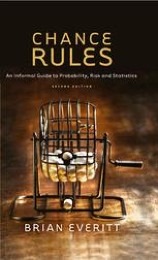
This second edition of Chance Rules again recounts the story of chance through history and the various ways it impacts on our lives. Here you can read about the earliest gamblers who thought that the fall of the dice was controlled by the gods, as well as the modern geneticist and quantum theory researcher trying to integrate aspects of probability into their chosen speciality. Example included in the first addition such as the infamous Monty Hall problem, tossing coins, coincidences, horse racing, birthdays and babies remain, often with an expanded discussion, in this edition. Additional material in the second edition includes, a probabilistic explanation of why things were better when you were younger, consideration of whether you can use probability to prove the existence of God, how long you may have to wait to win the lottery, some court room dramas, predicting the future, and how evolution scores over creationism. Chance Rules lets you learn about probability without complex mathematics.

For this book, the editors invited and called for contributions from indispensable research areas relevant to "chance discovery," which has been defined as the discovery of events significant for making a decision, and studied since 2000. From respective research areas as artificial intelligence, mathematics, cognitive science, medical science, risk management, methodologies for design and communication, the invited and selected authors in this book present their particular approaches to chance discovery. The chapters here show contributions to identifying rare or hidden events and explaining their significance, predicting future trends, communications for scenario development in marketing and design, identification effects and side-effects of medicines, etc.
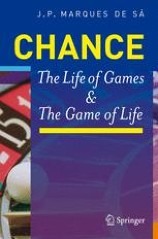
With its many easy-to-follow mathematical examples, this book takes the reader on an almost chronological trip through the fascinating and amazing laws of chance, omnipresent in the natural world and in our daily lives. Along the route many fascinating topics are discussed, such as: challenging probability paradoxes; "paranormal" coincidences; game odds; causes and effects; interpretation of opinion polls; winning chances as a game proceeds; the nature of randomness; entropy and randomness; randomness in life; algorithmic complexity and the undecidability of randomness; possibilities and limitations of learning the laws of a Universe immersed in chance events. This charming book will inform and entertain the scientist and non-scientist alike.
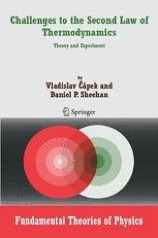
The second law of thermodynamics is considered one of the central laws of science, engineering and technology. For over a century it has been assumed to be inviolable by the scientific community. Over the last 10-20 years, however, more than two dozen challenges to it have appeared in the physical literature - more than during any other period in its 150-year history. The number and variety of these represent a cogent threat to its absolute status. This is the first book to document and critique these modern challenges. Written by two leading exponents of this rapidly emerging field, it covers the theoretical and experimental aspects of principal challenges. In addition, unresolved foundational issues concerning entropy and the second law are explored. This book should be of interest to anyone whose work or research is touched by the second law.

The book covers radiation protection and nuclear safety supervision of installations built during the cold war, particularly in relation to regulatory strategies for safe decommissioning of unique or unusual nuclear facilities and remediation
This book combines insights from language assessment literacy and critical language testing through critical analyses and research about challenges in language assessment around the world. It investigates problematic practices in language testing which are relevant to language test users such as language program directors, testing centers, and language teachers, as well as teachers-in-training in Graduate Diploma and Master of Arts in Applied Linguistics programs. These issues involve aspects of language testing such as test development, test administration, scoring, and interpretation/use of test results.

Computational Intelligence (CI) is used as a name to cover many existing branches of science, with artificial neural networks, fuzzy systems and evolutionary computation forming its core. In recent years CI has been extended by adding many other subdisciplines and it became quite obvious that this new field also requires a series of challenging problems that will give it a sense of direction. Without setting up clear goals and yardsticks to measure progress on the way many research efforts are wasted.The book written by top experts in CI provides such clear directions and the much-needed focus on the most important and challenging research issues, showing a roadmap how to achieve ambitious goals.
There is much ambivalence in women’s experience of the academy as teachers and students. Although today many more women follow academic careers than in the past, they do not find the welcome that they had hoped for and expected. Additionally, women students find that whilst they can now enter through the doors of universities, academic space remains embedded in structures and cultures of gender and social class. This book is a clear and accessible exploration of lifelong learning and educational opportunities for women in higher education. It has been developed from work undertaken by members of the Women in Higher Education Network with chapters organised in three thematic sections: Ambivalent Positions in the Academy / Process and Pedagogy at Work / Career – Identity – Home

Chalcogenocarboxylic acid derivatives are a large class of compounds including more than one chalcogenocarboxyl group in which one or two oxygen atoms of the carboxyl group are replaced with sulfur, selenium or tellurium atoms. The chemistry of metal chalcogenocarboxylates has not been explored extensively as that of carboxylates and dithiocarbamates. This volume presents a comprehensive overview of the syntheses and their limitations, structures and reactions of chalcogenocarboxylic acid derivatives, by emphasizing the developments in organic and inorganic chalcogen chemistry over the last 5 to 20 years.
This book contains a selection of lectures from the first Summer School organized by the Center for Functional Nanostructures (CFN) at the University of Karlsruhe. The mission of the CFN is to carry out research in the following areas: nanophotonics, nanoelectronics, molecular nanostructures and nanostructured materials. The aim of the summer schools is mainly to exchange new ideas and illustrate emerging research methodologies through a series of lectures. This is reflected by both the selection of topics addressed in the present volume as well as the tutorial aspect of the contributions.
Ceramic Materials: Science and Engineering is an up-to-date treatment of ceramic science, engineering, and applications in a single, integrated text. Building on a foundation of crystal structures, phase equilibria, defects and the mechanical properties of ceramic materials, students are shown how these materials are processed for a broad diversity of applications in today's society. Concepts such as how and why ions move, how ceramics interact with light and magnetic fields, and how they respond to temperature changes are discussed in the context of their applications. References to the art and history of ceramics are included throughout the text. The text concludes with discussions of ceramics in biology and medicine, ceramics as gemstones and the role of ceramics in the interplay between industry and the environment. The text is extensively illustrated and includes references and questions for the student.
Ceramic and Glass Materials: Structure, Properties and Processing is a concise and comprehensive guide to the key ceramic and glass materials used in modern technology. Each chapter focuses on the structure-property relationships for these important materials and expands the reader’s understanding of their nature by simultaneously discussing the technology of their processing methods. In each case, the resulting understanding of the contemporary applications of the materials provides insights as to their future roles in twenty first century engineering and technology. Organized to be a practical and comprehensive resource, each chapter is dedicated to a specific material such as: alumina, mullite, sillimanite minerals, aluminates, quartz and silicas, refractory oxides, clays, concrete and cement, lead compounds, and zirconia.

Daraa Highway - Ghabagheb - Syria
+963-15 2050 - 15 860 380 /1/2/3 - 11 662 3900