


Refine Results
Sort By
From
To


One principal need in petroleum recovery from carbonate reservoirs is the description of the three-dimensional distribution of petrophysical properties in order to improve performance predictions by means of fluid-flow computer simulations. The book focuses on a rock based approach for the integration of geological, petrophysical, and geostatistical methods to construct a reservoir model suitable to input into flow simulation programs. This second edition includes a new chapter on model construction and new examples of limestone, dolostone, and touching-vug reservoir models as well as improved chapters on basic petrophysical properties, rock-fabric/petrophysical relationships, calibration of wireline logs, and sequence stratigraphy.

A nanotube can bend easily but still is very robust. The nanotubes can be manipulated and contacted to external electrodes. Their diameter is in the nanometer range, whereas their length may exceed several micrometers, if not several millimeters. In diameter, the nanotubes behave like molecules with quantized energy levels, while in length, they behave like a crystal with a continuous distribution of momenta. Depending on its exact atomic structure, a single-wall nanotube –that is to say a nanotube composed of just one rolled-up graphene sheet– may be either a metal or a semiconductor. The nanotubes can carry a large electric current, they are also good thermal conductors.

The carbon nanotubes field has evolved substantially since the publication of the bestseller "Carbon Nanotubes: Synthesis, Structure, Properties and Applications". The present volume builds on the generic aspects of the aforementioned book, which emphasizes the fundamentals, with the new volume emphasizing areas that have grown rapidly since the first volume, guiding future directions where research is needed and highlighting applications. The volume also includes an emphasis on areas like graphene, other carbon-like and other tube-like materials because these fields are likely to affect and influence developments in nanotubes in the next 5 years.

Carbon and carbon dioxide always played an important role in the geobiosphere that is part of the Earth’s outer shell and surface environment. The book’s eleven chapters cover the fundamentals of the biogeochemical behavior of carbon near the Earth’s surface, in the atmosphere, minerals, waters, air-sea exchange, and inorganic and biological processes fractionating the carbon isotopes, and its role in the evolution of inorganic and biogenic sediments, ocean water, the coupling to nutrient nitrogen and phosphorus cycles, and the future of the carbon cycle in the Anthropocene. This book is mainly a reference text for Earth and environmental scientists; it presents an overview of the origins and behavior of the carbon cycle and atmospheric carbon dioxide, and the human effects on them. The book can also be used for a one-semester course at an intermediate to advanced level addressing the behavior of the carbon and related cycles.

Carbon is chemically versatile and is thus the body and soul of biological, geological, ecological and economic systems. Its appropriation by humans through diversion of its biogeochemical cycle has been a mainstay of development. This domestication is characterized by a number of thresholds: control of fire, development of agriculture, expansion of Europe, fossil-fuel use and biotechnology. All have exacted an environmental toll, not least being climatic change and biodiversity loss. Carbon management now and in the future is a ‘hot’ political issue.
Carbon-based materials and their applications constitute a burgeoning topic of scientific research among scientists and engineers attracted from diverse areas such as applied physics, materials science, biology, mechanics, electronics and engineering. Further development of current materials, advances in their applications, and discovery of new forms of carbon are the themes addressed by the frontier research in these fields. This book covers all the fundamental topics concerned with amorphous and crystalline C-based materials, such as diamond, diamond-like carbon, carbon alloys, carbon nanotubes. The goal is, by coherently progressing from growth - and characterisation techniques to technological applications for each class of material, to fashion the first comprehensive state-of-the-art review of this fast evolving field of research in carbon materials.
Canonical Perturbation Theories, Degenerate Systems and Resonance presents the foundations of Hamiltonian Perturbation Theories used in Celestial Mechanics, emphasizing the Lie Series Theory and its application to degenerate systems and resonance. This book is the complete text on the subject including advanced topics in Hamiltonian Mechanics, Hori’s Theory, and the classical theories of Poincaré, von Zeipel-Brouwer, and Delaunay.

The last decade has seen a dramatic shift in anticancer drug research towards agents that aim to target selectively key regulatory and signaling processes known to drive tumorigenesis. A number of these newer agents have now been introduced into clinical practice. This volume reviews advances in cancer chemotherapy research over the last 10 years and will be of interest to scientists engaged in drug research in the pharmaceutical industry, biotechnology and startup companies, academia and government institutions. Chapters written by leading experts in their field reflect a range of current medicinal chemistry approaches to small molecule drugs, including anti-hormonal therapy, growth factor inhibition, survival signaling, cell cycle inhibition, anti-angiogenics and anti-nvasives. Each chapter aims to cover the drug target and biological rationale, chemotypes, clinical status and future prospects in this rapidly developing area of drug research.

Calixarenes have been widely exploited in all areas of supramolecular chemistry over the past three decades and many recent developments have concerned their applications in the production of chemical entities with the dimensions of nanometres, as in "nanochemistry".Calixarenes in the Nanoworld Relates calixarenes to nanochemistry – key information for industries engaged in the production of high-tech materials. Provides a timely review of both what is known and the exciting prospects provided by calixarenes, Contains several review articles which define the importance of calixarenes as reagents in nanochemistry.

It is shown that in order to achieve high speed and high accuracy at high power efficiency, calibration is required. Calibration reduces the overall power consumption by using the available digital processing capability to relax the demands on critical power hungry analog components. Several calibration techniques are analyzed. The calibration techniques presented in this book are applicable to other analog-to-digital systems, such as those applied in integrated receivers. Further refinements will allow using analog components with less accuracy, which will then be compensated by digital signal processing. The presented methods allow implementing this without introducing a speed or power penalty.

Calibrating the Cosmos describes hard science, but is gently written. It explains in clear, non-mathematical language the measurements and the interpretation of the resulting data that have led to the current understanding of the origin, evolution and properties of our expanding Big Bang universe. Many people have a sketchy idea of the work of cosmologists, but Professor Levin’s experience in teaching both scientific and liberal arts students has enabled him to impart much of our current thinking without resorting to difficult mathematics. Theoretical concepts are emphasized, in particular the symmetries of homogeneity and isotropy enjoyed by our universe on the largest scales, how these symmetries lead to only one quantity being needed to describe the growth of the universe from its infancy to the present time, and how the so-called parameters of the universe are the ingredients used to construct the model universes to which ours – the real thing – is compared.
Aimed at first-year undergraduates in mathematics and the physical sciences, the only prerequisites are basic algebra, coordinate geometry and the beginnings of differentiation as covered in school. The transition from school to university mathematics is addressed by means of a systematic development of important classes of techniques, and through careful discussion of the basic definitions and some of the theorems of calculus, with proofs where appropriate, but stopping short of the rigour involved in Real Analysis.The influence of technology on the learning and teaching of mathematics is recognised through the use of the computer algebra and graphical package MAPLE to illustrate many of the ideas.
The present monograph gives a short and concise introduction to classical and quantum mechanics on two-point homogenous Riemannian spaces, with empahsis on spaces with constant curvature. Chapter 1-4 provide the basic notations from differential geometry for studying two-body dynamics in these spaces. Chapter 5 deals with the problem of finding explicitly invariant expressions for the two-body quantum Hamiltonian. Chapter 6 addresses one-body problems in a central potential. Chapter 7 studies the classical counterpart of the quantum system of chapter 5. Chapter 8 investigates some applications in the quantum realm, namely for the coulomb and oscillator potentials.

This textbook is an introduction to Scientific Calculus, illustrating various numerical methods for the computer solution of certain classes of mathematical problems. The authors show how to compute the zeros or integrals of continuous functions, solve linear systems, approximate functions by polynomials, and construct precise approximations for the solution of differential equations. To make the presentation concrete and attractive, the MATLAB programming environment has been adopted as a faithful companion.
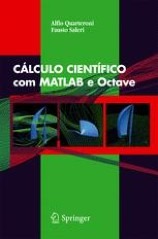
Its objective is to present various numerical methods for solving certain mathematical problems on the computer that cannot be treated in a simpler way. Classical issues such as the computation of zeros or integrals of continuous functions, the solving of linear systems, the approximation of functions by polynomials and the construction of precise approximations for solutions of differential equations are addressed. All algorithms are presented in the programming languages MATLAB and Octave, whose main commands and instructions are introduced gradually, aiming in particular at their compatibility in both languages.

Offers an introduction to the mathematical, probabilistic and numerical methods that are the basis of the models for the valuation of derivative instruments, such as options and futures, dealt with in modern financial markets. The book is aimed at readers with scientific training, wishing to develop skills in the field of stochastic calculus applied to finance.

Calcium performs diverse biological functions in the human body and is a micronutrient essential to human health and well-being. It serves as a second messenger for nearly every biological process, stabilizes many proteins, and in deficient amounts is associated with a large number diseases and disorders. In Calcium in Human Health, a panel of highly respected researchers and clinical practitioners comprehensively reviews the state of our knowledge concerning this ubiquitous micronutrient, not only demonstrating its importance to human health, but also defining its many complex roles.

This book consists of a collection of original, refereed research and expository articles on elliptic aspects of geometric analysis on manifolds, including singular, foliated and non-commutative spaces. There are contributions from leading specialists, and the book maintains a reasonable balance between research, expository and mixed papers.
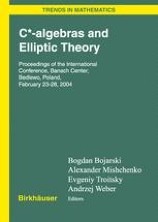
This volume contains the proceedings of the conference on "C*-algebras and Elliptic Theory" held in Bedlewo, Poland, in February 2004. It consists of original research papers and expository articles focussing on index theory and topology of manifolds.The collection offers a cross-section of significant recent advances in several fields, the main subject being K-theory (of C*-algebras, equivariant K-theory). A number of papers is related to the index theory of pseudodifferential operators on singular manifolds (with boundaries, corners) or open manifolds. Further topics are Hopf cyclic cohomology, geometry of foliations, residue theory, Fredholm pairs and others.

This friendly guide equips you with a step-by-step method for planning what to say and how to say it in writing. This sytem empowers you to handle every writing challenge with confidence, from emails to proposals, reports to resumes, presentations to video scripts, blogs to social posts, websites to books. Discover down-to-earth techniques for sharpening your language and correcting your own writing problems. Learn how to adapt content, tone and style for each medium and audience. And learn to use every message you write to build better relationships and solve problems, while getting to the “yes” you want.

Daraa Highway - Ghabagheb - Syria
+963-15 2050 - 15 860 380 /1/2/3 - 11 662 3900