


Refine Results
Sort By
From
To

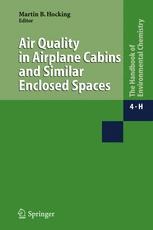
The editor of this volume invited a wide range of experts to provide an in-depth treatment of virtually all aspects of aircraft cabin air quality. The topics are covered at a level comprehensible to all who fly as well as being of sufficient depth to be informative to decision makers concerned with purchase, design, operation, and servicing of passenger aircraft. Topics are grouped under: Control of Aircraft Cabin Air Quality; Possible Effects of Low Humidity, Decreased Outside Air Flows; and Effects of Some Aircraft Malfunctions on Cabin Air Quality. The volume concludes with Air Quality Systems for Related Enclosed Spaces, in which chapters cover air quality in buildings, ships, submarines, and spacecraft, which provide novel approaches potentially applicable to aircraft.
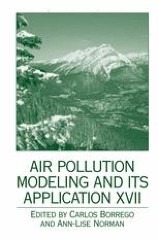
This volume contains the papers and posters presented at the 27 NATO/CCMS International Technical Meeting on Air Pollution Modeling and Its Application held in Banff, Canada, 24-29 October 2004. The key topics at this ITM included: Role of Atmospheric Models in Air Pollution Policy and Abatement Strategies; Integrated Regional Modeling; Effects of Climate Change on Air Quality; Aerosols as Atmospheric Contaminants; New Developments; and Model Assessment and Verification. 104 participants from North and South America, Europe, Africa and Asia attended th the 27 ITM.
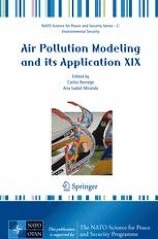
The book is aimed at researchers and government policy makers who wish to keep abreast of the most recent developments in air pollution modelling and air quality issues. The book emphasizes the following key topics: 1. Local and urban scale modelling; 2. Regional and intercontinental modelling; 3. Data assimilation and air quality forecast; 4. Model assessment and verification; 5. Aerosols in the atmosphere; 6. Interactions between air quality and climate change; 7. Air quality and human health.
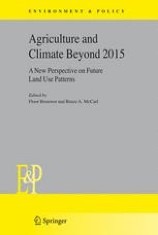
Interactions between agriculture, climate and patterns of land use are complex. Major changes in agriculture, and land use patterns are foreseen in the next couple of decades in response to shifts in climate, greenhouse gas management initiatives, population growth and other forces. The book explores key interactions between changes in agriculture, patterns of land use and efforts to reduce greenhouse emissions from agriculture. The volume is based on inter-disciplinary science and policy interactions, exploring the way land use may aid in addressing or be affected by the onset of climate change and alterations in food demand. Future forces shaping land use decisions are examined, and its sensitivity to climate change is highlighted. Patterns of land use and the agricultural role in climate change mitigation are explored. Also, policy and social responses to the new perspectives on future land use patterns are identified. The perspective of the book is beyond the year 2015.

Consists of various topics, including radioactivity inspection of food products; decontamination trials for rice and livestock production; the state of contamination in wild animals and birds, trees, mushrooms, and timber; the dynamics of radioactivity distribution in mountain and paddy fields; damage incurred by the forestry and fishery industries; and the change in consumers’ minds. The last chapter introduces a real-time radioisotope imaging system, the forefront technique to visualize actual movement of cesium in soil and in plants. This is the only book to provide systematic data about the actual change of radioactivity, and thus is of great value for all researchers who wish to understand the effect of radioactive fallout on agriculture.

Reports on studies undertaken at contaminated sites such as farmland, forests, and marine and freshwater environments, with a particular focus on livestock, wild plants and mushrooms, crops, and marine products in those environments. It also provides additional data collected in the subsequent years to show how the radioactivity levels in agricultural products and their growing environments have changed with time and the route by which radioactive materials entered agricultural products as well as their movement between different components (e.g., soil, water, and trees) within an environmental system (e.g., forests). The book covers various topics, including radioactivity testing of food products; decontamination trials for rice and livestock production; the state of contamination in, trees, mushrooms, and timber; the dynamics of radioactivity distribution in paddy fields and upland forests; damage incurred by the forestry and fishery industries; and the change in consumers’ attitudes. Chapter 19 introduces a real-time radioisotope imaging system, a pioneering technique to visualize the movement of cesium in soil and in plants.

Provides a comprehensive review of available techniques for the remote sensing of aerosols. Although mostly satellite remote sensing is considered, ground-based techniques are also discussed.describes techniques for the determination of the column concentration of aerosol particles and their optical sizing using spaceborne optical instrumentation. The majority of the techniques described in this book use a so-called "library method". This method relies upon the precalculated top-of-atmosphere reflectances (TOAR) for vaious atmospheric aerosol types. The comparison of measured and calculated TOARS allows one to characterize the optically-equivalent aerosol state.

Provides a comprehensive view of the chemical, dynamical, and radiative processes that affect ozone and other chemicals in the stratosphere and mesosphere. Over recent decades our understanding of these processes has increased dramatically. The discovery of the Antarctic ozone hole has shown that human activities can lead to major changes in our environment.
Contains peer-reviewed papers from the Fourth World Landslide Forum organized by the International Consortium on Landslides (ICL), the Global Promotion Committee of the International Programme on Landslides (IPL), University of Ljubljana (UL) and Geological Survey of Slovenia in Ljubljana, Slovenia from May 29 to June 2, 2017. The complete collection of papers from the Forum is published in five full-color volumes
The future of Earth’s ecosystems is increasingly influenced by the pace and patterns of urbanization. One of the greatest challenges for natural and social scientists is to understand how urbanizing regions evolve through the complex interactions between humans and ecological processes. Questions and methods of inquiry specific to our traditional disciplinary domains yield partial views that reflect different epistemologies and understandings of the world. In order to achieve the level of synthesis required to see the urban ecosystem as a whole we must change the way we pose questions and search for answers. Cities are the result of human and ecological processes occurring simultaneously in time and in space and the legacy of the simultaneous processes of the past. Urban ecology is the study of the co-evolution of human-ecological systems. Scholars of both urban systems and ecology must challenge the assumptions and world views within their disciplines and work towards a hybrid theory that builds on multiple world views.
There has been tremendous emphasis in unmanned aerial vehicles, both of fixed (airplanes) and rotary wing (vertical take off and landing, helicopters) types over the past ten years. Applications span both civilian and military domains, the latter being the most important at this stage. This edited book provides a solid and diversified reference source related to basic, applied research and development on small and miniature unmanned aerial vehicles, both fixed and rotary wing. As such, the book offers background information on the evolution of such vehicles over the years, followed by modeling and control fundamentals that are of paramount importance due to unmanned aerial vehicle model complexity, nonlinearity, coupling, inhirent instability and parameter values uncertainty. Aspects of navigation, including visual-based navigation and target tracking are discussed, followed by applications to attitude estimation on micro unmanned aerial vehicles, autonomous solar unmanned aerial vehicle, biomimetic sensing for autonomous flights in near-earth environments, localization of air-ground wireless sensor networks, decentralized formation tracking, design of an unmanned aerial vehicle for volcanic gas sampling and design of an on-board processing controller for miniature helicopters.

As is now generally accepted mankind’s burning of fossil fuels has resulted in the mass transfer of greenhouse gases to the atmosphere, a modification of the delicately-balanced global carbon cycle, and a measurable change in world-wide temperatures and climate. Although not the most powerful greenhouse gas, carbon dioxide (CO) drives climate 2 change due to the enormous volumes of this gas pumped into the atmosphere every day. Produced in almost equal parts by the transportation, industrial and energy-generating sectors, atmospheric CO concentrations have 2 increased by about 50% over the last 300 years, and according to some sources are predicted to increase by up to 200% over pre-industrial levels during the next 100 years. If we are to reverse this trend, in order to prevent significant environmental change in the future, action must be taken immediately.

The chapters in this volume were presented at the July 2005NATO Advanced Study Institute on Advances in Sensing with Security App- cations. The ASI was divided into three broadly de?ned but interrelated areas: the - creasing need for fast and accurate sensing, the scienti?c underpinnings of the ongoing revolution in sensing, and speci?c sensing algorithms and techniques. The ASI brought together world leaders from academia, government, andindustry,withextensivemultidisciplinarybackgroundsevidencedby theirresearchandparticipationinnumerousworkshopsandconferences.
This volume is a compilation of articles that summarize the most recent results in meteor, meteoroid and related fields presented at the Meteoroids 2007 conference held at the impressive CosmoCaixa Science Museum in Barcelona, Spain. The conference took place between the 11th and the 15th of June and was organized by the Institute of Space Sciences (Consejo Superior de Investigaciones Científicas, CSIC) and the Institut d'Estudis Espacials de Catalunya (IEEC). Researchers in meteor science and supporting fields representing more than 20 countries participated at this international conference.

It systematically summarizes the past achievements and identifies the frontier issues as the research agenda for the near future. It covers all aspects of land remote sensing, from sensor systems, physical modeling, inversion algorithms, to various applications. The papers on remote sensing system evaluate the capabilities of different sensor systems for estimating key land surface variables and how they can best be improved and integrated effectively in the future.
It is the vulnerable buildings - liable to cause damage and loss of life - that need immediate attention and urgent appraisal in order to decide if structural rehabilitation and upgrading are feasible. Current economic, efficient and occupant-friendly rehabilitation techniques vary widely and include the application either of precast concrete panels or layers, strips and patches of fiber reinforced polymers (FRP) in strategic locations. The papers in this book, many by renowned authorities in earthquake engineering, chart new and vital directions of research and application in the assessment and rehabilitation of buildings in seismic regions. While several papers discuss the probabilistic prediction and quantification of structural damage, others present approaches related with the in-situ and occupant friendly upgrading of buildings and propose both economical and practical techniques to address the problem.

Terrain analysis has been an active study field for years and attracted research studies from geographers, surveyors, engineers and computer scientists. With the rapid growth of Geographical Information System (GIS) technology, particularly the establishment of high resolution Digital Elevation Models (DEM) at national level, the challenge is now focused on delivering justifiable socio-economical and environmental benefits. The contributions in this book represent the state of the art of terrain analysis methods and techniques in areas of digital representation, morphological and hydrological models, uncertainty and applications of terrain analysis.
The individual papers represent a valuable collection of information on the current state-of-the-art research in the field of 3D geoinformation. It covers a range of these challenges, collected under the themes of Applications, Acquisition, Modelling, Analysis and Visualisation. The main strength of the collection concerns the data modelling and DBMS implementation issues with 3D GIS.
This book about Proceedings of the NATO Advanced Study Institute on Advanced Science and Technology for Biological Decontamination of Sites Affected by Chemical and Radiological Nuclear Agents, held in Zhitomir, Ukraine, 17-28 August 2005

Leading pollution control educators and practicing professionals describe how various combinations of different physicochemical treatment processes can be arranged to solve air, noise, and thermal pollution problems. In Advanced Physicochemical Treatment Processes, the authors discuss strategies for abating pollution by converting it into a less noxious form, using the most feasible technologies. Each chapter discusses in detail a variety of process combinations, along with technical and economic evaluations, and presents explanations of the principles behind the designs, as well as numerous variant designs useful to practicing engineers. The emphasis throughout is on developing the necessary engineering solutions from fundamental principles of chemistry, physics, and mathematics.

Daraa Highway - Ghabagheb - Syria
+963-15 2050 - 15 860 380 /1/2/3 - 11 662 3900