



الصفحة 1
الصفحة 1

Modeling Excitable Tissue : The EMI Framework
This volume presents a novel computational framework for understanding how collections of excitable cells work. The key approach in the text is to model excitable tissue by representing the individual cells constituting the tissue. This is in stark contrast to the common approach where homogenization is used to develop models where the cells are not explicitly present. The approach allows for very detailed analysis of small collections of excitable cells, but computational challenges limit the applicability in the presence of large collections of cells.

Human motion : Understanding, modeling, capture and animation
Edward Muybridge (1830–1904) is known as the pioneer in motion capt- ing with his famous experiments in 1887 called “Animal Locomotion”. Since then, the feld of animal or human motion analysis has grown in many dir- tions. However, research and results that involve human-like animation and the recovery of motion is still far from being satisfactory. Progress in human motion analysis depends on empirically anchored and grounded research in computer vision, computer graphics, and biomechanics. This book is based on a June 2006 workshop held in Dagstuhl, Germany. This workshop brought together for the frst time researchers from the afo- mentioned disciplines.
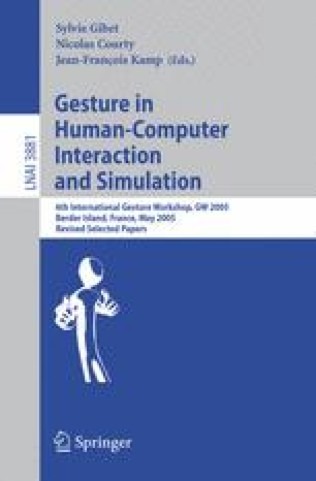
Gesture in Human-Computer Interaction and Simulation ; 6th International Gesture Workshop, GW 2005, Berder Island, France, May 18-20, 2005, Revised Selected Papers
The international Gesture Workshops have become the leading interdisciplinary events for dissemination of the latest results on gesture-based communication. The goal of these workshops is to bring together researchers who want to meet and share ideas on advanced research on gesture related to multidisciplinary scienti?c ?elds. Depending on the ?elds, the objectives can be very di?erent. While physiology and biomechanics aim to extract fundamental knowledge of physical gesture, computer sciences try to capture di?erent aspects of gesture and extract features that help to identify, interpret or rebuild the underlying mechanisms of communication gestures. Other approaches and methodologies are followed by cognitive sciences and linguistics, bringing a complementary - derstanding of motor control and gesture meaning. The results can be enhanced by technological applications or demonstrations.

Computer Mathematics ; 8th Asian Symposium, ASCM 2007, Singapore, December 15-17, 2007. Revised and Invited Papers
This book constitutes thoroughly refereed post-conference proceedings of the 8th Asian Symposium on Computer Mathematics, ASCM 2007, held in Singapore in December 2007.

Computational intelligence and security ; Vol. 3801 ; International Conference, CIS 2005, Xi'an, China, December 15-19, 2005, Proceedings, Part I
The two volume set LNAI 3801 and LNAI 3802 constitute the refereed proceedings of the annual International Conference on Computational Intelligence and Security, CIS 2005, held in Xi'an, China, in December 2005. The 338 revised papers presented - 254 regular and 84 extended papers - were carefully reviewed and selected from over 1800 submissions. The first volume is organized in topical sections on learning and fuzzy systems, evolutionary computation, intelligent agents and systems, intelligent information retrieval, support vector machines, swarm intelligence, data mining, pattern recognition, and applications.
