



الصفحة 1
الصفحة 1

Graphics Recognition. Recent Advances and New Opportunities ; 7th International Workshop, GREC 2007, Curitiba, Brazil, September 20-21, 2007. Selected Papers
This book constitutes the thoroughly refereed post-proceedings of the 7th International Workshop on Graphics Recognition, GREC 2007, held in Curitiba, Brazil in September 2007.The 30 revised full papers presented together with a panel discussion report were carefully selected and improved during two rounds of reviewing and revision. The papers are organized in topical sections on technical documents, maps and diagrams understanding; symbol and shape description and recognition; information retrieval, indexing and spotting; sketching interfaces and on-line processing; feature and primitive analysis and segmentation; performance evaluation and ground truthing.

Design computing and cognition 08 ; Proceedings of the 3rd International conference on design computing and cognition
This is the third volume of the new conference series Design Computing and Cognition (DCC) that takes over from and subsumes the successful series Artificial Intelligence in Design (AID) published by Kluwer (now Springer) since 1992.

Data-Driven 3D Facial Animation
Data-Driven 3D Facial Animation: systematically describes the emerging data-driven techniques developed over the last ten years or so. Although data-driven 3D facial animation is used more and more in animation practice, to date there have been very few books that specifically address the techniques involved. Comprehensive in scope, the book covers not only traditional lip-sync (speech animation), but also expressive facial motion, facial gestures, facial modeling, editing and sketching, and facial animation transferring. It provides an up-to-date reference source for academic research and for professionals working in the facial animation field.
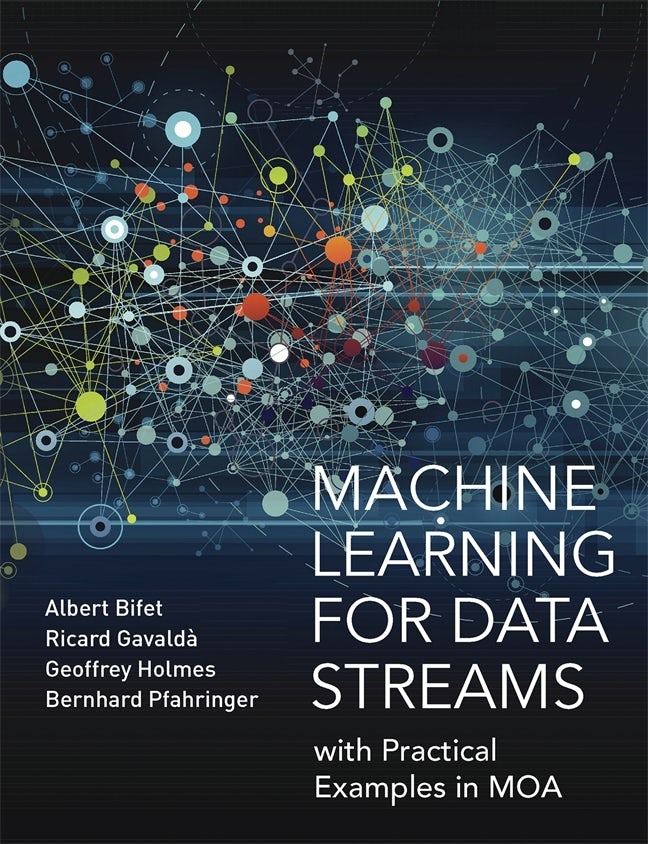
Machine learning for data streams : With practical examples in MOA
The book first offers a brief introduction to the topic, covering big data mining, basic methodologies for mining data streams, and a simple example of MOA. More detailed discussions follow, with chapters on sketching techniques, change, classification, ensemble methods, regression, clustering, and frequent pattern mining. Most of these chapters include exercises, an MOA-based lab session, or both. Finally, the book discusses the MOA software, covering the MOA graphical user interface, the command line, use of its API, and the development of new methods within MOA.

Artificial intelligence in the design process : The impact on creativity and team collaboration
Discusses how to include artificial intelligence (AI) systems in the early stages of the design process. Today designers need new tools capable of supporting them in dealing with the increasing project's complexity and empowering their performances and capabilities. AI systems appear to be powerful means to enhance designers' creativity. This assumption was tested in a workshop where sixteen participants collaborated with three AI systems throughout the creative phases of research, sketching, and color selection. Results show that designers can access a broader level of variance and inspiration while reducing the risk of fossilization by triggering lateral thinking through AI-generated data. Therefore, AI could significantly impact the creative phases of the design process if applied consciously. Being AI systems intelligent agents, the book treats the Human-AI collaboration as a collaboration between human agents, proposing a set of guidelines helpful to achieving an efficient partnership with the machine.
Algorithms and data structures for massive datasets
Learn: Probabilistic sketching data structures for practical problems Choosing the right database engine for your application Evaluating and designing efficient on-disk data structures and algorithms Understanding the algorithmic trade-offs involved in massive-scale systems Deriving basic statistics from streaming data Correctly sampling streaming data Computing percentiles with limited space resources Algorithms and Data Structures for Massive Datasets reveals a toolbox of new methods that are perfect for handling modern big data applications. You'll explore the novel data structures and algorithms that underpin Google, Facebook, and other enterprise applications that work with truly massive amounts of data. These effective techniques can be applied to any discipline, from finance to text analysis. Graphics, illustrations, and hands-on industry examples make complex ideas practical to implement in your projects--and there's no mathematical proofs to puzzle over. Work through this one-of-a-kind guide, and you'll find the sweet spot of saving space without sacrificing your data's accuracy. About the Technology Standard algorithms and data structures may become slow--or fail altogether--when applied to large distributed datasets. Choosing algorithms designed for big data saves time, increases accuracy, and reduces processing cost.
