



الصفحة 1
الصفحة 1

Multimedia Retrieval
The single chapters of this textbook explain the general architecture of multimedia information retrieval systems; various metadata languages like Dublin Core, RDF, or MPEG; pattern recognition through Markov models, unsupervised learning, and pattern clustering; various indexing approaches to audio and video streams; interaction and control; the protection of content and user privacy; and search effectiveness and efficiency.

Modeling and Management of Fuzzy Semantic RDF Data
Presents the latest research findings in fuzzy RDF data modeling and management. Fuzziness widely exist in many data and knowledge intensive applications. With the increasing amount of metadata available, efficient and scalable management of massive semantic data with uncertainty is of crucial importance. This book goes to great depth concerning the fast-growing topic of technologies and approaches of modeling and managing fuzzy metadata with Resource Description Framework (RDF) format. Its major topics include representation of fuzzy RDF data, fuzzy RDF graph matching, query of fuzzy RDF data, and persistence of fuzzy RDF data in diverse databases. The objective of the book is to provide the state-of-the-art information to researchers, practitioners, and postgraduates students who work on the area of big data intelligence and at the same time serve as the uncertain data and knowledge engineering professional as a valuable real-world reference.

Innovative approaches for learning and knowledge sharing ; 1st European Conference on Technology Enhanced Learning, EC-TEL 2006, Crete, Greece, October 1-4, 2006, Proceedings
This book constitutes the refereed proceedings of the First European Conference on Technology Enhanced Learning, EiTEL 2006, held in Crete, Greece in October 2006. The 32 revised full papers, 13 revised short papers and 31 poster papers presented together with 2 keynote talks were carefully reviewed and selected from 192 submissions. The conference provides a unique forum for all research related to technology-enhanced learning, as well as its interactions with knowledge management, business processes and work environments. Topics addressed are collaborative learning, personalized learning, multimedia content, semantic web, metadata and learning, workplace learning, learning repositories and infrastructures for learning, as well as experience reports, assesment, and case studies.

Information Sharing on the Semantic Web
The more information is available, the harder it is to locate any particular piece of it. And even when it has been successfully found, it is even harder still to usefully combine it with other information we may already possess. It is commonly understood that this problem of information sharing can only be solved by giving computers better access to the semantics of the information. While it has been recognized that ontologies play a crucial role in solving the open problems, most approaches rely on the existence of well-established data structures. To overcome these shortcomings, Stuckenschmidt and van Harmelen describe ontology-based approaches for resolving semantic heterogeneity in weakly structured environments, in particular the World Wide Web. Addressing problems like missing conceptual models, unclear system boundaries, and heterogeneous representations, they design a framework for ontology-based information sharing in weakly structured environments like the Semantic Web. For researchers and students in areas related to the Semantic Web, the authors provide not only a comprehensive overview of the State of the art, but also present in detail recent research in areas like ontology design for information integration, metadata generation and management, and representation and management of distributed ontologies. For professionals in areas such as e-commerce and knowledge management, the book provides decision support on the use of novel technologies, information about potential problems, and guidelines for the successful application of existing technologies.

Database systems for advanced applications ; Vol. 3453 ; 10th international conference, DASFAA 2005, Beijing, China, April 17-20, 2005, Proceedings
Data Stream Mining and Resource Adaptive Computation.- Purpose Based Access Control for Privacy Protection in Database Systems.- Complex Networks and Network Data Mining.- Bioinformatics.- Indexing DNA Sequences Using q-Grams.- PADS: Protein Structure Alignment Using Directional Shape Signatures.- LinkageTracker: A Discriminative Pattern Tracking Approach to Linkage Disequilibrium Mapping.- Watermarking and Encryption.- Query Optimization in Encrypted Database Systems.- Watermarking Spatial Trajectory Database.- Effective Approaches for Watermarking XML Data.- XML Query Processing.- A Unifying Framework for Merging and Evaluating XML Information.- Efficient Evaluation of Partial Match Queries for XML Documents Using Information Retrieval Techniques.- PathStack: A Holistic Path Join Algorithm for Path Query with Not-Predicates on XML Data.- XML Coding and Metadata Management.- An Improved Prefix Labeling Scheme: A Binary String Approach for Dynamic Ordered XML.- Efficiently Coding and Indexing XML Document.- XQuery-Based TV-Anytime Metadata Management.- Data Mining.- Effective Database Transformation and Efficient Support Computation for Mining Sequential Patterns.

Database Schema Evolution and Meta-Modeling ; 9th International Workshop on Foundations of Models and Languages for Data and Objects FoMLaDO/DEMM 2000 Dagstuhl Castle, Germany, September 18-21, 2000 Selected Papers
The Ninth International Workshop on Foundations of Models and Languages for Data and Objects (FoMLaDO) took place in Dagstuhl Germany, Sept- ber 18{21, 2000. The topic of this workshop was Database schema Evolution and Meta-Modeling; this FoMLaDO Workshop was hence assigned the acronym DEMM 2000.

Data Management in Grid and Peer-to-Peer Systems ; 1st International Conference, Globe 2008, Turin, Italy, September 3, 2008. Proceedings
This book constitutes the refereed proceedings of the First International Conference on Data Management in Grid and Peer-to-Peer Systems, Globe 2008, held in Turin, Italy, in September 2008.

Creating New Learning Experiences on a Global Scale ; 2nd European Conference on Technology Enhanced Learning, EC-TEL 2007, Crete, Greece, September 17-20, 2007, Proceedings
It is holding more than 500 pages of combined wisdom on Technology Enhanced Learning (TEL) in your hands! With the advance of metadata, standards, learning objects, Web 2. 0 approaches to rip, mix and burn learning, wikis, blogs, syndication, user-generated content, W- based video, games and the ubiquitous availability of computing devices we can and have to offer more flexible learning services on a global scale.It provided a unique forum for all research related to technology enhanced learning, including its interactions with knowledge management, business processes and work environments.

Computers and Education : Towards Educational Change and Innovation
This volume contains a selection of papers covering the latest research and experiences on the application of Information and Communication Technologies in the field of Education, especially in the Ibero-American space.
Long-Term Preservation of Digital Documents : Principles and Practices
Key to our culture is that we can disseminate information, and then maintain and access it over time. While we are rapidly advancing from vulnerable physical solutions to superior, digital media, preserving and using data over the long term involves complicated research challenges and organization efforts. Uwe Borghoff and his coauthors address the problem of storing, reading, and using digital data for periods longer than 50 years. They briefly describe several markup and document description languages like TIFF, PDF, HTML, and XML, explain the most important techniques such as migration and emulation, and present the OAIS (Open Archival Information System) Reference Model. To complement this background information on the technology issues the authors present the most relevant international preservation projects, such as the Dublin Core Metadata Initiative, and experiences from sample projects run by the Cornell University Library and the National Library of the Netherlands. A rated survey list of available systems and tools completes the book.
Journal on Data Semantics XI
The LNCS Journal on Data Semantics is devoted to the presentation of notable work that, in one way or another, addresses research and development on issues related to data semantics. The scope of the journal ranges from theories supporting the formal definition of semantic content to innovative domain-specific applications of semantic knowledge. The journal addresses researchers and advanced practitioners working on the semantic web, interoperability, mobile information services, data warehousing, knowledge representation and reasoning, conceptual database modeling, ontologies, and artificial intelligence.
JDBC Recipes : A Problem-Solution Approach
JDBC Recipes provides easy-to-implement, usable solutions to problems in relational databases that use JDBC. You will be able to integrate these solutions into your web-based applications, such as Java servlets, JavaServer Pages, and Java server-side frameworks. This handy book allows you to cut and paste the solutions without any code changes. This book focuses on topics that have been ignored in most other JDBC books, such as database and result set metadata. It will help you develop database solutions, like adapters, connectors, and frameworks using Java/JDBC. The insightful solutions will enable you to handle all data types, including large binary objects. A unique feature of the book is that it presents JDBC solutions (result sets) in XML.
JDBC Metadata, MySQL, and Oracle Recipes : A Problem-Solution Approach
JDBC Metadata, MySQL, and Oracle Recipes is the only book that focuses on metadata or annotation-based code recipes for JDBC API for use with Oracle and MySQL. It continues where the authors other book, JDBC Recipes: A Problem-Solution Approach, leaves off. This edition is also a Java EE 5-compliant book, perfect for lightweight Java database development. And it provides cut-and-paste code templates that can be immediately customized and applied in each developer's application development.

Comparative Evaluation of XML Information Retrieval Systems ; 5th International Workshop of the Initiative for the Evaluation of XML Retrieval, INEX 2006 Dagstuhl Castle, Germany, December 17-20, 2006 Revised and Selected Papers
This book covered methodology and seven additional tracks on ad-hoc, natural language processing, heterogeneous collection, multimedia, interactive, use case, as well as document mining.
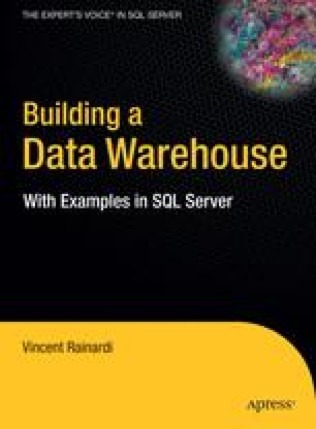
Building a Data Warehouse : With Examples in SQL Server
The book is organized as follows. In the beginning of this book (chapters 1 through 6), you learn how to build a data warehouse, for example, defining the architecture, understanding the methodology, gathering the requirements, designing the data models, and creating the databases. Then in chapters 7 through 10, you learn how to populate the data warehouse, for example, extracting from source systems, loading the data stores, maintaining data quality, and utilizing the metadata. After you populate the data warehouse, in chapters 11 through 15, you explore how to present data to users using reports and multidimensional databases and how to use the data in the data warehouse for business intelligence, customer relationship management, and other purposes. Chapters 16 and 17 wrap up the book: After you have built your data warehouse, before it can be released to production, you need to test it thoroughly. After your application is in production, you need to understand how to administer data warehouse operation.
Bioinformatics and Computational Biology Solutions Using R and Bioconductor
Bioconductor is a widely used open source and open development software project for the analysis and comprehension of data arising from high-throughput experimentation in genomics and molecular biology. Bioconductor is rooted in the open source statistical computing environment R. This volume's coverage is broad and ranges across most of the key capabilities of the Bioconductor project, including: Importation and preprocessing of high-throughput data from microarray, proteomic, and flow cytometry platforms / Curation and delivery of biological metadata for use in statistical modeling and interpretation. / Statistical analysis of high-throughput data, including machine learning and visualization,modeling and visualization of graphs and networks. This book is a dynamic document. Code underlying all of the computations that are shown is made available on a companion website, and readers can reproduce every number, figure, and table on their own computers.
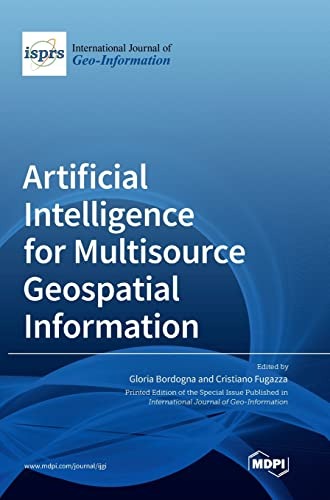
Artificial intelligence for multisource geospatial information
Collects 10 original research contributions published in the Special Issue entitled “Artificial Intelligence for Multisource Geospatial Information” of the ISPRS International Journal of Geo-Information. The focus is on different methods of Geospatial Artificial Intelligence (GeoAI) based on deep learning using different network architectures, clustering, soft computing, and semantic approaches. They are proposed to deal with a variety of Geospatial Big Data (GBD), such as georeferenced texts and photos in social networks, remote sensing images, cartographic maps, multidimensional geo databases, metadata in spatial data infrastructures, and for different tasks, such as for multisource georeferenced text integration and geodata flexible querying, for social sensing by applying sentiment analysis, clustering and geo analysis, for segmentation of roads, clouds and snow, and for detection of small targets and people on the streets.

Advances in XML information retrieval and Evaluation ; 4th International workshop of the initiative for the evaluation of XML retrieval, INEX 2005, Dagstuhl Castle, Germany, November 28-30, 2005. Revised and Selected Papers
Content-oriented XML retrieval has been receiving increasing interest due to the widespread use of eXtensible Markup Language (XML), which is becoming a standard document format on the Web, in digital libraries,and publishing. By exploiting the enriched source of syntactic and semantic information that XML markup provides, XML information retrieval (IR) systems aim to implement a more focused retrieval strategy and return document components, so-called XML elements – instead of complete documents – in response to a user query. This focused retrieval approach is of particular bene?t for collections containing long documents or documents covering a wide variety of topics (e.g., books, user manuals, legal documents, etc.), where users’ e?ort to locate relevant content can be reduced by directing them to the most relevant parts of the documents.

Advances in XML information retrieval ; 3rd International workshop of the Initiative for the evaluation of XML retrieval, INEX 2004, Dagstuhl Castle, Germany, December 6-8, 2004
The ultimate goal of many information access systems (e.g., digital libraries, the Web, intranets) is to provide the right content to their end-users. This content is increasingly a mixture of text, multimedia, and metadata, and is formatted according to the adopted –W3C standard for information repositories, the so-called eXtensible Markup L- guage (XML). Whereas many of today’s information access systems still treat do- ments as single large (text) blocks, XML offers the opportunity to exploit the internal structure of documents in order to allow for more precise access thus providing more specific answers to user requests. Providing effective access to XML-based content is therefore a key issue for the success of these systems. The aim of the INEX campaign (Initiative for the Evaluation of XML Retrieval), which was set up at the beginning of 2002, is to establish infrastructures, XML test suites, and appropriate measurements for evaluating the performance of information retrieval systems that aim at giving effective access to XML content. More precisely, the goal of the INEX initiative is to provide means, in the form of a large XML test collection and appropriate scoring methods, for the evaluation of content-oriented XML retrieval systems.
