



الصفحة 1
الصفحة 1

Obstructions in Security-Aware Business Processes : Analysis, Detection, and Handling
This book explores the dilemma-like stalemate between security and regulatory compliance in business processes on the one hand and business continuity and governance on the other. The growing number of regulations, e.g., on information security, data protection, or privacy, implemented in increasingly digitized businesses can have an obstructive effect on the automated execution of business processes. Such security-related obstructions can particularly occur when an access control-based implementation of regulations blocks the execution of business processes. By handling obstructions, security in business processes is supposed to be improved. For this, the book presents a framework that allows the comprehensive analysis, detection, and handling of obstructions in a security-sensitive way. Thereby, methods based on common organizational security policies, process models, and logs are proposed. The Petri net-based modeling and related semantic and language-based research, as well as the analysis of event data and machine learning methods finally lead to the development of algorithms and experiments that can detect and resolve obstructions and are reproducible with the provided software.

Object detection with deep learning models : Principles and applications
Discusses recent advances in object detection and recognition using deep learning methods, which have achieved great success in the field of computer vision and image processing. It provides a systematic and methodical overview of the latest developments in deep learning theory and its applications to computer vision, illustrating them using key topics, including object detection, face analysis, 3D object recognition, and image retrieval / A structured overview of deep learning in object detection / A diversified collection of applications of object detection using deep neural networks / Emphasize agriculture and remote sensing domains / Exclusive discussion on moving object detection

Modern Deep Learning Design and Application Development : Versatile Tools to Solve Deep Learning Problems
Learn how to harness modern deep-learning methods in many contexts. Packed with intuitive theory, practical implementation methods, and deep-learning case studies, this book reveals how to acquire the tools you need to design and implement like a deep-learning architect. It covers tools deep learning engineers can use in a wide range of fields, from biology to computer vision to business. With nine in-depth case studies, this book will ground you in creative, real-world deep learning thinking. You will: Improve the performance of deep learning models by using pre-trained models, extracting rich features, and automating optimization. Compress deep learning models while maintaining performance. Reframe a wide variety of difficult problems and design effective deep learning solutions to solve them. Use the Keras framework, with some help from libraries like HyperOpt, TensorFlow, and PyTorch, to implement a wide variety of deep learning approaches.

Metalearning : Applications to Automated Machine Learning and Data Mining
This book as one of the fastest-growing areas of research in machine learning, metalearning studies principled methods to obtain efficient models and solutions by adapting machine learning and data mining processes. This adaptation usually exploits information from past experience on other tasks and the adaptive processes can involve machine learning approaches. As a related area to metalearning and a hot topic currently, automated machine learning (AutoML) is concerned with automating the machine learning processes. Metalearning and AutoML can help AI learn to control the application of different learning methods and acquire new solutions faster without unnecessary interventions from the user.

Medical data processing and analysis
Medical data can be defined as obtaining information from patients (such as signals, images, sounds, chemical components and their concentration, body temperature, respiratory rate, blood pressure, and different treatment measurements) to quantify the patient’s status and disease stage. Computer-aided diagnostic (CAD) systems use classical image processing, computer vision, machine learning, and deep learning methods for image analysis. Using image classification or segmentation algorithms, they find a region of interest (ROI) pointing to a specific location within the given image or an outcome of interest in the form of a label pointing to a diagnosis or prognosis. Computer science, with the evolution of artificial intelligence and machine learning techniques, facilitates the modeling and interpretation of results—from carrying out measurements to experiments and observations.

Introduction to information retrieval
Teaches classical and web information retrieval, including web search and the related areas of text classification and text clustering from basic concepts. It gives an up-to-date treatment of all aspects of the design and implementation of systems for gathering, indexing, and searching documents; methods for evaluating systems; and an introduction to the use of machine learning methods on text collections. All the important ideas are explained using examples and figures, making it perfect for introductory courses in information retrieval for advanced undergraduates and graduate students in computer science.

Informatics education - supporting computational thinking ; 3rd International Conference on informatics in secondary schools : Evolution and perspectives, ISSEP 2008 Torun Poland, July 1-4, 2008 Proceedings
Informatics Education – Supporting Computational Thinking contains papers presented at the Third International Conference on Informatics in Secondary Schools – Evolution and Perspective, ISSEP 2008, held in July 2008 in Torun, Poland. As with the proceedings of the two previous ISSEP conferences (2005 in Klag- furt, Austria, and 2006 in Vilnius, Lithuania), the papers presented in this volume address issues of informatics education transcending national boundaries and, the- fore, transcending differences in the various national legislation and organization of the educational system. Observing these issues, one might notice a trend. The p- ceedings of the First ISSEP were termed From Computer Literacy to Informatics F- damentals [1]. There, broad room was given to general education in ICT.

Explainable Artificial Intelligence : An Introduction to Interpretable Machine Learning
Offers a curriculum for introducing interpretability to machine learning at every stage. The authors provide compelling examples that a core teaching practice like leading interpretive discussions can be taught and learned by teachers and sustained effort. And what better way to strengthen the quality of AI and Machine learning outcomes. I hope that this book will become a primer for teachers, data Science educators, and ML developers, and together we practice the art of interpretive machine learning.

Deep learning methods for converting speech to text = تقنيات التعلم العميق في تحويل الصوت إلى نص
Aims to design and develop a system capable of extracting audio content from films and audio recordings and converting it into text using deep learning techniques. This is done by analyzing audio patterns, extracting sounds and words from the video, and then converting them into written text. Deep learning, a branch of artificial intelligence, is used to accomplish this task. The study also includes comparing different deep learning techniques to determine their effectiveness in this context.

Deep learning for computational problems in hardware security : Modeling attacks on strong physically unclonable function circuits
Discusses a broad overview of traditional machine learning methods and state-of-the-art deep learning practices for hardware security applications, in particular the techniques of launching potent "modeling attacks" on Physically Unclonable Function (PUF) circuits, which are promising hardware security primitives. The volume is self-contained and includes a comprehensive background on PUF circuits, and the necessary mathematical foundation of traditional and advanced machine learning techniques such as support vector machines, logistic regression, neural networks, and deep learning. This book can be used as a self-learning resource for researchers and practitioners of hardware security, and will also be suitable for graduate-level courses on hardware security and application of machine learning in hardware security.

Data science on the Google cloud platform : Implementing end-to-end real-time data pipelines : From ingest to machine learning
Learn how easy it is to apply sophisticated statistical and machine learning methods to real-world problems when you build using Google Cloud Platform (GCP). This hands-on guide shows data engineers and data scientists how to implement an end-to-end data pipeline with cloud native tools on GCP. You'll work through a sample business decision by employing a variety of data science approaches. Follow along by building a data pipeline in your own project on GCP, and discover how to solve data science problems in a transformative and more collaborative way. Employ best practices in building highly scalable data and ML pipelines on Google Cloud Automate and schedule data ingest using Cloud Run Create and populate a dashboard in Data Studio Build a real-time analytics pipeline using Pub/Sub, Dataflow, and BigQuery Conduct interactive data exploration with BigQuery Create a Bayesian model with Spark on Cloud Dataproc Forecast time series and do anomaly detection with BigQuery ML Aggregate within time windows with Dataflow Train explainable machine learning models with Vertex AI Operationalize ML with Vertex AI Pipelines

Computational Collective Intelligence ; 12th International Conference, ICCCI 2020, Da Nang, Vietnam, November 30 – December 3, 2020, Proceedings
This volume constitutes the refereed proceedings of the 12th International Conference on Computational Collective Intelligence, ICCCI 2020, held in Da Nang, Vietnam, in November 2020.* The 70 full papers presented were carefully reviewed and selected from 314 submissions. The papers are grouped in topical sections on: knowledge engineering and semantic web; social networks and recommender systems; collective decision-making; applications of collective intelligence; data mining methods and applications; machine learning methods; deep learning and applications for industry 4.0; computer vision techniques; biosensors and biometric techniques; innovations in intelligent systems; natural language processing; low resource languages processing; computational collective intelligence and natural language processing; computational intelligence for multimedia understanding; and intelligent processing of multimedia in web systems.

Clinical text mining : Secondary use of electronic patient records
Describes the results of natural language processing and machine learning methods applied to clinical text from electronic patient records. It is divided into twelve chapters. Chapters 1-4 discuss the history and background of the original paper-based patient records, their purpose, and how they are written and structured. These initial chapters do not require any technical or medical background knowledge. The remaining eight chapters are more technical in nature and describe various medical classifications and terminologies such as ICD diagnosis codes, SNOMED CT, MeSH, UMLS, and ATC. Chapters 5-10 cover basic tools for natural language processing and information retrieval, and how to apply them to clinical text. The book’s closing chapters present a number of applications in clinical text mining and summarise the lessons learned from the previous chapters.
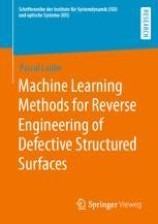
Machine learning methods for reverse engineering of defective structured surfaces
Pascal Laube presents machine learning approaches for three key problems of reverse engineering of defective structured surfaces: parametrization of curves and surfaces, geometric primitive classification and inpainting of high-resolution textures. The proposed methods aim to improve the reconstruction quality while further automating the process. The contributions demonstrate that machine learning can be a viable part of the CAD reverse engineering pipeline.
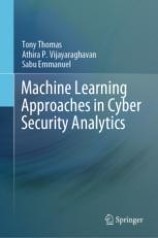
Machine Learning Approaches in Cyber Security Analytics
Introduces various machine learning methods for cyber security analytics. With an overwhelming amount of data being generated and transferred over various networks, monitoring everything that is exchanged and identifying potential cyber threats and attacks poses a serious challenge for cyber experts. Further, as cyber attacks become more frequent and sophisticated, there is a requirement for machines to predict, detect, and identify them more rapidly. Machine learning offers various tools and techniques to automate and quickly predict, detect, and identify cyber attacks.
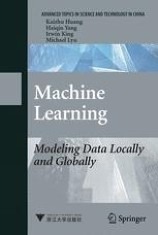
Machine Learning : Modeling Data Locally and Globally
Machine Learning - Modeling Data Locally and Globally presents a novel and unified theory that tries to seamlessly integrate different algorithms. Specifically, the book distinguishes the inner nature of machine learning algorithms as either "local learning"or "global learning."This theory not only connects previous machine learning methods, or serves as roadmap in various models, but – more importantly – it also motivates a theory that can learn from data both locally and globally. This would help the researchers gain a deeper insight and comprehensive understanding of the techniques in this field. The book reviews current topics,new theories and applications.

Learning Theory ; Vol. 4005 ; 19th Annual Conference on Learning Theory, COLT 2006, Pittsburgh, PA, USA, June 22-25, 2006, Proceedings
Constitutes the refereed proceedings of the 19th Annual Conference on Learning Theory, COLT 2006, held in Pittsburgh, Pennsylvania, USA in June 2006. The 43 revised full papers presented together with 2 articles on open problems and 3 invited lectures were carefully reviewed and selected from a total of 102 submissions. The papers cover a wide range of topics including clustering, un- and semisupervised learning, statistical learning theory, regularized learning and kernel methods, query learning and teaching, inductive inference, learning algorithms and limitations on learning, online aggregation, online prediction and reinforcement learning.

Artificial neural networks – ICANN 2007 ; 17th International Conference, Porto, Portugal, September 9-13, 2007, Proceedings, Part I
This book contains learning theory, advances in neural network learning methods, ensemble learning, spiking neural networks, advances in neural network architectures neural network technologies, neural dynamics and complex systems, data analysis, estimation, spatial and spatio-temporal learning, evolutionary computing, meta learning, agents learning, complex-valued neural networks, as well as temporal synchronization and nonlinear dynamics in neural networks.
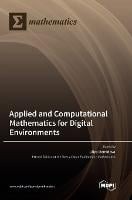
Applied and computational mathematics for digital environments
Contains the 11 papers that were accepted and published in the Special Issue “Applied and Computational Mathematics for Digital Environments” of the MDPI Mathematics journal. The topics of interest include, among others, scientific research, applied tasks, and problems in the following areas: The construction of mathematical and information models of intelligent computer systems for monitoring and controlling the parameters of digital environments; The development of intelligent optimization algorithms that search for optimal parameter values of mathematical and information models in digital environments; Software and mathematical technologies in the implementation of intelligent monitoring and computer control of the parameters of digital environments; The development and application of mathematical and information models, machine learning methods, and artificial intelligence for the analysis and processing of big data in digital environments.

Advances in neural networks - ISNN 2005 ; Vol. 3498 ; 2nd International Symposium on Neural Networks, Chongqing, China, May 30 - June 1, 2005, Proceedings, Part III
The three volume set LNCS 3496/3497/3498 constitutes the refereed proceedings of the Second International Symposium on Neural Networks, ISNN 2005, held in Chongqing, China in May/June 2005. The 483 revised papers presented were carefully reviewed and selected from 1.425 submissions. The papers are organized in topical sections on theoretical analysis, model design, learning methods, optimization methods, kernel methods, component analysis, pattern analysis, systems modeling, signal processing, image processing, financial analysis, control systems, robotic systems, telecommunication networks, incidence detection, fault diagnosis, power systems, biomedical applications, industrial applications, and other applications.
