



الصفحة 1
الصفحة 1

Network+ Guide to Networks
It thoroughly prepares you for success on CompTIA's Network+ N10-007 certification exam with fully mapped coverage of all objectives, including protocols, topologies, hardware, network design, security and troubleshooting. Virtualization-based projects give you experience working with a wide variety of hardware, software, operating systems and device interactions, while "On the Job" stories, Applying Concepts activities, and Hands-On and Capstone Projects let you explore concepts in more depth. MindTap Networking offers additional practice and certification prep.
Model Driven Engineering Languages and Systems ; 11th International Conference, MoDELS 2008, Toulouse, France, September 28 - October 3, 2008. Proceedings
The book also contains three keynote speeches and contributions to workshops, symposia, tutorials and panels at the conference. The papers are organized in topical sections on Model Transformation: Foundations; Requirements Modeling; Domain-Specific Modeling; Model Transformation: Techniques, Composition and Analysis of Behavioral Models; Model Comprehension; Model Management; Behavioral Conformance and Refinement; Metamodeling and Modularity; Constraints; Model Analysis; Service-Oriented Architectures; Adaptive and Autonomic Systems; Empirical Studies; Evolution and Reverse Engineering; Modeling Language Semantics; Dependability Analysis and Testing; Aspect-Oriented Modeling; Structural Modeling;and Embedded Systems.
Introduction à SCILAB
Ce livre est organisé en deux parties. La première partie est consacrée au langage Scilab et à son environnement. Dans la seconde partie, les fonctionnalités des grands domaines d'utilisation du calcul numérique sont décrites et illustrées par des exemples: calcul matriciel, simulation, optimisation, résolution d'équations, statistiques.

Intelligent Virtual Agents ; 7th International Working Conference, IVA 2007, Paris, France, September 17-19, 2007, Proceedings
The 19 revised full papers and 12 revised short papers presented together with five invited talks and the abstracts of 32 poster papers are organized in topical sections on rendering and analysis, culture and identity, behavior models, feedback models, dialogues, applications, evaluation, gaze models and emotions.
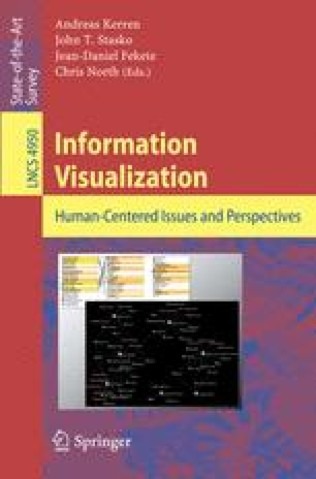
Information visualization : Human-centered issues and perspectives
This book is the outcome of the Dagstuhl Seminar on "Information Visualization -- Human-Centered Issues in Visual Representation, Interaction, and Evaluation" held at Dagstuhl Castle, Germany, from May 28 to June 1, 2007.Information Visualization (InfoVis) is a relatively new research area, which focuses on the use of visualization techniques to help people understand and analyze data.This book documents and extends the findings and discussions of the various sessions in detail.

Informatics in Control, Automation and Robotics II
Informatics in Control, Automation and Robotics II is a collection of the best papers presented at the 2nd International Conference on Informatics in Control, Automation and Robotics (ICINCO). The purpose of ICINCO was to bring together researchers, engineers and practitioners interested in the application of informatics to Control, Automation and Robotics.

Graphics Recognition. Recent Advances and New Opportunities ; 7th International Workshop, GREC 2007, Curitiba, Brazil, September 20-21, 2007. Selected Papers
This book constitutes the thoroughly refereed post-proceedings of the 7th International Workshop on Graphics Recognition, GREC 2007, held in Curitiba, Brazil in September 2007.The 30 revised full papers presented together with a panel discussion report were carefully selected and improved during two rounds of reviewing and revision. The papers are organized in topical sections on technical documents, maps and diagrams understanding; symbol and shape description and recognition; information retrieval, indexing and spotting; sketching interfaces and on-line processing; feature and primitive analysis and segmentation; performance evaluation and ground truthing.
Gesture in Human-Computer Interaction and Simulation ; 6th International Gesture Workshop, GW 2005, Berder Island, France, May 18-20, 2005, Revised Selected Papers
The international Gesture Workshops have become the leading interdisciplinary events for dissemination of the latest results on gesture-based communication. The goal of these workshops is to bring together researchers who want to meet and share ideas on advanced research on gesture related to multidisciplinary scienti?c ?elds. Depending on the ?elds, the objectives can be very di?erent. While physiology and biomechanics aim to extract fundamental knowledge of physical gesture, computer sciences try to capture di?erent aspects of gesture and extract features that help to identify, interpret or rebuild the underlying mechanisms of communication gestures. Other approaches and methodologies are followed by cognitive sciences and linguistics, bringing a complementary - derstanding of motor control and gesture meaning. The results can be enhanced by technological applications or demonstrations.

From Animals to Animats 10 ; 10th International Conference on Simulation of Adaptive Behavior, SAB 2008, Osaka, Japan, July 7-12, 2008. Proceedings
This book constitutes the refereed proceedings of the 10th International Conference on Simulation of Adaptive Behavior, SAB 2008, held in Osaka, Japan in July 2008.The 30 revised full papers and 21 revised poster papers presented were carefully reviewed and selected from 110 submissions. The papers are organized in topical sections on the animat approach to adaptive behaviour, evolution, navigation and internal world models, perception and control, learning and adaptation, cognition, emotion and behaviour, collective and social behaviours, adaptive behaviour in language and communication, and applied adaptive behaviour.

Foundations of software science and computation structures ; 23rd International conference, FOSSACS 2020, Held as part of the European joint conferences on theory and practice of software, ETAPS 2020, Dublin, Ireland, April 25–30, 2020, proceedings
This book constitutes the proceedings of the 23rd International Conference on Foundations of Software Science and Computational Structures, FOSSACS 2020, which took place in Dublin, Ireland, in April 2020, and was held as Part of the European Joint Conferences on Theory and Practice of Software, ETAPS 2020.

Foundations of AOP for J2EE Development
Foundations of AOP for J2EE Development covers a relatively new programming paradigm: aspect-oriented programming, or AOP. Presented are the core concepts of AOP: AspectJ 5, JBoss AOP, Spring AOP, and JAC. Specific features of these tools are compared. The book also explores the potential uses of AOP in everyday programming life, such as design patterns implementation, program testing, and application management. In the latter part of the book, the authors show how AOP can ease the task of J2EE application development (J2EE is known for being a rich and somewhat complicated framework).

Formal Techniques for Networked and Distributed Systems - FORTE 2006 ; 26th IFIP WG 6.1 International Conference, Paris, France, September 26-29, 2006, Proceedings
This book constitutes the refereed proceedings of the 26th IFIP WG 6.1 International Conference on Formal Techniques for Networked and Distributed Systems, FORTE 2006, held in Paris, France, in September 2006. The 26 revised full papers and 4 short papers presented together with 3 invited lectures were carefully reviewed and selected from 177 submissions. The papers focus on the construction of middleware and services using formalised and verified approaches.

Formal Modeling and Analysis of Timed Systems ; 5th International Conference, FORMATS 2007, Salzburg, Austria, October 3-5, 2007, Proceedings
This volume consists of the proceedings of the Fifth International Conference on Formal Modelling and Analysis of Timed Systems (FORMATS 2007). The main goal of this series of conferences is to bring together diverse communities of researchers that deal with the timing aspects of computing systems.

Finite Elements III : First-Order and Time-Dependent PDEs
Volume III is divided into 28 chapters. The first eight chapters focus on the symmetric positive systems of first-order PDEs called Friedrichs' systems. This part of the book presents a comprehensive and unified treatment of various stabilization techniques from the existing literature. It discusses applications to advection and advection-diffusion equations and various PDEs written in mixed form such as Darcy and Stokes flows and Maxwell's equations. The remainder of Volume III addresses time-dependent problems: parabolic equations (such as the heat equation), evolution equations without coercivity (Stokes flows, Friedrichs' systems), and nonlinear hyperbolic equations (scalar conservation equations, hyperbolic systems). It offers a fresh perspective on the analysis of well-known time-stepping methods. The last five chapters discuss the approximation of hyperbolic equations with finite elements. Here again a new perspective is proposed.
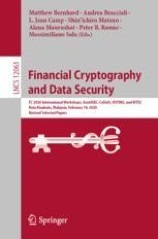
Financial cryptography and data security ; FC 2020 International Workshops, AsiaUSEC, CoDeFi, VOTING, and WTSC, Kota Kinabalu, Malaysia, February 14, 2020, Revised Selected Papers
This book constitutes the refereed proceedings of two workshops held at the 24th International Conference on Financial Cryptography and Data Security, FC 2020, in Kota Kinabalu, Malaysia, in February 2020. The 39 full papers and 3 short papers presented in this book were carefully reviewed and selected from 73 submissions. The papers feature four Workshops: The 1st Asian Workshop on Usable Security, AsiaUSEC 2020, the 1st Workshop on Coordination of Decentralized Finance, CoDeFi 2020, the 5th Workshop on Advances in Secure Electronic Voting, VOTING 2020, and the 4th Workshop on Trusted Smart Contracts, WTSC 2020.

Elementary Functions : Algorithms and Implementation
This unique book provides concepts and background necessary to understand and build algorithms for computing the elementary functions—sine, cosine, tangent, exponentials, and logarithms. The author presents and structures the algorithms, hardware-oriented as well as software-oriented, and also discusses issues related to accurate floating-point implementation. The purpose is not to give "cookbook recipes" that allow one to implement a given function, but rather to provide the reader with tools necessary to build or adapt algorithms for their specific computing environment.

ECOOP’ 87 European Conference on Object-Oriented Programming ; Paris, France, June 15-17, 1987. Proceedings
In October 1983 an informal meeting was organized in Le Cap d'Agde with the help of the BIGRE bulletin. Sixty people turned out to hear more than ten presentations on object-oriented programming. More important was their unanimous demand for other, more structured encounters. So, about one year later, the Object group was created by AFCET.

Economics of Identity Theft : Avoidance, Causes and Possible Cures
This book discusses privacy as multi-dimensional, and then pulls forward the economics of privacy in the first few chapters. This book also includes identity-based signatures, spyware, and the placement of biometric security in an economically broken system, which results in a broken biometric system. The final chapters include systematic problems with practical individual strategies for preventing identity theft for any reader of any economic status. In conclusion, four startling previews of the future are written as scenarios.

Discovery Science ; 11th International Conference, DS 2008, Budapest, Hungary, October 13-16, 2008. Proceedings
This book constitutes the refereed proceedings of the 11th International Conference on Discovery Science, DS 2008, held in Budapest, Hungary, in October 2008, co-located with the 19th International Conference on Algorithmic Learning Theory, ALT 2008.

Digital Anatomy : Applications of Virtual, Mixed and Augmented Reality
This book offers readers fresh insights on applying Extended Reality to Digital Anatomy, a novel emerging discipline. Indeed, the way professors teach anatomy in classrooms is changing rapidly as novel technology-based approaches become ever more accessible. Recent studies show that Virtual (VR), Augmented (AR), and Mixed-Reality (MR) can improve both retention and learning outcomes.
