



الصفحة 1
الصفحة 1

Open IT-Based Innovation : Moving Towards Cooperative IT Transfer and Knowledge Diffusion ; IFIP TC8 WG 8.6 International Working Conference October 22–24, 2008, Madrid, Spain
The IFIP series publishes state-of-the-art results in the sciences and technologies of information and communication. The scope of the series includes: foundations of computer science; software theory and practice; education; computer applications in technology; communication systems; systems modeling and optimization; information systems; computers and society; computer systems technology; security and protection in information processing systems; artificial intelligence; and human-computer interaction. Proceedings and post-proceedings of refereed international conferences in computer science and interdisciplinary fields are featured.

Ontology Learning and Population from Text: Algorithms, Evaluation and Applications
Ontology Learning and Population from Text: Algorithms, Evaluation and Applications presents approaches for ontology learning from text and will be relevant for researchers working on text mining, natural language processing, information retrieval, semantic web and ontologies. Containing introductory material and a quantity of related work on the one hand, but also detailed descriptions of algorithms, evaluation procedures etc. on the other, this book is suitable for novices, and experts in the field, as well as lecturers.
Ontologies for Agents : Theory and Experiences
On the other hand, ontologies have established themselves as a powerful tool to enable kno- edge sharing, and a growing number of applications have bene?ted from the use of ontologies as a means to achieve semantic interoperability among heterogeneous, distributed systems. In principle ontologies and agents are a match made in heaven, that has failed to happen. What makes a simple piece of software an agent is its ability to communicate in a ”social” environment, to make autonomous decisions, and to be proactive on behalf of its user. Communication ultimately depends on und- standing the goals, preferences, and constraints posed by the user. Autonomy is theabilitytoperformataskwithlittleornouserintervention,whileproactiveness involves acting autonomously with no need for user prompting. Communication, but also autonomy and proactiveness, depend on knowledge. The ability to c- municate depends on understanding the syntax (terms and structure) and the semantics of a language. Ontologies provide the terms used to describe a domain and the semantics associated with them. In addition, ontologies are often comp- mented by some logical rules that constrain the meaning assigned to the terms. These constraints are represented by inference rules that can be used by agents to perform the reasoning on which autonomy and proactiveness are based.

Online Business Security Systems
On-Line Business Security Systems, a professional book, applies the concept of synchronization to security of global heterogeneous and hetero-standard systems by modeling the relationship of risk access spots (RAS) between advanced and developing economy's network platforms. The proposed model is more effective at securing the electronic security gap between these economies in real life applications.
On the move to meaningful internet systemss 2005 : CoopIS, DOA, and ODBASE ; Vol. 3760 : OTM Confederated International Conferences, CoopIS, DOA, and ODBASE 2005, Agia Napa, Cyprus, October 31 - November 4, 2005, Proceedings Part I
such as the modeling of (legal) regulatory systems and the ubiquitous nature of their usage. Weweregladto seethatin 2005undertheinspiredleadershipofDr. Pilar Herrero, several of earlier successful workshops re-emerged with a second or even third edition (notably WOSE, MIOS-INTEROP and GADA), and that 5 new workshops could be hosted and successfully organized by their respective proposers: AWeSOMe, SWWS, CAMS, ORM and SeBGIS. .

omputational science and its applications - ICCSA 2005 ; Vol. 3480 ; International Conference, Singapore, May 9-12, 2005, Proceedings, Part I
The four volume set assembled following The 2005 International Conference on Computational Science and its Applications, ICCSA 2005, held in Suntec International Convention and Exhibition Centre, Singapore, from 9 May 2005 till 12 May 2005, represents the ?ne collection of 540 refereed papers selected from nearly 2,700 submissions. Computational Science has ?rmly established itself as a vital part of many scienti?c investigations, a?ecting researchers and practitioners in areas ranging from applications such as aerospace and automotive, to emerging technologies such as bioinformatics and nanotechnologies, to core disciplines such as ma- ematics, physics, and chemistry. Due to the shear size of many challenges in computational science, the use of supercomputing, parallel processing, and - phisticated algorithms is inevitable and becomes a part of fundamental t- oretical research as well as endeavors in emerging ?elds.

Official Statistics 4.0 : Verified Facts for People in the 21st Century
Explores official statistics and their social function in modern societies. Digitisation and globalisation are creating completely new opportunities and risks, a context in which facts (can) play an enormously important part if they are produced with a quality that makes them credible and purpose-specific. In order for this to actually happen, official statistics must continue to actively pursue the modernisation of their working methods.
Objects, Components, Models and Patterns ; 46th International Conference, TOOLS EUROPE 2008, Zurich, Switzerland, June 30 - July 4, 2008. Proceedings
This book constitutes the thoroughly refereed proceedings of the 46th International Conference on Objects, Components, Models and Patterns, TOOLS EUROPE 2008, held in Zurich, Switzerland, in June/July 2008.TOOLS played a major role in the spread of object-oriented and component technologies. It has now broadened its scope beyond the original topics of object technology and component-based development to encompass all modern, practical approaches to software development.

Object-Oriented Technology ; ECOOP 2001 Workshops, Panel, and Posters, Budapest, Hungary, June 18-22, 2001. Proceedings
For the ?fth time in its history, in cooperation with Springer-Verlag, the European C- ference on Object-Oriented Programming (ECOOP) conference series is glad to offer the object-oriented research community the ECOOP 2001 Workshop Reader, a c- pendium of workshop reports, panel transcripts, and poster abstracts pertaining to the ECOOP 2001 conference, held in Budapest from 18 to 22 June, 2001. ECOOP 2001 hosted 19 high-quality workshops covering a large spectrum of - search topics. The workshops attracted 460 participants on the ?rst two days of the conference. Originally 22 workshops were chosen from 26 proposals by a workshop selection committee, following a peer review process. Due to the overlaps in the areas of interest and the suggestions made by the committee six of the groups decided to merge their topicsintothreeworkshops.

Object-Oriented Software Engineering Using UML Patterns and Java
Shows students how to use both the principles of software engineering and the practices of various object-oriented tools, processes, and products. Using a step-by-step case study to illustrate the concepts and topics in each chapter, Bruegge and Dutoit emphasize learning object-oriented software engineer through practical experience: students can apply the techniques learned in class by implementing a real-world software project. The third edition addresses new trends, in particular agile project management (Chapter 14 Project Management) and agile methodologies (Chapter 16 Methodologies).

Object-Oriented Programming and Java
Object-Oriented Programming and Java presents two important topics in contemporary software development: object-oriented programming and Java. This book takes a different teaching approach from most available literature, it begins with the description of real-world object interaction scenarios and explains how they can be translated, represented and executed using object-oriented programming paradigm.

Object-oriented metrics in practice : Using software metrics to characterize, Evaluate, and Improve the design of object-oriented systems
The combination of theoretically sound results and practically tested procedures and solution paths makes this book an ideal companion for professional software architects, developers and quality engineers. The pattern-oriented description of disharmonies offers easy access to detecting shortcomings and applying solution strategies. "This well-written book is an important piece of work that takes the seemingly forgotten art of object-oriented metrics to the next level in terms of relevance and usefulness."


Object-Oriented Data Structures Using Java ; 4th ed.
an essential resource for students learning data structures using the Java programming language. It presents both the traditional and modern data structure topics with an emphasis on problem-solving and object-oriented software design. Beginning early and continuing throughout the text, it introduces and expands upon the use of many Java features such as classes, objects, generics, polymorphism, packages, interfaces, library classes, inheritance, exceptions, and threads.
Object-Oriented ActionScript for Flash 8
Object-Oriented ActionScript For Flash 8 teaches the theory and practice of OOP with ActionScript. You do not need any extensive prior programming experience, you just need to want to go beyond the usual Flash interfaces. Authors and working Flash developers Peter Elst and Todd Yard take you through the complete development cycle of a series of related applications, using numerous step-by-step instructions. You'll be able to develop highly reusable applications and services that leverage the dynamic features in Flash. This book demonstrates professional OOP skills and techniques that are completely transferable to other programming languages and technologies, including Inheritance, Polymorphism, managing classes, component development, consuming web services, and much more. It also includes some cutting edge ActionScript programming techniques, and animation and effects classes.

Object detection with deep learning models : Principles and applications
Discusses recent advances in object detection and recognition using deep learning methods, which have achieved great success in the field of computer vision and image processing. It provides a systematic and methodical overview of the latest developments in deep learning theory and its applications to computer vision, illustrating them using key topics, including object detection, face analysis, 3D object recognition, and image retrieval / A structured overview of deep learning in object detection / A diversified collection of applications of object detection using deep neural networks / Emphasize agriculture and remote sensing domains / Exclusive discussion on moving object detection

Numerical analysis
Introduces readers to the theory and application of modern numerical approximation techniques. Providing an accessible treatment that only requires a calculus prerequisite, the authors explain how, why, and when approximation techniques can be expected to work-and why, in some situations, they fail. A wealth of examples and exercises develop readers' intuition, and demonstrate the subject's practical applications to important everyday problems in math, computing, engineering, and physical science disciplines.

Nuclear Principles in Engineering
Nuclear Principles in Engineering is written for students, engineers, physicians and scientists who need up-to-date information in basic nuclear concepts and calculation methods using numerous examples and illustrative computer application areas.
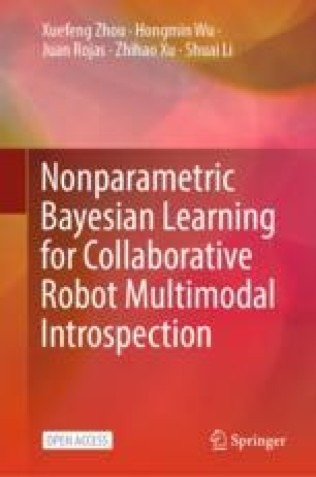
Nonparametric Bayesian Learning for Collaborative Robot Multimodal Introspection
This book focuses on robot introspection, which has a direct impact on physical human–robot interaction and long-term autonomy, and which can benefit from autonomous anomaly monitoring and diagnosis, as well as anomaly recovery strategies.

Nonlinear Dimensionality Reduction
This book describes existing and advanced methods to reduce the dimensionality of numerical databases. For each method, the description starts from intuitive ideas, develops the necessary mathematical details, and ends by outlining the algorithmic implementation. Methods are compared with each other with the help of different illustrative examples. The purpose of the book is to summarize clear facts and ideas about well-known methods as well as recent developments in the topic of nonlinear dimensionality reduction. With this goal in mind, methods are all described from a unifying point of view, in order to highlight their respective strengths and shortcomings.
