



الصفحة 1
الصفحة 1
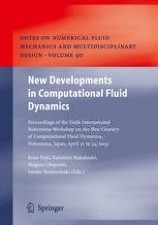
New Developments in Computational Fluid Dynamics ; Proceedings of the Sixth International Nobeyama Workshop on the New Century of Computational Fluid Dynamics, Nobeyama, Japan, April 21 to 24, 2003
This volume contains 20 papers in Nobeyama Workshop focuses on predicting the next one hundred years of development of Fluid Dynamics, accounting for the current status and future trends of high performance computation and communication.

Handbook of Fractional Calculus for Engineering and Science
Provides reliable methods for solving fractional-order models in science and engineering. Contains efficient numerical methods and algorithms for engineering-related equations. Contains comparison of various methods for accuracy and validity. Demonstrates the applicability of fractional calculus in science and engineering. Examines qualitative as well as quantitative properties of solutions of various types of science- and engineering-related equations.

Biomedical Simulation; 4th International Symposium, ISBMS 2008, London, UK, July 7-8, 2008 Proceedings
This book constitutes the refereed proceedings of the 4th International Symposium on Biomedical Simulation, ISBMS 2008, held in London, UK, in July 2008.
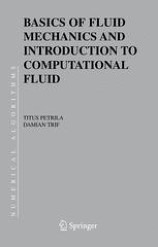
Basics of fluid mechanics and introduction to computational fluid dynamics
Brings together the theoretical basics of fluid dynamics with a systemaic overview of the appropriate numerical and computational methods for solving the problems presented in the book. Also, effective codes for a majority of the examples are included.
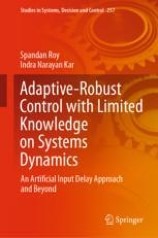
Adaptive-robust control with limited knowledge on systems dynamics : An artificial input delay approach and beyond
investigates the role of artificial input delay in approximating unknown system dynamics, referred to as time-delayed control (TDC), and provides novel solutions to current design issues in TDC. Its central focus is on designing adaptive-switching gain-based robust control (ARC) for a class of Euler–Lagrange (EL) systems with minimal or no knowledge of the system dynamics parameters. The newly proposed TDC-based ARC tackles the commonly observed over- and under-estimation issues in switching gain. The consideration of EL systems lends a practical perspective on the proposed methods, and each chapter is supplemented by relevant experimental data
