



الصفحة 1
الصفحة 1

New horizons for a data-driven economy : A roadmap for usage and exploitation of big data in Europe
The book is structured in four parts: Part I “The Big Data Opportunity” explores the value potential of big data with a particular focus on the European context. It also describes the legal, business and social dimensions that need to be addressed, and briefly introduces the European Commission’s BIG project. Part II “The Big Data Value Chain” details the complete big data lifecycle from a technical point of view, ranging from data acquisition, analysis, curation and storage, to data usage and exploitation. Next, Part III “Usage and Exploitation of Big Data” illustrates the value creation possibilities of big data applications in various sectors, including industry, healthcare, finance, energy, media and public services. Finally, Part IV “A Roadmap for Big Data Research” identifies and prioritizes the cross-sectorial requirements for big data research, and outlines the most urgent and challenging technological, economic, political and societal issues for big data in Europe.

Introduction to data systems : Building from Python
Encompassing a broad range of forms and sources of data, this textbook introduces data systems through a progressive presentation. Introduction to Data Systems covers data acquisition starting with local files, then progresses to data acquired from relational databases, from REST APIs and through web scraping. It teaches data forms/formats from tidy data to relationally defined sets of tables to hierarchical structure like XML and JSON using data models to convey the structure, operations, and constraints of each data form.

Handbook of networked and embedded control systems
The Handbook of Networked and Embedded Control Systems, the first of its kind, provides engineers, computer scientists, mathematicians, and students a broad, comprehensive source of information and technology to address many questions and aspects of embedded and networked control. A carefully organized collection of important results, tools, software, and technology, this work unifies into a single reference many scattered articles, websites, and specification sheets—information that might otherwise be difficult to find.

Frontiers of Digital Transformation : Applications of the Real-World Data Circulation Paradigm
Proposing the concept of real-world data circulation (RWDC), this book presents various practical and industry-related studies in human, mechanical, and social data domains. RWDC is a new field of study, established by the information technology (IT) community.

Disruptive trends in automation technology
The industrial sector is being transformed by the convergence of information technology and operational technology. The latter is another name for automation technology and covers established systems such as supervisory control and data acquisition (SCADA), programmable logic controllers (PLC), fieldbuses, and automation and control systems. As this technology is connected to the Internet and 5G networks, some monitoring, control, and analytic functionalities are deployed to the edge or cloud, and researchers are challenged to ensure the security, dependability, real-time performance, and maintainability of the resulting systems. The big data that is accessible from these systems create opportunities for artificial intelligence applications that can further disrupt the established practices in the automation domain.

Deep learning and computer vision in remote sensing-II
Computer vision (CV) have seen a massive rise in popularity in the remote sensing field over the last few years. This success is mostly due to the effectiveness of deep learning (DL) algorithms. However, remote sensing data acquisition and annotation, as well as information extraction from massive remote sensing data, are still challenging. This reprint collected novel developments in the field of deep learning and computer vision methods for remote sensing. Papers dealing with fundamental theoretical analyses, as well as those demonstrating their application to real-world problems, have been published. With practical examples and real-world case studies, this reprint provides a valuable resource for researchers, professionals, and students seeking to harness the power of deep learning in the field of remote sensing.

Deep learning and computer vision in remote sensing-I
In the last few years, huge amounts of progress have been made regarding remote sensing in the field of computer vision. This success and progress is mostly due to the effectiveness of deep learning (DL) algorithms. In addition, the remote sensing community has shifted its attention to DL, and DL algorithms have been used to achieve significant success in many image analysis tasks. However, with regard to remote sensing, a number of challenges caused by difficulties in data acquisition and annotation have not been fully solved yet. This reprint is a collection of novel developments in the field of remote sensing using computer vision, deep learning, and artificial intelligence. The articles published involve fundamental theoretical analyses as well as those demonstrating their application to real-world problems.

Decoding the city urbanism in the Age of Big Data
Shows how Big Data change reality and, hence, the way we deal with the city. They demonstrate how the Lab interprets digital data as material that can be used for the formulation of a different urban future. The publication also looks at the negative aspects of the city-related data acquisition and control.

Machine learning and data mining for sports analytics ; 7th international workshop, MLSA 2020, Co-located with ECML/PKDD 2020, Ghent, Belgium, September 14–18, 2020, Proceedings
Constitutes the refereed post-conference proceedings of the 7th International Workshop on Machine Learning and Data Mining for Sports Analytics, MLSA 2020, colocated with ECML/PKDD 2020, in Ghent, Belgium, in September 2020. The 11 papers presented were carefully reviewed and selected from 22 submissions. The papers present a variety of topics within the area of sports analytics, including tactical analysis, outcome predictions, data acquisition, performance optimization, and player evaluation.

Bayesian reliability
Bayesian Reliability presents modern methods and techniques for analyzing reliability data from a Bayesian perspective. The adoption and application of Bayesian methods in virtually all branches of science and engineering have significantly increased over the past few decades. This increase is largely due to advances in simulation-based computational tools for implementing Bayesian methods. The authors extensively use such tools throughout this book, focusing on assessing the reliability of components and systems with particular attention to hierarchical models and models incorporating explanatory variables. Such models include failure time regression models, accelerated testing models, and degradation models. The authors pay special attention to Bayesian goodness-of-fit testing, model validation, reliability test design, and assurance test planning. Throughout the book, the authors use Markov chain Monte Carlo (MCMC) algorithms for implementing Bayesian analyses--algorithms that make the Bayesian approach to reliability computationally feasible and conceptually straightforward.
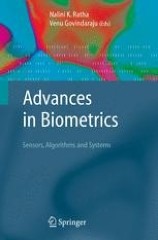
Advances in Biometrics: Sensors, Algorithms and Systems
This book presents a comprehensive treatment of biometrics and offers coverage of the entire gamut of topics in the field, including data acquisition, pattern-matching algorithms, and issues that impact at the system level, such as standards, security, networks, and databases.

Advances in Biometrics ; International Conference, ICB 2007, Seoul, Korea, August 27-29, 2007, Proceedings
Biometrics technology continues to stride forward with its wider acceptance and its real need in various new security facets of modern society. From simply logging on to a laptop to crossing the border of a country, biometrics is being called upon to meet the growing challenges of identity management. This book presents a comprehensive treatment of biometrics and offers coverage of the entire gamut of topics in the field, including data acquisition, pattern-matching algorithms, and issues that impact at the system level, such as standards, security, networks, and databases. It has been organized under three sections: sensors, advances in biometric matching algorithms, and topics that deal with issues at the systems level.
