



الصفحة 1
الصفحة 1

New perspectives in critical data studies: the ambivalences of data power
Examines the ambivalences of data power. Firstly, the ambivalences between global infrastructures and local invisibilities challenge the grand narrative of the ephemeral nature of a global data infrastructure. They make visible local working and living conditions, and the resources and arrangements required to operate and run them. Secondly, the book examines ambivalences between the state and data justice. It considers data justice in relation to state surveillance and data capitalism, and reflects on the ambivalences between an “entrepreneurial state” and a “welfare state”. Thirdly, the authors discuss ambivalences of everyday practices and collective action, in which civil society groups, communities, and movements try to position the interests of people against the “big players” in the tech industry.
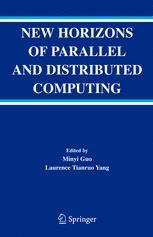
New Horizons of Parallel and Distributed Computing
Parallel and distributed computing is one of the foremost technologies for shaping future research and development activities in academia and industry. Hyperthreading in Intel processors, hypertransport links in next generation AMD processors, multicore silicon in today’s high-end microprocessors, emerging cluster and grid computing, has moved parallel/distributed computing into the mainstream of computing. New Horizons of Parallel and Distributed Computing is a collection of self-contained chapters written by pioneers and researchers to provide solutions for newly emerging problems in this field. This volume will not only provide novel ideas, work in progress and state-of-the-art techniques in the field, but also stimulate future research activities in the area of parallel and distributed computing with applications. New Horizons of Parallel and Distributed Computing is intended for researchers and graduate students in computer science and electrical engineering, as well as researchers and developers in industry. This book can be used as a textbook and a reference for use by students, researchers, and developers.

New Frontiers in Artificial Intelligence ; JSAI 2007 Conference and Workshops, Miyazaki, Japan, June 18-22, 2007, Revised Selected Papers
The technology of artifcial intelligence is increasing its importance thanks to the rapid growth of the Internet and computer technology. In Japan, the annual conference series of JSAI (The Japanese Society for Arti?cial Intelligence) has been playing a leading role in promoting AI research, and selected papers of the annual conferences have been published in the LNAI series since 2003. This book consists of award papers from the 21st annual conference of JSAI (JSAI 2007) and selected papers from the four co-located workshops.
New challenges in software engineering ; Vol 1
Explores the key challenges shaping the future of software development, including automation, AI-driven development, security-focused engineering, resilient and autonomous architectures, business process optimization, cloud computing, microservices, high-performance distributed systems, and sustainable technologies. Software engineering is undergoing a constant transformation, driven by rapid technological advances and evolving market demands. additionally, it delves into the ethical considerations of AI, the evolution of intuitive user interfaces, and the importance of multidisciplinary collaboration.

Network Control and Engineering for QOS, Security and Mobility, III ; IFIP TC6 / WG6.2, 6.6, 6.7 and 6.8. Third International Conference on Network Control and Engineering for QoS, Security and Mobility, NetCon 2004 on November 2-5, 2004, Palma de Mallorca, Spain
This volume contains the proceedings of the Third International Conference on Network Control and Engineering for Quality of Service, Security and Mobility (Net-Con'2004), celebrated in Palma de Mallorca (Illes Balears, Spain) during November 2-5, 2004. This IFIP TC6 Conference was organized by the Universitat de les Illes Balears and sponsored by the following Working Groups: WG6.2 (Network and Internetwork Architectures), WG6.6 (Management of Networks and Distributed Systems), WG6.7 (Smart Networks) and WG6.8 (Mobile and Wireless Communications). The rapid evolution of the networking industry introduces new exciting challenges that need to be explored by the research community. The adoption of Internet as the global network infrastructure places the issue of quality of service among one of the hot topics nowadays: a huge diversity of applications with quite different service requirements must be supported over a basic core of protocols. Also, the open and uncontrolled nature of Internet enforces the need to guarantee secure transactions among users, thus placing security as another hot topic. Finally, the explosion of mobility and its integration as part of the global infrastructure are probably now the most challenging issues in the networking field.

Multi-access Edge Computing : Software Development at the Network Edge
The book aims not only at providing a comprehensive technology and standard reference overview for students, but also useful research insights and practical exercises for edge software developers and investigators in the area (and for students looking to apply their skills). A particular emphasis is given Multi-access Edge Computing (MEC) as defined in European Telecommunications Standards Institute (ETSI), in relationship with other standard organizations like 3GPP, thus in alignment with the recent industry efforts to produce harmonized standards for edge computing leveraging both ETSI ISG MEC and 3GPP specifications.

Modern IoT onboarding platforms for advanced applications: a practitioner’s guide to KIS.ME
There is no doubt that digitalization solutions from Industry 4.0 and the Internet of Things (IoT) can be perceived as excellent candidate strategies capable of handling the above-stated issues concerning measurements and transparency. However, IoT tools themselves can provide appropriate data only, while their efficient integration and application are possible using a dedicated onboarding platform only. To settle this issue, the book undertakes the problem of modern IoT onboarding platforms for the advanced applications pertaining to manufacturing and logistics. In particular, instead of deliberating about a possible hypothetic platforms, an existing and efficient one is employed, which is called KIS.ME. KIS.ME (Keep It Simple. Manage Everything) is a complete IoT solution for a simple integration in manufacturing and logistics.

Mobile 3D Graphics
Historically, not enough was understood about how to deliver a high quality playing experience on handheld, small screen, small memory devices, plus there has been considerable confusion about the hardware’s abilities and restrictions. By addressing these issues this book provides: • A comprehensive explanation of 3D mobile graphics programming • Includes an extensive range of code samples in both C and Java • Combines 3D and 2D mobile graphics methods • Covers recent advances in mobile computer graphics techniques and applications. The book teaches fundamental 3D mobile graphics programming with standard APIs, and covers the basic and advanced application programme interfaces behind the major wireless and mobile devices supporting 3D graphics applications. Advanced undergraduates and postgraduates, as well as mobile application and games developers, will find this an excellent reference source.

MICAI 2006 : Advances in Artificial Intelligence ; 5th Mexican International Conference on Artificial Intelligence, Apizaco, Mexico, November 13-17, 2006, Proceedings
This volume contains the papers presented during the oral session of the 5 Mexican International Conference on Artificial Intelligence, held on November 13–17, 2006, at the Technologic Institute of Apizaco, Mexico. The conference received for evaluation 448 submissions by 1207 authors from 42 different countries

Messages security application
The rapid development of communication technology, is bringing many technological conveniences with it and simplifying our lives. On the other hand, it has disadvantages such as hiding the information that is continuously roaming through various communication media resources between senders and receivers and avoid sharing them with third parties. Eliminating these disadvantages via specific security methods and algorithms is related to the discipline called cryptography, which includes information security. Encryption is the process of turning a plaintext to jargon or the method of changing a confidential file to jargon in order to prevent unauthorized persons from gaining access to confidential message. A Message is the transfer of information from the sender to the receiver through a particular medium. Encryption is the most effective process for achieving data security.

IoT-enabled Smart Healthcare Systems, Services and Applications
In IoT-Enabled Smart Healthcare Systems, Services and Applications, an accomplished team of researchers delivers an insightful and comprehensive exploration of the roles played by cutting-edge technologies in modern healthcare delivery. The distinguished editors have included resources from a diverse array of learned experts in the field that combine to create a broad examination of a rapidly developing field.

Introduction to data systems : Building from Python
Encompassing a broad range of forms and sources of data, this textbook introduces data systems through a progressive presentation. Introduction to Data Systems covers data acquisition starting with local files, then progresses to data acquired from relational databases, from REST APIs and through web scraping. It teaches data forms/formats from tidy data to relationally defined sets of tables to hierarchical structure like XML and JSON using data models to convey the structure, operations, and constraints of each data form.
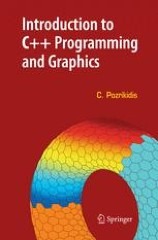
Introduction to C++ Programming and Graphics
Introduction to C++ Programming and Graphics offers a venue for rapidly learning the language by concisely revealing its grammar, syntax and main features, and by explaining the key ideas behind object oriented programming (OOP), with emphasis on scientific computing.

Introducing Robotic Process Automation to Your Organization : A Guide for Business Leaders
Enables you, a novice to RPA, to successfully implement an RPA program at your company. RPA is rapidly growing in use, but is only starting to be taught at a university level. Many mid-level managers will be tasked with introducing an RPA program at their organizations as senior management learns of its efficacy, but will be unfamiliar with how to do so. This book provides you with the skills and information you need to make an informed decision. You will learn: Know the benefits of robotic process automation (RPA) / Understand the limitations of RPA / Ask the right questions to determine whether a process is a good candidate for automation / Obtain buy-in from skeptics at the senior and middle manager levels, and from line workers Be familiar with the structure required for success
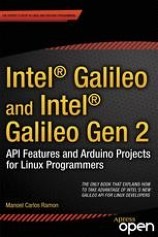
Intel® Galileo and Intel® Galileo Gen 2 : API Features and Arduino Projects for Linux Programmers
ntel® Galileo and Intel® Galileo Gen 2: API Features and Arduino Projects for Linux Programmers provides detailed information about Intel® Galileo and Intel® Galileo Gen 2 boards for all software developers interested in Arduino and the Linux platform. The book covers the new Arduino APIs and is an introduction for developers on natively using Linux.

Inside Relational Databases with Examples in Access
Inside Relational Databases was first published in 1997 and, rather to our surprise, rapidly reached the status of a classic work in the database field. The book illustrates the relational model using the reader’s favorite product – such as Access.

Inside deep learning : Math, algorithms, models
Journey through the theory and practice of modern deep learning, and apply innovative techniques to solve everyday data problems. In Inside Deep Learning, you will learn how to: Implement deep learning with PyTorch Select the right deep learning components Train and evaluate a deep learning model Fine tune deep learning models to maximize performance Understand deep learning terminology Adapt existing PyTorch code to solve new problems Inside Deep Learning is an accessible guide to implementing deep learning with the PyTorch framework. It demystifies complex deep learning concepts and teaches you to understand the vocabulary of deep learning so you can keep pace in a rapidly evolving field. No detail is skipped--you'll dive into math, theory, and practical applications. Everything is clearly explained in plain English.

Information security theory and practices : Smart devices, Convergence and Next Generation Networks ; 2nd IFIP WG 11.2 International Workshop, WISTP 2008, Seville, Spain, May 13-16, 2008. Proceedings
This volume constitutes the refereed proceedings of the Second IFIP WG 11.2 International Workshop on Information Security Theory and Practices: Smart Devices, Convergence and Next Generation Networks, WISTP 2008, held in Seville, Spain, in May 2008.The 10 revised full papers presented were carefully reviewed and selected from numerous submissions for inclusion in the book; they examine the rapid development of information technologies and the transition to next generation networks.

Impacts and Risk Assessment of Technology for Internet Security : Enabled Information Small-Medium Enterprises (TEISMES)
This emerging economy is bringing with it new forms of TEI intermediation, online businesses, virtual supply chains, rapidly changing internet-electronic commerce technologies, increasing knowledge intensity, and unprecedented sensitivity of the time-to-market by customers. Impacts and Risk Assessment of Technology for Internet Security Enabled Information Small-Medium Enterprises (TEISMES) also identifies ways of minimizing risk liability of TEISME business operations as a result of their dependence on TEI (Internet-eC). The rapid evolution and spread of information technology (IT) during the last few years is challenging SMEs, governments and internet security professionals to rethink the very nature of risk exposure. Impacts and Risk Assessment of Technology for Internet Security Enabled Information Small-Medium Enterprises (TEISMES) is designed for a professional audience of researchers and practitioners in industry. This book is also suitable for graduate-level students in computer science.

Hydra = هايدرا
Forgery involves the use of advanced algorithms to replicate and distribute deceptive products across various categories, casting shadows of doubt on the authenticity of goods. Although counterfeit detection can be useful in identifying and mitigating fraudulent activities, the widespread presence of counterfeit goods poses significant dangers, undermining consumer confidence and brand reputation. To underscore the severity of this issue, consider instances such as fake luxury items flooding the market, counterfeit electronics compromising safety, or bogus pharmaceuticals endangering health. Addressing this issue is critical in maintaining the integrity of brands, safeguarding consumer well-being, and preserving trust in the marketplace. The ability to distinguish between authentic and counterfeit products is paramount in ensuring accurate decision-making and preventing the harmful consequences of fraudulent goods. This technological context underscores the urgency of developing and deploying cutting-edge solutions to combat the evolving landscape of product forgery. Hydra emerges as a robust solution, utilizing a comprehensive approach that includes extracting posts and images from search engine tools, and is integrated with AI models to detect forgery. The Hydra platform not only provides users with a powerful tool for detecting counterfeit products but also offers tangible benefits such as enhanced brand security, increased awareness about the prevalence of forgeries, and the opportunity to actively participate in a real-time community.
