



الصفحة 94
الصفحة 94
Abstract Computing Machines : A Lambda Calculus Perspective
The book addresses ways and means of organizing computations, highlighting the relationship between algorithms and the basic mechanisms and runtime structures necessary to execute them using machines. It completely abstracts from concrete programming languages and machine architectures, taking instead the lambda calculus as the basic programming and program execution model to design various abstract machines for its correct implementation. The emphasis is on fully normalizing machines based on full-fledged beta-reductions as essential prerequisites for symbolic computations that treat functions and variables truly as first-class objects. Their weakly normalizing counterparts are shown to be functional abstract machines that sacrifice the flavors of full beta-reductions for decidedly simpler runtime structures and improved runtime efficiency. Further downgrading of the lambda calculus leads to classical imperative machines that permit side-effecting operations on the runtime environment.
A Theory of Distributed Objects : Asynchrony - Mobility - Groups - Components
Distributed and communicating objects are becoming ubiquitous. In global, Grid and Peer-to-Peer computing environments, extensive use is made of objects interacting through method calls. So far, no general formalism has been proposed for the foundation of such systems. Caromel and Henrio are the first to define a calculus for distributed objects interacting using asynchronous method calls with generalized futures, i.e., wait-by-necessity -- a must in large-scale systems, providing both high structuring and low coupling, and thus scalability. The authors provide very generic results on expressiveness and determinism, and the potential of their approach is further demonstrated by its capacity to cope with advanced issues such as mobility, groups, and components.
A software process model handbook for incorporating peoples capabilities
Offers the most advanced approach to date, empirically validated at software development organizations. This handbook adds a valuable contribution to the much-needed literature on people-related aspects in software engineering. The primary focus is on the particular challenge of extending software process definitions to more explicitly address people-related considerations. The capability concept is not present nor has it been considered in most software process models. The authors have developed a capabilities-oriented software process model, which has been formalized in UML and implemented as a tool. A Software Process Model Handbook for Incorporating People's Capabilities guides readers through the incorporation of the individual’s capabilities into the software process. Structured to meet the needs of research scientists and graduate-level students in computer science and engineering, A Software Process Model Handbook for Incorporating People's Capabilities is also suitable for practitioners in industry.
A Practical Theory of Reactive Systems : Incremental Modeling of Dynamic Behaviors
Presents a ""practical theory"" of reactive systems, with formal foundations in Temporal Logic of Actions. This book emphasises theoretical understanding of reactive behaviors and using ""horizontal"" modularity to manage their complexity. It illustrates the incremental specification by a number of examples of varying size and complexity
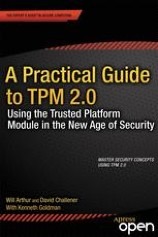
A Practical Guide to TPM 2.0 : Using the New Trusted Platform Module in the New Age of Security
A Practical Guide to TPM 2.0: Using the Trusted Platform Module in the New Age of Security is a straight-forward primer for developers. It shows security and TPM concepts, demonstrating their use in real applications that the reader can try out. Simply put, this book is designed to empower and excite the programming community to go out and do cool things with the TPM. The approach is to ramp the reader up quickly and keep their interest.A Practical Guide to TPM 2.0: Using the Trusted Platform Module in the New Age of Security explains security concepts, describes the TPM 2.0 architecture, and provides code and pseudo-code examples in parallel, from very simple concepts and code to highly complex concepts and pseudo-code.
A Practical Guide for SystemVerilog Assertions
SystemVerilog language consists of three very specific areas of constructs - design, assertions and testbench. This guide shows how to use the language to solve real verification problems. It examines how to verify complex protocols and memories using SVA with seeral examples.
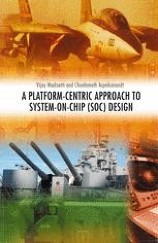
A Platform-Centric Approach to System-on-Chip (SOC) Design
The book proposes a new methodology for realizing platform-centric design of complex systems, and presents a detailed plan for its implementation. The proposed plan allows component vendors, system integrators and product developers to collaborate effectively and efficiently to create complex products within budget and schedule constraints.
A Modular Calculus for the Average Cost of Data Structuring
This volume, with forewords by Greg Bollella and Dana Scott, presents novel programs based on the new advances in this area, including the first randomness-preserving version of Heapsort. Programs are provided, along with derivations of their average-case time, to illustrate the radically different approach to average-case timing. The automated static timing tool applies the Modular Calculus to extract the average-case running time of programs directly from their MOQA code.
A Modern Approach to Intelligent Animation : Theory and Practice
Part of the new series, Advanced Topics in Science and Technology in China, this book discusses concepts, theory, and core technologies of intelligent theory and human animation, including video based human animation, and intelligent technology of motion data management and reusing. It introduces systems developed to demonstrate the technologies of video based animation. Each chapter is independent. Lively pictures and demos will be presented to make the theory and technologies more understandable.
A journey of embedded and cyber-physical systems : Essays dedicated to Peter Marwedel on the occasion of his 70th birthday
This book celebrates Professor Peter Marwedel's outstanding achievements in compilers, embedded systems, and cyber-physical systems. The contributions in the book summarize the content of invited lectures given at the workshop “Embedded Systems” held at the Technical University Dortmund in early July 2019 in honor of Professor Marwedel's seventieth birthday.
A High-Performance Logical Framework -- All About Maude : How to Specify, Program, and Verify Systems in Rewriting Logic
This book gives a comprehensive account of Maude, a language and system based on rewriting logic. Many examples are used throughout the book to illustrate the main ideas and features of Maude, and its many possible uses. Maude modules are rewrite theories. Computation with such modules is - cient deduction by rewriting. Because of its logical basis and its initial model semantics,aMaude module defines a precise mathematical model.This means that Maude and its formal tool environment can be used in three, mutually reinforcing ways: • as a declarative programming language; • as an executable formal specification language; and • as a formal verification system. Maude’s rewriting logic is simple, yet very expressive. This gives Maude good representational capabilities as a semantic framework to formally represent a wide range of systems, including models of concurrency, distributed al- rithms, network protocols, semantics of programming languages, and models of cell biology. Rewriting logic is also an expressive universal logic,making Maude a fiexible logical framework in which many difierent logics and - ference systems can be represented and mechanized. This makes Maude a useful metatool to build many other tools, including those in its own formal tool environment. Thanks to the logic’s simplicity and the use of advanced semi-compilation techniques, Maude has a high-performance implementation, making it competitive with other declarative programming languages.

A healthcare professionals training system
The Objective Structured Clinical Examination (OSCE) is a type of examination often used in health sciences. It is designed to test clinical skill performance and competence in a range of skills. It is a practical, real-world approach to learning and assessment. Comprises a circuit of short (5-10 minutes) stations, in which each candidate is examined on a one-to-one basis with one or two impartial examiner(s) and patients who are either real or simulated (actors or electronic patient simulators). Each station has a different examiner; in comparison, the traditional method of clinical examination is when a candidate is assigned to an examiner for the entire examination.
A Guide to Graph Algorithms
Offers high-quality content in the research area of graph algorithms and explores the latest developments in graph algorithmics. The reader will gain a comprehensive understanding of how to use algorithms to explore graphs. It is a collection of texts that have proved to be trend setters and good examples of that. The book aims at providing the reader with a deep understanding of the structural properties of graphs that are useful for the design of efficient algorithms. These algorithms have applications in finite state machine modelling, social network theory, biology, and mathematics. The book contains many exercises, some up at present-day research-level. The exercises encourage the reader to discover new techniques by putting things in a clear perspective.
A General introduction to data analytics
A guide to the principles and methods of data analysis that does not require knowledge of statistics or programming. A guide to the reasoning behind data mining techniques. A unique illustrative example that extends throughout all the chapters. Exercises at the end of each chapter and larger projects at the end of each of the text’s two main parts
A First Course in Statistical Inference
Offers a modern and accessible introduction to Statistical Inference, the science of inferring key information from data. Aimed at beginning undergraduate students in mathematics, it presents the concepts underpinning frequentist statistical theory. Written in a conversational and informal style, this concise text concentrates on ideas and concepts, with key theorems stated and proved. Detailed worked examples are included and each chapter ends with a set of exercises, with full solutions given at the back of the book. Examples using R are provided throughout the book, with a brief guide to the software included. Topics covered in the book include: sampling distributions, properties of estimators, confidence intervals, hypothesis testing, ANOVA, and fitting a straight line to paired data.
A first course in differential equations with modeling applications
A comprehensive treatment of ordinary differential equations, concisely presenting basic and essential results in a rigorous manner. Including various examples from physics, mechanics, natural sciences, engineering and automatic theory, Differential Equations is a bridge between the abstract theory of differential equations and applied systems theory.
A Concise Introduction to Languages and Machines
This easy-to-follow text provides an accessible introduction to the key topics of formal languages and abstract machines within Computer Science.
A Concise Introduction to Data Compression
Compressing data is an option naturally selected when faced with problems of high costs or restricted space. Written by a renowned expert in the field, this book offers readers a succinct, reader-friendly foundation to the chief approaches, methods and techniques currently employed in the field of data compression.
A Computational Model of Natural Language Communication : Interpretation, Inference, and Production in Database Semantics
Presents a high-level description of an artificial agent which humans can freely communicate with in their accustomed language. Part II analyzes the major constructions of natural language, i.e., intra- and extrapropositional functor - argument structure, coordination, and coreference, in the speaker and the hearer mode. Part III defines declarative specifications for fragments of English, which are used for an implementation in Java.
3-D Shape Estimation and Image Restoration : Exploiting Defocus and Motion-Blur
Images contain information about the spatial properties of the scene they depict. When coupled with suitable assumptions, images can be used to infer three-dimensional information. This useful volume concentrates on motion blur and defocus, which can be exploited to infer the 3-D structure of a scene—as well as its radiance properties—and which in turn can be used to generate novel images with better quality. 3-D Shape Estimation and Image Restoration presents a coherent framework for the analysis and design of algorithms to estimate 3-D shape from defocused and motion blurred images, and to eliminate defocus and motion blur to yield "restored" images. It provides a collection of algorithms that are optimal with respect to the chosen model and estimation criterion.
