



الصفحة 93
الصفحة 93
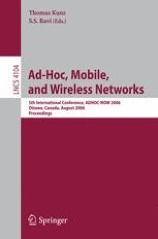
Ad-Hoc, mobile, and wireless networks ; Vol. 4104 ; 5th International Conference, ADHOC-NOW 2006, Ottawa, Canada, August 17-19, 2006 Proceedings
The 5th International Conference on Adhoc, Mobile and Wireless Networks (Adhoc-Now 2006) was held during August 17–19, 2006, in Ottawa, Canada. The ?rst four conferences in this series were held in Toronto (2002), Montreal (2003), Vancouver (2004) and Cancun (2005), respectively. The purpose of this conference is to provide a forum for researchers from academia/industry and practitioners to meet and exchange ideas regarding recent developments in the areas of ad hoc wireless networks. We received more than 170 papers for the conference submitted by authors from the following 25 countries: Australia, Bangladesh, Brazil, Canada, China, France, Germany, Greece, India, Iran, Ireland, Italy, Korea, Malaysia, Mexico, Nepal, Norway,Poland, Spain, Taiwan, The Netherlands, Turkey, UK, USA and Venezuela. Each paper was assignedto three members of the Technical Program Committee (TPC).
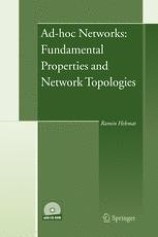
Ad-hoc Networks : Fundamental Properties and Network Topologies
This book clearly demonstrates how the Medium Access Control protocols impose a limit on the level of interference in ad-hoc networks. It has been shown that interference is upper bounded, and a new accurate method for the estimation of interference power statistics in ad-hoc and sensor networks is introduced here. Furthermore, this volume shows how multi-hop traffic affects the capacity of the network. In multi-hop and ad-hoc networks there is a trade-off between the network size and the maximum input bit rate possible per node. Large ad-hoc or sensor networks, consisting of thousands of nodes, can only support low bit-rate applications.

Addressing Global Challenges and Quality Education ; 15th European Conference on Technology Enhanced Learning, EC-TEL 2020, Heidelberg, Germany, September 14–18, 2020, Proceedings
The chapters: “Designing an Online Self-Assessment for Informed Study Decisions: The User Perspective”; “Living with Learning Difficulties: Two Case Studies Exploring the Relationship Between Emotion and Performance in Students With Learning Difficulties”; “Applying Instructional Design Principles on Augmented Reality Cards for Computer Science Education”; and “Teaching Simulation Literacy With Evacuations - Concept, Technology, and Material for a Novel Approach” are available open access under a Creative Commons Attribution 4.0 International License via link.springer.com.
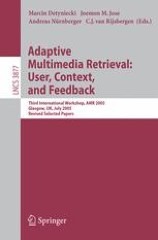
Adaptive Multimedia Retrieval : User, Context, and Feedback ; Third International Workshop, AMR 2005, Glasgow, UK, July 28-29, 2005, Revised Selected Papers
This book is an extended collection of revised contributions that were initially submitted to the International Workshop on Adaptive Multimedia Retrieval (AMR 2005). This workshop was organized during July 28-29, 2005, at the U- versity of Glasgow, UK, as part of an information retrieval research festival and in co-location with the 19th International Joint Conference on Arti?cial Int- ligence (IJCAI 2005). AMR 2005 was the third and so far the biggest event of the series of workshops that started in 2003 with a workshop during the 26th German Conference on Arti?cial Intelligence (KI 2003) and continued in 2004 as part of the 16th European Conference on Arti?cial Intelligence (ECAI 2004).
Adaptive Machine Learning Algorithms with Python : Solve Data Analytics and Machine Learing Problems on Edge Devices
Learn to use adaptive algorithms to solve real-world streaming data problems. This book covers a multitude of data processing challenges, ranging from the simple to the complex. At each step, you will gain insight into real-world use cases, find solutions, explore code used to solve these problems, and create new algorithms for your own use. You will: Apply adaptive algorithms to practical applications and examples / Understand the relevant data representation features and computational models for time-varying multi-dimensional data / Derive adaptive algorithms for mean, median, covariance, eigenvectors (PCA) and generalized eigenvectors with experiments on real data / Speed up your algorithms and put them to use on real-world stationary and non-stationary data / Master the applications of adaptive algorithms on critical edge device computation applications
Adaptive Learning of Polynomial Networks : Genetic Programming, Backpropagation and Bayesian Methods
This book provides theoretical and practical knowledge for develop ment of algorithms that infer linear and nonlinear models. It offers a methodology for inductive learning of polynomial neural network mod els from data. The design of such tools contributes to better statistical data modelling when addressing tasks from various areas like system identification, chaotic time-series prediction, financial forecasting and data mining. The main claim is that the model identification process involves several equally important steps: finding the model structure, estimating the model weight parameters, and tuning these weights with respect to the adopted assumptions about the underlying data distrib ution. When the learning process is organized according to these steps, performed together one after the other or separately, one may expect to discover models that generalize well.

Adaptive Hypermedia and Adaptive Web-Based Systems ; 4th International Conference, AH 2006, Dublin, Ireland, June 21-23, 2006, Proceedings
Here are the refereed proceedings of the 4th International Conference on Adaptive Hypermedia and Adaptive Web-Based Systems, AH 2006, held in Dublin, Ireland, June 2006. The book presents 22 revised full papers and 19 revised short papers together with abstracts of 3 keynotes, 12 poster papers, and 14 doctoral consortium posters. Topics include pioneering theories, techniques, and innovative technologies to provide dynamic personalization, adaptation, and contextualization of hypermedia resources and services.

Adapting Proofs-as-Programs : The Curry--Howard Protocol
This book nuds new things to do with an old idea. The proofs-as-programs paradigm constitutes a set of approaches to developing programs from proofs in constructive logic. there is increasingly active research in applying constructive techniques to industrial-scale, complex software engineering problems. Thismonographdetailsseveralimportantadvancesinthisdirectionofpr- tical proofs-as-programs. One of the central themes of the book is a general, abstract framework for developing new systems of program synthesis by adapting proofs-as-programs to new contexts. Framework-oriented approaches that facilitate analogous - proaches to building systems for solving particular problems have been popular and successful. Thesemethodsarehelpful asthey providea formal toolbox that enablesa“roll-your-own”approachtodevelopingsolutions.Itishopedthatour framework will have a similar impact. The framework is demonstrated by example. We will give two novel - plications of proofs-as-programs to large-scale, coarse-grain software engine- ing problems: contractual imperative program synthesis and structured p- gram synthesis.
Ada 2005 Reference Manual. Language and Standard Libraries : International Standard ISO/IEC 8652/1995(E) with Technical Corrigendum 1 and Amendment 1
The Ada 2005 Reference Manual incorporates these changes in the overall standard text and thus will replace the former versions as an indispensable working companion for anybody using Ada professionally or learning and studying the language systematically. In naming this version, we have chosen the vernacular term Ada 2005 used by the Ada community to refer to the interesting extensions made to the language Ada by the Amendment 1.
Ada 2005 Rationale : The Language, The Standard Libraries
The primary goals for this book were to enhance its capabilities particularly in those areas where its reliability and predictability are of great value. Accordingly, a number of intriguing and attractive ideas have been included and implemented in a coherent manner as appropriate to the level of perfection necessary for the diligent maintenance of a language standard.
Active Networks : IFIP TC6 6th International Working Conference, IWAN 2004, Lawrence, KS, USA, October 27-29, 2004, Revised Papers
The proceedings of the sixth Annual International Working Conference on Active Networks, which took place in October 2004 at The Information and Telecommunications Technology Center, The University of Kansas, USA. The proceedings of IWAN 2004 mark a transition between the funded active networking programs in Europe, Japan, and the United States and a strong, continued interest in the architectures of programmable networks.The papers are organized into sections on active network systems and architectures, security in active networking, active network applications, mobile active networks and active network management.
Active Lighting and Its Application for Computer Vision : 40 Years of History of Active Lighting Techniques
Computer vision entails both passive and active illumination techniques. Whereas passive techniques observe the scene statically and analyse it as is, by contrast active techniques give the scene some actions and try to facilitate the analysis. In particular, active illumination techniques project specific light, for which the characteristics are known beforehand, to a target scene to enable stable and accurate analysis of the scene.

Active Directory Field Guide
Active Directory Field Guide is ideal for Windows and Active Directory administrators and consultants. It contains valuable descriptions of higher-level skills, tasks, and tools, including migration, large-scale deployment, security, and disaster recovery, and provides bold, nontraditional solutions.
Action Research in Software Engineering: Theory and Applications
This book addresses action research (AR), one of the main research methodologies used for academia-industry research collaborations. It elaborates on how to find the right research activities and how to distinguish them from non-significant ones. Further, it details how to glean lessons from the research results, no matter whether they are positive or negative. Lastly, it shows how companies can evolve and build talents while expanding their product portfolio.

Accessing Multilingual Information Repositories ; 6th Workshop of the Cross-Language Evaluation Forum, CLEF 2005, Vienna, Austria, 21-23 September, 2005, Revised Selected Papers
The sixth campaign of the Cross Language Evaluation Forum (CLEF) for European languages was held from January to September 2005. CLEF is by now an established international evaluation initiative and 74 groups from all over the world submitted results for one or more of the different evaluation tracks in 2005, compared with 54 groups in 2004. There were eight distinct evaluation tracks, designed to test the performance of a wide range of systems for multilingual information access. Full details regarding the design of the tracks, the methodologies used for evaluation, and the results obtained by the participants can be found in the different sections of these proceedings.

Accelerator Programming Using Directives ; 6th International Workshop, WACCPD 2019, Denver, CO, USA, November 18, 2019, Revised Selected Papers
This book constitutes the refereed post-conference proceedings of the 6th International Workshop on Accelerator Programming Using Directives, WACCPD 2019, held in Denver, CO, USA, in November 2019. The 7 full papers presented have been carefully reviewed and selected from 13 submissions. The papers share knowledge and experiences to program emerging complex parallel computing systems. They are organized in the following three sections: porting scientific applications to heterogeneous architectures using directives; directive-based programming for math libraries; and performance portability for heterogeneous architectures.

Abstraction, Reformulation, and Approximation ; 7th International Symposium, SARA 2007, Whistler, Canada, July 18-21, 2007, Proceedings
This volume contains the proceedings of SARA 2007, the seventh symposium, held at Whistler Village, British Columbia, Canada, July 18-21. Three distinguished speakers were invited to give keynote presentations, and their abstracts are included herein,It has been recognized since the inception of artificial intelligence that abstractions, problem reformulations and approximations (AR&A) are central to human common-sense reasoning and problem solving and to the ability of systems to reason effectively in complex domains.AR&A techniques have been used in a variety of problem-solving settings, including automated reasoning, cognitive modelling.
Abstraction, reformulation and approximation ; 6th International symposium, SARA 2005, Airth Castle, Scotland, UK, July 26-29, 2005, proceedings
This volume contains the proceedings of the 6th Symposium on Abstraction, Reformulation and Approximation (SARA 2005). the proceedings have been published in the LNAI series of Springer. Abstractions, reformulations and approximations (AR&A) have found app- cationsin avarietyofdisciplines andproblems, including constraintsatisfaction, design, diagnosis, machine learning, planning, qualitative reasoning, scheduling, resource allocation and theorem proving, but are also deeply rooted in philo- phy and cognitive science. The papers in this volume capture a cross-section of the various facets of the ?eld and of its applications. One of the primary uses of AR&A is oriented to overcome computational intractability. AR&A techniques, however, have also proved useful for knowledge acquisition, explanation and other applications.
Abstraction, refinement and proof for probabilistic systems
Probabilistic techniques are increasingly being employed in computer programs and systems because they can increase efficiency in sequential algorithms, enable otherwise nonfunctional distribution applications, and allow quantification of risk and safety in general. This makes operational models of how they work, and logics for reasoning about them, extremely important. Abstraction, Refinement and Proof for Probabilistic Systems presents a rigorous approach to modeling and reasoning about computer systems that incorporate probability. Its foundations lie in traditional Boolean sequential-program logic—but its extension to numeric rather than merely true-or-false judgments takes it much further, into areas such as randomized algorithms, fault tolerance, and, in distributed systems, almost-certain symmetry breaking. The presentation begins with the familiar "assertional" style of program development and continues with increasing specialization: Part I treats probabilistic program logic, including many examples and case studies; Part II sets out the detailed semantics; and Part III applies the approach to advanced material on temporal calculi and two-player games.

Abstract State Machines, B and Z ; 1st International Conference, ABZ 2008, London, UK, September 16-18, 2008. Proceedings
This book constitutes the refereed proceedings of the First International Conference of Abstract State Machines, B and Z, ABZ 2008, held in London, UK, in September 2008.
