



الصفحة 90
الصفحة 90
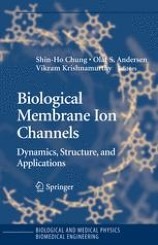
Biological Membrane Ion Channels : Dynamics, Structure, and Applications
Ion channels are biological nanotubes that are formed by membrane proteins. Because ion channels regulate all electrical activities in living cells, understanding their mechanisms at a molecular level is a fundamental problem in biology. This book deals with recent breakthroughs in ion-channel research that have been brought about by the combined effort of experimental biophysicists and computational physicists, who together are beginning to unravel the story of these exquisitely designed biomolecules. With chapters by leading experts.
Biological and medical data analysis ; Vol. 4345 : 7th International Symposium, ISBMDA 2006, Thessaloniki, Greece, December 7-8, 2006. Proceeding
This book constitutes the refereed proceedings of the 7th International Symposium on Biological and Medical Data Analysis, ISBMDA 2006, held in Thessaloniki, Greece, December 2006. Coverage in this volume includes functional genomics, sequence analysis, biomedical models, information modeling, biomedical signal processing, biomedical image analysis, biomedical data analysis, as well as decision support systems and diagnostic tools.
Biological and medical data analysis ; Vol. 3745 ; 6th International symposium, ISBMDA 2005, Aveiro, Portugal, November 10-11, 2005, Proceedings
The 6th International Symposium on Biological and Medical Data Analysisaimed to become a place where researchersinvolved in these diverse but increas-ingly complementary areas could meet topresent and discuss their scientificresults.The papers in this volume discuss issues from statistical models to archi-tectures and applications to bioinformatics and biomedicine. They cover bothpractical experience and novel research ideas and concepts.
Biological and artificial intelligence environments
The book reports the proceedings of the 15th Italian workshop on neural networks issued by the Italian Society on Neural Networks SIREN. The longevity recipe of this conference stands in three main points that normally renders the reading of these proceedings so interesting as appealing. 1. The topics of the neural networks is considered an attraction pole for a set of researches centered on the inherent paradigm of the neural networks, rather than on a specific tool exclusively. Thus, the subsymbolic management of the data information content constitutes the key feature of papers in various fields such as Pattern Recognition, Stochastic Optimization, Learning, Granular Computing, and so on, with a special bias toward bioinformatics operational applications. An excerpt of all these matters may be found in the book. 2. Though managed at domestic level, the conference attracts contributions from foreign researchers as well, so that in the book the reader may capture the flavor of the state of the art in the international community. 3. The conference is a meeting of friends as well. Thus the papers generally reflect a relaxed atmosphere where researchers meet to generously exchange their thought and explain their actual results in view of a common cultural growing of the community.
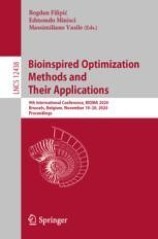
Bioinspired optimization methods and their applications ; 9th International conference, BIOMA 2020, Brussels, Belgium, November 19–20, 2020, Proceedings
This book constitutes the refereed proceedings of the 9th International Conference on Bioinspired Optimization Methods and Their Applications, BIOMA 2020, held in Brussels, Belgium, in November 2020. The 24 full papers presented in this book were carefully reviewed and selected from 68 submissions. The papers in this BIOMA proceedings specialized in bioinspired algorithms as a means for solving the optimization problems and came in two categories: theoretical studies and methodology advancements on the one hand, and algorithm adjustments and their applications on the other.

Bio-inspired modeling of cognitive tasks ; 2nd International Work-conference on the interplay between natural and artificial computation, IWINAC 2007, La Manga del Mar Menor, Spain, June 18-21, 2007, Proceedings, Part I
This volume includes all the contributions mainly related with theoretical, conceptual and methodological aspects linking AI and knowledge engineering with neurophysiology, clinics and cognition.
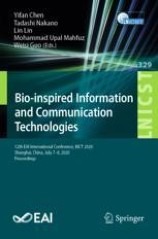
Bio-inspired information and communication technologies ; 12th EAI International Conference, BICT 2020, Shanghai, China, July 7-8, 2020, Proceedings
This book constitutes the refereed conference proceedings of the 12th International Conference on Bio-inspired Information and Communications Technologies, held in Shanghai, China, in July 2020. Due to the safety concerns and travel restrictions caused by COVID-19, BICT 2020 took place online in a live stream. BICT 2020 aims to provide a world-leading and multidisciplinary venue for researchers and practitioners in diverse disciplines that seek the understanding of key principles, processes and mechanisms in biological systems and leverage those understandings to develop novel information and communications technologies (ICT).

Bio-inspired computing and communication ; 1st Workshop on Bio-inspired design of networks, BIOWIRE 2007 Cambridge, UK, April 2-5, 2007 Revised Selected Papers
The book constitutes the thoroughly refereed post-workshop proceedings of the First Workshop on Bio-Inspired Design of Networks, BIOWIRE 2007, held in Cambridge, UK, in April 2007.
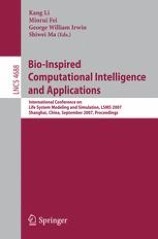
Bio-inspired computational intelligence and applications ; International conference on life system modeling, and simulation, LSMS 2007, Shanghai, China, September 14-17, 2007. Proceedings
It covers both micro and macro c- ponents ranging from cells, tissues and organs across to organisms and ecologic niches. These interact and evolve to produce an overall complex system whose beh- ior is difficult to comprehend and predict.The arrival of the 21st century has been marked by a resurgence of research interest both in arriving at a systems-level und- standing of biology and in applying such knowledge in complex real-world appli- tions. Consequently, computational methods and intelligence in systems, biology, as well as bio-inspired computational intelligence, have emerged as key drivers for new computational methods. For this reason papers dealing with theory, techniques and real-world applications relating to these two themes were especially solicited.

Bioinformatics research and applications ; 3rd International Symposium,ISBRA 2007, Atlanta, GA, USA, May 7-10, 2007, Proceedings
This book including clustering and classification, gene expression analysis, gene networks, genome analysis, motif finding, pathways, protein structure prediction, protein domain interactions, phylogenetics, and software tools.
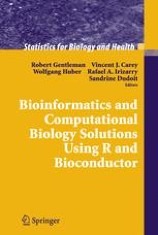
Bioinformatics and Computational Biology Solutions Using R and Bioconductor
Bioconductor is a widely used open source and open development software project for the analysis and comprehension of data arising from high-throughput experimentation in genomics and molecular biology. Bioconductor is rooted in the open source statistical computing environment R. This volume's coverage is broad and ranges across most of the key capabilities of the Bioconductor project, including: Importation and preprocessing of high-throughput data from microarray, proteomic, and flow cytometry platforms / Curation and delivery of biological metadata for use in statistical modeling and interpretation. / Statistical analysis of high-throughput data, including machine learning and visualization,modeling and visualization of graphs and networks. This book is a dynamic document. Code underlying all of the computations that are shown is made available on a companion website, and readers can reproduce every number, figure, and table on their own computers.
Bioinformatics
In this textbook present mathematical models in bioinformatics and they describe the biological problems that inspire the computer science tools used to handle the enormous data sets involved. The first part of the book covers the mathematical and computational methods, while the practical applications are presented in the second part. The mathematical presentation is descriptive and avoids unnecessary formalism, and yet remains clear and precise. Emphasis is laid on motivation through biological problems and cross applications. Each of the four chapters in the first part is accompanied by exercises and problems to support an understanding of the techniques presented. Each of the six chapters of the second part is devoted to some specific application domain: sequence alignment, molecular phylogenetics and coalescence theory, genomics, proteomics, RNA, and DNA microarrays. Each chapter concludes with a problems and projects section, to deepen the reader's understanding and to allow for the design of derived methods. Many of the projects involve publicly available software and/or Web-based bioinformatics depositories. Finally, the book closes with a thorough bibliography, reaching from classic research results to very recent findings, providing many pointers for future research.Overall, this volume is ideally suited for a senior undergraduate or graduate course on bioinformatics, with a strong focus on its mathematical and computer science background.
Biogeochemistry of Trace Elements in Arid Environments
Global warming has worsened the water resource crisis in many arid zones worldwide, from Africa to Asia, affecting millions of people and putting them at risk of hunger. Effective management of arid zone resources, including understanding the risks of toxic trace and heavy elements to humans, coupled with the need to produce more food to feed the world’s growing population, has thus become increasingly important. This very timely book, the only one of its kind on the market, fills the gap of our knowledge of trace elements in these regions. This book begins by introducing the nature and properties of arid zone soil, followed by an updated overview and comprehensive coverage of the major aspects of the trace elements and heavy metals of most concern in the world’s arid and semi-arid soils. These aspects include: - content and distribution - solution chemistry - solid-phase chemistry - selective sequential dissolution techniques - transfer fluxes - bioavailability - pollution and remediation In order to illustrate the themes, a comprehensive and focused case study on transfer fluxes of trace elements in Israeli arid soils is presented. Finally it closes with the global perspectives on anthropogenic interferences in the natural trace elements’ distribution.
Biogeochemical cycles in globalization and sustainable development
This valuable study of environmental subsystems functioning under various climatic and anthropogenic conditions provides a unique insight into the social context of global changes in biogeochemical cycles and demonstrates current understanding of globalization and sustainable development.
Biofuels, Solar and Wind as Renewable Energy Systems : Benefits and Risks
With shortages of fossil energy, especially oil and natural gas, and heavy biomass energy use occurring in both developed and developing countries, a major focus has developed worldwide on renewable energy systems. Renewable energy systems include wind power, biomass, photovoltaics, hydropower, solar thermal, thermal ponds, and biogas. Currently, a heavy focus is on biofuels made from crops, such as corn, sugarcane, and soybeans, for use as renewable energy sources. Wood and crop residues also are being used as fuel. Though it may seem beneficial to use renewable plant materials for biofuel, the use of crop residues and other biomass for biofuels raises many concerns about major environmental problems, including food shortages and serious destruction of vital soil resources.
Bioengineering in cell and tissue research
This book reviews the latest technological developments of bioengineering approaches in cell and tissue research. It is meant to have life and spirit, and to become a pioneer in technology and sciences, especially the life science. The chapters are written by excellent scientists on advanced, frontier technology and address scientific questions that need considerable thinking in terms of engineering.
Bioeconomic modelling and valuation of exploited marine ecosystems
This book offers an environmental-economic analysis of exploited ecosystems with a clear policy orientation. The study tries to move beyond traditional economic fishery analysis in two respects. First, several theoretical and numerical models are offered that combine economic and ecological descriptions of fisheries. These models give special attention to spatial processes as well as to combining exploitation and conservation objectives. Second, valuation and stakeholder concerns are addressed in empirical analyses employing both qualitative and quantitative approaches. The latter is done by using advanced methods of monetary valuation. In addition, the first part of the book presents short, introductory overviews of integrated assessment, economic modeling of fishery management, and incorporating uncertainty in fisheries analysis.
Biodiesel : A realistic fuel alternative for diesel engines
Environmental and political concerns are generating a growing interest in alternative engine fuels such as biodiesel. Biodiesel is a renewable energy source produced from natural oils and fats, which can be used as a substitute for petroleum diesel without the need for diesel engine modification. In addition to being biodegradable and non-toxic, biodiesel is also essentially free of sulfur and aromatics, producing lower exhaust emissions than conventional gasoline whilst providing similar properties in terms of fuel efficiency.
Biochemical Mechanisms of Detoxification in Higher Plants : Basis of Phytoremediation
Plants play a key role in purifying the biosphere of the toxic effects of industrial activity. This book shows how systematic application of the results of investigations into the metabolism of xenobiotics (foreign, often toxic substances) in plants could make a vastly increased contribution to planetary well-being. Deep physiological knowledge gained from an accumulation of experimental data enables the great differences between the detoxifying abilities of different plants for compounds of different chemical nature to be optimally exploited. Hence planting could be far more systematically adapted to actual environmental needs than is actually the case at present.
Bioarrays : From Basics to Diagnostics
Bioarrays: From Basics to Diagnostics provides an integrated and comprehensive collection of timely articles on the use of bioarray techniques in the fields of biotechnology and molecular medicine. The entire volume is broken into four sections – Bioarray Technology Platforms, Biomarkers and Clinical Genomics, Biomarker Identification Using Clinical Proteomics and Glycomics, and Emerging Technologies in Diagnostics – that create one well-integrated work. Particular emphasis is placed on DNA, protein, and carbohydrate biochips. The volume also looks extensively at oligonucleotides, cDNA, proteins, antibodies, and carbohydrate arrays.
