



الصفحة 9
الصفحة 9

Computational intelligence and security ; Vol. 3801 ; International Conference, CIS 2005, Xi'an, China, December 15-19, 2005, Proceedings, Part I
The two volume set LNAI 3801 and LNAI 3802 constitute the refereed proceedings of the annual International Conference on Computational Intelligence and Security, CIS 2005, held in Xi'an, China, in December 2005. The 338 revised papers presented - 254 regular and 84 extended papers - were carefully reviewed and selected from over 1800 submissions. The first volume is organized in topical sections on learning and fuzzy systems, evolutionary computation, intelligent agents and systems, intelligent information retrieval, support vector machines, swarm intelligence, data mining, pattern recognition, and applications.

Computational intelligence and security ; International Conference, CIS 2006, Guangzhou, China, November 3-6, 2006, Revised selected papers
It covers bio-inspired computing, evolutionary computation, learning systems and multi-agents, cryptography, information processing and intrusion detection, systems and security, image and signal processing, and pattern recognition.

Computational intelligence and bioinspired systems ; 8th International Work-conference on artificial neural networks, IWANN 2005, Vilanova i la Geltrú, Barcelona, Spain, June 8-10, 2005, Proceedings
We present in this volume the collection of finally accepted papers of the eighth edition of the “IWANN” conference (“International Work-Conference on Artificial Neural Networks”). This biennial meeting focuses on the foundations, theory, models and applications of systems inspired by nature (neural networks, fuzzy logic and evolutionary systems). For scientists, engineers and professionals working in the area, this is a very good way to get solid and competitive applications. We are facing a real revolution with the emergence of embedded intelligence in many artificial systems (systems covering diverse fields: industry, domotics, leisure, healthcare, … ). So we are convinced that an enormous amount of work must be, and should be, still done. Many pieces of the puzzle must be built and placed into their proper positions, offering us new and solid theories and models (necessary tools) for the application and praxis of these current paradigms. The above-mentioned concepts were the main reason for the subtitle of the IWANN 2005 edition: “Computational Intelligence and Bioinspired Systems.” papers was addressing the following topics: 1. Mathematical and theoretical methods in computational intelligence.

Computational Forensic ; 2nd International Workshop, IWCF 2008, Washington, DC, USA, August 7-8, 2008. Proceedings
This book constitutes the refereed proceedings of the Second International Workshop, IWCF 2008, held in Washington, DC, USA, August 2008. The papers are organized in topical sections on trends and challenges; scanner, printer, and prints; human identification; shoeprints; linguistics;decision making and search; speech analysis; signatures and handwriting.

Combinatorial pattern matching ; Vol.4009) ; 17th Annual Symposium, CPM 2006, Barcelona, Spain, July 5-7, 2006, Proceedings
The book presents 33 revised full papers together with 3 invited talks, organized in topical sections on data structures, indexing data structures, probabilistic and algebraic techniques, applications in molecular biology, string matching, data compression, and dynamic programming

Combinatorial pattern matching ; Vol. 3537 ; 16th Annual Symposium, CPM 2005, Jeju Island, Korea, June 19-22, 2005, Proceedings
This volume presents the proceedings of The 16th Annual Symposium on Combinatorial Pattern Matching was heldon Jeju Island, Korea on June 19–22, 2005. the Program Committee accepted 37 of the submissionsto be presented at the conference. This collection of papers offers original research contributionsin combinatorial pattern matching and its applications.In addition to the selected papers

Combinatorial pattern matching ; 19th Annual Symposium, CPM 2008, Pisa, Italy, June 18-20, 2008 Proceedings
This book constitutes the refereed proceedings of the 19th Annual Symposium on Combinatorial Pattern Matching, CPM 2008, held in Pisa, Italy, in June 2008.

Combinatorial pattern matching ; 18th Annual Symposium, CPM 2007, London, Canada, July 9-11, 2007, Proceedings
This book presented original research contri- tions on computational pattern matching and analysis, data compression and compressed text processing, sufix arrays and trees, and computational biology. Combinatorial Pattern Matching addresses issues of searching and matching strings and more complicated patterns such as trees, regular expressions, graphs, point sets, and arrays.The goal is to derive non-trivial combinatorial properties of such structures and to exploit these properties in order to either achieve superior performance for the corresponding computational problems or pinpoint conditions under which searches cannot be performed eficiently.

Combinatorial pattern matching ; 12th Annual Symposium, CPM 2001 Jerusalem, Israel, July 1-4, 2001 Proceedings
This book constitutes the refereed proceedings of the 12th Annual Symposium on Combinatorial Pattern Matching, CPM 2001, held in Jerusalem, Israel, in July 2001. The 21 revised papers presented together with one invited paper were carefully reviewed and selected from 35 submissions. The papers are devoted to current theoretical and algorithmic issues of searching and matching strings and more complicated patterns such as trees, regular expressions, graphs, point sets, and arrays as well as to advanced applications of CPM in areas such as the Internet, computational biology, multimedia systems, information retrieval, data compression, coding, computer vision, and pattern recognition.

Combinatorial Image Analysis ; 12th International Workshop, IWCIA 2008, Buffalo, NY, USA, April 7-9, 2008. Proceedings
This volume contains the proceedings of the 12th International Workshop on Combinatorial Image Analysis. Coverage includes digital geometry, curves and surfaces, applications of computational geometry, as well as medical imaging and biometrics.
Cognitive Vision ; 4th International Workshop, ICVW 2008, Santorini, Greece, May 12, 2008, Revised Selected Papers
This volume constitutes the post-conference proceedings of the 4th International Cognitive Vision Workshop, ICVW 2008, held in Santorini, Greece, on May 12, 2008.

Cognitive engineering : A distributed approach to machine intelligence
Cognitive Engineering: A Distributed Approach to Machine Intelligence explores the design issues of intelligent engineering systems. Beginning with the foundations of psychological modeling of the human mind, the main emphasis is given to parallel and distributed realization of intelligent models for application in reasoning, learning, planning and multi-agent co-ordination problems. The last two chapters provide case studies on human-mood detection and control, and behavioral co-operation of mobile robots. This is the first comprehensive text of its kind, bridging the gap between Cognitive Science and Cognitive Systems Engineering. Each chapter includes plenty of numerical examples and exercises with sufficient hints, so that the reader can solve the exercises on their own. Computer simulations are also included in most chapters to give a clear idea about the application of the algorithms undertaken in the book. In addition, mathematical analysis on convergence and stability of the neuro-fuzzy models will enable the reader to pursue their research career in cognitive engineering.

Cloud Native Architecture and Design : A Handbook for Modern Day Architecture and Design with Enterprise-Grade Examples
Explains the fundamentals of cloud-native architecture and services, what cloud principles and patterns to use, and details of designing a cloud-native element. And Progresses to cover the details of how IT systems can modernize to embrace cloud-native architecture, and also provides details of various enterprise assessment techniques to decide what systems can move and cannot move into the cloud. Architecting and designing a cloud-native system isn’t possible without modernized software engineering principles, the culture of automation, and the culture of innovation. As such, this book covers the details of cloud-native software engineering methodologies, and process, and how to adopt an automated governance approach across enterprises with the adoption of artificial intelligence. You will: Discover cloud-native principles and patterns, and how you can leverage them to solve your business problems ; Gain the techniques and concepts you need to adapt to design a cloud-native application ; Use assessment techniques and tools for IT modernization ; Apply cloud-native engineering principles to the culture of automation and culture of innovation ; Harness the techniques and tools to run your cloud-native applications and automate infrastructure ; Operate your cloud-native applications by using AI techniques and zero operation techniques

Markov Models for Pattern Recognition : From Theory to Applications
Describes the underlying theoretical concepts - covering Hidden Markov models and Markov chain models - and presents the techniques and algorithmic solutions essential to creating real world applications. The actual use of Markov models in their three main application areas - namely speech recognition, handwriting recognition, and biological sequence analysis - is presented with examples of successful systems.
Machine Learning, Image Processing, Network Security and Data Sciences ; 2nd International conference, MIND 2020, Silchar, India, July 30 - 31, 2020, Proceedings, Part II
This two-volume set (CCIS 1240-1241) constitutes the refereed proceedings of the Second International Conference on Machine Learning, Image Processing, Network Security and Data Sciences, MIND 2020, held in Silchar, India. Due to the COVID-19 pandemic the conference has been postponed to July 2020. The 79 full papers and 4 short papers were thoroughly reviewed and selected from 219 submissions. The papers are organized according to the following topical sections: data science and big data; image processing and computer vision; machine learning and computational intelligence; network and cyber security.

Machine learning, image processing, network security and data sciences ; 2nd International conference, MIND 2020, Silchar, India, July 30 - 31, 2020, Proceedings, Part I
This two-volume set (CCIS 1240-1241) constitutes the refereed proceedings of the Second International Conference on Machine Learning, Image Processing, Network Security and Data Sciences, MIND 2020, held in Silchar, India. Due to the COVID-19 pandemic the conference has been postponed to July 2020. The 79 full papers and 4 short papers were thoroughly reviewed and selected from 219 submissions. The papers are organized according to the following topical sections: data science and big data; image processing and computer vision; machine learning and computational intelligence; network and cyber security.

Machine Learning Techniques for Multimedia : Case Studies on Organization and Retrieval
This book provides a comprehensive coverage of the most important machine learning techniques used and their application in this domain. Arising from the EU MUSCLE network, a program that drew together multidisciplinary teams with expertise in machine learning, pattern recognition, artificial intelligence, and image, video, text and crossmedia processing, the book first introduces the machine learning principles and techniques that are applied in multimedia data processing and analysis. The second part focuses on multimedia data processing applications, with chapters examining specific machine learning issues in domains .
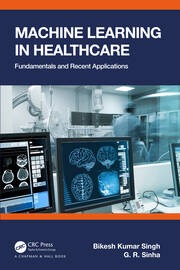
Machine learning in healthcare : Fundamentals and recent applications
Discusses how to build various ML algorithms and how they can be applied to improve healthcare systems. Healthcare applications of AI are innumerable: medical data analysis, early detection and diagnosis of disease, providing objective-based evidence to reduce human errors, curtailing inter- and intra-observer errors, risk identification and interventions for healthcare management, real-time health monitoring, assisting clinicians and patients for selecting appropriate medications, and evaluating drug responses. Extensive demonstrations and discussion on the various principles of machine learning and its application in healthcare is provided, along with solved examples and exercises.

Machine Learning for Multimodal Interaction ; Vol.3361 : 1st International Workshop, MLMI 2004, Martigny, Switzerland, June 21-23, 2004, Revised Selected Papers
his book contains a selection of refereed papers presented at the 1st Wo- shop on Machine Learning for Multimodal Interaction (MLMI 2004), held at the “Centre du Parc,” Martigny, Switzerland, during June 21–23, 2004. The workshop was organized and sponsored jointly by three European projects, – AMI, Augmented Multiparty Interaction, http://www.amiproject.org – PASCAL, Pattern Analysis, Statistical Modeling and Computational Learning, http://www.pascal-network.org – M4, Multi-modal Meeting Manager, http://www.m4project.org as well as the Swiss National Centre of Competence in Research (NCCR): – IM2: Interactive Multimodal Information Management, http://www.im2.ch MLMI 2004 was thus sponsored by the European Commission and the Swiss National Science Foundation.
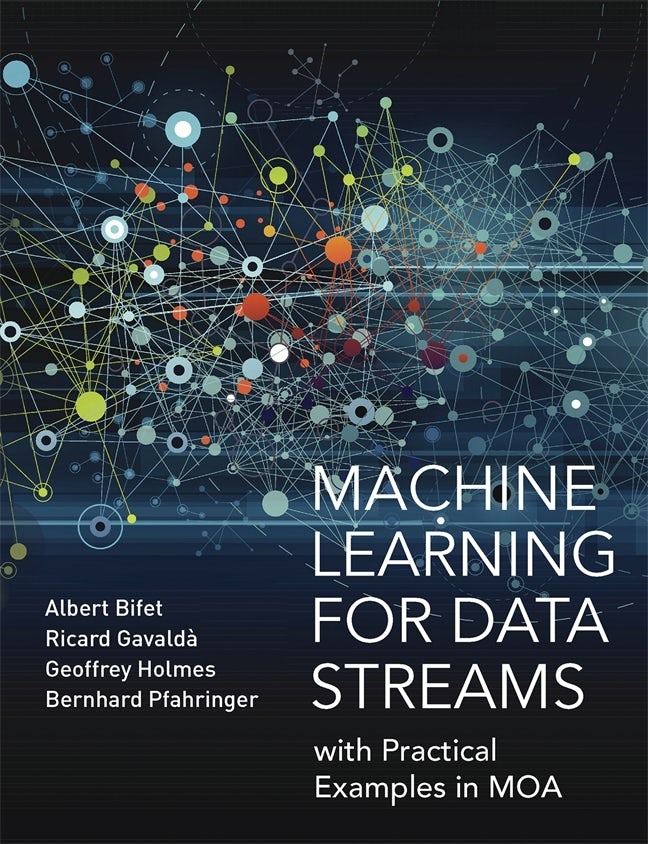
Machine learning for data streams : With practical examples in MOA
The book first offers a brief introduction to the topic, covering big data mining, basic methodologies for mining data streams, and a simple example of MOA. More detailed discussions follow, with chapters on sketching techniques, change, classification, ensemble methods, regression, clustering, and frequent pattern mining. Most of these chapters include exercises, an MOA-based lab session, or both. Finally, the book discusses the MOA software, covering the MOA graphical user interface, the command line, use of its API, and the development of new methods within MOA.
