



الصفحة 9
الصفحة 9

Conceptual Modeling - ER 2007 ; 26th International Conference on Conceptual Modeling, Auckland, New Zealand, November 5-9, 2007, Proceedings
Conceptual modeling is fundamental to the development of complex systems, because it provides the key communication means between systems developers, end-users and customers.Conceptua lmodeling provides languages,methods and tools to understand and represent the application domain;to elicitate,concepalize and formalize system requirements and user needs;to communicate systems designs to all stakeholders; to formally verify and validate system designs on high levels of abstractions; and to minimize ambiguities in system development. Initially, conceptual modeling mainly addressed data-intensive information s- tems and contributed to data modeling and database application engineering. The area of conceptual modeling has now matured to encompass all kinds of application areas such as e-applications (including e-business and e-learning), web-based systems (including the semantic web and ubiquitous systems), life science and geographic applications.

Conceptual Modeling - ER 2005
Conceptual modeling is fundamental to any domain where one must cope with complex real-world situations and systems because it fosters communication - tween technology experts and those who would bene?t from the application of those technologies. Conceptual modeling is the key mechanism for und- standing and representing the domains of information system and database - gineering but also increasingly for other domains including the new “virtual” e-environmentsandtheinformationsystemsthatsupportthem.Theimportance of conceptual modeling in software engineering is evidenced by recent interest in “model-drivenarchitecture”and“extremenon-programming”.Conceptualm- eling also plays a prominent rolein various technical disciplines and in the social sciences. The Annual International Conference on Conceptual Modeling (referred to as the ER Conference) provides a central forum for presenting and discussing current research and applications in which conceptual modeling is the major emphasis.

Computer Music Modeling and Retrieval ; Vol. 3310
This volume contains the final proceedings for the 2004 Computer Music Model-ing and Retrieval Symposium (CMMR 2004). CMMR is an annualevent focusing on important aspects of computer music. CMMR 2004 is the sec-ond event in this series. The use of computers in music is well established. CMMR 2004 provided aunique opportunity to meet and interact with peers concerned with the cross-influence of the technological and creative in computer music. The field of com-puter music is interdisciplinary by nature and closely related to a number of com-puter science and engineering areas such as information retrieval, programming,human computer interaction, digital libraries, hypermedia, artificial intelligence,acoustics, signal processing, etc. The event gathered many interesting people(researchers, educators, composers, performers, and others). There were manyhigh-quality keynote and paper presentations, that fostered inspiring discussions.

Computer Insecurity : Risking the System
Security is one of the most significant issues facing the owners and users of computer systems in the Internet age, and recent years have convincingly illustrated that the problem is increasing in both scale and cost. Computer Insecurity: Risking the System approaches its topic from the perspective of vulnerability – how can your system be attacked? Covering technical issues and human factors, the comprehensively researched text makes reference to numerous real-life security incidents, which help to provide persuasive practical evidence of the problems and the impacts that result. Key issues covered include: • the problem of computer insecurity • the need to raise security awareness • common failings that compromise protection • the attack and exploitation of systems • considerations in responding to the threats

Computer and Information Seciences - ISCIS 2006 ; 21th International Symposium Istanbul, Turkey, Novenber 1-3, 2006, Proceedings
Thesearetheproceedingsofthe21stInternationalSymposiumonComputerand ? Information Sciences (ISCIS 2006) held in Istanbul, Turkey, November 1 – 3, 2006. ISCIS 2006 was organized by the Faculty of Engineering and Natural S- ences of Sabanc?University.

Computer and Information Sciences - ISCIS 2005 ; 20th International Symposium, Istanbul, Turkey, October 26 -- 28, 2005, Proceedings
This book constitutes the refereed proceedings of the 20th International Symposium on Computer and Information Sciences, ISCIS 2005, held in Istanbul, Turkey in October 2005. The 92 revised full papers presented together with 4 invited talks were carefully reviewed and selected from 491 submissions. The papers are organized in topical sections on computer networks, sensor and satellite networks, security and cryptography, performance evaluation, e-commerce and Web services, multiagent systems, machine learning, information retrieval and natural language processing, image and speech processing, algorithms and database systems, as well as theory of computing.

Computational Life Sciences ; Vol. 3695 ; 1st International Symposium, CompLife 2005, Konstanz, Germany, September 25-27, 2005, Proceedings
This book constitutes the refereed proceedings of the First International Symposium on Computational Life Sciences, CompLife 2005, held in Konstanz, Germany in September 2005. The integration of knowledge in the life sciences is continuing apace with ev- increasingimportancebeing placedoncomputer-basedmethodsofdata capture, analysis, and knowledge representation. Today, our many di?erent sciences are providing us with a sea of information: it is the handling of this in?ux that is becoming a key discovery and regulatory question. The solutions to these problems will result in advancements to all of the involved sciences and will be highly in?uential both in the selection of the areas scientists seek to investigate and also on their success. For this to happen, it is crucial to establish an open and lively exchange between computer scientists, biologists, and chemists. To encourage precisely this type of exchange, crossing the borders of the sciences, we organized the 1st Symposium on Computational Life Science in Konstanz, Germany(September 25 27,2005).

Computational Electronic Circuits : Simulation and Analysis with MATLAB®
This textbook teaches in one, coherent presentation the three distinct topics of analysis of electronic circuits, mathematical numerical algorithms and coding in a software such as MATLAB®. By combining the capabilities of circuit simulators and mathematical software, the author teaches key concepts of circuit analysis and algorithms, using a modern approach. The DC, Transient, AC, Noise and behavioral analyses are implemented in MATLAB to study the complete characteristics of a variety of electronic circuits, such as amplifiers, rectifiers, hysteresis circuits, harmonic traps and passes, polyphaser filters, directional couplers, electro-static discharge and piezoelectric crystals. This book teaches basic and advanced circuit analysis, by incorporating algorithms and simulations that teach readers how to develop their own simulators and fully characterize and design electronic circuits.

CMOS Multi-Channel Single-Chip Receivers for Multi-Gigabit Optical Data Communications
Focuses on optical communications for short and very short distance applications and discusses the monolithic integration of optical receivers with processing elements in standard CMOS technologies. CMOS Multi-Channel Single-Chip Receivers for Multi-Gigabit Optical Data Communications provides the reader with the necessary background knowledge to fully understand the trade-offs in short-distance communication receiver design and presents the key issues to be addressed in the development of such receivers in CMOS technologies. Moreover, novel design approaches are presented. A system-level design methodology allows for the impact analysis of different block specifications and system-wide design optimization. Statistical models are used for design space exploration in the scope of jitter tolerance analysis of clock recovery circuits.

Manual of Digital Earth
This book offers a summary of the development of Digital Earth over the past twenty years. By reviewing the initial vision of Digital Earth, the evolution of that vision, the relevant key technologies, and the role of Digital Earth in helping people respond to global challenges, this publication reveals how and why Digital Earth is becoming vital for acquiring, processing, analysing and mining the rapidly growing volume of global data sets about the Earth.
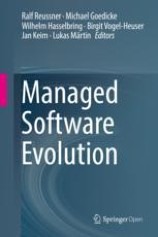
Managed Software Evolution
This book presents the outcomes of the “Design for Future – Managed Software Evolution” .The different lifecycles of software and hardware platforms lead to interoperability problems in such systems. Instead of separating the development, adaptation and evolution of software and its platforms, as well as aspects like operation, monitoring and maintenance, they should all be integrated into one overarching process. Accordingly, the book is split into three major parts, the first of which includes an introduction to the nature of software evolution, followed by an overview of the specific challenges and a general introduction to the case studies used in the project. The second part of the book consists of the main chapters on knowledge carrying software, and cover tacit knowledge in software evolution, continuous design decision support, model-based round-trip engineering for software product lines, performance analysis strategies, maintaining security in software evolution, learning from evolution for evolution, and formal verification of evolutionary changes. In turn, the last part of the book presents key findings and spin-offs. The individual chapters there describe various case studies, along with their benefits, deliverables and the respective lessons learned. An overview of future research topics rounds out the coverage.
Machine learning methods for reverse engineering of defective structured surfaces
Pascal Laube presents machine learning approaches for three key problems of reverse engineering of defective structured surfaces: parametrization of curves and surfaces, geometric primitive classification and inpainting of high-resolution textures. The proposed methods aim to improve the reconstruction quality while further automating the process. The contributions demonstrate that machine learning can be a viable part of the CAD reverse engineering pipeline.
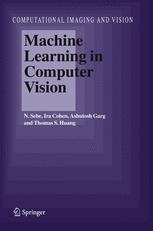
Machine Learning in Computer Vision
The goal of this book is to address the use of several important machine learning techniques into computer vision applications. An innovative combination of computer vision and machine learning techniques has the promise of advancing the field of computer vision, which contributes to better understanding of complex real-world applications. The effective usage of machine learning technology in real-world computer vision problems requires understanding the domain of application, abstraction of a learning problem from a given computer vision task, and the selection of appropriate representations for the learnable (input) and learned (internal) entities of the system. In this book, we address all these important aspects from a new perspective: that the key element in the current computer revolution is the use of machine learning to capture the variations in visual appearance, rather than having the designer of the model accomplish this. As a bonus, models learned from large datasets are likely to be more robust and more realistic than the brittle all-design models.
Machine learning for cyber-physical systems: selected papers from the international conference ML4CPS 2023
Contains selected papers from the international conference ML4CPS – Machine Learning for Cyber-Physical Systems, which was held in Hamburg (Germany), from 29 to 31 March 2023. Cyber-physical systems are adaptive and learning: they analyze their environment and, based on observations, learn patterns, associations and predictive models. Typical applications are condition monitoring, predictive maintenance, image processing and diagnostics. Machine learning is the key technology for these developments.

Machine Learning for Cyber Physical Systems : Selected papers from the International Conference ML4CPS 2018
Presents new approaches to Machine Learning for Cyber Physical Systems, experiences and visions. Cyber Physical Systems are characterized by their ability to adapt and to learn: They analyze their environment and, based on observations, they learn patterns, correlations and predictive models. Typical applications are condition monitoring, predictive maintenance, image processing and diagnosis. Machine Learning is the key technology for these developments.
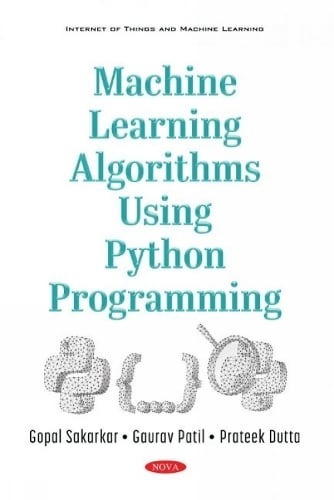
Machine Learning Algorithms Using Python Programming
Presents the key concepts of Machine Learning which includes Python concepts and Interpreter, Foundation of Machine Learning, Data Pre-processing, Supervised Machine Learning, Unsupervised Machine Learning, Reinforcement Learning, Kernel Machine, Design and analysis of Machine Learning experiment and Data visualization. The theoretical concepts along with coding implementation are covered. This book aims to pursue a middle ground between a theoretical textbook and one that focuses on applications. The book concentrates on the important ideas in machine learning.
Long-Term Preservation of Digital Documents : Principles and Practices
Key to our culture is that we can disseminate information, and then maintain and access it over time. While we are rapidly advancing from vulnerable physical solutions to superior, digital media, preserving and using data over the long term involves complicated research challenges and organization efforts. Uwe Borghoff and his coauthors address the problem of storing, reading, and using digital data for periods longer than 50 years. They briefly describe several markup and document description languages like TIFF, PDF, HTML, and XML, explain the most important techniques such as migration and emulation, and present the OAIS (Open Archival Information System) Reference Model. To complement this background information on the technology issues the authors present the most relevant international preservation projects, such as the Dublin Core Metadata Initiative, and experiences from sample projects run by the Cornell University Library and the National Library of the Netherlands. A rated survey list of available systems and tools completes the book.

Life System Modeling and Simulation; International Conference on Life System Modeling, and Simulation, LSMS 2007, Shanghai, China, September 14-17, 2007. Proceedings
The International Conference on Life System Modeling and Simulation (LSMS) was formed to bring together international researchers and practitioners in the field of life system modeling and simulation as well as life system-inspired theory and methodology. The arrival of the 21st century has been marked by a resurgence of research interest both in arriving at a systems-level und- standing of biology and in applying such knowledge in complex real-world appli- tions. Consequently, computational methods and intelligence in systems, biology, as well as bio-inspired computational intelligence, have emerged as key drivers for new computational methods. For this reason papers dealing with theory, techniques and real-world applications relating to these two themes were especially solicited.
Legal Programming : Designing Legally Compliant RFID and Software Agent Architectures for Retail Processes and Beyond
LEGAL PROGRAMMING: Designing Legally Compliant RFID and Software Agent Architectures for Retail Processes and Beyond provides a process-oriented discussion of the legal concerns presented by agent-based technologies, processes and programming. It offers a general outline of the potential legal difficulties that could arise in relation to them, focusing on the programming of negotiation and contracting processes in a privacy, consumer and commercial context. The authors will elucidate how it is possible to create form of legal framework and design methodology for transaction agents, applicable in any environment and not just in a specific proprietary framework, that provides the right level of compliance and trust. Key elements considered include the design and programming of legally compliant methods, the determination of rights in respect of objects and variables, and ontologies and programming frameworks for agent interactions. Examples are used to illustrate the points made and provide a practical perspective.
Learning PHP, MySQL & JavaScript : With jQuery, CSS & HTML5
You'll tackle dynamic web programming with the latest versions of today's core technologies: PHP, MySQL, JavaScript, CSS, HTML5, and key jQuery libraries.
