



الصفحة 8
الصفحة 8

Fuzzy Logic, Identification and Predictive Control
Fuzzy Logic, Identification and Predictive Control is a comprehensive introduction to the use of fuzzy methods in many different control paradigms encompassing robust, model-based, PID-like and predictive control. This combination of fuzzy control theory and industrial serviceability will make a telling contribution to your research whether in the academic or industrial sphere and also serves as a fine roundup of the fuzzy control area for the graduate student

Fuzzy Logic with engineering applications
Latest advances in the field including material on expansion of the MLFE method using genetic algorithms, cognitive mapping, fuzzy agent-based models and total uncertainty. Redundant or obsolete topics have been removed, resulting in a more concise yet inclusive text that will ensure the book retains its broad appeal at the forefront of the literature.

Fuzzy logic with engineering applications
With numerous examples and end-of-chapter problems, this book is essential reading for graduates and senior undergraduate students in civil, chemical, mechanical and electrical engineering as wells as researchers and practitioners working with fuzzy logic in industry.

Fuzzy Logic and Applications ; Vol. 3849 ; 6th International Workshop, WILF 2005, Crema, Italy, September 15-17, 2005, Revised Selected Papers
This volume contains the proceedings of the 6th International Workshop on Soft Computing and Applications (WILF 2005), which took place in Crema, Italy, on September 15–17, 2005, continuing an established tradition of biannual meetings among researchers and developers from both academia and industry to report on the latest scienti?c and theoretical advances, to discuss and debate major issues, and to demonstrate state-of-the-art systems. This edition of the workshop included two special sessions, sort of subwo- shops, focusing on the application of soft computing techniques (or compu- tional intelligence) to image processing (SCIP) and bioinformatics (CIBB).

Fuzzy Logic and Applications ; Vol. 2955 ; 5th International Workshop, WILF 2003, Naples, Italy, October 9-11, 2003, Revised Selected Papers
This volume constitutes the thoroughly refereed post-workshop proceedings of the 5th International Workshop on Fuzzy Logic and Applications held in Naples, Italy, in October 2003. The 40 revised full papers presented have gone through two rounds of reviewing and revision. All current issues of theoretical, experimental and applied fuzzy logic and related techniques are addressed with special attention to rough set theory, neural networks, genetic algorithms and soft computing.

Fuzzy Equational Logic
The book deals with similarity relations defined on a set with functions. The functions are required to map similar elements to similar ones. The book presents basic mathematical properties of structures consisting of similarity-preserving functions and logics for reasoning about similarities. The presented text is self-contained. The notions and results are demonstrated through examples which are graphically illustrated. The book is useful for researchers, but it can also be used as a graduate text.

Fuzzy Control of Queuing Systems
21 detailed case studies demonstrate an efficient departure from classical techniques. Unique work creating a new Research and Development topic. Multidisciplinary approach that will benefit researchers and students throughout the fields of artificial intelligence, operations research, optimal control, Internet techniques, communications and traffic control industries. Equipped with an extensive bibliography for easy reference and scope for further study.

Fundamentals of the New Artificial Intelligence: Neural, Evolutionary, Fuzzy and More
The significantly updated second edition of Fundamentals of the New Artificial Intelligence thoroughly covers the most essential and widely employed material pertaining to neural networks, genetic algorithms, fuzzy systems, rough sets, and chaos. In particular, this unique textbook explores the importance of this content for real-world applications.
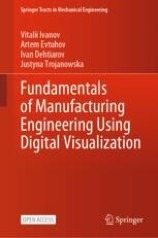
Fundamentals of manufacturing engineering using digital visualization
Offers a guide to core principles and practices of manufacturing engineering. It covers the design of, together with technological and measurement issues for, technical systems. Locating charts and setup schemes describing different machining processes are included. Concepts of product quality, with a focus on accuracy indicators, machining accuracy, roughness, and the impact of surface quality on exploitation properties are also explained. Furthermore, key machining methods, including turning, milling, hole machining, grinding, and gear machining, are analyzed in depth, covering their principles, applications, and techniques. The book is enriched by QR codes, linking to a mobile application presenting additional information about the content, for an interactive and extended learning experience. It also uses illustrations visualized with digital tools to promote a better understanding of the concepts.

Fundamentals of computation theory ; 16th International Symposium, FCT 2007, Budapest, Hungary, August 27-30, 2007, Proceedings
This book constitutes the refereed proceedings of the 16th International Symposium Fundamentals of Computation Theory. The papers address all current topics in computation theory.

Fundamentals of Artificial Intelligence
Fundamentals of Artificial Intelligence introduces the foundations of present day AI and provides coverage to recent developments in AI such as Constraint Satisfaction Problems, Adversarial Search and Game Theory, Statistical Learning Theory, Automated Planning, Intelligent Agents, Information Retrieval, Natural Language & Speech Processing, and Machine Vision. The book features a wealth of examples and illustrations, and practical approaches along with the theoretical concepts. It covers all major areas of AI in the domain of recent developments. The book is intended primarily for students who major in computer science at undergraduate and graduate level but will also be of interest as a foundation to researchers in the area of AI.
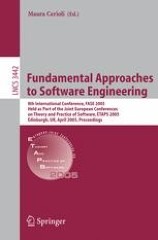
Fundamental approaches to software engineering ; Vol. 3442 ; 8th International Conference, FASE 2005, Held as Part of the Joint European conferences on theory and practice of software, ETAPS 2005, Edinburgh, UK, April 4-8, 2005, Proceedings
ETAPS 2005 was the eighth instance of the European Joint Conferences on Theory and Practice of Software. ETAPS is an annual federated conference that was established in 1998 by combining a number of existing and new conf- ences. This year it comprised ?ve conferences (CC, ESOP, FASE, FOSSACS, TACAS), 17 satellite workshops (AVIS, BYTECODE, CEES, CLASE, CMSB, COCV, FAC, FESCA, FINCO, GCW-DSE, GLPL, LDTA, QAPL, SC, SLAP, TGC, UITP), seven invited lectures (not including those that were speci?c to the satellite events), and several tutorials. We received over 550 submissions to the ?ve conferences this year, giving acceptance rates below 30% for each one. The events that comprise ETAPS address various aspects of the system - velopment process, including speci?cation, design, implementation, analysis and improvement. The languages, methodologies and tools which support these - tivities are all well within its scope. Di?erent blends of theory and practice are represented, with an inclination towards theory with a practical motivation on the one hand and soundly based practice on the other. Many of the issues involved in software design apply to systems in general, including hardware s- tems,andtheemphasisonsoftwareisnotintendedtobeexclusive.

Fundamental approaches to software engineering ; 24th International Conference, FASE 2021, Held as Part of the European Joint Conferences on Theory and Practice of Software, ETAPS 2021, Luxembourg City, Luxembourg, March 27 – April 1, 2021, Proceedings
This book constitutes the proceedings of the 24th International Conference on Fundamental Approaches to Software Engineering, FASE 2021, which took place during March 27–April 1, 2021, and was held as part of the Joint Conferences on Theory and Practice of Software, ETAPS 2021.

Fundamental approaches to software engineering ; 22nd International Conference, FASE 2019, Held as Part of the European Joint Conferences on Theory and Practice of Software, ETAPS 2019, Prague, Czech Republic, April 6–11, 2019, Proceedings
This book cover software verification; model-driven development and model transformation; software evolution and requirements engineering; specification, design, and implementation of particular classes of systems; and software testing.

Fundamental approaches to software engineering ; 21st International Conference, FASE 2018, Held as Part of the European Joint Conferences on Theory and Practice of Software, ETAPS 2018, Thessaloniki, Greece, April 14-20, 2018, Proceedings
This book contains the proceedings of FASE 2018, the 21th International Conference on Fundamental Approaches to Software Engineering, held in Thessaloniki, Greece, in April 2018, the volume contains regular research papers that cover a wide range of topics, such as program and system analysis, model transformations, configuration and synthesis, graph modeling and transformation,software product lines, test selection, as well as learning and inference.
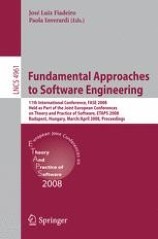
Fundamental approaches to software engineering ; 11th International Conference, FASE 2008, Held as Part of the Joint European conferences on theory and practice of software, ETAPS 2008, Budapest, Hungary, March 29-April 6, 2008. Proceedings
The fve main conferences received 571 submissions, 147 of which were accepted, giving an overall acceptance rate of less than 26%, with each conference below 27%.Congratulationsthereforetoallthe authorswhomadeittothe alprogramme! I hope that most of the other authors will still have found a way of participating in this exciting event, and that you will all continue submitting to ETAPS and contributing to make of it the best conference in the area،The events that comprise ETAPS address various aspects of the system velopment process,including specifcation, design, implementation, analysis and improvement.

Functional and logic programming ; 9th International Symposium, FLOPS 2008, Ise, Japan, April 14-16, 2008. Proceedings
This volume contains the proceedings of the 9th International Symposium on Functional and Logic Programming (FLOPS 2008), held in Ise, Japan, April 14-16, 2008 at the Ise City Plaza. FLOPS is a forum for research on all issues concerning functional progr- ming and logic programming. In particular it aims to stimulate the cro- fertilization as well as integration of the two paradigms. The Program Committee meeting was conducted electro- cally, for a period of two weeks in December 2007. After careful and thorough discussion, the ProgramCommittee selected20 papers(33%)for presentationat theconference.

Functional and logic programming ; 8th International Symposium, FLOPS 2006, Fuji-Susono, Japan, April 24-26, 2006, Proceedings
This book constitutes the refereed proceedings of the 8th International Symposium on Functional and Logic Programming, FLOPS 2006, held in Fuji-Susono, Japan, in April 2006. The 17 revised full papers presented together with 2 invited contributions were carefully reviewed and selected from 51 submissions. The papers are organized in topical sections on data types, FP extensions, type theory, LP extensions, analysis, contracts, as well as Web and GUI.

FSTTCS 2007 : Foundations of software technology and theoretical computer science; 27th International Conference, New Delhi, India, December 12-14, 2007, Proceedings
This book constitutes the refereed proceedings of the 27th International Conference on the Foundations of Software Technology and Theoretical Computer Science, FSTTCS 2007. The papers provide original research results in fundamental aspects of computer science as well as reports from the frontline of software technology and theoretical computer science.

FSTTCS 2006 : Foundations of software technology and theoretical computer science ; 26th International Conference, Kolkata, India, December 13-15, 2006, Proceed
This book constitutes the refereed proceedings of the 26th International Conference on the Foundations of Software Technology and Theoretical Computer Science, FSTTCS 2006, held in Kolkata, India, in December 2006. It contains 38 papers that cover a broad variety of current topics from the theory of computing, ranging from formal methods, discrete mathematics, complexity theory, and automata theory to theoretical computer science in general.
