



الصفحة 8
الصفحة 8

Model-Based Engineering of Collaborative Embedded Systems : Extensions of the SPES Methodology
This book presents the results of the "Collaborative Embedded Systems" (CrESt) project, aimed at adapting and complementing the methodology underlying modeling techniques developed to cope with the challenges of the dynamic structures of collaborative embedded systems (CESs) based on the SPES development methodology.

Model driven architecture- foundations and applications ; 3rd European Conference, ECMDA-FA 2007, Haifa, Israel, June 11-15, 2007, Proceedings
This book constitutes the refereed proceedings of the Third European Conference on Model Driven Architecture: Foundations and Applications, ECMDA-FA 2007, held in Haifa, Israel in June 2007. The papers address all current issues of model-driven architecture, including foundational topics and application-oriented issues.

Model Driven Architecture and Ontology Development
Gaševic and his co-authors try to fill this gap by covering the subject of MDA application for ontology development on the Semantic Web. Part I of their book describes existing technologies, tools, and standards like XML, RDF, OWL, MDA, and UML. Part II presents the first detailed description of OMG’s new ODM (Ontology Definition Metamodel) initiative, a specification which is expected to be in the form of an OMG language like UML. Finally, Part III is dedicated to applications and practical aspects of developing ontologies using MDA-based languages.

Model Driven Architecture ; European MDA Workshops : Foundations and Applications, MDAFA 2003 and MDAFA 2004, Twente, The Netherlands, June 26-27, 2003, and Linköping, Sweden, June 10-11, 2004, Revised Selected Papers
Model-Driven Architecture (MDA) is an initiative proposedby the Object M- agement Group (OMG) for platform-generic software development. MDA s- arates the specification of system functionality from the implementation on a specific platform. It is aimed at making software assets more resilient to changes caused by emerging technologies. While stressing the importance of modeling, the MDA initiative covers a wide spectrum of research areas. Further efforts are required to bring them into a coherent approach based on open standards and supported by matured tools and techniques. This volume contains the selected papers of two workshops on “Model-Driven Architecture – Foundations and Applications” (MDAFA): MDAFA 2003 held at the University of Twente, Twente, The Netherlands, June 26–27, 2003, and MDAFA 2004 held at Linko ¨ping University, Link¨ oping, Sweden, June 10–11, 2004. The goal of the workshops was to understand the foundations of MDA, to share experience in applying MDA techniques and tools, and to outline future research directions. The workshops organizers encouraged authors of accepted papers to re-submit their papers to a post-workshop reviewing process; 15 of these papers were accepted to appear in this volume on MDA.

Model Driven Architecture : Foundations and Applications ; 1st European Conference, ECMDA-FA 2005, Nuremberg, Germany, November 7-10, 2005, Proceedings
Constitutes the refereed proceedings of the First European Conference, Workshops on Model Driven Architecture - Foundations and Applications, ECMDA-FA 2005, held in Nuremberg, Germany, in November, 2005. The papers are organized in topical sections on MDA development processes, MDA for embedded and real-time systems, and more.

Model Driven Architecture - Foundations and Applications ; 4th European Conference, ECMDA-FA 2008, Berlin, Germany, June 9-13, 2008. Proceedings
The 31 revised full papers presented - 21 research papers and 10 industry papers - were carefully reviewed and selected from 87 submissions. The papers address all current issues of model-driven architecture, i.e. model management, executable models, concrete syntaxes, aspects, and concerns, validation and testing, model-based systems engineering, model-driven development and service-oriented architectures, and the application of model-driven development. The papers are organized in topical sections on model management, executable models, concrete syntaxes, aspects and concerns, validation and testing, model-based systems engineering, model-driven development and service-oriented architectures, as well as surveys on applying model-driven development.

Model and Design of Improved Current Mode Logic Gates : Differential and Single-ended
This book presents MOSFET-based current mode logic (CML) topologies, which increase the speed, and lower the transistor count, supply voltage and power consumption. The improved topologies modify the conventional PDN, load, and the current source sections of the basic CML gates.
Mobility Aware Technologies and Applications ; 2nd International Workshop, MATA 2005, Montreal, Canada, October 17 -- 19, 2005, Proceedings
The beginning of the twenty-first century is characterized by global markets, and the mobility of people is becoming an important fact of life. Consequently, the mobile user is demanding appropriate technical solutions to make use of customized information and communication services. In this context the notion of next-generation networks (NGNs), which are driven by the convergence of the entertainment sector, the mobile Internet, and fixed/mobile telecommunications, is emerging. Such NGNs are aggregating a variety of different access networks and supporting the seamless connection of an open set of end-user devices, and due to the adoption of an all-IP network paradigm they enable a much better integration of voice and data services. Coincidently the buzzword ‘fixed mobile convergence’ (FMC) describes the current trend towards providing common services across fixed and mobile networks resulting in the medium term in the full integration of fixed and mobile telecommunication networks. The adoption of appropriate middleware technologies and the provision of - called service delivery platforms driven by the ongoing innovation in the field of information technologies provides today the technical foundation for supporting terminal, personal and service mobility and thus the implementation of real seamless information and communication services. Furthermore, users are nowadays looking, in light of an omnipresent service environment, for a much higher degree of customization and context awareness in the services they use. The papers in this volume look at these enabling mobility-aware technologies and their use for implementing mobility-aware and context-aware applications.
Mobile Wireless Middleware, Operating Systems and Applications ; 9th EAI International Conference, MOBILWARE 2020, Hohhot, China, July 11, 2020, Proceedings
This book constitutes the refereed conference proceedings of the 9th International Conference on Mobile Wireless Middleware, Operating Systems and Applications, MOBILWARE 2020, held in Hohhot, China, in July 2020. Due to COVID-19 pandemic the conference was held virtually. The 21 revised full papers were reviewed and selected from 69 submissions and are organized in tracks on MobilWare; Big data, data mining and artificial intelligence workshop; Blockchain and internet of things workshop.
Mobile Information Systems II ; IFIP Working Conference on Mobile Information Systems, MOBIS 2005, Leeds, UK, December 6-7, 2005
Contains the proceedings of the second IFIP TC8 Working Conference on Mobile Information Systems which was held in December 2005 in Leeds, UK and sponsored by the International Federation of Information Processing (IFIP). Mobile Information Systems II aims to: · Clarify differences and similarities between the development of mobile and more traditional information systems. · Investigate the organizational impact of mobile information systems. · Investigate the 'e to m shift' , for example in m-Commerce relative to e-Commerce. · Investigate mobile commerce applications combined with the advantages of mobile communications technologies, the drivers of which have been identified as ubiquity, accessibility, security, convenience, localization, instant connectivity, and personalization. · Evaluate existing and newly developed approaches for the analysis, design, implementation, and evolution of mobile information systems. · Investigate technical issues and the constraints they impose on mobile information systems functionalities and design.
Mobile Information Systems ; Vol. 158 : IFIP TC 8 Working Conference on Mobile Information Systems (MOBIS) 15-17 September 2004, Oslo, Norway
This book contains the proceedings of the IFIP TC8 Working Conference on Mobile Information Systems, which was held in September 2004 in Oslo, Norway and sponsored by the International Federation for Information Processing (IFIP). Mobile Information Systems aims to: Clarify differences and similarities between the development of mobile vs. more traditional information system. Investigate the organizational impact of mobile information systems Investigate mCommerce relative to eCommerce Investigate mobile commerce applications combined with the advantages of mobile communications technologies, the drivers of which have been identified as ubiquity, reachability, security, convenience, localization, instant connectivity and personalization. Evaluate existing and newly developed approaches for analysis, design, implementation, and evolution of mobile information systems. Investigate technical issues and the constraints they pose on mobile information systems functionalities and design

Mobile Information Systems : Infrastructure and Design for Adaptivity and Flexibility
The book is divided into three parts: core technologies for mobile information systems (e.g., adaptive middleware and flexible e-services), enabling technologies (like data management on small devices or adaptive low-power hardware architectures or wireless networks), and methodological aspects of mobile information systems design (such as service profiling or user interface and e-service design for context-aware applications). It provides researchers in academia and industry with a comprehensive vision on innovative aspects which can be used as a basis for the development of new frameworks and applications.
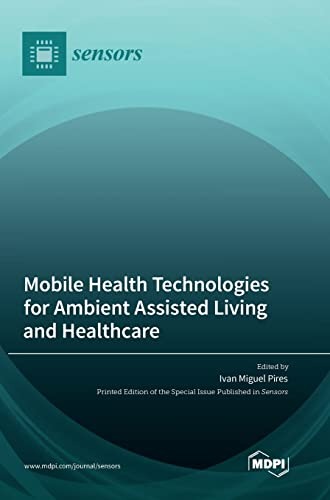
Mobile health technologies for ambient assisted living and healthcare
The use of telemedicine and mobile devices is growing, and sensors might aid in creating creative solutions. Developing these solutions is crucial for monitoring senior citizens, lifestyles, and medical procedures. The development of assistive technology for various users to follow sports and other activities is strongly tied to this study area. Data protection is crucial, and the development of these solutions for medical uses should be verified. The security and privacy of the information may be tied to other recognized research projects for their acceptability. ICT research has considerably improved quality of life and has fully assimilated all citizens into society through medical rehabilitation and assistive technology. The technologies and research fields that influence medical informatics include databases, networking, graphical user interfaces, data mining, machine learning, intelligent decision support systems, and specialized programming languages.

Mobile Edge Computing
It offers comprehensive, self-contained knowledge on Mobile Edge Computing (MEC), which is a very promising technology for achieving intelligence in the next-generation wireless communications and computing networks. The book starts with the basic concepts, key techniques and network architectures of MEC. Then, we present the wide applications of MEC, including edge caching, 6G networks, Internet of Vehicles, and UAVs. In the last part, we present new opportunities when MEC meets blockchain, Artificial Intelligence, and distributed machine learning (e.g., federated learning). We also identify the emerging applications of MEC in pandemic, industrial Internet of Things and disaster management.
Mobile computing, applications, and services ; 11th EAI International Conference, MobiCASE 2020, Shanghai, China, September 12, 2020, Proceedings
This book constitutes the thoroughly refereed post-conference proceedings of the 11th International Conference on Mobile Computing, Applications, and Services, MobiCASE 2020, held in Shanghai, China, in September 2020. The conference was held virtually due to the COVID-19 pandemic. The 15 full papers were carefully reviewed and selected from 49 submissions. The papers are organized in topical sections on mobile application and framework; mobile application with data analysis; and AI application.

Mobile and Wireless Communications with Practical Use-Case Scenarios
While wireless technologies had a spectacular evolution over the past years, the present trend is to adopt a global heterogeneous network of shared standards that enables the provisioning of Quality of Service and Quality of Experience to the end-user. To this end, enabling technologies like Machine Learning, Internet of Things, Digital Twins, are seen as promising solutions for next generation networks that will enable an intelligent adaptive interconnected environment with support for prediction and decision making so that the heterogeneous applications and users requirements can be highly satisfied. The aim of this textbook is to provide the readers with a comprehensive technical foundation of the mobile communication systems and wireless network design, operations and applications of various radio access technologies. Additionally, it also introduces the reader to the latest advancements in technologies in terms of Internet of Things ecosystem, Machine Learning and Digital Twins for IoT-enabled intelligent environments. Furthermore, this textbook also includes practical use-case scenarios using Altair WinProp Software as well as Phyton, TensorFlow and Jupiter as support for practice-based laboratory sessions"

Mobile and Wireless Communication Networks; IFIP 19th World Computer Congress, TC-6, 8th IFIP/IEEE Conference on Mobile and Wireless Communications Networks, August 20-25, 2006, Santiago, Chile
International Federation for Information Processing The IFIP series publishes state-of-the-art results in the sciences and technologies of information and communication. The scope of the series includes: foundations of computer science; software theory and practice; education; computer applications in technology; communication systems; systems modeling and optimization; information systems; computers and society; computer systems technology; security and protection in information processing systems; artificial intelligence; and human-computer interaction. Proceedings and post-proceedings of referred international conferences in computer science and interdisciplinary fields are featured. These results often precede journal publication and represent the most current research. The principal aim of the IFIP series is to encourage education and the dissemination and exchange of information about all aspects of computing.

Mobile 3D Graphics
Historically, not enough was understood about how to deliver a high quality playing experience on handheld, small screen, small memory devices, plus there has been considerable confusion about the hardware’s abilities and restrictions. By addressing these issues this book provides: • A comprehensive explanation of 3D mobile graphics programming • Includes an extensive range of code samples in both C and Java • Combines 3D and 2D mobile graphics methods • Covers recent advances in mobile computer graphics techniques and applications. The book teaches fundamental 3D mobile graphics programming with standard APIs, and covers the basic and advanced application programme interfaces behind the major wireless and mobile devices supporting 3D graphics applications. Advanced undergraduates and postgraduates, as well as mobile application and games developers, will find this an excellent reference source.

Mining Sequential Patterns from Large Data Sets
To meet the different needs of various applications, several models of sequential patterns have been proposed. This volume not only studies the mathematical definitions and application domains of these models, but also the algorithms on how to effectively and efficiently find these patterns. Mining Sequential Patterns from Large Data Sets provides a set of tools for analyzing and understanding the nature of various sequences by identifying the specific model(s) of sequential patterns that are most suitable. This book provides an efficient algorithm for mining these patterns.
Middleware 2008 ; ACM/IFIP/USENIX 9th International Middleware Conference Leuven, Belgium, December 1-5, 2008 Proceedings
This book constitutes the refereed proceedings of the ACM/IFIP/USENIX 9th International Middleware Conference 2008, held in Leuven, Belgium, in December 2008.The 21 revised full papers presented were carefully reviewed and selected from 117 submissions for inclusion in the book. The papers are organized in topical sections on platforms extended to new capabilities, advanced software engineering focusing on specific system properties, system management techniques, as well as components and system algorithms and properties.
