



الصفحة 6
الصفحة 6

Leveraging applications of formal methods, verification and validation : Engineering Principles ; 9th International Symposium on Leveraging Applications of Formal Methods, ISoLA 2020, Rhodes, Greece, October 20–30, 2020, Proceedings, Part II
Constitutes the refereed proceedings of the 9th International Symposium on Leveraging Applications of Formal Methods, ISoLA 2020, which was planned to take place during October 20–30, 2020, on Rhodes, Greece. The event itself was postponed to 2021 due to the COVID-19 pandemic. The papers presented were carefully reviewed and selected for inclusion in the proceedings. Each volume focusses on an individual topic with topical section headings within the volume: Part II, Engineering Principles : Automating Software Re-Engineering ; Rigorous Engineering of Collective Adaptive Systems.

Knowledge-Based Intelligent Information and Engineering Systems ; Vol.3683 : 9th International Conference, KES 2005, Melbourne, Australia, September 14-16, 2005, Proceedings, Part III
The KES conference series has been established for almost a decade, and it cont- ues each year to attract participants from all geographical areas of the world, including Europe, the Americas, Australasia and the Paci?c Rim. The KES conferences cover a wide range of intelligent systems topics. The broad focus of the conference series is the theory and applications of intelligent systems. From a pure research ?eld, intel- gent systems have advanced to the point where their abilities have been incorporated into many business and engineering application areas. KES 2005 provided a valuable mechanism for delegates to obtain an extensive view of the latest research into a range of intelligent-systems algorithms, tools and techniques. The conference also gave de- gates the chance to come into contact with those applying intelligent systems in diverse commercial areas. The combination of theory and practice represented a unique opp- tunity to gain an appreciation of the full spectrum of leading-edge intelligent-systems activity. The papers for KES 2005 were either submitted to invited sessions, chaired and organized by respected experts in their ?elds, or to a general session, managed by an extensive International Program Committee, or to the Intelligent Information Hiding and Multimedia Signal Processing (IIHMSP) Workshop, managed by an International Workshop Technical Committee.

Knowledge-Based Intelligent Information and Engineering Systems ; Vol. 4251 ; 10th International Conference, KES 2006, Bournemouth, UK, October 9-11 2006, Proceedings, Part I
Delegates and friends, we are very pleased to extend to you the sincerest of welcomes to this, the 10th International Conference on Knowledge Based and Intelligent Information and Engineering Systems at the Bournemouth International Centre in Bournemouth, UK, brought to you by KES International. This is a special KES conference, as it is the 10th in the series, and as such, it represents an occasion for celebration and an opportunity for reflection. The first KES conference was held in 1997 and was organised by the KES conference founder, Lakhmi Jain. In 1997, 1998 and 1999 the KES conferences were held in Adelaide, Australia. In 2000 the conference moved out of Australia to be held in Brighton, UK; in 2001 it was in Osaka, Japan; in 2002, Crema near Milan, Italy; in 2003, Oxford, UK; in 2004, Wellington, New Zealand; and in 2005, Melbourne, Australia. The next two conferences are planned to be in Italy and Croatia. Delegate numbers have grown from about 100 in 1997, to a regular figure in excess of 500. The conference attracts delegates from many different countries, in Europe, Australasia, the Pacific Rim, Asia and the Americas, and may truly be said to be ‘International’.

Knowledge-Based Intelligent Information and Engineering Systems ; 12th International Conference, KES 2008, Zagreb, Croatia, September 3-5, 2008, Proceedings, Part I
The 316 revised papers presented were carefully reviewed and selected. The papers present a wealth of original research results from the field of intelligent information processing in the broadest sense; topics covered in the first volume are artificial neural networks and connectionists systems; fuzzy and neuro-fuzzy systems; evolutionary computation; machine learning and classical AI; agent systems; knowledge based and expert systems; intelligent vision and image processing; knowledge management, ontologies, and data mining; Web intelligence, text and multimedia mining and retrieval; and intelligent robotics and control.

Knowledge-Based Intelligent Information and Engineering Systems ; 11th International Conference, KES 2007, Vietri sul Mare, Italy, September 12-14, 2007, Proceedings, Part III
Annotation The three volume set LNAI 4692, LNAI 4693, and LNAI 4694, constitute the refereed proceedings of the 11th International Conference on Knowledge-Based Intelligent Information and Engineering Systems, KES 2007, held in Vietri sul Mare, Italy, September 12-14, 2007. The papers present a wealth of original research results from the field of intelligent information processing in the broadest sense.

Knowledge-Based Intelligent Information and Engineering Systems ; 11th International Conference, KES 2007, Vietri sul Mare, Italy, September 12-14, 2007, Proceedings, Part II
Annotation The three volume set LNAI 4692, LNAI 4693, and LNAI 4694, constitute the refereed proceedings of the 11th International Conference on Knowledge-Based Intelligent Information and Engineering Systems, KES 2007, held in Vietri sul Mare, Italy, September 12-14, 2007. The papers present a wealth of original research results from the field of intelligent information processing in the broadest sense.

Knowledge-Based Intelligent Information and Engineering Systems ; 11th International Conference, KES 2007, Vietri sul Mare, Italy, September 12-14, 2007, Proceedings, Part I
This book is part of a three-volume set that constitutes the refereed proceedings of the 11th International Conference on Knowledge-Based Intelligent Information and Engineering Systems, KES 2007.

KI 2005 : Advances in Artificial Intelligence ; 28th Annual German Conference on AI, KI 2005, Koblenz, Germany, September 11-14, 2005, Proceedings
Constitutes the refereed proceedings of the 28th Annual German Conference on Artificial Intelligence, KI 2005, held in Germany. This work presents papers organized in topical sections on knowledge representation and reasoning, machine learning, diagnosis, neural networks, planning, robotics, and cognitive modeling, philosophy, natural language.

Computational and Ambient Intelligence ; 9th International Work-Conference on Artificial Neural Networks, IWANN 2007, San Sebastián, Spain, June 20-22, 2007, Proceedings
This biennial meeting focuses on the foundations, theory, models and applications of systems inspired by nature (neural networks, fuzzy logic and evo- tionary systems).These new computational techniques are used in applications that try to bring a new situation of well-being to the user. The conjunction of a more and more miniaturized hardware together with the growing computational intelligence embodied in this hardware leads us towards fully integrated embedded systems-on- chip and opens the door for truly ubiquitous electronics.

Cellular automata ; 7th International conference on cellular automata for research and industry, ACRI 2006, Perpignan, France, September 20-23, 2006, Proceedings
This book constitutes the refereed proceedings of the 7th International Conference on Cellular Automata for Research and Industry, ACRI 2006. The book presents 53 revised full papers and 19 revised poster papers together with 6 invited lectures. Topical sections include CA theory and implementation, computational theory, population dynamics, physical modeling, urban, environmental and social modeling, traffic and boolean networks, multi-agents and robotics, as well as crowds and cellular automata, and more.
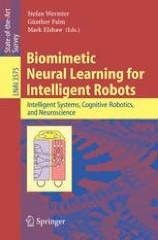
Biomimetic neural learning for intelligent robots : Intelligent systems, cognitive robotics, and neuroscience
This book presents research performed as part of the EU project on biomimeticmultimodal learning in a mirror neuron-based robot (MirrorBot) and contribu-tions presented at the International AI-Workshop on NeuroBotics. The over-all aim of the book is to present a broad spectrum of current research intobiomimetic neural learning for intelligent autonomous robots. In this book we show the development of newtechniques using cell assemblies, associative neural networks, and Hebbian-typelearning in order to associate vision, language and motor concepts. We havedeveloped biomimetic multimodal learning and language instruction in a robotto investigate the task of searching for objects. As well as the research performedin this area for the MirrorBot project, the second part of this book incorporatessignificant contributions from other research in the field of biomimetic robotics.This second part of the book concentrates on the progress made in neuroscienceinspired robotic learning approaches (in short: NeuroBotics). We hope that this book stimulates and encourages new research in this in-teresting and dynamic area.
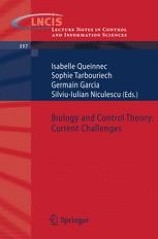
Biology and Control Theory : Current Challenges
Creating some links between control feedback and biology modeling communities based on similarities in modeling, observing and perceiving alive structures, and analyzing interconnections between biological structures and subsystems was the main objective of this volume. The idea of this book was conceived in the context mentioned above with the objective to help in claiming many of the problems for control researchers, starting discussions and opening interactive debates between the control and biology communities, and, finally, to alert graduate students to the many interesting ideas at the frontier between control feedback theory and biology.

Biologically Inspired Approaches to Advanced Information Technology ; 2nd International Workshop, BioADIT 2006, Osaka, Japan 26-27, 2006, Proceedings
This book contains 30 articles and three abstracts of invited talks presented at The Second International Workshop on Biologically Inspired Approaches for Advanced Information Technology,The workshop is intended to provide an e?ective forum for original research results in the ?eld of bio-inspired approaches to advanced information technologies. It also serves to foster the connection between biological paradigms and solutions to building the next-generation information systems.
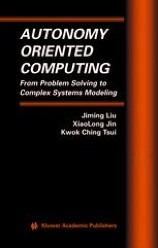
Autonomy oriented computing : From problem solving to complex systems modeling
Autonomy Oriented Computing explores the important theoretical and practical issues in AOC, by analyzing methodologies and presenting experimental case studies. The book serves as a comprehensive reference source for researchers, scientists, engineers, and professionals in all fields concerned with this promising new development in computer science. It can also be used as a main or supplementary text in graduate and undergraduate programs across a broad range of computer-related disciplines, including Robotics and Automation, Amorphous Computing, Image Processing and Computer Vision, Programming Paradigms, Computational Biology, and many others. The first part of the book, Fundamentals, describes the basic concepts and characteristics of an AOC system, and then it enumerates the critical design and engineering issues faced in AOC system development. The second part of the book, AOC in Depth, provides a detailed analysis of methodologies and case studies to evaluate the use of AOC in problem solving and complex system modeling. The final chapter reviews the essential features of the AOC paradigm and outlines a number of possibilities for future research and development.
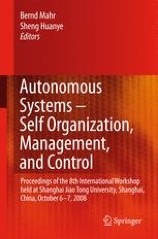
Autonomous Systems - Self-Organization, Management, and Contro ; Proceedings of the 8th International Workshop held at Shanghai Jiao Tong University, Shanghai, China, October 6–7, 2008
The International Workshop on "Autonomous Systems - Self-Organization, Management, and Control " is the eighth in a successful series of workshops that were established by Shanghai Jiao Tong University and Technische Universitat Berlin. The goal of these workshops is to bring together researchers from both universities in order to present research results to an international community.
Autonomous Robots and Agents
This book deals with the theoretical and methodological aspects of incorporating intelligence in Autonomous Robots and Agents. Challenges faced in the real world to accomplish complex tasks, which require collaborative efforts, and methods to overcome them, are detailed. Several informative articles deal with navigation, localization and mapping of mobile robots, a problem that engineers and researchers are grappling with all the time.This edited volume is targeted to present the latest state-of-the-art methodologies in Robotics. It is a compilation of the extended versions of the very best papers selected from the many that were presented at the 3rd International Conference on Autonomous Robots and Agents (ICARA 2006) which was held at Palmerston North, New Zealand from 11-14 December, 2006. Scientists and engineers who work with mobile robots will find this book very useful and stimulating.
Autonomes fahren : Technische, rechtliche und gesellschaftliche aspekte = Autonomous driving : Technical, legal and social aspects
This book provides answers to a wide range of these and other questions. Experts from Germany and the USA describe central topics related to the automation of vehicles on public roads from an engineering and social science perspective. They show which "decisions" are required of an autonomous vehicle or which "ethics" must be programmed. The authors discuss expectations and concerns that characterize the individual and societal acceptance of autonomous driving. An increased safety potential through autonomous vehicles is compared to the challenges and solution approaches that play a role in securing the safety concept. In addition, they explain what possibilities for change and opportunities arise for our mobility and the reorganization of traffic, not least for freight traffic. The book thus offers an up-to-date, comprehensive and scientifically sound examination of the topic of "autonomous driving".
Automated nanohandling by microrobots
Automated Nanohandling by Microrobots introduces an actuation principle for such microrobots and presents a new robot design. Different aspects of this research field regarding the hardware and software implementation of the system components, including the sensory feedback for automated nanohandling, are discussed in detail. Extensive applications of the microrobot station for nanohandling, nano-characterization and nanostructuring are provided, together with the experimental results.

Augmented reality, virtual reality, and computer graphics ; 7th International Conference, AVR 2020, Lecce, Italy, September 7–10, 2020, Proceedings, Part II
The 2-volume set LNCS 12242 and 12243 constitutes the refereed proceedings of the 7th International Conference on Augmented Reality, Virtual Reality, and Computer Graphics, AVR 2020, held in Lecce, Italy, in September 2020.* The 45 full papers and 14 short papers presented were carefully reviewed and selected from 99 submissions. The papers discuss key issues, approaches, ideas, open problems, innovative applications and trends in virtual reality, augmented reality, mixed reality, 3D reconstruction visualization, and applications in the areas of cultural heritage, medicine, education, and industry.

Augmented reality, virtual reality, and computer graphics ; 7th International conference, AVR 2020, Lecce, Italy, September 7–10, 2020, Proceedings, Part I
he 2-volume set LNCS 12242 and 12243 constitutes the refereed proceedings of the 7th International Conference on Augmented Reality, Virtual Reality, and Computer Graphics, AVR 2020, held in Lecce, Italy, in September 2020.* The 45 full papers and 14 short papers presented were carefully reviewed and selected from 99 submissions. The papers discuss key issues, approaches, ideas, open problems, innovative applications and trends in virtual reality, augmented reality, mixed reality, 3D reconstruction visualization, and applications in the areas of cultural heritage, medicine, education, and industry.
