



الصفحة 6
الصفحة 6

Autonomic principles of IP operations and management ; 6th IEEE International Workshop on IP Operations and Management, IPOM 2006, Dublin, Ireland, October 23-25, 2006, Proceedings
th This volume presents the proceedings of the 6 IEEE International Workshop on IP Operations and Management (IPOM 2006), which was held as part of Manweek 2006 rd th in Dublin, Ireland from October 23 to 25 , 2006. In line with its reputation as one ofthe pre-eminent venues for the discussion and debate of advances of management of IP networks and services, the 2006 iteration of IPOM brought together an international audience of researchers and practitioners from both industry and academia. The overall theme of Manweek 2006 was “Autonomic Component and System Management”,with IPOM taking this to be the application of autonomic principles to the IP operations, administration, maintenance and provisioning.
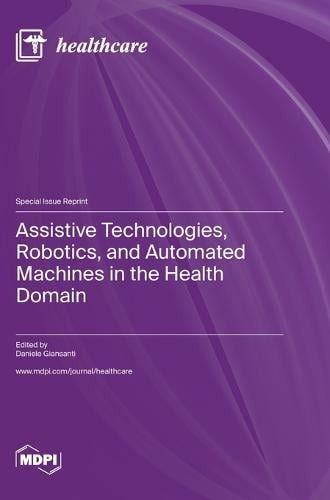
Assistive technologies, robotics, and automated machines in the health domain
The field of healthcare is constantly evolving and advancing with new technologies and innovations. Among these, assistive technologies, robotics, and automated machines are rapidly gaining ground as powerful tools to improve the quality of care and enhance patient outcomes. From wearable devices that monitor vital signs to surgical robots that assist in complex procedures, these technologies have the potential to revolutionize the way we deliver healthcare. The development and the integration of assistive technologies, care robots, and automated machines are strategic both as single components, when paired together, and when interconnected in the health domain.This reprint explores the latest developments in assistive technologies, robotics, and automated machines in the health domain, providing a comprehensive overview of their applications and potential impact. The reprint is for the benefit of healthcare professionals, researchers, engineers, and students interested in these rapidly evolving fields.
Artificial Intelligence : Applications and innovations
It's about the science of artificial intelligence (AI). AI is the study of the design of intelligent computational agents. This book provides a valuable resource for researchers, scientists, professionals, academicians and students dealing with the new challenges and advances in the areas of AI and innovations. This book also covers a wide range of applications of machine learning such as fire detection, structural health and pollution monitoring and control. Provides insight into prospective research and application areas related to industry and technology / Discusses industry- based inputs on success stories of technology adoption / Discusses technology applications from a research perspective in the field of AI / Provides a hands- on approach and case studies for readers of the book to practice and assimilate learning

Architecting dependable systems III
As software systems become ubiquitous, the issues of dependability become more and more crucial. Given that solutions to these issues must be considered from the very beginning of the design process, it is reasonable that dependability is addressed at the architectural level. This book comes as a result of an effort to bring together the research communities of software architectures and dependability. The papers are organised in topical sections on architectures for dependable services, monitoring and reconfiguration in software architectures, dependability support for software architectures, architectural evaluation, and architectural abstractions for dependability
Applied and computational mathematics for digital environments
Contains the 11 papers that were accepted and published in the Special Issue “Applied and Computational Mathematics for Digital Environments” of the MDPI Mathematics journal. The topics of interest include, among others, scientific research, applied tasks, and problems in the following areas: The construction of mathematical and information models of intelligent computer systems for monitoring and controlling the parameters of digital environments; The development of intelligent optimization algorithms that search for optimal parameter values of mathematical and information models in digital environments; Software and mathematical technologies in the implementation of intelligent monitoring and computer control of the parameters of digital environments; The development and application of mathematical and information models, machine learning methods, and artificial intelligence for the analysis and processing of big data in digital environments.

Applications and theory of Petri Nets 2005 ; 26th international conference, ICATPN 2005, Miami, FL, June 20-25, 2005, Proceedings
This volume contains the proceedings of the 26th International Conference on Application and Theory of Petri Nets and Other Models of Concurrency (ICATPN 2005). The Petri net conferences serve to discuss yearly progress in the ?eld of Petri nets and related models of concurrency, and to foster new - vancesintheapplicationandtheoryofPetrinets. Several tutorials and workshops were organized within the conf- ence, covering introductory and advanced aspects related to Petri nets.Detailed
Applications and innovations in intelligent systems XII ; Proceedings of AI-2004, the Twenty-fourth SGAI International Conference on Innhovative Techniques and Applications of Artificial Intelligence
The papers in this volume are the refereed application papers presented at AI-2004, the Twenty-fourth SGAI International Conference on Innovative Techniques and Applications of Artificial Intelligence, held in Cambridge 2004. The papers present new and innovative developments in the field, divided into sections on Synthesis and Prediction, Scheduling and Search, Diagnosis and Monitoring, Classification and Design, and Analysis and Evaluation. This is the twelth volume in the Applications and Innovations series. The series serves as a key reference on the use of AI Technology to enable organisations to solve complex problems and gain significant business benefits. The Technical Stream papers are published as a companion volume under the title Research and Development in Intelligent Systems XXI.
Anti-fragile ICT Systems
Introduces a novel approach to the design and operation of large ICT systems. It views the technical solutions and their stakeholders as complex adaptive systems and argues that traditional risk analyses cannot predict all future incidents with major impacts. To avoid unacceptable events, it is necessary to establish and operate anti-fragile ICT systems that limit the impact of all incidents, and which learn from small-impact incidents how to function increasingly well in changing environments. The book applies four design principles and one operational principle to achieve anti-fragility for different classes of incidents. It discusses how systems can achieve high availability, prevent malware epidemics, and detect anomalies. Analyses of Netflix’s media streaming solution, Norwegian telecom infrastructures, e-government platforms, and Numenta’s anomaly detection software show that cloud computing is essential to achieving anti-fragility for classes of events with negative impacts.
Anomaly Detection : Techniques and Applications
When information in the data warehouse is processed, it follows a definite pattern. An unexpected deviation in the data pattern from the usual behavior is called an anomaly. The anomaly in the data is also referred to as noise, outlier, spammer, deviations, novelties and exceptions. Identification of the rare items, events, observations, patterns which raise suspension by differing significantly from the majority of data is called anomaly detection. With progress in the technologies and the widespread use of data for the purpose for business the increase in the spams faced by the individuals and the companies are increasing day by day. This noisy data has boomed as a major problem in various areas such as Internet of Things, web service, Machine Learning, Artificial Intelligence, Deep learning, Image Processing, Cloud Computing, Audio processing, Video Processing, VoIP, Data Science, Wireless Sensor etc. Identifying the anomaly data and filtering them before processing is a major challenge for the data analyst. This anomaly is unavoidable in all areas of research. This book covers the techniques and algorithms for detecting the deviated data.

Android smart health monitoring system
Recent years have witnessed an increasing interest in the application of machine learning to clinical informatics and healthcare system never forgetting that the data also states that half of the world's population uses mobile devices. Despite of the existence of tons of applications, algorithms, and systems, the achievement of prescribing proper food that is suitable for patient health case based on face health status, height, weight, daily calories etc.., wasn’t achieved yet because of the lack of knowledge in food therapy process. Our system provides the service of food suggestion based on the input that is inserted by the user in sign-up form which are (height, weight, age, etc….).

Ambient intelligence for scientific discovery : Foundations, theories, and systems
Many difficult scientific discovery tasks can only be solved in interactive ways, by combining intelligent computing techniques with intuitive and adaptive user interfaces. It is inevitable to use human intelligence in scientific discovery systems: human eyes can capture complex patterns and relationships, along with detecting the exceptional cases in a data set; the human brain can easily manipulate perceptions to make decisions. Ambient intelligence is about this kind of ubiquitous and autonomous human interaction with information. Scientific discovery is a process of creative perception and communication, dealing with questions like: how do we significantly reduce information while maintaining meaning, or how do we extract patterns from massive data and growing data resources. Originating from the SIGCHI Workshop on Ambient Intelligence for Scientific Discovery, this state-of-the-art survey is organized in three parts: new paradigms in scientific discovery, ambient cognition, and ambient intelligence systems. Many chapters share common features such as interaction, vision, language, and biomedicine.

Ambient intelligence : A novel paradigm
Ambient Intelligence (AmI) is an integrating technology for supporting a pervasive and transparent infrastructure for implementing smart environments. Such technology is used to enable environments for detecting events and behaviors of people and for responding in a contextually relevant fashion. AmI proposes a multi-disciplinary approach for enhancing human machine interaction. The authors start with a description of the iDorm as an example of a smart environment conforming to the AmI paradigm, and introduces computer vision as an important component of the system. Other computer vision examples describe visual monitoring for the elderly, classic and novel surveillance techniques using clusters of cameras installed in indoor and outdoor application domains, and the monitoring of public spaces. Face and speech recognition systems are also covered as well as enhanced LEGO blocks for novel educational purposes. The book closes with a provocative chapter on how a cybernetic system can be designed as the backbone of a human machine interaction.
Algorithms for Sensor and Ad Hoc Networks : Advanced Lectures
Thousands of mini computers (comparable to a stick of chewing gum in size), equipped with sensors, are deployed in some terrain or other. After activation the sensors form a self-organized network and provide data, for example about a forthcoming earthquake. The trend towards wireless communication increasingly affects electronic devices in almost every sphere of life. Conventional wireless networks rely on infrastructure such as base stations; mobile devices interact with these base stations in a client/server fashion. In contrast, current research is focusing on networks that are completely unstructured, but are nevertheless able to communicate (via several hops) with each other, despite the low coverage of their antennas. Such systems are called sensor or ad hoc networks, depending on the point of view and the application. Wireless ad hoc and sensor networks have gained an incredible research momentum. Computer scientists and engineers of all flavors are embracing the area. Sensor networks have been adopted by researchers in many fields: from hardware technology to operating systems, from antenna design to databases, from information theory to networking, from graph theory to computational geometry.
Algorithmic Aspects of Wireless Sensor Networks ; 3rd International Workshop, ALGOSENSORS 2007, Wroclaw, Poland, July 14, 2007, Revised Selected Papers
This book contains the proceedings of the Third International Workshop on Algorithmic Aspects of Wireless Sensor Networks. Coverage includes abstract models, complexity-theoretic results, and the design and analysis of algorithms for wireless sensor networks.

AI virtual mouse system
Even today, many people still find interacting with computers and hardware to be an unpleasant experience, despite the development of input devices over decades. Computers and hardware should be tailored to our natural modes of communication: Body language and speech. Intelligent machines that can work alongside computers are now being developed, allowing for friendlier Human-Computer Interaction (HCI). this project, intends a hand gesture-based system that allows users to control virtual keyboard, desktop mouse movements and connect it with mobile phone in order to monitor and control.

Agent-oriented software engineering VII ; 7th International Workshop, AOSE 2006, Hakodate, Japan, May 8, 2006, Revised and Invited Papers
Software architectures that contain many dynamically interacting components, each with their own thread of control, and engaging in complex coordination protocols, are difficult to correctly and efficiently engineer. Agent-oriented modelling techniques are important for supporting the design and development of such applications.The book is organized in topical sections on modelling and design of agent systems, modelling open agent systems, formal reasoning about designs, as well as testing, debugging and evolvability.

Agent-oriented information systems II ; 6th International bi-conference workshop, AOIS 2004, Riga, Latvia, June 8, 2004 and New York, NY, USA, July 20, 2004, revised selected papers
Information systems have become the backbone of all kinds of organizations - day. In almost every sector – manufacturing, education, health care, government and businesses large and small – information systems are relied upon for - eryday work, communication, information gathering and decision-making. Yet, the in?exibilities in current technologies and methods have also resulted in poor performance, incompatibilities and obstacles to change. As many organizations are reinventing themselves to meet the challenges of global competition and e-commerce, there is increasing pressure to develop and deploy new technologies that are ?exible, robust and responsive to rapid and unexpected change. Agent concepts hold great promise for responding to the new realities of - formation systems. They o?er higher-level abstractions and mechanisms which address issues such as knowledge representation and reasoning, communication, coordination, cooperation among heterogeneous and autonomous parties, p- ception, commitments, goals, beliefs, intentions, etc., all of which need conc- tual modelling. On the one hand, the concrete implementation of these concepts can lead to advanced functionalities.

Agent Technology and e-Health
Multi-agent systems are one of the most exciting research areas in Artificial Intelligence. This book reports on the results achieved in this area, discusses the benefits (and drawbacks) that agent-based systems may bring to medical domains and society.

Advances in spatial and temporal databases ; 10th International symposium, SSTD 2007, Boston, MA, USA, July 16.-18, 2007, Proceedings
The book is classified in numerous categories, each corresponding to a conference session. These include continuous monitoring; indexing and query processing; and mining.
Advances in radar systems for target detection and tracking
Radar systems can provide the all-weather and all-time detection and tracking of targets of interest, and they have been extensively applied by the remote sensing community, in applications such as geological exploration, disaster forecasting, traffic monitoring, urban planning, environmental sciences, hydrology, littoral zones, oceans, etc. This reprint contains the several advance research studies on radar systems for target detection and tracking. It includes multipath ghost suppression, maneuvering target tracking, target detection, and other topics.
