



الصفحة 6
الصفحة 6

Modeling and simulation of complex communication networks
Covers important topics and approaches related to the modeling and simulation of complex communication networks from a complex adaptive systems perspective. The authors present different modeling paradigms and approaches as well as surveys and case studies. Modern network systems such as Internet of Things, Smart Grid, VoIP traffic, Peer-to-Peer protocol, and social networks, are inherently complex. They require powerful and realistic models and tools not only for analysis and simulation but also for prediction. With contributions from an international panel of experts, this book is essential reading for networking, computing, and communications professionals, researchers and engineers in the field of next generation networks and complex information and communication systems, and academics and advanced students working in these fields.

Modeling and Retrieval of Context ; 2nd International Workshop, MRC 2005, Edinburgh, UK, July 31-August 1, 2005, Revised Selected Papers
Computing in context has become a necessity in modern and intelligent IT - plications. With the use of mobile devices and current research on ubiquitous computing, context-awareness has become a major issue. However, context and context-awareness are crucial not only for mobile and ubiquitous computing. They are also vital for spanning various application areas, such as collaborative softwareand Web engineering,personaldigital assistantsand peer-to-peer inf- mation sharing, health care work?ow and patient control, and adaptive games and e-learning solutions. In these areas, context serves as a major source for reasoning, decision making, and adaptation, as it covers not only application knowledge but also environmental knowledge.Likewise, modeling and retrieving context is an important part of modern knowledge management processes.
Modeling and Management of Fuzzy Semantic RDF Data
Presents the latest research findings in fuzzy RDF data modeling and management. Fuzziness widely exist in many data and knowledge intensive applications. With the increasing amount of metadata available, efficient and scalable management of massive semantic data with uncertainty is of crucial importance. This book goes to great depth concerning the fast-growing topic of technologies and approaches of modeling and managing fuzzy metadata with Resource Description Framework (RDF) format. Its major topics include representation of fuzzy RDF data, fuzzy RDF graph matching, query of fuzzy RDF data, and persistence of fuzzy RDF data in diverse databases. The objective of the book is to provide the state-of-the-art information to researchers, practitioners, and postgraduates students who work on the area of big data intelligence and at the same time serve as the uncertain data and knowledge engineering professional as a valuable real-world reference.

Model-Driven Development of Reliable Automotive Services ; 2nd Automotive Software Workshop, ASWSD 2006, San Diego, CA, USA, March 15-17, 2006, Revised Selected Papers
This book constitutes the thoroughly refereed post-workshop proceedings of the Second Automotive Software Workshop, ASWSD 2006, held in San Diego, CA, USA in March 2006.The 11 revised full papers presented were carefully reviewed and selected from 18 lectures held at the workshop, that brought together experts from industry and academia, working on highly complex, distributed, reactive software systems related to the automotive domain. The papers are organized in topical sections on modeling techniques and infrastructures, model transformations, quality assurance, real-time control, as well as services and components.

Model-Driven Development and Operation of Multi-Cloud Applications : The MODAClouds Approach
In this book readers will find technological discussions on the existing and emerging technologies across the different stages of the big data value chain. They will learn about legal aspects of big data, the social impact, and about education needs and requirements. And they will discover the business perspective and how big data technology can be exploited to deliver value within different sectors of the economy. The book is structured in four parts: Part I "The Big Data Opportunity" explores the value potential of big data with a particular focus on the European context. It also describes the legal, business and social dimensions that need to be addressed, and briefly introduces the European Commission's BIG project.
Model-Based Software and Data Integration ; 1st International Workshop, MBSDI 2008, Berlin, Germany, April 1-3, 2008. Proceedings
The First International Workshop on Model-Based Software and Data Integ- tion (MBSDI 2008), was ourfrst event of this kind in a forthcoming series of activities at TU Berlin, where a scientifc discussion and exchange forum was provided for both academic and industrial researchers. We aimed at researchers, engineersand practitionerswho focus onadvanced, model-basedsolutions inthe area of software and information integration and interoperability. As withevery beginning, the resonanceonour callsin today's overfoodingof workshops was somewhat unpredictable, and we did not really know how many paper submissions to expect. We were nicely surprised, considering the rather short lead time to organize the meeting and the very specialized and focused topic.

Model-Based Engineering of Collaborative Embedded Systems : Extensions of the SPES Methodology
This book presents the results of the "Collaborative Embedded Systems" (CrESt) project, aimed at adapting and complementing the methodology underlying modeling techniques developed to cope with the challenges of the dynamic structures of collaborative embedded systems (CESs) based on the SPES development methodology.

Model Driven Architecture and Ontology Development
Gaševic and his co-authors try to fill this gap by covering the subject of MDA application for ontology development on the Semantic Web. Part I of their book describes existing technologies, tools, and standards like XML, RDF, OWL, MDA, and UML. Part II presents the first detailed description of OMG’s new ODM (Ontology Definition Metamodel) initiative, a specification which is expected to be in the form of an OMG language like UML. Finally, Part III is dedicated to applications and practical aspects of developing ontologies using MDA-based languages.

Model checking and artificial intelligence ; 4th Workshop, MoChArt IV, Riva del Garda, Italy, August 29, 2006, Revised Selected and Invited Papers
This book constitutes the thoroughly refereed post-proceedings of the 4th Workshop on Model Checking and Artificial Intelligence, MoChArt IV, held in Riva Del Garda, Italy in August 2006, as a satellite event of ECAI0 2006, the 17th biannual European conference on Artificial Intelligence.

Mobile World : Past, Present and Future
Key reading for all those involved with the future of mobile communications, this book is a valuable resource, particularly for advanced undergraduate and postgraduate students on Mobile Technology courses, practitioners, and researchers working in mobile communications, CSCW and HCI. This volume is a sequel to Brown et al: Wireless World: Social and Interactional Aspects of the Mobile Age, also in the CSCW series. "This book presents a rich insight into how and why the mobile has become so important in today’s society. It explores the strong emotional attachment that people have to these devices, and argues that it is people and not the technology that developers must put at the heart of future mobile offerings. A valuable book for industry and academics alike."
Mobile Wireless Middleware, Operating Systems and Applications ; 9th EAI International Conference, MOBILWARE 2020, Hohhot, China, July 11, 2020, Proceedings
This book constitutes the refereed conference proceedings of the 9th International Conference on Mobile Wireless Middleware, Operating Systems and Applications, MOBILWARE 2020, held in Hohhot, China, in July 2020. Due to COVID-19 pandemic the conference was held virtually. The 21 revised full papers were reviewed and selected from 69 submissions and are organized in tracks on MobilWare; Big data, data mining and artificial intelligence workshop; Blockchain and internet of things workshop.
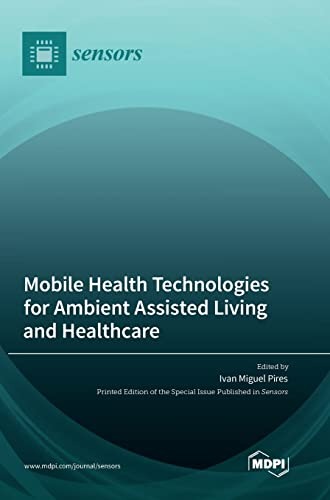
Mobile health technologies for ambient assisted living and healthcare
The use of telemedicine and mobile devices is growing, and sensors might aid in creating creative solutions. Developing these solutions is crucial for monitoring senior citizens, lifestyles, and medical procedures. The development of assistive technology for various users to follow sports and other activities is strongly tied to this study area. Data protection is crucial, and the development of these solutions for medical uses should be verified. The security and privacy of the information may be tied to other recognized research projects for their acceptability. ICT research has considerably improved quality of life and has fully assimilated all citizens into society through medical rehabilitation and assistive technology. The technologies and research fields that influence medical informatics include databases, networking, graphical user interfaces, data mining, machine learning, intelligent decision support systems, and specialized programming languages.

Mobile Edge Computing
It offers comprehensive, self-contained knowledge on Mobile Edge Computing (MEC), which is a very promising technology for achieving intelligence in the next-generation wireless communications and computing networks. The book starts with the basic concepts, key techniques and network architectures of MEC. Then, we present the wide applications of MEC, including edge caching, 6G networks, Internet of Vehicles, and UAVs. In the last part, we present new opportunities when MEC meets blockchain, Artificial Intelligence, and distributed machine learning (e.g., federated learning). We also identify the emerging applications of MEC in pandemic, industrial Internet of Things and disaster management.
Mobile computing, applications, and services ; 11th EAI International Conference, MobiCASE 2020, Shanghai, China, September 12, 2020, Proceedings
This book constitutes the thoroughly refereed post-conference proceedings of the 11th International Conference on Mobile Computing, Applications, and Services, MobiCASE 2020, held in Shanghai, China, in September 2020. The conference was held virtually due to the COVID-19 pandemic. The 15 full papers were carefully reviewed and selected from 49 submissions. The papers are organized in topical sections on mobile application and framework; mobile application with data analysis; and AI application.

Mobile Communications : Re-negotiation of the Social Sphere
Mobile Communications: Renegotiation of the Social Sphere surveys some of the broader issues associated with the adoption and use of mobile communication, and explores developing areas of inquiry. Mobile communications are looked at in the context of other types of mediated interaction (e-mail, instant messaging, Wi-Fi, landline telephone etc.), thus demonstrating the uniqueness of this form of communication and how it is influencing the renegotiation of the social sphere. A truly international set of contributors consider how mobile communication has impacted on society and reflect on how it is used (and sometimes resented) in various public and private spaces. They provide an in-depth analysis of specific areas which complement our understanding of the phenomena including: • The psychological dimensions of mobile communication (addiction, proclivity to be disturbed by others use of the mobile phone), • The linguistics of mobile communication, and • The understanding of mobile communication’s commercialisation. This book will be a valuable addition to any researcher’s or professional’s reading material in the area of interaction of technology and society, providing the reader with a broad insight and specific knowledge of how mobile communication is reformulating the social sphere.

Mobile and Wireless Communication Networks; IFIP 19th World Computer Congress, TC-6, 8th IFIP/IEEE Conference on Mobile and Wireless Communications Networks, August 20-25, 2006, Santiago, Chile
International Federation for Information Processing The IFIP series publishes state-of-the-art results in the sciences and technologies of information and communication. The scope of the series includes: foundations of computer science; software theory and practice; education; computer applications in technology; communication systems; systems modeling and optimization; information systems; computers and society; computer systems technology; security and protection in information processing systems; artificial intelligence; and human-computer interaction. Proceedings and post-proceedings of referred international conferences in computer science and interdisciplinary fields are featured. These results often precede journal publication and represent the most current research. The principal aim of the IFIP series is to encourage education and the dissemination and exchange of information about all aspects of computing.

Mission AI: the new system technology
Offers a strategic perspective on AI and the process of embedding it in society. After decades of research, Artificial Intelligence (AI) is now entering society at large. Due to its general purpose character, AI will change society in multiple, fundamental and unpredictable ways. Therefore, the Netherlands Scientific Council for Government Policy (WRR) characterizes AI as a system technology: a rare type of technologies that have a systemic impact on society. Earlier system technologies include electricity, the combustion engine and the computer. The history of these technologies provides us with useful insights about what it takes to direct the introduction of AI in society.

Mind conversation = التنبؤ بالحروف العربية من خلال الإشارات الدماغية
Throughout history, humans have long dreamed of understanding what goes on inside the human mind—what people are thinking or feeling. It seemed like something from a far-off future or a magical realm. But now, thanks to amazing technology called EEG and BCI, this dream is turning into reality. EEG stands for electroencephalography. It's a way of listening to what the brain is up to by placing small sensors on or near the head. These sensors pick up tiny electrical signals produced by the brain's activity. It's like eavesdropping on the brain's conversations with itself. BCI, or Brain-Computer Interface, is like a bridge between the brain and machines. It lets the brain talk to devices or computers. This means people can control things without using their hands or voices. Our system takes advantage of EEG and BCI to create something helpful, a special mobile app. This app is designed for people who can't move their bodies, like those who are paralyzed. It helps them use their phones to express what they are thinking about.

Microsoft Dynamics NAV : Jump Start to Optimization
Mastering Microsoft Dynamics NAV for beginners and IT professionals: from jump start to optimization. This book covers general use and shows you how to tailor Microsoft Dynamics NAV to mirror your firm's unique needs. Learn skills that enable you to navigate and interpret the world of possibilities locked within the ERP system. Through easy, concrete examples, you will master the layered environment and be able to use and create reports, forms, import/export functions and more. This book gives you the basis you need to demand the best information infrastructure for your enterprise.

Microsoft .NET framework 2.0 web-based client development : MCTS self-paced training Kit (Exam 70-528)
Designed to help you make the most of your study time. Maximize your performance on the exam by learning to: * Create, trace, configure, and deploy Web applications * Integrate data into your application using Microsoft ADO.NET, XML, and data-bound controls * Implement forms authentication, impersonation, and login controls * Configure server controls and create custom Web controls * Use themes, user profiles, and Web parts for customizable, personalized Web sites * Manage server-side and client-side application state PRACTICE TESTS Assess your skills with practice tests on CD. You can work through hundreds of questions using multiple testing modes to meet your specific learning needs. You get detailed explanations for right and wrong answers?including a customized learning path that describes how and where to focus your studies. Your kit includes: * Official self-paced study guide. * Practice tests with multiple, customizable testing options and a learning plan based on your results. *400+ practice and review questions. * Case scenarios and lab exercises. * Microsoft Visual Basic and Visual C# code samples on CD.
