



الصفحة 51
الصفحة 51

3D design reconstruction
This report will talk about a way to design and rebuild a cheap, true-to-the-truth 3D system using reverse engineering. The system provides the service of reconstructing objects into 3D models by placing the object in a predetermined place facing a set of sensors and cameras at a certain distance and at precise angles, using the angle of rotation for each image and combining the points of triangulation we can build a form of 3D modeling types. These models can be used in digital animation or printed with 3D printers for a wide variety of applications.
3-D Computer vision : Principles, algorithms and applications
Offers advanced content on computer vision (basic content can be found in its prerequisite textbook, “2D Computer Vision: Principles, Algorithms and Applications”), including the basic principles, typical methods and practical techniques. It is intended for graduate courses on related topics, e.g. Computer Vision, 3-D Computer Vision, Graphics, Artificial Intelligence, etc. The book is mainly based on my lecture notes for several undergraduate and graduate classes I have offered over the past several years, while a number of topics stem from my research publications co-authored with my students. This book takes into account the needs of learners with various professional backgrounds, as well as those of self-learners. Furthermore, it can be used as a reference guide for practitioners and professionals in related fields.
17th International Conference on Information Technology–New Generations (ITNG 2020)
This volume presents the 17th International Conference on Information Technology—New Generations (ITNG), and chronicles an annual event on state of the art technologies for digital information and communications. The application of advanced information technology to such domains as astronomy, biology, education, geosciences, security, and healthcare are among the themes explored by the ITNG proceedings. Visionary ideas, theoretical and experimental results, as well as prototypes, designs, and tools that help information flow to end users are of special interest. Specific topics include Machine Learning, Robotics, High Performance Computing, and Innovative Methods of Computing. The conference features keynote speakers; a best student contribution award, poster award, and service award; a technical open panel, and workshops/exhibits from industry, government, and academia.
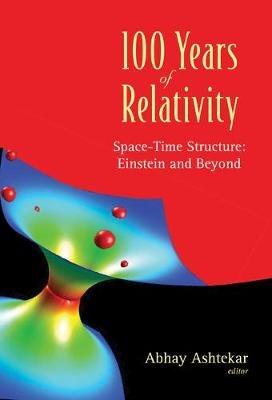
100 years of relativity : Space-time structure - Einstein and beyond
Contains contributions from leading researchers, worldwide, who have thought deeply about the nature and consequences of this interplay. The articles take a long-range view of the subject and distill the most important advances in broad terms, making them easily accessible to non-specialists. The first part is devoted to a summary of how relativity theories were born (J Stachel). The second part discusses the most dramatic ramifications of general relativity, such as black holes (P Chrusciel and R Price), space-time singularities (H Nicolai and A Rendall), gravitational waves (P Laguna and P Saulson), the large scale structure of the cosmos (T Padmanabhan); experimental status of this theory (C Will) as well as its practical application to the GPS system (N Ashby). The last part looks beyond Einstein and provides glimpses into what is in store for us in the 21st century.
.NET 2.0 for Delphi Programmers
.NET 2.0 for Delphi Programmers explores .NET from a Delphi programmers viewpoint, and it is ideal for Delphi programmers moving to .NET. It presents the core concepts of the .NET world in terms you are familiar with. This book will help you with Delphi for .NET as well as C#. Apress publishes migration books for both Visual Basic 6 and C++ programmers moving to .NET. Consider this the Delphi installment of Apress migration books! There is ample coverage of C# as well as Delphi for .NET inside this edition.
