



الصفحة 51
الصفحة 51

Advances in biometric person authentication ; 5th Chinese conference on biometric recognition, SINOBIOMETRICS 2004, Guangzhou, China, December 13-14, 2004, Proceedings
Aimed at promoting the international exchange of ideas and providing an opportunity for keeping abreast of the latest developments in biometric algorithms, systems, and applications. The 1st Biometrics Verification Competition (BVC) on face, iris, and fingerprint recognition was also conducted in conjunction with the conference. This book is composed of 74 papers presented at Sinobiometrics 2004,

Advances in Big Data Analytics : Theory, Algorithms and Practices
Provides a comprehensive and cutting-edge study on big data analytics, based on the research findings and applications developed by the author and his colleagues in related areas. It addresses the concepts of big data analytics and/or data science, multi-criteria optimization for learning, expert and rule-based data analysis, support vector machines for classification, feature selection, data stream analysis, learning analysis, sentiment analysis, link analysis, and evaluation analysis. The book also explores lessons learned in applying big data to business, engineering and healthcare. Lastly, it addresses the advanced topic of intelligence-quotient (IQ) tests for artificial intelligence.

Advances in Artificial Reality and Tele-Existence ; 16th International Conference on Artificial Reality and Telexistence, ICAT 2006, Hangzhou, China, November 28 - December 1, 2006, Proceedings
ICAT is the oldest international conference on virtual reality and tele-existence. ICAT 2006 not only looked for innovations in the technology itself, but also explored novel ways to transfer and express information and creative ideas to the society and people. The 16th International Conference on Artificial Reality and Telexistence was held at the Zhejiang University of Technology, Hangzhou, P. R. China from November 29 to December 1, 2006. The main purpose of the conference is to provide opportunities for researchers and practitioners to present their research findings and exchange opinions on the development and use of such systems.

Advances in Artificial Life ; 9th European Conference, ECAL 2007, Lisbon, Portugal, September 10-14, 2007, Proceedings
This book is organized in topical sections on conceptual articles, morphogenesis and development, robotics and autonomous agents, evolutionary computation and theory, cellular automata, models of biological systems and their applications, ant colony and swarm systems, evolution of communication, simulation of social interactions, self-replication, artificial chemistry, and posters.

Advances in artificial life ; 8th European Conference, ECAL 2005 , Canterbury, UK, September 5-9, 2005, Proceedings
The Artificial Life term appeared more than 20 years ago . Since then the area has developed dramatically, many researchersjoining enthusiastically and research groups sprouting everywhere.a conceptual track, where papers were judged on criteria like importance and/or novelty of the concepts proposed rather than the experimental / theoretical results, has been introduced this year. A conference on a theme as broad as Artificial Life is bound to be very di-verse, but a few tendencies emerged. First, fields like ‘Robotics and Autonomous Agents’ or ‘Evolutionary Computation’are still extremely active and keep onbringing a wealth of results to the A-Life community. Even there, however, new tendencies appear, like collective robotics, and more specifically self-assembling robotics, which represent now a large subsection. Second, new areas appear.‘Morphogenesis and Development’ which used to be the subject of only a fewpapers, is now one of the largest subsections, and seems to be on the brinkof becoming a field of its own. Finally, most classical themes of A-Life re-search like ‘Artificial Chemistry’, ‘Ant-Inspired Systems’, ‘Cellular Automata’,‘Self-Replication’, ‘Social Simulations’ or ‘Bio-realist Simulations’ are still goingstrong and are well represented within this volume.
Advances in Artificial Intelligence ; Vol. 4013 : 19th Conference of the Canadian Society for Computational Studies of Intelligence, Canadian AI 2006, Quebec City, Quebec, Canada, June 7-9, Proceedings
Constitutes the refereed proceedings of the 4th Hellenic Conference on Artificial Intelligence, SETN 2006, held at Heraklion, Crete, Greece in May 2006. The 43 revised full papers and extended abstracts of 34 revised short papers presented together with 2 invited contributions were carefully reviewed and selected from 125 submissions. The papers address any area of artificial intelligence; particular fields of interest include; logic programming, knowledge-based systems, intelligent information retrieval, machine learning, neural nets, genetic algorithms, data mining and knowledge discovery, hybrid intelligent systems and methods, intelligent agents, multi-agent systems, intelligent distributed systems, intelligent/natural interactivity, intelligent virtual environments, planning, scheduling, and robotics.

Advances in Artificial Intelligence ; Vol. 3955 : 4th Helenic Conference on AI, SETN 2006, Heraklion, Crete, Greece, May 18-20, 2006, Proceedings
Constitutes the refereed proceedings of the 4th Hellenic Conference on Artificial Intelligence, SETN 2006, held at Heraklion, Crete, Greece in May 2006. The 43 revised full papers and extended abstracts of 34 revised short papers presented together with 2 invited contributions were carefully reviewed and selected from 125 submissions. The papers address any area of artificial intelligence; particular fields of interest include; logic programming, knowledge-based systems, intelligent information retrieval, machine learning, neural nets, genetic algorithms, data mining and knowledge discovery, hybrid intelligent systems and methods, intelligent agents, multi-agent systems, intelligent distributed systems, intelligent/natural interactivity, intelligent virtual environments, planning, scheduling, and robotics.
Advances in Artificial Economics : The Economy as a Complex Dynamic System
Perceiving the economy as a complex dynamic system, generates a need for new tools for its study. As a constructive simulation method, Agent-Based Computational Economics (ACE) has in recent years proven its strength and extensive applicability. Fields of study are widely spread within economics, with a cluster around financial markets. This book is based on communications given at AE’2006 (Aalborg, Denmark) – the second symposium on Artificial Economics, and covers both wellknown questions of economics, like the existence of market efficiency, as well as new questions raised by the new tools, for example questions related to networks of social interaction.

Advanced Wired and Wireless Networks
ADVANCED WIRED AND WIRELESS NETWORKS brings the reader a sample of recent research efforts representative of advances in the areas of recognized importance for the future Internet, In Part I, we bring ad-hoc networking closer to the reality of practical use. The focus is on more advanced scalable routing suitable for large networks, directed flooding useful in information dissemination networks, as well as self-configuration and security issues important in practical deployments. Part II illustrates the efforts towards development of advanced mobility support techniques (beyond traditional "mobile phone net") and Mobile IP technologies. The issues range from prediction based mobility support, through context transfer during Mobile IP handoff, to service provisioning platforms for heterogeneous networks. The focus of the final section concerns the performance of networks and protocols. Furthermore this section illustrates researchers’ interest in protocol enhancement requests for improved performance with advanced networks, reliable and efficient multicast methods in unreliable networks, and composite scheduling in programmable/active networks where computing resources equal network performance as transmission bandwidth.
Advanced Techniques in Knowledge Discovery and Data Mining
This explosion is a result of the growing use of electronic media. But what is data mining (DM)? A Web search using the Google search engine retrieves many (really many) definitions of data mining. We include here a few interesting ones. One of the simpler definitions is: “As the term suggests, data mining is the analysis of data to establish relationships and identify patterns” [1]. It focuses on identifying relations in data. Our next example is more elaborate: An information extraction activity whose goal is to discover hidden facts contained in databases. Using a combination of machine learning, statistical analysis, modeling techniques and database technology, data mining finds patterns and subtle relationships in data and infers rules that allow the prediction of future results. Typical applications include market segmentation, customer profiling, fraud detection, evaluation of retail promotions, and credit risk analysis .

Advanced studies in biometrics : Summer School on biometrics, Alghero, Italy, June 2-6, 2003. Revised Selected Lectures and Papers
This book originates from an international summer school on biometrics, held in Alghero, Italy, in June 2003. The seven revised tutorial lectures by leading researchers introduce the reader to biometrics-based person authentication, fingerprint recognition, gait recognition, various aspects of face recognition and face detection, topologies for biometric recognition, and hand detection. Also included are the four best selected student papers, all dealing with face recognition.
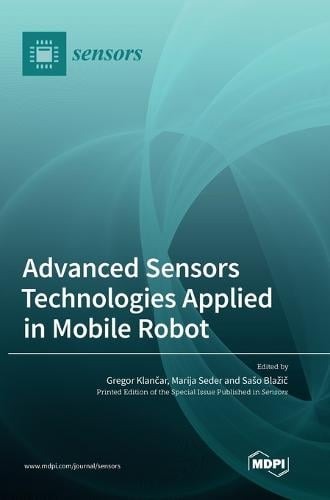
Advanced sensors technologies applied in mobile robot
Contains contributions on the latest developments in mobile robotic systems and related research. Various topics with different ideas and applications from mobile robotics have found their place. New ideas are presented for mobile robots that specialise in cleaning floors, power lines and HVAC systems. We also find innovative approaches for navigation path planning using local minima-free potential fields, novel path primitives and/or their parameterisation for minimum-time planning, and various control approaches ranging from visual serving to model predictive and adaptive trajectory tracking, applied to wheeled robots, humanoid manipulators and flying robots. Localisation approaches using LiDAR, motion capture systems, fingerprint-based and biomechanical gait systems are also discussed.

Advanced parallel processing technologies ; 7th International Symposium, APPT 2007 Guangzhou, China, November 22-23, 2007 Proceedings
APPT was upgraded to the International Symposium on Advanced Parallel Processing Technologies. However, it kept its traditional flavor by sharing of the underlying theories and applications, and the establishment of new and long-term collaborative channels. And it will continue to provide a forum for researchers, professionals, and industrial practitioners from around the world to report on new advances in high-performance architecture and software, as well as to identify issues and directions for research and development in the new era of evolving technologies.
Advanced mathematical science for mobility society
The automotive industry has made steady progress in technological innovations under the names of Connected Autonomous-Shared-Electric (CASE) and Mobility as a Service (MaaS). Needless to say, mathematics and informatics are important to support such innovations. As the concept of cars and movement itself is diversifying, they are indispensable for grasping the essence of the future mobility society and building the foundation for the next generation. This book contains three main contents. 1. Mathematical models of flow 2. Mathematical methodsfor huge data and network analysis 3. Algorithm for mobility society The first one discusses mathematical models of pedestrian and traffic flow, as they are important for preventing accidents and achieving efficient transportation.
Advanced machine learning and deep learning approaches for remote sensing
Provides research on how technologies such as artificial intelligence-based machine learning and deep learning can be applied to remote sensing. Through this, we can see the process of solving the existing problems of image and image signal processing for remote sensing. These techniques are computationally intensive and require the help of high-performance computing devices. With the development of devices such as GPUs, remote sensing technology, and aerial sensing technology, it is possible to monitor the Earth with high-resolution images and to obtain vast amounts of Earth observation data. The papers published in this reprint describe recent advances in big data processing and artificial intelligence-based technologies for remote sensing technology.
Advanced functional programming ; 5th International School, AFP 2004, Tartu, Estonia, August 14-21, 2004, Revised Lectures
Contains the revised lecture notes corresponding to nine of thelecture courses presented at the 5th International School on Advanced Functional Programming, AFP 2004, held in Tartu, Estonia, August 14–21, 2004. The goal of the AFP schools is to inform the wide international communitiesof computer science students and software production professionals about thenew and important developments in the area of functional programming. The schools put a special emphasis on practical applications of advanced techniques.
AdvancED Flex 3
Divided into three parts. The first part discusses the architectural and design aspects of Flex 3 application development. It explains the internals of a Flex 3 application and advocates a few best practices to fine-tune your application to ensure maximum performance. It includes tutorials on creating custom components, data binding, and creating AIR-powered desktop applications. The second part concentrates on effectively integrating Flex 3 with server- and client-side technologies. Techniques for integration with Java and PHP are covered in detail, and content covering interaction with client-side technologies is also included. After reading the chapter on JavaScript integration, you will be ready to create applications that can use Ajax and Flex 3 together. The third and final part of the book is a unique and eclectic mix of some advanced topics like mash-ups, collaborative applications, 3D rendering, highly interactive visualization, and audio and video streaming.
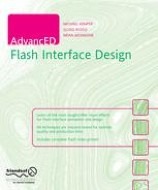
AdvancED Flash Interface Design
Flash allows users to create some amazing interactive interfaces to interact with rich Internet applications, e-learning systems, and simple web sites. In this book, two of the most talented Flash designers in the world will show you how to use them effectively to create breathtaking visuals for your Flash web sites. You'll also learn how to take advantage of Flash's powerful built-in vector-based drawing tools.
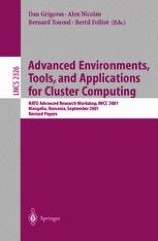
Advanced environments, tools, and applications for cluster computing ; NATO Advanced Research Workshop, IWCC 2001, Mangalia, Romania, September 1-6, 2001. Revised Papers
Started by small group of well known scientists with the aim of sharing knowledge, experiences, and results on all aspects of cluster computing, the initiative of a workshop on cluster computing received more attention after IFIP WG 10.3 and IEEE Romania Section accepted our request for sponsorship. Moreover, the application for a NATO ARW grant was successful, leading to a greater interest in the workshop. In this respect, we have to say that we chose Romania in order to attract scientists from Central and Eastern European countries and improve the cooperation in the region, in the field of cluster computing. We had an extremely short time to organize the event, but many people joined us and enthusiastically contributed to the process. The success of the workshop is wholly due to the hard work of the organizing committee, members of the program committee, key speakers, speakers from industry, and authors of accepted papers.

Advanced encryption standard - AES ; 4th International Conference, AES 2004, Bonn, Germany, May 10-12, 2004, Revised Selected and Invited Papers
This volume comprises the proceedings of the 4th Conference on Advanced En-cryption Standard, ‘AES — State of the Crypto Analysis,’ which was held inBonn, Germany, 2004.The conference followed a series of events organized by the US National In-stitute of Standards and Technology (NIST) in order to hold an internationalcompetition to decide on an algorithm to serve as the Advanced EncryptionStandard (AES). In 1998, at the first AES conference (AES 1), 15 different algo-rithms were presented, discussed, reviewed and verified. After a further conferencedevoted to verification, testing and examination of the candidate algorithms inorder to prove their performance and security, one winning algorithm remained.The encryption scheme Rijndael, designed by the Belgian cryptographers JoanDaemen and Vincent Rijmen, was selected in 2000 to become the successor tothe famous DES (Data Encryption Standard) and it is now the Advanced En-cryption Standard.
