



الصفحة 5
الصفحة 5

Mathematics of Surfaces XI ; 11th IMA International Conference, Loughborough, UK, September 5-7, 2005, Proceedings
Constitutes the refereed proceedings of the 11th IMA International Conference on the Mathematics of Surfaces, held in Loughborough, UK in September 2005. Among the topics addressed are Voronoi diagrams, linear systems, curvatures on meshes, approximate parameterization, condition numbers, pythagorean hodographs, and more.

Mathematics for Computer Graphics
In thirteen chapters you will rediscover - and hopefully discover for the first time a new way of understanding - the mathematical techniques required to solve problems and design computer programs for computer graphic applications. Each chapter explores a specific mathematical topic and takes you forward into more advanced areas until you are able to understand 3D curves and surface patches, and solve problems using vectors.

Mathematical Morphology : 40 Years On ; Proceedings of the 7th International Symposium on Mathematical Morphology, April 18-20, 2005
Mathematical Morphology is a speciality in Image Processing and Analysis, which considers images as geometrical objects, to be analyzed through their interactions with other geometrical objects. It relies on several branches of mathematics, such as discrete geometry, topology, lattice theory, partial differential equations, integral geometry and geometrical probability. It has produced fast and efficient algorithms for computer analysis of images, and has found applications in bio-medical imaging, materials science, geoscience, remote sensing, quality control, document processing and data analysis. This book contains the 43 papers presented at the 7th International Symposium on Mathematical Morphology, held in Paris on April 18-20, 2005. It gives a lively state of the art of current research topics in this field. It also marks a milestone, the 40 years of uninterrupted development of this ever-expanding domain.

IP Networking over Next-Generation Satellite Systems ; International Workshop, Budapest, July 2007
Highlights the very latest research output of several EU satellite-related projects and addresses many unresolved issues in next-generation satellite systems, such as efficient deployment of IPv6 over satellites, working with WLAN and WiMax, QoS provisioning over multi-segment networks (including satellite networks), multicast networks and security.

IOT control and surveillance system
An automated system is a combination of both software and hardware which is designed and programmed to work automatically without the need of any human operator to provide inputs and instructions for each operation. The Internet of Things (IoT) is a network of connected things. These ‘things’ (devices) communicate with each other using machine to machine communication (M2M). Information is traversed between devices so that processes can be automated, without the need for human intervention. By reducing the number of people involved in a business process, several advantages arise, including improved accuracy and up-time. We will build an IoT automated system to control access of humans and vehicles to a warehouse based on biometrics and image recognition techniques.

IoT and AI Technologies for Sustainable Living : A Practical Handbook
Brings together all the latest methodologies, tools and techniques related to the Internet of Things and Artificial Intelligence in a single volume to build insight into their use in sustainable living. The areas of application include agriculture, smart farming, healthcare, bioinformatics, self-diagnosis systems, body sensor networks, multimedia mining, and multimedia in forensics and security. Provides a comprehensive discussion of modeling and implementation in water resource optimization, recognizing pest patterns, traffic scheduling, web mining, cyber security and cyber forensics. It will help develop an understanding of the need for AI and IoT to have a sustainable era of human living. The tools covered include genetic algorithms, cloud computing, water resource management, web mining, machine learning, block chaining, learning algorithms, sentimental analysis and Natural Language Processing (NLP).

Invited Lectures from the 13th International Congress on Mathematical Education
The book presents the Invited Lectures given at 13th International Congress on Mathematical Education (ICME-13). The papers present the work of prominent mathematics educators from all over the globe and give insight into the current discussion in mathematics education. The Invited Lectures cover a wide spectrum of topics, themes and issues and aim to give direction to future research towards educational improvement in the teaching and learning of mathematics education. This book is of particular interest to researchers, teachers and curriculum developers in mathematics education.

Inventive communication and computational technologies ; Proceedings of ICICCT 2020
This book gathers selected papers presented at the 4th International Conference on Inventive Communication and Computational Technologies (ICICCT 2020), held on 28–29 May 2020 at Gnanamani College of Technology, Tamil Nadu, India. The respective contributions highlight recent research efforts and advances in a new paradigm called ISMAC (IoT in Social, Mobile, Analytics and Cloud contexts). The topics covered include the Internet of Things, Social Networks, Mobile Communications, Big Data Analytics, Bio-inspired Computing and Cloud Computing. Given its scope, the book is chiefly intended for academics and practitioners working to resolve practical issues in this area.

Intrusion and Malware Detection and Vulnerability Assessment 2nd International Conference, DIMVA 2005, Vienna, Austria, July 7-8, 2005, Proceedings
Represents an increase of approximately 25% compared with the n- ber of submissions last year. All submissions were carefully reviewed by at least three Program Committee members or external experts according to the cri- ria of scienti?c novelty, importance to the ?eld, and technical quality. The ?nal selection took place at a meeting held on March 18, 2005, in Zurich, Switz- land. Fourteen full papers were selected for presentation and publication in the conference proceedings. In addition, three papers were selected for presentation in the industry track of the conference. The program featured both theoretical and practical research results, which were grouped into six sessions. Philip Att?eld from the Northwest Security Institute gave the opening keynote speech. The slides presented by the authors are available on the DIMVA 2005 Web site at http://www.dimva.org/dimva2005 We sincerely thank all those who submitted papers as well as the Program Committee members and the external reviewers for their valuable contributions.

Introduction to Geometric Computing
The geometric ideas in computer science, mathematics, engineering, and physics have considerable overlap and students in each of these disciplines will eventually encounter geometric computing problems. The topic is traditionally taught in mathematics departments via geometry courses, and in computer science through computer graphics modules. This text isolates the fundamental topics affecting these disciplines and lies at the intersection of classical geometry and modern computing.

Introduction to Computer Graphics : Using Java 2D and 3D
This book introduces the most important basic concepts of computer graphics, coupling the technical background and theory with practical examples and applications throughout. Its user-friendly approach enables the reader to gain understanding through the theory at work, via the many example programs provided. With only elementary knowledge of the programming language Java, the reader will be able to create their own images and animations immediately, using Java 2D and/or Java 3D.

Introduction to blender 3.0 : Learn organic and architectural modeling, lighting, materials, painting, rendering, and compositing with blender
Explains modeling, materials, lighting, painting, and more with Blender and other external tools. You will configure a 3D architectural environment and set up the workflow of an art and design project within Blender. You will use Blender's main tools—mesh modeling and sculpting—to create virtual objects and environments. And, you will explore building materials and light scenes, followed by drawing and virtual painting. Chapters cover rendering scenes and transforming them into 2D images or videos. You will learn to use Blender 3.0 for video editing as a compositor and video sequence editor (VSE or sequencer) with a wide range of effects available through the nodal system. You Will Learn : Create objects and architectural buildings with different techniques of 3D modeling / Master creating an environment for your objects and how to light them / Determine how to create node materials and assign them to your Blender objects / Pick up UV unwrapping and texture painting / Get closer to painting and drawing in Blender / Render your scenes and create stunning videos

Internet and Network Economics ; Vol. 4286 ; 2nd International Workshop, WINE 2006, Patras, Greece, December 15-17, 2006, Proceedings
Constitutes the refereed proceedings of the Second International Workshop on Internet and Network Economics, WINE 2006, held in Patras, Greece in December 2006. The 32 revised full papers presented together with 3 invited talks were carefully reviewed and selected from 79 submissions. The papers contain foundational and mathematical work from theories, methodologies, and applications in computer science, economics, mathematics, and management sciences for solving problems arisen in internet technologies, grid computing, network communication protocols, as well as social economic issues in virtual communities enabled through the World Wide Web.

Internet and network economics ; 4th International Workshop, WINE 2008, Shanghai, China, December 17-20, 2008. Proceedings
This book constitutes the refereed proceedings of the 4th International Workshop on Internet and Network Economics, WINE 2008, held in Shanghai, China, in December 2008.The 68 revised full papers presented together with 10 invited talks were carefully reviewed and selected from 126 submissions. The papers are organized in topical sections on market equilibrium, congestion games, information markets, nash equilibrium, network games, solution concepts, algorithms and optimization, mechanism design, equilibrium, online advertisement, sponsored search auctions, and voting problems.

Internet and Network Economics ; 3rd International Workshop,WINE 2007, San Diego, CA, USA, December 12-14, 2007, Proceedings
This book constitutes the refereed proceedings of the Third International Workshop on Internet and Network Economics, WINE 2007, held in San Diego, CA, USA, in December 2007.

Interferometry and Synthesis in Radio Astronomy
This book is open access under a CC BY-NC 4.0 license.The third edition of this indispensable book in radio interferometry provides extensive updates to the second edition, including results and technical advances from the past decade; discussion of arrays that now span the full range of the radio part of the electromagnetic spectrum observable from the ground, 10 MHz to 1 THz; an analysis of factors that affect array speed; and an expanded discussion of digital signal-processing techniques and of scintillation phenomena and the effects of atmospheric water vapor on image distortion, among many other topics.

Interactive technologies and sociotechnical systems; 12th International Conference, VSMM 2006, Xi'an, China, October 18-20, 2006, Proceedings
This book constitutes the refereed proceedings of the 13th International Conference on Interactive Technologies and Sociotechnical Systems, VSMM 2006, held in Xi'an, China in October 2006. The 59 revised full papers presented together with one keynote paper were carefully reviewed and selected from more than 180 submissions.
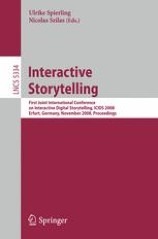
Interactive storytelling ; 1st Joint International Conference on interactive digital storytelling, ICIDS 2008 Erfurt, Germany, November 26-29, 2008 Proceedings
This book constitutes the refereed proceedings of the First Joint International Conference on Interactive Digital Storytelling, ICIDS 2008, held in Erfurt, Germany, in November 2008.The 19 revised full papers, 5 revised short papers, and 5 poster papers presented together with 3 invited lectures and 8 demo papers were carefully reviewed and selected from 62 submission. The papers are organized in topical sections on future perspectives on interactive digital storytelling, interactive storytelling applications, virtual characters and agents, user experience and dramatic immersion, architectures for story generation, models for drama management and interacting with stories, as well as authoring and creation of interactive narrative.

Interactive Curve Modeling : With Applications to Computer Graphics, Vision and Image Processing
Interactive curve modeling techniques and their applications are extremely useful in a number of academic and industrial settings, and specifically play a significant role in multidisciplinary problem solving, such as in font design, designing objects, CAD/CAM, medical operations, scientific data visualization, virtual reality, character recognition, and object recognition, etc. Various problems such as iris, fingerprint, and signature recognition, can also be intelligently solved and automated using curve techniques.

Intelligent Virtual Agents ; Vol.4133 ; 6th International Conference, IVA 2006, Marina Del Rey, CA; USA, August 21-23, 2006, Proceedings
This volume contains the proceedings of the 6th International Conference on Intelligent Virtual Agents, IVA 2006, held in Marina del Rey, California, USA from August 21–23.For the second year in a row,IVA also hosted the Gathering of Animated Lifelike Agents (GALA 2006), an annual festival to showcase the latest animated lifelike agents created by university students and academic or industrial research groups. IVA 2006 received 73 submissions from Europe, the AmericasandAsia.Thepaperspublishedherearethe24fullpapersand11short papers presented at the conference, as well as one-page descriptions of posters and the featured invited talks by Brian Parkinson of Oxford University, Rod Humble of Electronic Arts, and Michael Mateas of the University of California, Santa Cruz and Andrew Stern of Procedural Arts.
