



الصفحة 5
الصفحة 5

IoT and AI Technologies for Sustainable Living : A Practical Handbook
Brings together all the latest methodologies, tools and techniques related to the Internet of Things and Artificial Intelligence in a single volume to build insight into their use in sustainable living. The areas of application include agriculture, smart farming, healthcare, bioinformatics, self-diagnosis systems, body sensor networks, multimedia mining, and multimedia in forensics and security. Provides a comprehensive discussion of modeling and implementation in water resource optimization, recognizing pest patterns, traffic scheduling, web mining, cyber security and cyber forensics. It will help develop an understanding of the need for AI and IoT to have a sustainable era of human living. The tools covered include genetic algorithms, cloud computing, water resource management, web mining, machine learning, block chaining, learning algorithms, sentimental analysis and Natural Language Processing (NLP).

Invited Lectures from the 13th International Congress on Mathematical Education
The book presents the Invited Lectures given at 13th International Congress on Mathematical Education (ICME-13). The papers present the work of prominent mathematics educators from all over the globe and give insight into the current discussion in mathematics education. The Invited Lectures cover a wide spectrum of topics, themes and issues and aim to give direction to future research towards educational improvement in the teaching and learning of mathematics education. This book is of particular interest to researchers, teachers and curriculum developers in mathematics education.

Inventive communication and computational technologies ; Proceedings of ICICCT 2020
This book gathers selected papers presented at the 4th International Conference on Inventive Communication and Computational Technologies (ICICCT 2020), held on 28–29 May 2020 at Gnanamani College of Technology, Tamil Nadu, India. The respective contributions highlight recent research efforts and advances in a new paradigm called ISMAC (IoT in Social, Mobile, Analytics and Cloud contexts). The topics covered include the Internet of Things, Social Networks, Mobile Communications, Big Data Analytics, Bio-inspired Computing and Cloud Computing. Given its scope, the book is chiefly intended for academics and practitioners working to resolve practical issues in this area.

Intrusion Detection Systems
Sٍheds new light on defense alert systems against computer and network intrusions. It also covers integrating intrusion alerts within security policy framework for intrusion response, related case studies and much more. This volume is presented in an easy-to-follow style while including a rigorous treatment of the issues, solutions, and technologies tied to the field.
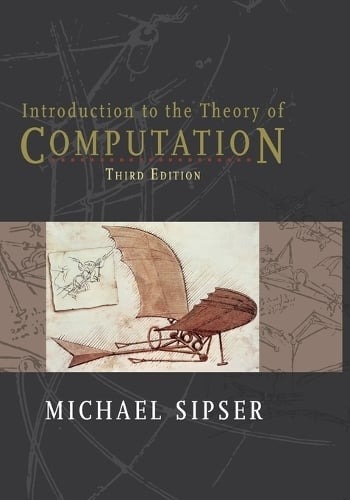
Introduction to the theory of computation
Gain a solid understanding of the fundamental mathematical properties of computer hardware, software, and applications with a blend of practical and philosophical coverage and mathematical treatments, including advanced theorems and proofs.

Introduction to software design with Java
Provides an in-depth introduction to software design, with a focus on object-oriented design, and using the Java programming language. Its goal is to help readers learn software design by discovering the experience of the design process. To this end, the text follows a continuous narrative that introduces each element of design know-how in context, and explores alternative solutions in that context. This narrative is complemented by hundreds of code fragments and design diagrams.

Introduction to robotics : Mechanics and control ; 3rd ed.
Includes material from traditional mechanical engineering, control theoretical material and computer science. It includes coverage of rigid-body transformations and forward and inverse positional kinematics

Introduction to robotics : Mechanics and control ; 2nd ed.
Written for senior level or first year graduate level robotics courses, this text includes material from traditional mechanical engineering, control theoretical material and computer science. It includes coverage of rigid-body transformations and forward and inverse positional kinematics

Introduction to robotics : Analysis, control, applications
Offers a guide to the fundamentals of robotics, robot components and subsystems and applications. The author—a noted expert on the topic—covers the mechanics and kinematics of serial and parallel robots, both with the Denavit-Hartenberg approach as well as screw-based mechanics. In addition, the text contains information on microprocessor applications, control systems, vision systems, sensors, and actuators.

Introduction to Reliable Distributed Programming
Guerraoui and Rodrigues present an introductory description of fundamental reliable distributed programming abstractions as well as algorithms to implement these abstractions. The authors follow an incremental approach by first introducing basic abstractions in simple distributed environments, before moving to more sophisticated abstractions and more challenging environments. Each core chapter is devoted to one specific class of abstractions, covering reliable delivery, shared memory, consensus and various forms of agreement. This textbook comes with a companion set of running examples implemented in Java. These can be used by students to get a better understanding of how reliable distributed programming abstractions can be implemented and used in practice. Combined, the chapters deliver a full course on reliable distributed programming. The book can also be used as a complete reference on the basic elements required to build reliable distributed applications.

Introduction to Programming with Fortran : with coverage of Fortran 90, 95, 2003 and 77
Introduction to Programming with Fortran contains: lots of clear and simple examples highlighting the key language features of the most recent versions of Fortran – Fortran 2003, 95 and 90. practical examples based on ISO TR 15580 and ISO TR 15581 which are widely supported and cover the ISO TR on Enhanced Modules – particularly important to large code suites common problems that occur when programming which are highlighted via clear examples and solutions Introduction to Programming with Fortran is an essential introduction for beginners as well as a concise reference for professionals. Overall the book gives a very effective hands-on coverage of Fortran, valuable to students and practitioners alike.

Introduction to Machine Learning with Applications in Information Security
Provides a classroom-tested introduction to a wide variety of machine learning and deep learning algorithms and techniques, reinforced via realistic applications. The book is accessible and doesn't prove theorems, or dwell on mathematical theory. The goal is to present topics at an intuitive level, with just enough detail to clarify the underlying concepts. The book covers core classic machine learning topics in depth, including Hidden Markov Models (HMM), Support Vector Machines (SVM), and clustering. Additional machine learning topics include k-Nearest Neighbor (k-NN), boosting, Random Forests, and Linear Discriminant Analysis (LDA). The fundamental deep learning topics of backpropagation, Convolutional Neural Networks (CNN), Multilayer Perceptrons (MLP), and Recurrent Neural Networks (RNN) are covered in depth. A broad range of advanced deep learning architectures are also presented, including Long Short-Term Memory (LSTM), Generative Adversarial Networks (GAN), Extreme Learning Machines (ELM), Residual Networks (ResNet), Deep Belief Networks (DBN), Bidirectional Encoder Representations from Transformers (BERT), and Word2Vec.

Introduction to data systems : Building from Python
Encompassing a broad range of forms and sources of data, this textbook introduces data systems through a progressive presentation. Introduction to Data Systems covers data acquisition starting with local files, then progresses to data acquired from relational databases, from REST APIs and through web scraping. It teaches data forms/formats from tidy data to relationally defined sets of tables to hierarchical structure like XML and JSON using data models to convey the structure, operations, and constraints of each data form.
Introduction to Cryptography : Principles and Applications
In the first part, this book covers the key concepts of cryptography on an undergraduate level, from encryption and digital signatures to cryptographic protocols. In the second part, more advanced topics are addressed, such as the bit security of one-way functions and computationally perfect pseudorandom bit generators.

Introduction to blender 3.0 : Learn organic and architectural modeling, lighting, materials, painting, rendering, and compositing with blender
Explains modeling, materials, lighting, painting, and more with Blender and other external tools. You will configure a 3D architectural environment and set up the workflow of an art and design project within Blender. You will use Blender's main tools—mesh modeling and sculpting—to create virtual objects and environments. And, you will explore building materials and light scenes, followed by drawing and virtual painting. Chapters cover rendering scenes and transforming them into 2D images or videos. You will learn to use Blender 3.0 for video editing as a compositor and video sequence editor (VSE or sequencer) with a wide range of effects available through the nodal system. You Will Learn : Create objects and architectural buildings with different techniques of 3D modeling / Master creating an environment for your objects and how to light them / Determine how to create node materials and assign them to your Blender objects / Pick up UV unwrapping and texture painting / Get closer to painting and drawing in Blender / Render your scenes and create stunning videos

Introduction to Assembly Language Programming : For Pentium and RISC Processors
Assembly language continues to hold a core position in the programming world because of its similar structure to machine language and its very close links to underlying computer-processor architecture and design. These features allow for high processing speed, low memory demands, and the capacity to act directly on the system’s hardware. This completely revised second edition of the highly successful Introduction to Assembly Language Programming introduces readers to assembly language programming and its role in computer programming and design. It focuses on providing a firm grasp of the main features of assembly programming, and how it can be used to improve a computer's performance. The revised edition covers a broad scope of subjects and adds valuable material on protected-mode Pentium programming, MIPS assembly language programming, and use of the NASM and SPIM assemblers for a Linux orientation. All of the language's main features are covered in depth. The book requires only some basic experience with a structured, high-level language.

Introduction to Algorithms
Combines rigor and comprehensiveness. The book covers a broad range of algorithms in depth, yet makes their design and analysis accessible to all levels of readers. Each chapter is relatively self-contained and can be used as a unit of study. The algorithms are described in English and in a pseudocode designed to be readable by anyone who has done a little programming. The explanations have been kept elementary without sacrificing depth of coverage or mathematical rigor. The first edition became a widely used text in universities worldwide as well as the standard reference for professionals. The second edition featured new chapters on the role of algorithms, probabilistic analysis and randomized algorithms, and linear programming.

Introduction to Algorithms
Combines rigor and comprehensiveness. It covers a broad range of algorithms in depth, yet makes their design and analysis accessible to all levels of readers, with self-contained chapters and algorithms in pseudocode. Since the publication of the first edition, Introduction to Algorithms has become the leading algorithms text in universities worldwide as well as the standard reference for professionals. This fourth edition has been updated throughout.

Internet of things. information processing in an increasingly connected world ; First IFIP International Cross-Domain Conference, IFIPIoT 2018, Held at the 24th IFIP World Computer Congress, WCC 2018, Poznan, Poland, September 18-19, 2018, Revised Selected Papers
This book cover a wide range of topics from a technology to a business perspective and include among others hardware, software and management aspects, process innovation, privacy, power consumption, architecture, applications.

Internet of things, artificial intelligence and blockchain technology
Explores the concepts and techniques of IoT, AI, and blockchain. Also discussed is the possibility of applying blockchain for providing security in various domains. The specific highlight of this book is focused on the application of integrated technologies in enhancing data models, better insights and discovery, intelligent predictions, smarter finance, smart retail, global verification, transparent governance, and innovative audit systems. Explains how blockchain can significantly increase data privacy and security while boosting accuracy and integrity in IoT generated data and AI processed information; Gives insight into blockchain’s numerous potential applications, starting with recent technologies that give users control over sharing and privacy; Shows readers how to employ blockchain in IoT and AI, helping them to understand what they can and cannot do with blockchain.
