



الصفحة 47
الصفحة 47

Digital self-tuning controllers : Algorithms, implementation and applications
Digital Self-tuning Controllers presents you with a complete course in self-tuning control, beginning with a survey of adaptive control and the formulation of adaptive control problems. Modelling and identification are dealt with before passing on to algebraic design methods and particular PID and linear-quadratic forms of self-tuning control. Finally, laboratory verification and experimentation will show you how to ground your theoretical knowledge in real plant control.

Digital Rights Management : Technologies, Issues, Challenges and Systems
The First International Conference on Digital Rights Management: Technology, Issues, Challenges and Systems (DRMTICS – pronounced ‘dramatics’), took place in Sydney, Australia on 31st October - 2nd November, 2005.DRMTICS isan internationalconferenceseriesthat coversthe areaof digital rights management, including research advancements of an applied and theor- ical nature. The goal is to have a broad coverage of the ?eld and related issues and subjects as the area evolves. Since the Internet and the computing infr- tructure has turned into a marketplace for content where information goods of various kinds are exchanged, this area is expected to grow and be part of the ongoing evolution of the information society.

Digital Platform Regulation : Global Perspectives on Internet Governance
Provides an in-depth exploration of global policy and governance issues related to digital platform regulation Connects research in platform studies to questions of public policy Explores a wide range of digital communication platforms such as social media, search engines and app stores

Digital Libraries : Universal and Ubiquitous Access to Information ; 11th International Conference on Asian Digital Libraries, ICADL 2008, Bali, Indonesia, December 2-5, 2008. Proceedings
This book constitutes the refereed proceedings of the 11th International Conference on Asian Digital Libraries, ICADL 2008, held in Bali, Indonesia, in December 2008.

Digital Image Processing
The book offers an integral view of image processing from image acquisition to the extraction of the data of interest. The discussion of the general concepts is supplemented with examples from applications on PC-based image processing systems and ready-to-use implementations of important algorithms. Each chapter now includes exercises that help you to test your understanding, train your skills, and introduce you to real-world image processing tasks. An important part of the exercises is a wealth of interactive computer exercises, which cover all topics of this textbook.

Digital human modeling and applications in health, safety, ergonomics and risk management : Posture, motion and health ; 11th International Conference, DHM 2020, Held as Part of the 22nd HCI International Conference, HCII 2020, Copenhagen, Denmark, July 19–24, 2020, Proceedings, Part I
This two-volume set LNCS 12198 and 12199 constitutes the thoroughly refereed proceedings of the 11th International Conference on Digital Human Modeling and Applications in Health, Safety, Ergonomics and Risk Management, DHM 2020, which was supposed to be held as part of the 22st HCI International Conference, HCII 2020, in Copenhagen, Denmark, in July 2020. The conference was held virtually due to the COVID-19 pandemic.

Digital human modeling and applications in health, safety, ergonomics and risk management : Human communication, organization and work ; 11th International Conference, DHM 2020, Held as Part of the 22nd HCI International Conference, HCII 2020, Copenhagen, Denmark, July 19–24, 2020, Proceedings, Part II
This two-volume set LNCS 12198 and 12199 constitutes the thoroughly refereed proceedings of the 11th International Conference on Digital Human Modeling and Applications in Health, Safety, Ergonomics and Risk Management, DHM 2020, which was supposed to be held as part of the 22st HCI International Conference, HCII 2020, in Copenhagen, Denmark, in July 2020. The conference was held virtually due to the COVID-19 pandemic.

Digital Human Modeling ; 1st International Conference, ICDHM 2007, Held as Part of HCI International 2007, Beijing, China, July 22-27, 2007, Proceedings
Theis book includes human aspects of design and use of computing systems.It covers the entire field of Human-Computer Interaction, addressing major - vances in knowledge and effective use of computers in a variety of application areas. It also contains thematic area of Digital Human Modeling, Shape and Movement Modeling and Anthropometry, Building and Applying Virtual Humans, Medical and Rehabilitation Applications, Industrial and Ergonomic Applications

Digital Holography : Digital Hologram Recording, Numerical Reconstruction, and Related Techniques
This book presents a self-contained treatment of the principles and major applications of digital hologram recording and numerical reconstruction (Digital Holography). The first part deals with optical foundations and the theory of holography. The next section describes how to record holograms directly with an electronic sensor (CCD) and describes the various reconstruction techniques. A special chapter is designated to digital holographic interferometry with applications in deformation and shape measurement and refractive index determination. Applications in imaging and microscopy are also described. The next part discusses special techniques such as digital light-in-flight holography, holographic endoscopy, information encrypting and comparative holography. In the last chapter related techniques of speckle metrology are treated briefly.

Digital fundamentals
For courses in digital circuits, digital systems (including design and analysis), digital fundamentals, digital logic, and introduction to computers Digital Fundamentals, Eleventh Edition, continues its long and respected tradition of offering students a strong foundation in the core fundamentals of digital technology, providing basic concepts reinforced by plentiful illustrations, examples, exercises, and applications.
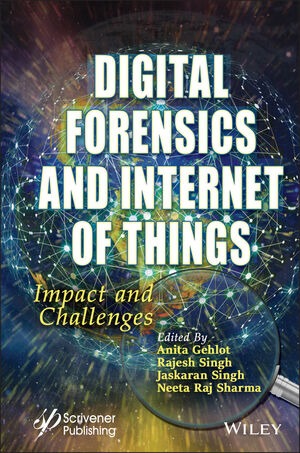
Digital Forensics and Internet of Things : Impact and Challenges
The book discusses applications and challenges professionals encounter in the burgeoning field of IoT forensics. IoT forensics attempts to align its workflow to that of any forensics practice—investigators identify, interpret, preserve, analyze and present any relevant data. As with any investigation, a timeline is constructed, and, with the aid of smart devices providing data, investigators might be able to capture much more specific data points than in a traditional crime.

Digital Fluency : Understanding the Basics of Artificial Intelligence, Blockchain Technology, Quantum Computing, and Their Applications for Digital Transformation
If you are curious about the basics of artificial intelligence, blockchain technology, and quantum computing as key enablers for digital transformation, Digital Fluency is your handy guide. The real-world applications of these cutting-edge technologies are expanding rapidly, and your daily life will continue to be affected by each of them. There is no better time than now to get started and become digitally fluent.

Digital Design of Nature : Computer Generated Plants and Organics
The reproduction of nature via computer has fascinated scientists in computer graphics and artists ever since synthetic imaging was thought possible. This book illustrates and exemplifies methods for the creation of artificial plant models, and the application of these methods within areas such as simulation, virtual reality, botany, landscaping, and architecture.The models are combined to create gardens, parks, and even entire landscapes.The range of creating representational forms reaches from deceptively authentic looking pictures to abstract presentations. In addition, with similar methods organic objects can be produced, changed, and animated.

Digital Decision Making : Back to the Future
This book aims, through a gentle narrative approach, to stimulate an awareness of the issues and be a readable, challenging and informative introduction, both for university students and the general reader, to processes surrounding developments in technology and law which have important implications for the knowledge society.
Digital cities III : Information technologies for social capital: Cross-cultural Perspectives ; 3rd international digital cities workshop, Amsterdam, The Netherlands, September 18-19, 2003, Revised Selected Papers
Digital cities constitutes a multidisciplinary field of research and development, where researchers, designers and developers of communityware interact and collaborate with social scientists studying the use and effects of these kinds of infrastructures and systems in their local application context. The field is rather young. After the diffusion of ICT in the world of organizations and companies, ICT entered everyday life. And this also influenced ICT research and development. The 1998 Workshop on Communityware and Social Interaction in Kyoto was an early meeting in which this emerging field was discussed.

Digital Anatomy : Applications of Virtual, Mixed and Augmented Reality
This book offers readers fresh insights on applying Extended Reality to Digital Anatomy, a novel emerging discipline. Indeed, the way professors teach anatomy in classrooms is changing rapidly as novel technology-based approaches become ever more accessible. Recent studies show that Virtual (VR), Augmented (AR), and Mixed-Reality (MR) can improve both retention and learning outcomes.

Differential Evolution Algorithm with Type-2 Fuzzy Logic for Dynamic Parameter Adaptation with Application to Intelligent Control
This book focuses on the fields of fuzzy logic, bio-inspired algorithm, especially the differential evolution algorithm and also considering the fuzzy control area. The main idea is that these two areas together can help solve various control problems and to find better results. In this book, the authors test the proposed method using five benchmark control problems. First, the water tank, temperature, mobile robot, and inverted pendulum controllers are considered. For these 4 problems, experimentation was carried out using a Type-1 fuzzy system and an Interval Type-2 system. The last control problem was the D.C. motor, for which the experiments were performed with Type-1, Interval Type-2, and Generalized Type-2 fuzzy systems. When we use fuzzy systems combined with the differential evolution algorithm, we can notice that the results obtained in each of the controllers are better and with increasing uncertainty, the results are even better. For this reason, the authors consider in this book the proposed method using fuzzy systems and the differential evolution algorithm to improve the fuzzy controllers’ behavior in complex control problems.

Differential Evolution : A Practical Approach to Global Optimization
Problems demanding globally optimal solutions are ubiquitous, yet many are intractable when they involve constrained functions having many local optima and interacting, mixed-type variables. The differential evolution (DE) algorithm is a practical approach to global numerical optimization which is easy to understand, simple to implement, reliable, and fast. Packed with illustrations, computer code, new insights, and practical advice, this volume explores DE in both principle and practice. It is a valuable resource for professionals needing a proven optimizer and for students wanting an evolutionary perspective on global numerical optimization.

Diagrammatic Representation and Inference ; 5th International Conference, Diagrams 2008, Herrsching, Germany, September 19-21, 2008. Proceedings
This book constitutes the refereed proceedings of the 5th International Conference on Theory and Application of Diagrams, Diagrams 2008, held in Herrsching, Germany, in September 2008.

Diagrammatic representation and inference ; 4th International conference, Diagrams 2006, Stanford, CA, USA, June 28-30, 2006, Proceedings
Proceedings of the 4th International Conference on Theory and Application of Diagrams, Stanford, CA, USA in June 2006. 13 revised full papers, 9 revised short papers, and 12 extended abstracts are presented together with 2 keynote papers and 2 tutorial papers. The papers are organized in topical sections on diagram comprehension by humans and machines, notations: history, design and formalization, diagrams and education, reasoning with diagrams by humans and machines, and psychological issues in comprehension, production and communication.
