



الصفحة 44
الصفحة 44

Chinese Spoken Language, Processing ; 5th International Symposium, ISCSLP 2006, Singapore, December 13-16, 2006, Proceedings
This book contains a selection of refereed papers presented at the Fifth Inter- tionalSymposium on Chinese Spoken Language Processing(ISCSLP 2006), held in Singapore during December 13-16, 2006. ISCSLP is a biennial conference for scientists, researchers, and practitionersto reportand discuss the latest progress in all scientifc and technological aspects of Chinese spoken language processing (CSLP). The previous four conferences were held in Singapore (ISCSLP 1998), Beijing (ISCSLP 2000), Taipei (ISCSLP 2002) and Hong Kong (ISCSLP 2004), respectively.

Charting the Topic Maps Research and Applications Landscape ; 1st International Workshop on Topic Map Research and Applications, TMRA 2005, Leipzig, Germany, October 6-7, 2005, Revised Selected Papers
The papers in this volume were presented at the workshop “Topic Map Research and Applications 2005” held on October 6-7, 2005, in Leipzig. TMRA 2005 was the first workshop of an annual series of international workshops dedicated to topic maps in research and industry. As the motto “Charting the Topic Maps Research and Applications Landscape” suggests, the aim of TMRA 2005 was to identify the primary open issues in research, learn about who is working on what, bring together researchers and application pioneers, stimulate the systematic tackling of such issues, and foster the exchange of ideas in a stimulating setting.

Challenges of expanding internet : E-commerce, e-business, and e-government ; 5th IFIP conference on e-commerce, e-business, and e-government (I3E'2005), October 28-30 2005, Poznan, Poland
This book constitutes the refereed proceedings of the5th IFIP Conference e-Commerce, e-Business, and e-Government (I3E’2005), 2005, Poznan, Poland This collection of papers offers Topics e-Commerce/e-business Sales/Distribution / Information Systems Applications (incl. Internet) / Computer Communication Networks / Cryptology / Database Managemen

Challenges in Ad Hoc Networking ; 4th Annual Mediterranean Ad Hoc Networking Workshop, June 21-24, 2005, Île de Porquerolles, France
The IFIP series publishes state-of-the-art results in the sciences and technologies of information and communication. The scope of the series includes: foundations of computer science; software theory and practice; education; computer applications in technology; communication systems; systems modeling and optimization; information systems; computers and society; computer systems technology; security and protection in information processing systems; artificial intelligence; and human-computer interaction. Proceedings and post-proceedings of referred international conferences in computer science and interdisciplinary fields are featured. These results often precede journal publication and represent the most current research.

Certification and security in inter-organizational E-services ; IFIP 18th World Computer Congress, August 22-27, 2004, Toulouse, France
This collection of papers offers real-life application experiences, research results and methodological proposals of direct interest to systems experts and users in governmental, industrial and academic communities. This book also documents several important developments. The uptake of distributed computational infrastructure oriented to service provision, like Web-Services and Grid, is making C&S even more important. E-services based on legacy systems managed by autonomous and independent organizations, a common situation in the public administration sector, increase overall complexity. The increased presence and use of e-service IT-infrastructures depends on the critical ability required for all security issues, from the basic (availability, authentication, integrity, confidentiality) to the more complex (e.g. authorization, non-repudiation).

Cellular Automata and Discrete Complex Systems ; 26th IFIP WG 1.5 International Workshop, AUTOMATA 2020, Stockholm, Sweden, August 10–12, 2020, Proceedings
This volume constitutes the refereed post-conference proceedings of the 26th IFIP WG 1.5 International Workshop on Cellular Automata and Discrete Complex Systems, AUTOMATA 2020, held in Stockholm, Sweden, in August 2020. The workshop was held virtually. The 11 full papers presented in this book were carefully reviewed and selected from a total of 21 submissions. The topics of the conference include dynamical, topological, ergodic and algebraic aspects of CA and DCS, algorithmic and complexity issues, emergent properties, formal languages, symbolic dynamics, tilings, models of parallelism and distributed systems, timing schemes, synchronous versus asynchronous models, phenomenological descriptions, scientific modeling, and practical applications.

Case-Based Approximate Reasoning
Case-based reasoning (CBR) has received a great deal of attention in recent years and has established itself as a core methodology in the field of artificial intelligence. The key idea of CBR is to tackle new problems by referring to similar problems that have already been solved in the past. More precisely, CBR proceeds from individual experiences in the form of cases. The generalization beyond these experiences typically relies on a kind of regularity assumption demanding that 'similar problems have similar solutions'. Making use of different frameworks of approximate reasoning and reasoning under uncertainty, notably probabilistic and fuzzy set-based techniques, this book develops formal models of the above inference principle, which is fundamental to CBR. The case-based approximate reasoning methods thus obtained especially emphasize the heuristic nature of case-based inference and aspects of uncertainty in CBR. This way, the book contributes to a solid foundation of CBR which is grounded on formal concepts and techniques from the aforementioned fields. Besides, it establishes interesting relationships between CBR and approximate reasoning, which not only cast new light on existing methods but also enhance the development of novel approaches and hybrid systems.

CASCOM : Intelligent service coordination in the semantic web
A general architecture for service delivery and coordination in intelligent agent-based peer-to-peer (IP2P) environments, that has been developed within the CASCOM research project, is presented in this book.

Canadian Semantic Web
This book covers a variety of well known topics of interest to practitioners in industry and research scientists. The range of topics includes languages, tools and methodologies for the semantic Web, semantic Web-based ontology management and engineering, semantic Web services, practical applications of the semantic Web techniques, artificial intelligence methods and tools for the semantic Web, software agents on the semantic Web, visualization and modeling of the semantic Web. The goal of this book is to provide a state-of-the-art review of the research as well as to introduce topics of interest to experts.

Business agility and information technology diffusion ; IFIP TC8 WG 8.6 International working Conference, May 8-11, 2005, Atlanta, Georgia, USA
Addresses issues related to business agility and the diffusion of Information Technology (IT). Success, even survival, in today's business environment has been made complex and difficult by technologically-based competitive pressure. One promising strategy is to be agile and ready to adapt quickly to changes in the environment or market. Such strategy takes shape as an agile software development, agile manufacturing, agile modeling and agile iterations. In contrast, successful IT diffusion is known to be a process that takes time and careful effort. Many IT projects that succeeded in developing a product have subsequently failed in changing the behavior of the target group when diffusion just didn't happen. Therefore this volume responds to the question: What is the relationship between agility and IT diffusion? The book's scope will cover information systems and technology issues, as well as organizational and managerial issues, related to agility and IT diffusion. The planned perspectives include topics such as diffusion of agile methods, enabling business agility with IT, creating agile environments that facilitate diffusion of IT, theories and frameworks for understanding diffusion and agility issues, best practices relating to business agility and IT diffusion, software process improvement and agility, diffusion studies of specific agile technologies, and impacts of diffusion of IT agile methods.
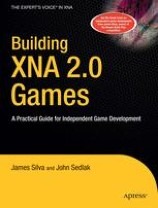
Building XNA 2.0 Games : A Practical Guide for Independent Game Development
Building XNA 2.0 Games: A Practical Guide for Independent Game Development is written by James Silva, who recently won the prestigious Microsoft Dream Build Play game competition with his award–winning game, The Dishwasher: Dead Samurai. Building XNA 2.0 Games: A Practical Guide for Independent Game Development is an in–depth and exclusive look into the entire XNA game development process and includes the creation of a software game masterpiece. James Silva guides you through the process he took to build his award–winning title, from concept to reality. He reveals tips and techniques for creating a polished, high–quality game with very few resources, while bridging the gap between coding and art.
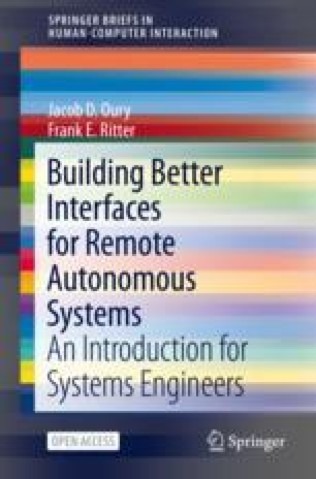
Building better interfaces for remote sutonomous systems : An introduction for systems engineers
This book provides foundational knowledge for designing autonomous, asynchronous systems and explains aspects of users relevant to designing for these systems, introduces principles for user-centered design, and prepares readers for more advanced and specific readings.
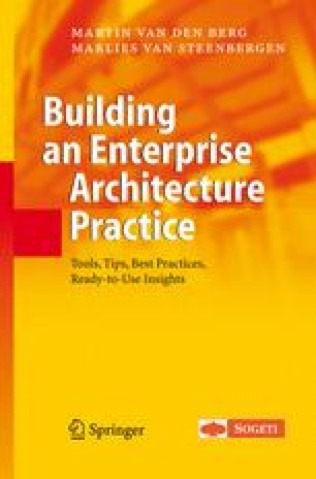
Building an Enterprise Architecture Practice : Tools, Tips, Best Practices, Ready-to-Use Insights
This book clearly describes how to establish an architecture practice that delivers value for an organization. The authors demonstrate a wealth of experience and a deep understanding of the multifaceted nature of this challenging task and they provide sound advice on how to avoid the many pitfalls that may be encountered along the way. Building an Enterprise Architecture Practice provides practical advice on how to develop your enterprise architecture practice.
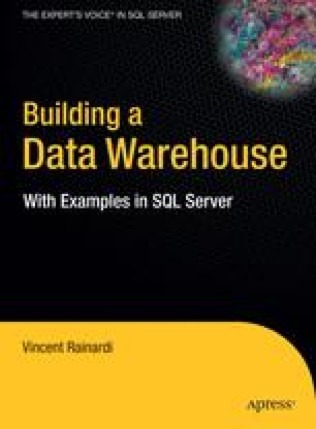
Building a Data Warehouse : With Examples in SQL Server
The book is organized as follows. In the beginning of this book (chapters 1 through 6), you learn how to build a data warehouse, for example, defining the architecture, understanding the methodology, gathering the requirements, designing the data models, and creating the databases. Then in chapters 7 through 10, you learn how to populate the data warehouse, for example, extracting from source systems, loading the data stores, maintaining data quality, and utilizing the metadata. After you populate the data warehouse, in chapters 11 through 15, you explore how to present data to users using reports and multidimensional databases and how to use the data in the data warehouse for business intelligence, customer relationship management, and other purposes. Chapters 16 and 17 wrap up the book: After you have built your data warehouse, before it can be released to production, you need to test it thoroughly. After your application is in production, you need to understand how to administer data warehouse operation.
Broadband satellite communication systems and the challenges of mobility ; IFIP TC6 Workshops on broadband satellite communication systems and challenges of mobility, world computer congress ; August 22-27, 2004, Toulouse, France
This book constitutes the refereed proceedings of IFIP TC6 Workshops on Broadband Satellite Communication Systems and Challenges of Mobility, World Computer Congress, 2004, Toulouse, France includTopics Communications Engineering, Networks Computer Communication Networks / Software Engineering/Programming and Operating Systems / Computer Systems Organization and Communication Networks / Information Systems and Communication Service / Multimedia Information Systems

Brainlesion: Glioma, Multiple Sclerosis, Stroke and Traumatic Brain Injuries ; 7th International Workshop, BrainLes 2021, Held in Conjunction with MICCAI 2021, Virtual Event, September 27, 2021, Revised Selected Papers, Part I
The content of thebook covers the current state-of-the-art literature on federated learning applications for cancer research and Vclinical oncology analysis, as well as an overview of the deep learning approaches improving the current standard of care for brain lesions and current neuroimaging challenges. It is also focusing on the accepted BrainLes workshop submissions, is to provide an overview of new advances of medical image analysis in all the aforementioned brain pathologies. It brings together researchers from the medical image analysis domain, neurologists, and radiologists working on at least one of these diseases. The aim is to consider neuroimaging biomarkers used for one disease applied to the other diseases.
Brain-inspired computing ; 4th International Workshop, BrainComp 2019, Cetraro, Italy, July 15–19, 2019, Revised Selected Papers
The 11 papers presented in this volume were carefully reviewed and selected for inclusion in this book. They deal with research on brain atlasing, multi-scale models and simulation, HPC and data infra-structures for neuroscience as well as artificial and natural neural architectures.
Boundary Representation Modelling Techniques
Boundary representation is the principle solid modelling method used in modern CAD/CAM systems. There have been a long series of developments on which currently available systems are based, full details of which are only partially known. Ian Stroud’s thorough coverage of these developments puts this technology in perspective. Ian Stroud started working with boundary representation solid modelling in 1977. Since then he has researched and is researching a wide variety of topics in and around this field. The information in the book comes from the results of this research.
Boosting Collaborative Networks 4.0 ; 21st IFIP WG 5.5 Working Conference on Virtual Enterprises, PRO-VE 2020, Valencia, Spain, November 23–25, 2020, Proceedings
This book constitutes the refereed proceedings of the 21st IFIP WG 5.5 Working Conference on Virtual Enterprises, PRO-VE 2020, held in Valencia, Spain, in November 2020. The conference was held virtually. The 53 full papers were carefully reviewed and selected from 135 submissions. They provide a comprehensive overview of major challenges and recent advances in various domains related to the digital transformation and collaborative networks and their applications with a strong focus on the following areas related to the main theme of the conference: collaborative business ecosystems; collaborative business models; collaboration platform; data and knowledge services; blockchain and knowledge graphs; maintenance, compliance and liability; digital transformation; skills for organizations of the future

Bluetooth based indoor location positioning system for mobile robot navigation
Positioning objects has been an important topic since it’s needed to locate people, guide them to a certain place, and assist companies and organizations with their assets management. Great applicational opportunities emerge based on the inquiry of Received Signal Strength Indicator (RSSI). In this research, a positioning system using Bluetooth RSSI is proposed for indoor applications. First, RSSI values are inquired multiple times and the average is taken at multiple points of different distances from the transmitters. Then the distance is determined by the variations of RSSI values respectively to distance variations. Finally, a triangulation algorithm is used to calculate the current location of the receiver.
